Ōmisoka: Japan's ritual for a mindful New Year
While Europe is caught up in New Year's Eve celebrations, Japan marks the turn of the year differently: quietly, clearly, ritually. Ōmisoka on December 31 is not a party, but a conscious conclusion. A day that shows how valuable mindful transitions can be.
The big final day
Ōmisoka (大晦日) literally means "the big last day." Not the last day of the month, but the end of the entire year. For many Japanese people, this day is a ritual with deep meaning and palpable tranquility.
It is a moment of conscious pause before the next chapter begins.
Oosouji: The ritual spring cleaning
The morning of December 31 traditionally begins with Oosouji (大掃除) – a thorough cleaning of the house. Rooms, cupboards, tatami mats, personal belongings, and sometimes even the garden or balcony are cleaned and tidied up, down to the last corner.
Oosouji is much more than ordinary cleaning: it is a symbolic act of letting go. Everything that is unnecessary or worn out can go. After all, purity (kiyome) plays a fundamental role in Shintoism —not as an external condition, but as an energetic one. Cleaning the home is therefore not about sparkling clean sinks or kitchen fronts, but about inner clarity. This allows the old year to end "tidily" and creates space for the new.

Japanese Zen garden
Toshikoshi soba: buckwheat noodles at the turn of the year
In the evening, the family gathers for a traditional meal. They eat Toshikoshi-Soba (年越し蕎麦) – long buckwheat noodles.
The noodles represent a long life and the strength to persevere. Their length symbolizes the gentle transition from one year to the next, and buckwheat is considered particularly resilient. The preparation of the noodle soup is deliberately simple, almost meditative.
Then comes a special moment: while eating, people deliberately bite through the long noodles —a symbolic gesture of letting go. The idea is to leave old conflicts behind, resolve entanglements, and bring closure to the past. People honor the old year—but also let it go in peace.

Toshikoshi soba
108 bell chimes for a clear mind
Shortly before midnight, Joya no Kane —the ritual ringing of bells—begins in Buddhist temples. From around 11 p.m., the large temple bells are struck 108 times until the new year begins.
The 108 strokes symbolize the 108 worldly desires that prevent people from achieving inner clarity. With each gong strike, one of these desires is supposed to leave the earth so that people can start the new year free of burdens from the past.
Many Japanese people use this moment for hatsumōde, the first temple visit of the new year. They bring with them wishes for a happy year, protection, success, health, and a peaceful state of mind.
Experience Ōmisoka as a traveler
Japan in winter —without cherry blossoms and summer festivals—offers a particularly authentic atmosphere and the opportunity to experience the country from a new perspective.
Travelers can participate in Oosouji workshops in Kyoto or Kanazawa, sample freshly made soba at traditional restaurants, or attend temple bell ceremonies.
At the turn of the year, Japan is quieter than during the rest of the year. Visitors are warmly invited to experience the centuries-old tradition of Ōmisoka not only as observers, but as valued guests.

Japan in winter
Why Ōmisoka is particularly moving at the end of the year
In our increasingly fast-paced world, we find the idea of a clear and orderly year-end closing soothing and inspiring.
Ōmisoka reminds us:
- A powerful new beginning doesn't have to be loud.
- Rituals provide stability.
- Clarity is a luxury that we can consciously create for ourselves.
- Important transitions may take time and space.
- True beauty lies in simplicity.
Travel is also an inner transition
As travel enthusiasts, we at inventia find it easy to bridge the gap between Ōmisoka and experiences such as northern lights nights, the morning mist over the Congo Basin, or the view over a tranquil fjord landscape: Travel also broadens horizons and opens up spaces —not only geographically, but also internally.
Would you like to experience Japan's mindful culture with all your senses? Discover Japan by ship or train and experience even more ancient rituals directly in venerable temples or at historical sites!
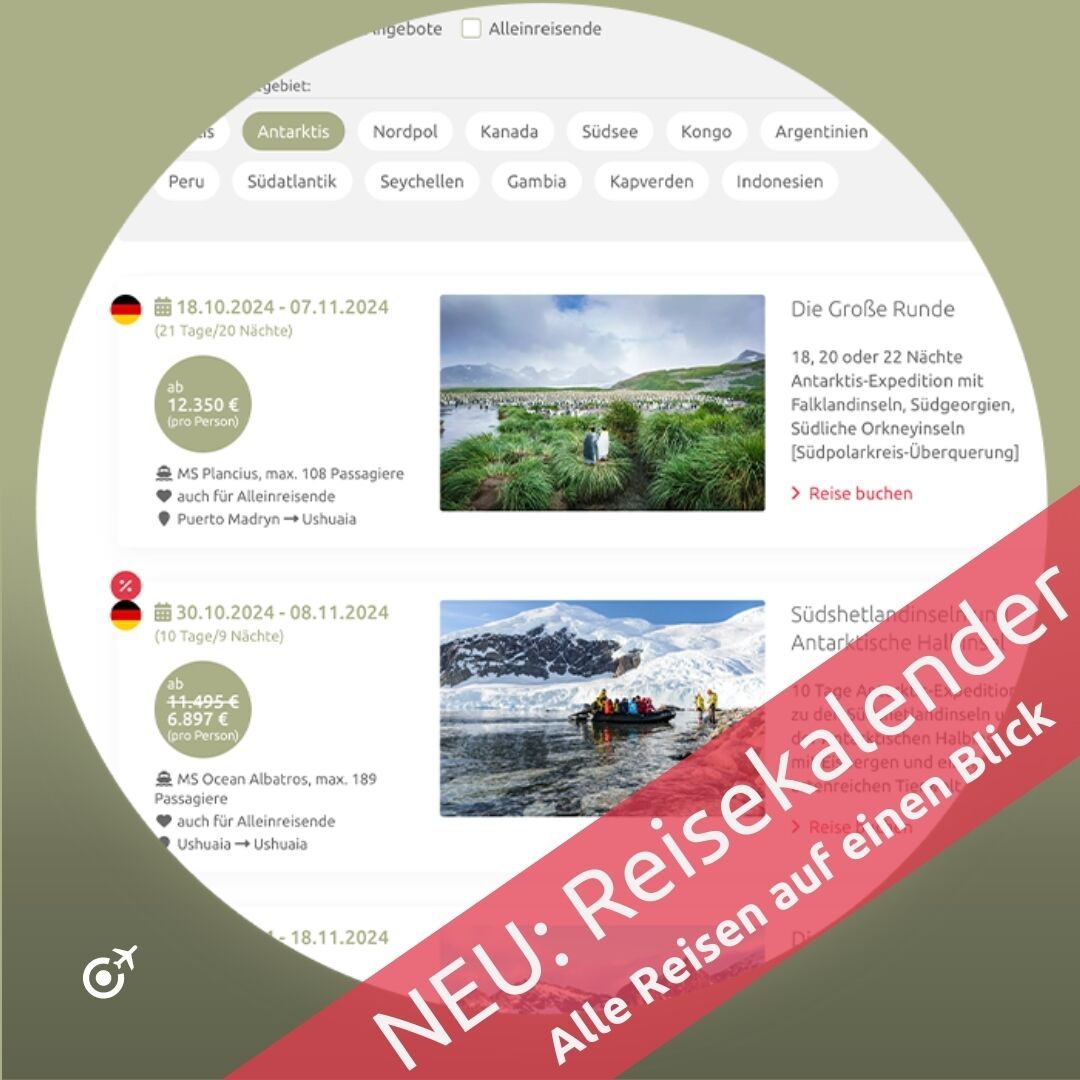
Travel finder: All Antarctic trips and offers at a glance
Browse through the calendar and find your perfect Antarctic trip

Stephanie Gräf
Travel expert, inventia | Travel beyond the ordinary
Specialist in personalized and exciting trips around the globe.
I am your contact person for questions and bookings regarding your trip.
You can reach me by phone or email:
+49 (0)201 858 90 960
welcome@inventia.de
Customized travel offer

Newsletter: Travel beyond the ordinary
Stay in touch with us and receive our latest travel ideas on a regular basis.