Rare Antarctic expedition to Bellingshausen Sea with helicopter flights

from/to Ushuaia

25 days (24 nights)

MS Ortelius
25 days (24 nights) Antarctic expedition from/to Ushuaia on an extraordinary route through the Bellingshausen Sea to Peter I Island + Ellsworth Land with helicopter landings and the opportunity for polar diving
This expedition trip with helicopter flights takes you to the rarely visited region of the Bellingshausen Sea deep in the Southern Ocean. You will follow in the footsteps of famous polar explorers such as Adrien de Gerlache and visit places discovered during the Belgica polar expedition from 1887 to 1899. Many of the research stations in the eternal ice still look exactly as the pioneers left them back then. Far away from civilization, you will experience expedition history up close and authentically right on site. Incidentally, the Bellingshausen Sea owes its name to the Russian polar explorer Fabian Gottlieb von Bellingshausen, who was one of the first people to see Antarctica in 1820.
On board your sturdy ice-strengthened expedition ship , you will follow the coast of the Antarctic Peninsula unusually far south. On your way to the ice-rich Crystal Sound at the edge of the pack ice, you will cross the Antarctic Circle. Weather permitting, you will visit abandoned historic research stations on Horseshoe Island and Stonington Island and set foot on Antarctic mainland at Red Rock Ridge. Further south, you will venture into the Bellingshausen Sea, which is often covered by pack ice, and thus into true pioneer territory. Places such as the lonely Peter I Island or Ellsworth Land are rarely visited by passenger ships.
During numerous landings with Zodiacs and helicopters , you will clearly feel the remoteness of this wilderness. How incredible to think that only a few people before you have set foot on these islands! You will become even more aware of the incredible geographical dimensions of this untouched region during panoramic flights with the on-board helicopters.
During this intensive ship expedition, you will repeatedly gaze out over the rugged ice shelves and observe Antarctic wildlife in their hostile natural environment – including humpback and minke whales, orcas, leopard, elephant, crabeater, Weddell, and Antarctic fur seals– perhaps even a Ross seal or southern elephant seals. Gentooand Adelie penguins waddle across lonely islands, while skuas, terns, giant petrels, and wandering albatrosses sail confidently across the endless expanse of water.
On your comfortable ship, this intensive expedition to the southernmost part of the world becomes an immersive experience thanks to exciting expert lectures. With your lungs still filled with cold polar air, listen to interesting presentations about the fragile Antarctic ecosystem or learn more about Antarctic expeditions of the past.
Even when you return to the port of Ushuaia, the southernmost city in the world on Tierra del Fuego, you are still at the end of the world.

Stephanie Gräf
Travel expert, inventia | Travel beyond the ordinary
Specialist in travel to the Arctic and Antarctic.
I am your contact person for questions and bookings relating to the Arctic and Antarctic, and I am delighted that you are one of the few people who are traveling to the ends of the earth.
You can reach me by phone or email:
+49 (0)201 858 90 960
welcome@inventia.de
Good to know
Arrival and departure:We offer various individual travel packages including flights, hotels in Buenos Aires and Ushuaia, transfers, and activities. We are also happy to suggest pre- and post-programs in Argentina, Chile, and Uruguay to extend your trip.
Attention solo travelers: If you do not wish to have a single cabin, accommodation on board is possible in shared cabins. In this case, you will be accommodated with other travelers of the same gender and possibly of a different nationality. There are no single cabin surcharges.
Entry requirements: German citizens need only a passport (valid for 6 months beyond the date of return) to enter Argentina.
Insurance: Proof of international health insurance covering medical repatriationmust be provided.
Medical questionnaire:You are required to completea medical questionnaire before departure.
HIGHLIGHTS
- Unusual route through the little-traveled Bellingshausen Sea
- Crossing the Antarctic Circle
- Passage of the Crystal Sound with its enormous table icebergs
- Visit to volcanic Peter I Island, one of the most remote islands in the world
- Scenic flights and landings with the onboard helicopters
- Possible sightings of humpback and minke whales, leopard seals, seals, wandering albatrosses, as well as Adélie and chinstrap penguins
- Polar diving (limited offer at extra cost, only possible with experience of more than 30 dives in a dry suit)
- Exciting expert lectures on board about the history of Antarctic expeditions and the fragile Antarctic ecosystem
route

itinerary
Day 1: Journey begins at the end of the world
Your journey begins where the world seems to end. Ushuaia, Argentina —known as the southernmost city on Earth—is located at the very tip of South America. In the afternoon, you will board the ship in this small, picturesque town on Tierra del Fuego. Ushuaia is nicknamed "The End of the World," but for you, it is the beginning of an intense expedition. In the evening, you will sail through the Beagle Channel, lined with majestic mountains, leaving civilization behind.


Day 2 to 3: In the footsteps of polar explorers
During the next two days in the Drake Passage, you will experience the same impressions that once accompanied the great polar explorers when they first charted these lonely waters: a cool salty sea breeze, gently rolling waves – and perhaps even a fin whale blowing a high fountain into the sky.
Once you cross the Antarctic Convergence —the natural boundary of Antarctica, where cold, northward-flowing waters meet the warmer sub-Antarctic seas—you are in the Circumpolar Current. Here, not only does the hidden life underwater change, but so does the bird life. With a little luck, you may spot wandering albatrosses, grey-headed albatrosses, black-browed albatrosses, sooty albatrosses, Cape petrels, southern giant petrels, Wilson's petrels, or blue and Antarctic petrels.
Days 4 to 6: The Antarctic Peninsula
You will follow in the footsteps of the famous Belgian explorer Adrien de Gerlache and, weather permitting, land on Auguste Island. This is the same place where the crew of the Belgica first set foot on Antarctic soil in 1898.
Another possible destination is Hydrurga Rocks, a small group of islands east of the much larger Two Hummock Island. Here you have the chance to observe Adélie and chinstrap penguins, as well as Weddell seals, leopard seals, and southern elephant seals. With a little luck, humpback whales and Antarctic minke whales may also be seen in the surrounding waters.
These days, they are venturing further and further south and exploring the Antarctic Peninsula extensively. Among other things, these special destinations await you there:
- Charlotte Bay – Here you will likely make your first landing on the Antarctic mainland at Portal Point.
- Cuverville Island – This small, steeply rising island is nestled between the mountains of the Antarctic Peninsula and Rongé Island. It is home to a large colony of gentoo penguins and breeding pairs of brown skuas.
- Danco Island – Gentoo penguins nest here, but Weddell seals and crabeater seals are also welcome guests.


Day 7: Flandres Bay with Renard Island
Today you will reach Flandres Bay, where you are expected to land on Renard Island . This steep and rugged island was named after Alphonse Renard, one of the most important scientific supporters of Adrien de Gerlache's expedition. Renard Island is best known as the last landing point of the Belgica expedition along the west coast of the Antarctic Peninsula.
Days 8 to 11: Crossing the Antarctic Circle
Crossing the Antarctic Circle, you will reach the particularly ice-rich region of Crystal Sound. With a little luck, you will be able to observe a variety of Antarctic wildlife and find yourself in the midst of the vast Antarctic landscape with its endless rugged ice fields and majestic towering mountains. Conditions permitting, you will land on Detaille Island , a historic site and former research station. The virtually unchanged station offers a rare glimpse into the early days of scientific research in Antarctica against an impressive backdrop.
Pourquoi-Pas Island / Horseshoe Island
After visiting one or both islands, you will be even more amazed by the groundbreaking expeditions of the past. Pourquoi-Pas Island, named by the famous explorer and scientist Jean-Baptiste Charcot, is home to penguins and seals. On a hiking trail, the impressive view of the glaciers that shaped the island's landscape is a constant companion.
Horseshoe Island is home to an abandoned research station whose buildings are reminiscent of the legendary Mary Celeste—as if it had simply been abandoned one day. Groundbreaking scientific studies and long-distance dog sled expeditions took place here, and the remains of the old dog kennels can still be seen. The island not only provides a fascinating insight into history, but with its harsh conditions and striking views, it also embodies the original essence of the Arctic.
Stonington Island
Between the 1930s and 1970s, Stonington Island was an important center for scientific research, with both American and British research stations. To this day, historic buildings and artifacts tell the story of the glorious Antarctic pioneers. Once connected to the mainland by snow and ice, this place is a powerful reminder of the remoteness of Antarctica and the untamed power of the wilderness. The combination of rich wildlife, unspoiled nature, and historical relics makes Stonington Island a particularly multifaceted experience.
Red Rock Ridge
Your landing point on the Antarctic mainland, Red Rock Ridge, can be seen from afar: its striking red-colored rocks stand out dramatically against the icy landscape. Conditions permitting, you will go ashore here. There is a breeding colony of Adélie penguins in the area, and with a little luck you may also spot seals and Antarctic cormorants nesting nearby.


Days 12 to 14: Continuing south through Marguerite Bay
As your ship continues southward, keep a keen eye out for the giants of the seas—and also for rarer animals such as the shy Ross seal. You are now traveling through a truly pioneering region that few people have ventured into before.
Days 15 to 18: Entering the Bellingshausen Sea
Today, your ship is expected to reach the Ronne entrance – an area first documented during Lincoln Ellsworth's flights and later mapped by the British Graham Land Expedition. Weather permitting, you will land in this extremely remote region by Zodiac or helicopter in one of the most isolated places in the world. As ice and weather conditions along the coast of Ellsworth Land are constantly changing, your expedition leader will determine the best options for activities in this area at short notice.

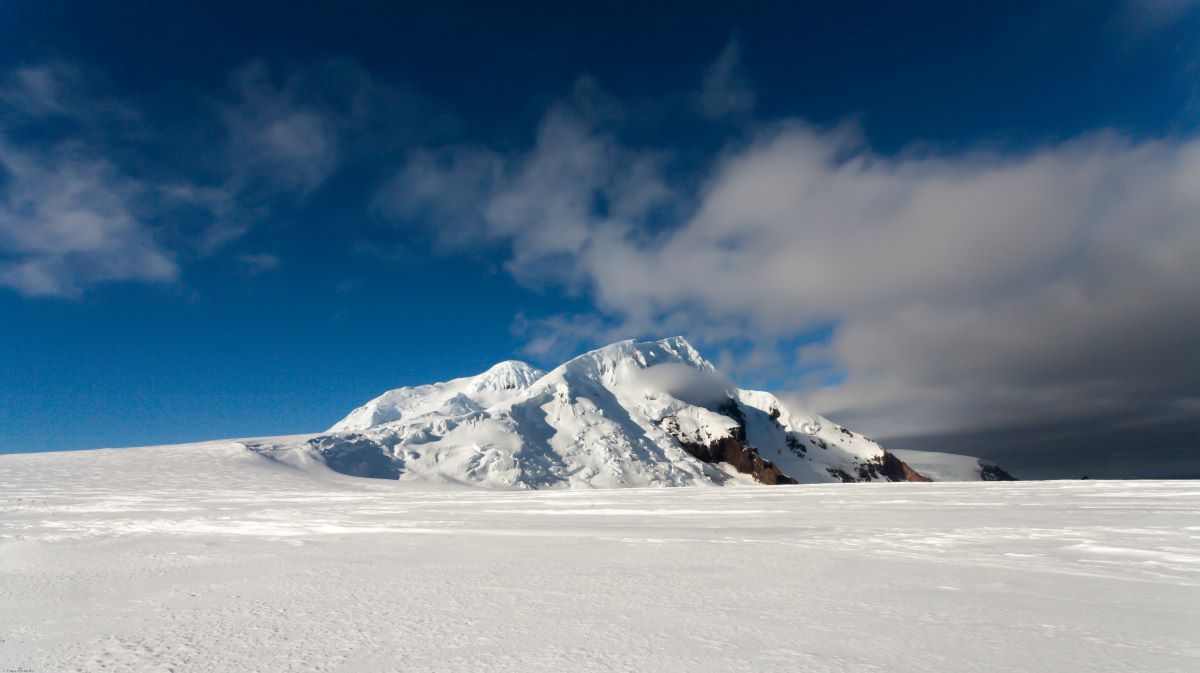
Days 19 to 20: A rare glimpse of Peter I Island
Also known as Peter I Øy, this uninhabited volcanic island is located in the Bellingshausen Sea. It was discovered in 1821 by Fabian von Bellingshausen and named in honor of Peter the Great of Russia. Although Norway claims the island as its territory, its remote location means that it is very rarely visited by passenger ships.
Landing here is a real challenge. But if weather and ice conditions permit, you will have the extraordinary opportunity to land by helicopter on the glaciated northern part of the island. Then you could set foot on one of the most remote islands in the world.
Days 21 to 24: Northern route – From Peter I Island to the Drake Passage
After leaving Peter I Island, the captain sets course northward. They leave Antarctica and sail across the Bellingshausen Sea into the endless expanse of the Southern Ocean.
As your ship glides through the waters, your onboard experts continue to offer interesting lectures —for example, on the history of Antarctic expeditions or the sensitive marine ecosystems of this unique region.
The wildlife will also be your constant companion: keep an eye out for wandering albatrosses and petrels gliding elegantly over the waves, or even whales. With a little luck, you may spot humpback whales or perhaps even a blue whale feeding in these nutrient-rich waters.
Now you're facing the huge Drake Passage again, this time as the last leg of your journey back to South America.


Day 25: Back to the end of the world
After an intensive expedition to one of the world's last true wildernesses, today it's time to say goodbye. When you disembark in Ushuaia, you won't be returning empty-handed: deeply moved by extraordinary experiences and encounters with nature, you'll take home memories that you'll never forget.
The daily programs described here are for your guidance. The itinerary may vary considerably due to local ice and weather conditions, last-minute permit procedures, and local authorities, but also to respond to current conditions regarding wildlife viewing.Theexpedition leader on board will determine the final itinerary and daily program. Flexibility is of utmost importance during our expedition-style voyages.
DATES & PRICES
Request your trip here!
Submit questions via email Arrange a callback Call now: +49 201 85890960
or please select your preferred date
January 14, 2027 – February 7, 2027
Starting at €23,200 ; €18,550 per person
25 days/24 nights
MS Ortelius (Maximum occupancy: 108)
Ushuaia Ushuaia
Optional, for an additional fee: polar diving
Selected date
January 14, 2027 – February 7, 2027 (25 days/24 nights)
MS Ortelius | Bellingshausen Sea / Peter I Island + Ellsworth Land - incl. helicopter
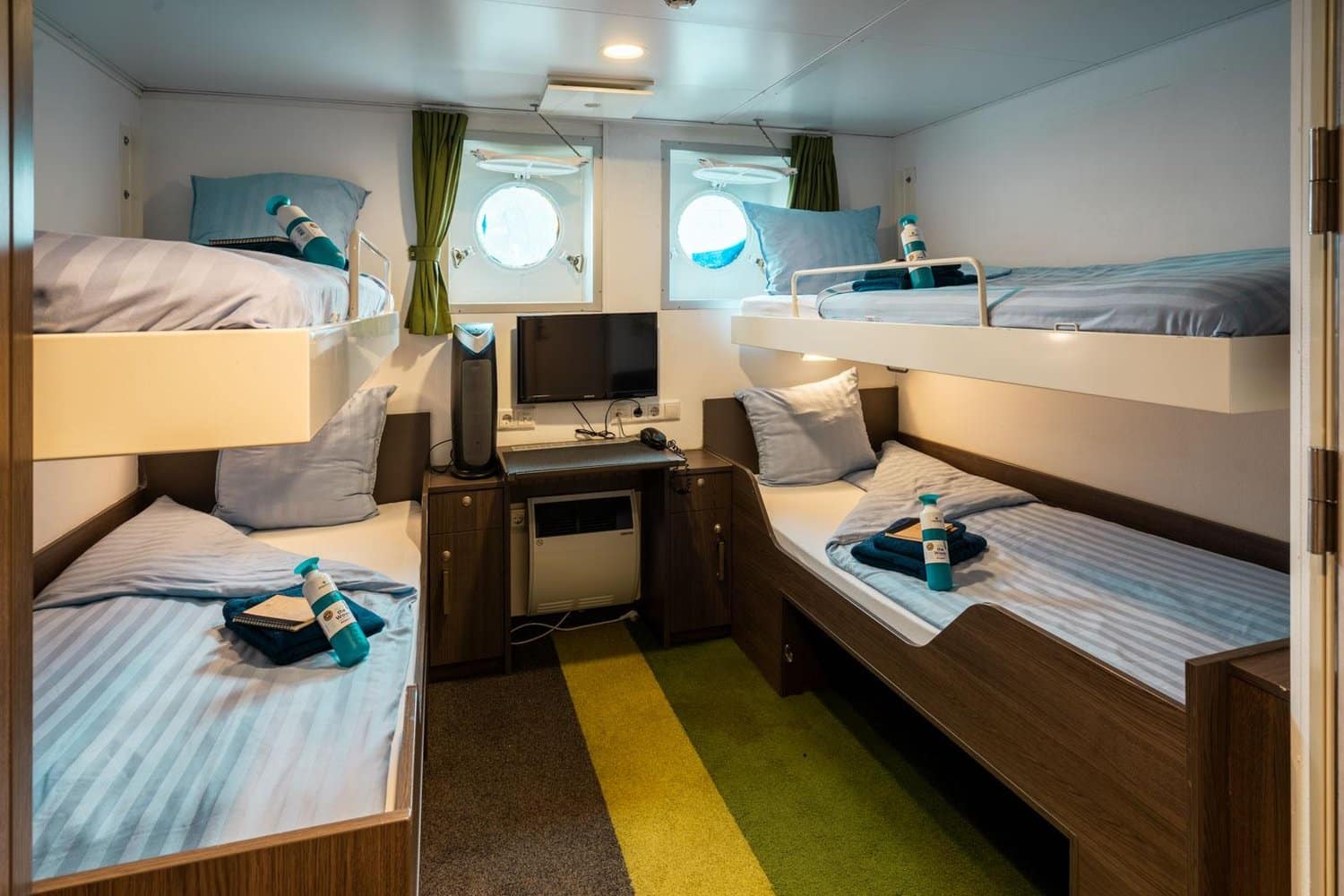
Four-person with porthole

Three-person porthole

Double with porthole, deck 4
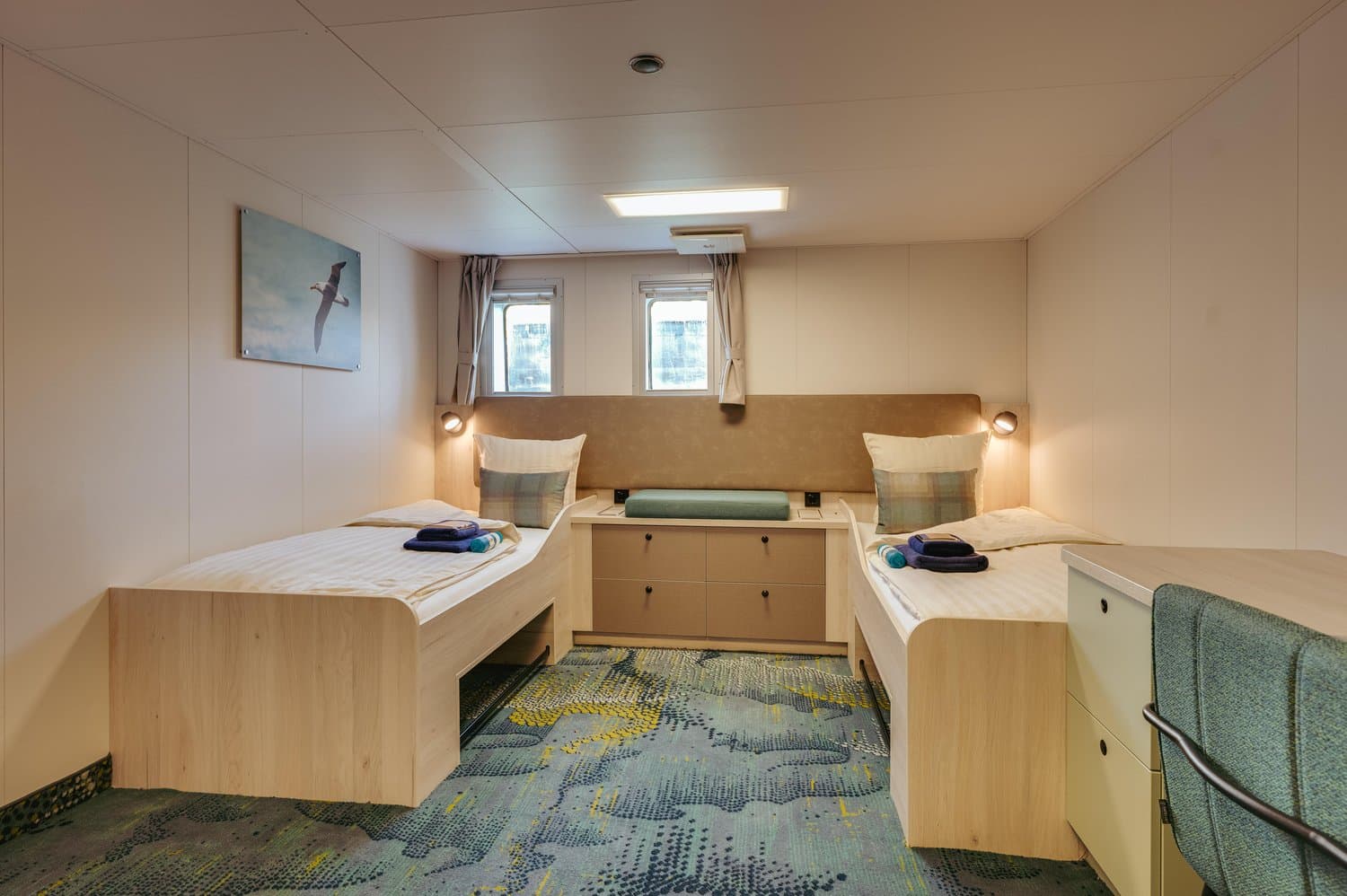
Double room with window

Double Deluxe

superior
cabin
options
| Diving (price per person) | ||
| Person(s) | 1 450,00 € | |
| Helicopter Sightseeing Flights | ||
| Person(s) | ||
personal data
By clicking on the "Request now" button, you agree to the Processing of your personal data to complete the reservation.
Summary
optional activities
Information
Included services:
- Cruise and overnight stays on board the booked ship according to the itinerary shown
- All meals, including snacks, coffee, and tea throughout the trip on board the ship
- All shore excursions and activities throughout the trip, including Zodiac excursions and helicopter landings
- Expert lectures and leadership of an international expedition team on board and ashore
- Free use of rubber boots and snowshoes
- Helicopter transfer from the ship to the landing site (certain times not guaranteed)
- Luggage transfer to the ship on the day of departure in Ushuaia
- Collective transfer on the day of disembarkation from the port to Ushuaia Airport (immediately after disembarkation)
- All other taxes and port fees related to the ship program
- Comprehensive travel documents (boarding pass, travel information)
- Free Wi-Fi. All guests receive 1.5 GB of data per day, which is renewed every 24 hours.
- Free water bottle for use during and after your expedition
Not included in the price:
- Flights, whether scheduled or charter flights
- Land arrangements before and after the cruise (e.g., hotel accommodations on land)
- Passport and visa fees
- Entry and exit taxes
- Meals ashore
- Luggage, travel cancellation, and personal insurance (strongly recommended)
- Excess baggage fees and all onboard services such as laundry, bar, beverage costs, and telecommunications costs
- Tips at the end of the trip for the service staff on board (guidelines available on request)
- Language spoken on board: English
- English-speaking expedition team
- Means of payment on board: US dollars, euros, and major credit cards
- Filling out a medical questionnaire is mandatory.
- Rubber boots available for loan on board
- Open bridge
- A doctor is on board
- Proof of international health insurance with medical repatriation must be provided.
- The trip is not suitable for people with limited mobility.
- A heart for solo travelers: Share a cabin with travelers of the same gender and save on the single cabin supplement. Valid for four-bed, three-bed, and double cabins with portholes, windows, and deluxe cabins. The cabins have separate beds.
Please note: Use of helicopters
On these trips, you will land with Zodiacs. In places where this is not possible, two helicopters are available as an alternative. However, a certain number of helicopter flights cannot be guaranteed in advance. Helicopters offer a decisive advantage in reaching landing sites that are difficult to access, but this expedition takes you to one of the most remote regions in the world – the final itinerary is determined by weather, ice, and other forces of nature. Conditions can change quickly and affect helicopter operations. We ask for your understanding and acceptance.
Safety is our top priority, and we do not compromise on this. The ship is equipped with two helicopters. If one of them is not operational for any reason, all helicopter flights will be suspended or canceled, as two functioning helicopters are always required. No guarantees can be given, and any claims are excluded.
polar diving
Polar diving is possible during this expedition. However, you must have sufficient experience in cold water diving and at least 30 dives in a dry suit. Please also note that there are additional costs for this limited activity.
Your ship during the voyage
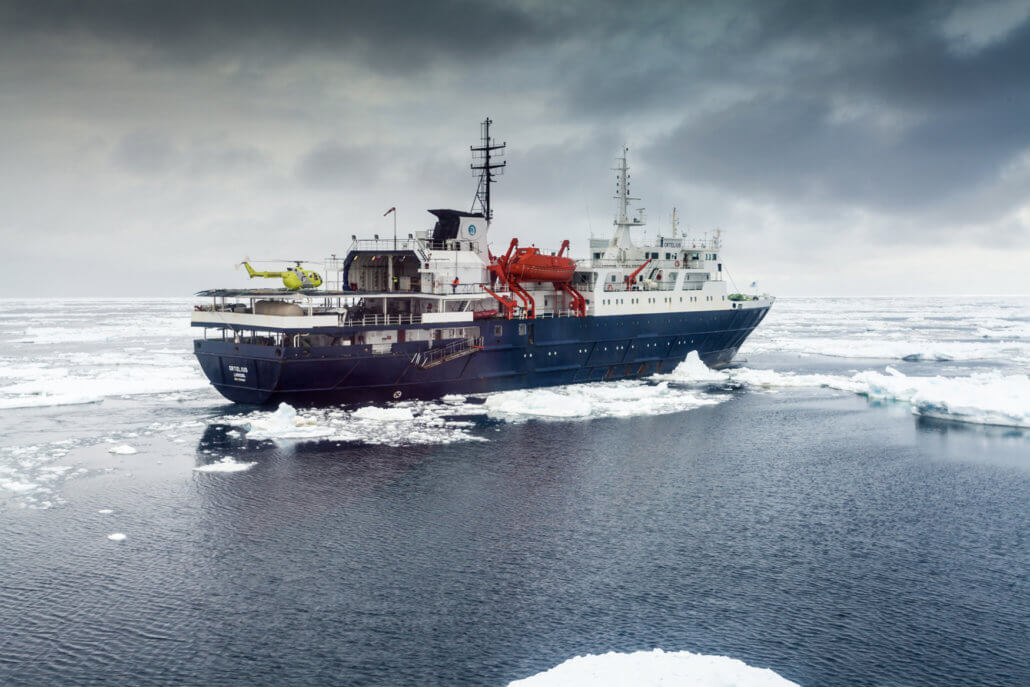
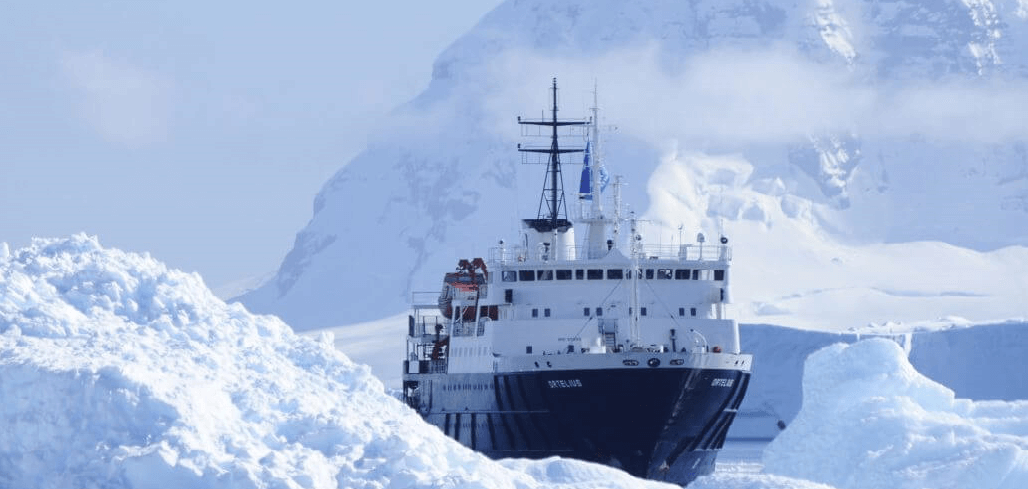
MS Ortelius on Antarctic voyage
MS Ortelius on Antarctic voyage
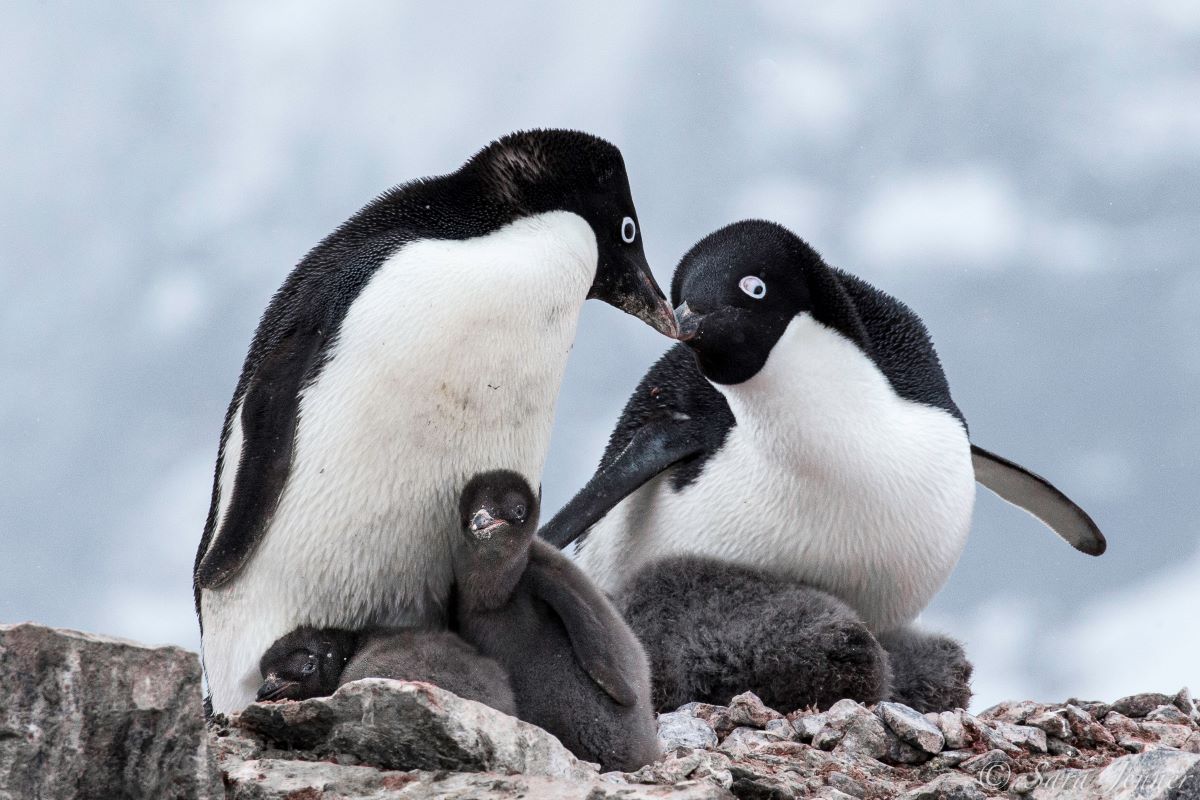
Antarctic Adelie penguin Antarctic beyond the Antarctic Circle to the Wilkins Ice Shelf Sara Jenner
Adelie penguin family

Antarctica Classic - Antarctica, including Deception Island, Gentoo Penguins, Danco Island, and Martin van Lokven
Gentoo Penguins on Danco Island
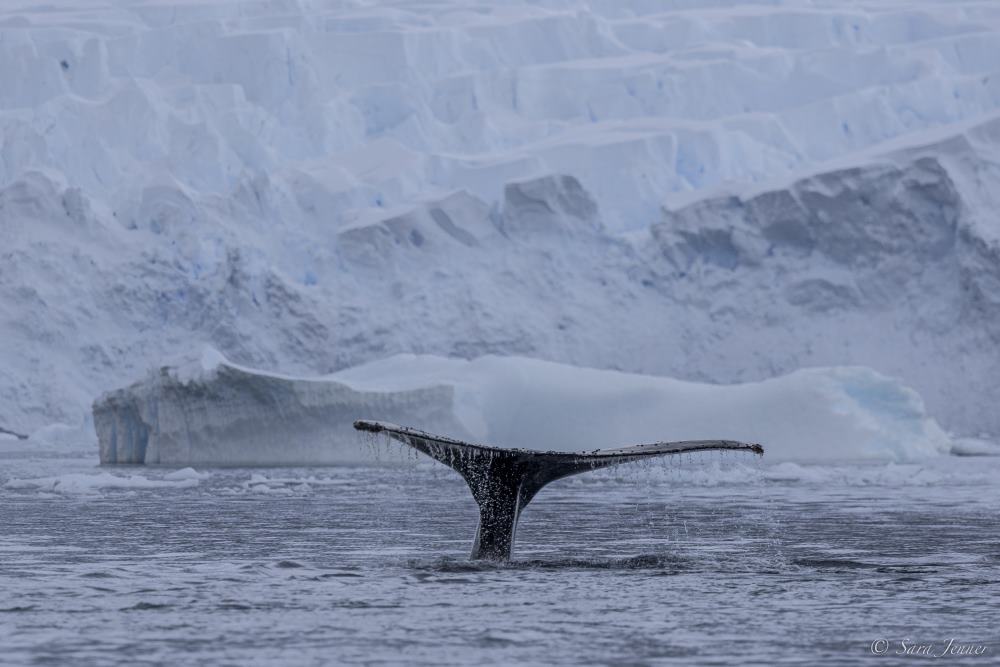
weddell sea hikes_danco island_sara jenner_oceanwide expeditions
Whale off Danco Island | © Sara Jenner
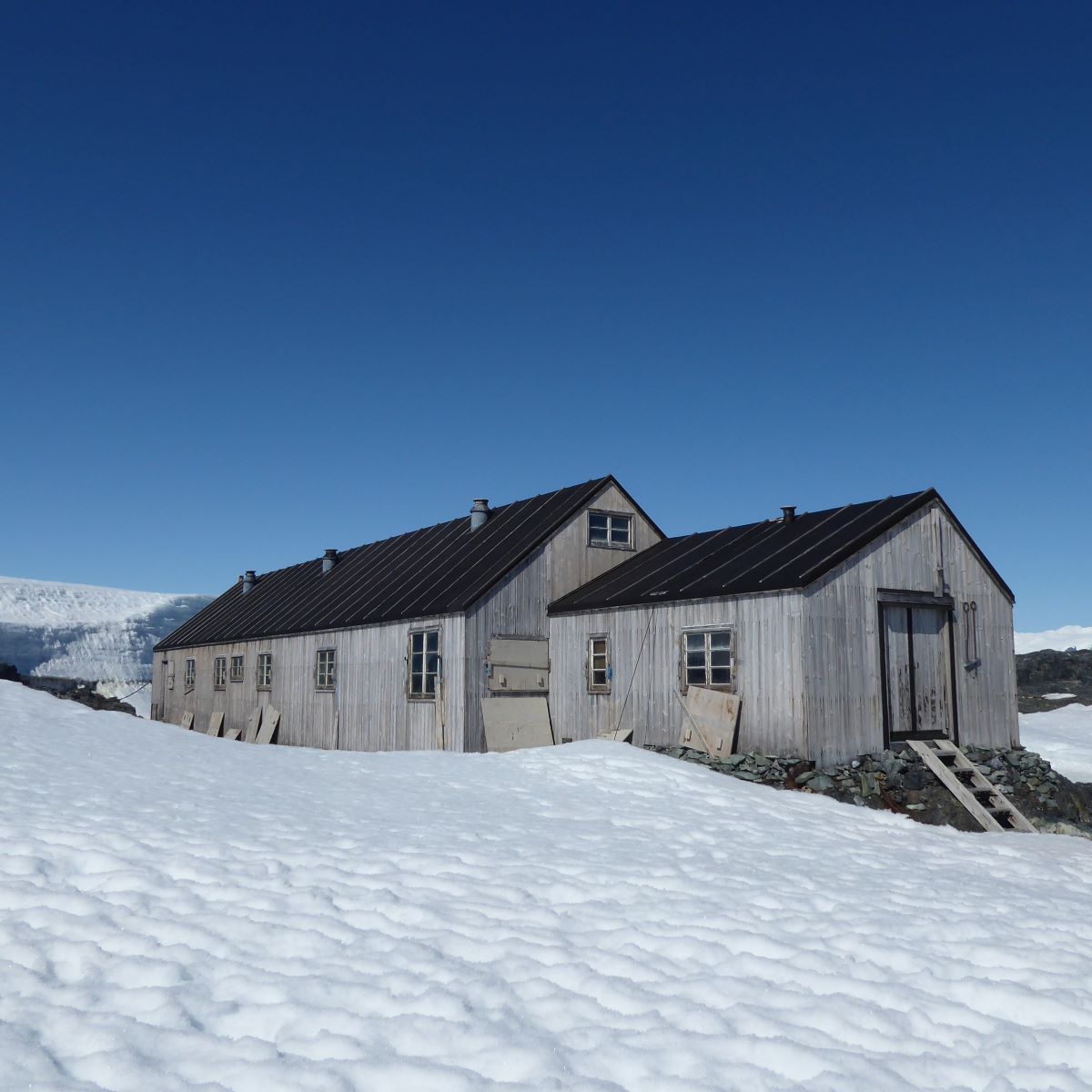
Antarctica - Detailed Map - Island Station - West Antarctica - Beyond the Polar Circle to the Wilkins Ice Shelf - Victoria Salem
Base W on Detaille Island

basecamp-southern-polar-circle_humpback-whale_nicolo-de-cata_oceanwide-expeditions
Sighting of a humpback whale | © Nicolo de Cata

Antarctica-Antarctic Peninsula-to-Arctic Circle-Discovery of the Deep South-Polar diving-MissScuba
polar diving

basecamp-southern-polar-circle_detail-iceberg-island_jamie-scherbeijn_oceanwide-expeditions
A table iceberg | © Jamie Scherbeijn
Sounds interesting?
You can book your trip here
Do you have any questions?
just call
Further Antarctic expeditions

MS Heritage Discoverer | Polar Expedition Ship
26.236 €

The Great Loop through the Southern Ocean
MS Aranoa | Boutique Cruise Ship for the Austral Islands
33.386 €
Among the King Penguins of South Georgia

Northwest Passage Cruises
Travel to Gabon
MS Discoverer | Expedition Ship for 140 Passengers
19.122 €

The Northwest Passage Along the Inuit Waterways
22.495 €

Franklin's Trail Through the Ice Labyrinth of the Northwest Passage

Rainforest Trail to Gabon's Gorillas

AmaMelodia