New laws for nature conservation and animal welfare in Svalbard
Dear customers, friends, and interested parties,
From January 1, 2025, new travel regulations for Svalbard will come into force to protect the environment and wildlife.
Today, we would like to give you an overview of the new guidelines, explain how they fit into the bigger picture, and how they affect our trips. Please feel free to contact us at any time if you have any questions.
The new regulations adopted by Parliament include:
- Landing restrictions:
- Tourist landings are now only permitted at 43 designated locations in protected areas, compared to the current 240 landing sites. At 12 of these locations, a maximum of 39 people are allowed to go ashore at any one time.
- Limiting passenger numbers:
- Ships operating in the protected areas of Svalbard may carry a maximum of 200 passengers. This regulation is stricter than that in Antarctica, where ships carrying up to 500 people are permitted.
- Prohibitions and distancing rules:
- There will be a general ban on the use of drones so as not to disturb wildlife.
- Ships must maintain a minimum distance of 500 meters from areas where walruses rest and are not permitted to navigate near nesting seabirds or polar bears.
- speed limits:
- Ships are not allowed to travel faster than 5 knots in certain areas, especially near bird cliffs, in order to minimize disturbance.
These new regulations are intended to reconcile growing tourist activities with the protection of the unique Arctic environment and wildlife.
It is expected that these measures will not only reduce the number of visitors, but could also increase pressure on the remaining accessible areas, which is viewed critically by both environmental groups and tourism companies.
What we at inventia think about it:
We at inventia expressly welcome the new regulations, particularly with regard to the reduced passenger numbers. In fact, we don't think they go far enough. With our small ships, which can accommodate a maximum of 12, 50, and 108 passengers, respectively, we have always been well below the required limit.
As always, we are ahead of our time.
So, if you travel to the Arctic on ships carrying more than 200 people in the future, you will only be able to travel on routes outside national parks and protected areas.
Why the new regulations favor our trips on small ships
Inventia was named Best Adventure Travel Agency 2024 – Germany at the EU Travel Awards. The awards recognize companies that offer unparalleled experiences, introduce advanced technologies, are committed to sustainability, and offer tailor-made services.
Our core values are passion, integrity, sustainability, and customer focus. These principles have guided us since our founding in 2002 and shape our mission to create meaningful and transformative travel experiences. We firmly believe that travel is not only about discovering new places, but also about collecting unforgettable experiences that enrich our customers' lives and have a lasting impact on their relationships.
We will only have to make minimal changes to our portfolio due to the new regulations, as all of our ships are (and always have been) within the new limits. We expressly support the new restrictions in order to preserve the Arctic as a viable habitat for a wide variety of wildlife in the future.
Our micro-expeditions on ships with only 6 or 7 cabins are designed for small groups of up to 12 guests. This allows us to visit all 43 locations in Spitsbergen's national parks that are accessible under the new restrictions for landings with only 39 or 200 people (200 people is still too many in our opinion!).
The reduction in landing sites will not affect the quality of our expeditions. As true explorers, we embrace the unpredictability of the Arctic and make the most of every opportunity. Rather than sticking to a strict itinerary, we observe nature as it unfolds, seize the opportunities that come our way, and always maintain respect for the environment we visit. That will never change.
Traveling in small groups not only reduces the impact on Spitsbergen's ecosystem, but also allows for a deeper connection with nature and other explorers.
Below you will find our expedition ship fleet sorted by size (or small ;-)).
drones
The rules and implications for the use of drones were developed in Svalbard and are being introduced to reduce disturbance to wildlife. Unfortunately, expedition guests are not permitted to use drones during their expedition. When members of our team fly drones, they are used professionally and comply with Svalbard regulations and AECO guidelines.
animal watching
Maintaining a respectful distance from wildlife has always been a top priority and has been strictly adhered to by our guides. The new regulations focus on the peak summer months when bird cliffs serve as important breeding grounds. It is important not to disturb the delicate balance of nature. The opportunity to observe wildlife is still possible. It is about maintaining a balance of respect between wild animals and ourselves.
Why rush? A speed limit of 5 knots has also been introduced. We like to take it slow and often choose to turn off the engine so we can observe the wildlife in peace. We would say that this is essential for the best wildlife viewing opportunities.
Further information:
> Information from the Norwegian government (in Norwegian) with interesting maps
> To the trip finder | All our trips to the Arctic on small ships
Our fleet in the Arctic, sorted by size in ascending order:
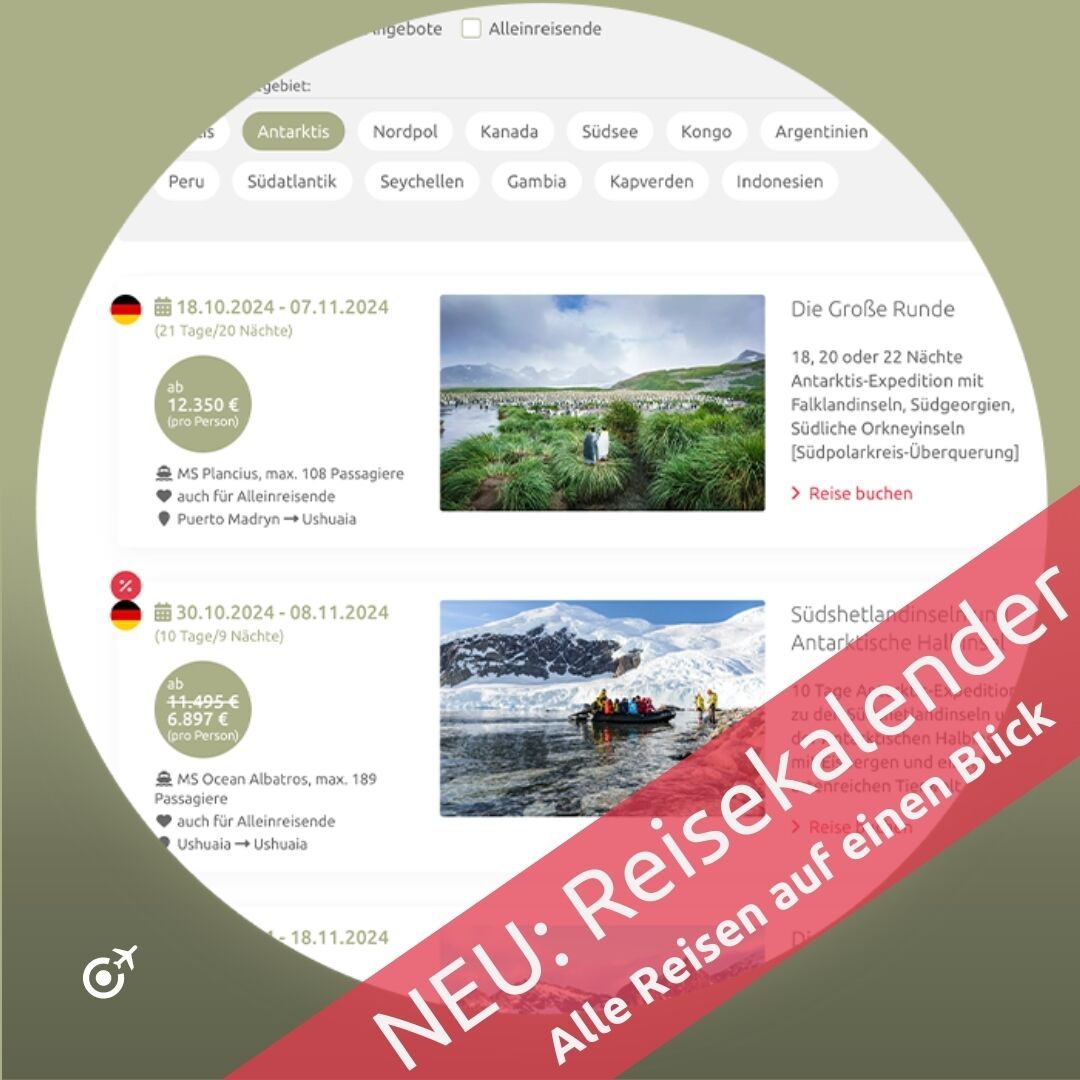
NEW! Travel calendar:

Stephanie Gräf
Travel expert, inventia | Travel beyond the ordinary
Specialist in personalized and exciting trips around the globe.
I am your contact person for questions and bookings regarding your trip.
You can reach me by phone or email:
+49 (0)201 858 90 960
welcome@inventia.de
Customized travel offer
Newsletter: Travel beyond the ordinary
Stay in touch with us and receive our latest travel ideas on a regular basis.
Shall we stay in touch?
Aurora Borealis Tours
Silvester auf den Flüssen des Amazonas

Kontrastreiches Chile in Style
10 answers to the most frequently asked questions about Antarctic travel
4.530 €

Irland per Zug entdecken: Die Glanzlichter der Grünen Insel (2026)
21.200 €

Rovos Rail von Ost nach West – Afrika-Durchquerung vom Sambesi zum…
10.900 €

Namibia, die Viktoriafälle und Rovos Rail (2026/2027)
5.890 €

Außergewöhnliche Zugreise quer durch das unbekannte Königreich Saudi-Arabien (2026)
14.980 €

Kanadas unbekannter Norden – Mit dem Hudson Bay Express durch die…
1.500 €

Flussaufwärts: Vientiane – Luang Prabang (2026/2027) (6-tägige Flusskreuzfahrt)
1.680 €

Flussabwärts: Luang Prabang – Vientiane (6-tägige Flusskreuzfahrt) (2026)
11.800 €

Per Komfort-Sonderzug von Hanoi bis Saigon (2026/2027)
1.400 €