Arctic Tundra, Icy Landscapes & Polar Bears
Just 1,000 kilometers to the North Pole. Imposing glacier fronts calving deep into the fjords of Spitsbergen. Expedition cruises along remote coastlines, past fields of pack ice where walruses rest and seals surface among the ice floes. Spotting polar bears in one of the last great wildernesses on Earth. Bird cliffs teeming with thousands of thick-billed murres, puffins, and kittiwakes, whose calls echo across the Arctic fjords. Hikes through the silent tundra of Spitsbergen, which bursts into surprisingly colorful bloom during the short summer. The midnight sun, bathing the landscape in an almost endless light. Traces of early polar explorers and remote settlements that tell of the harsh history of the Far North.
Our trips to Spitsbergen
4.350 €

Active Base Camp in Northern Spitsbergen
4.100 €
Short Expedition Cruise Through Western Spitsbergen
7.986 €

Western Spitsbergen & the Polar Ice Edge
7.790 €

Svalbard Expedition to the Pack Ice | MS Quest | MS Balto
9.812 €

Bird islands & glacier ice in the Norwegian Arctic
13.739 €

Spitsbergen exclusively between pack ice and midnight sun
7.550 €

Spitsbergen – Northeast Greenland – Iceland: Northern lights, Inuit, and long hikes |...
7.550 €

Northeast Greenland Extreme
11.386 €
Svalbard Circumnavigation Including Kvitøya | MS Sea Spirit
5.790 €

Spring in Spitsbergen on a small ship | MS Quest | MS…
5.450 €

Northern Spitsbergen: Arctic summer under sail | SY Rembrandt van Rijn
4.350 €

Northern Spitsbergen Explorer | MS Hondius | MS Ortelius | MS Plancius
Longyearbyen is located at 78° North—one of the northernmost permanently inhabited cities on Earth. The archipelago belongs to Norway, but the rules of everyday life hardly apply here: About 65% of Svalbard’s land area is protected, and outside the settlements, special safety rules are in place to protect against polar bears. To the east and northeast of Spitsbergen lies the Barents Sea; to the north, the Arctic Ocean; and to the west, the Greenland Sea and the European North Sea. It is a destination for people who want to see the world in a different light—rougher, quieter, more pristine.
Inventia’s expeditions to Spitsbergen are not your typical cruises. They are journeys aboard small ships, led by experienced guides, with itineraries that adapt to ice conditions, weather, and wildlife sightings—not a fixed schedule. Whether you’re traveling to the High Arctic for the first time or are already familiar with the polar climate, Spitsbergen reveals itself differently to everyone.
The highlights of our Svalbard trips at a glance:
- Small expedition ships carrying around 12 to 70 passengers—for impromptu shore excursions, flexible itineraries, and up-close wildlife viewing
- Travel from the Arctic spring through to fall —depending on the season, enjoy the midnight sun, wildlife, pack ice, or the Northern Lights
- Polar bears, walruses, whales —Svalbard is one of the most famous wildlife viewing destinations in the Arctic
- Expeditions for every travel style —from compact short expeditions to a round-trip tour of Spitsbergen or a 15-day combined itinerary to Northeast Greenland and Iceland
- inventia provides personalized consultation in German —with a curated selection of the world’s best expedition tours
Small ships, flexible routes – why that makes all the difference here
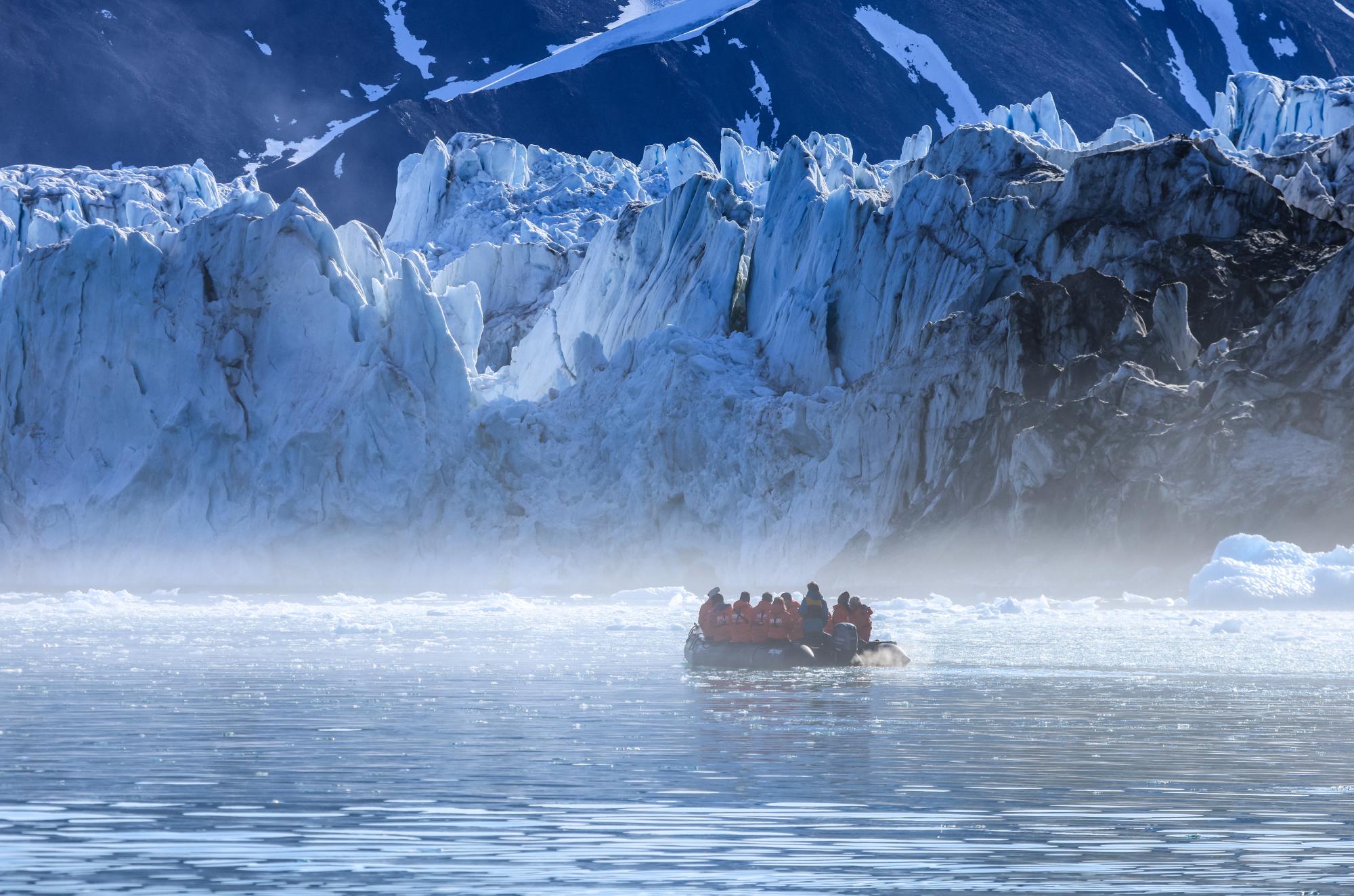
On a ship carrying 200 passengers, you see Spitsbergen from a distance. On an expedition ship with 12, 20, or 30 guests, you land right in front of it. This isn’t a marketing promise, but a matter of physics: Small ships can get closer to glaciers, anchor in bays that are off-limits to large ships, and turn around within minutes if a polar bear appears on the shore.
Many coastal regions are accessible only by small boats or Zodiacs—secluded coves that remain inaccessible to larger vessels. Itineraries and daily schedules are determined by what the Arctic has to offer—not by what’s in the brochure. This makes every trip unique, and that’s exactly what makes them indispensable for anyone seeking true wilderness rather than a structured itinerary.
Inventia’s fleet ranges from the MS Quest, which accommodates 22 passengers, to the MS Stockholm and the Aqua Lares, an ice-class superyacht designed for expeditions in Arctic waters. All expedition teams have international experience, and the language on board is usually English—that’s simply the nature of these trips. German-language consultation, selecting the right route, and preparing you for what to expect: inventia takes care of all that before departure.
Svalbard in the Summer: Midnight Sun and Wildlife
Spitsbergen is particularly easy to explore from spring through late summer. The midnight sun defines the travel season from late April through late August—in midsummer, the sun shines 24 hours a day. While this may sound abstract at first, it fundamentally changes the travel experience: Zodiac excursions at midnight, glacier trekking without time constraints, and wildlife viewing in the golden light at 2 a.m.
The wildlife is at its peak during this season. Walruses bask on the ice floes, puffins and kittiwakes nest in large colonies on the cliffs, and humpback whales migrate through the fjords. Reindeer and arctic foxes roam the tundra, and seals are hardly disturbed by passing ships. Those who visit Svalbard in the summer experience the Arctic summer in all its intensity—short, intense, and unforgettable.
Polar bears on Spitsbergen
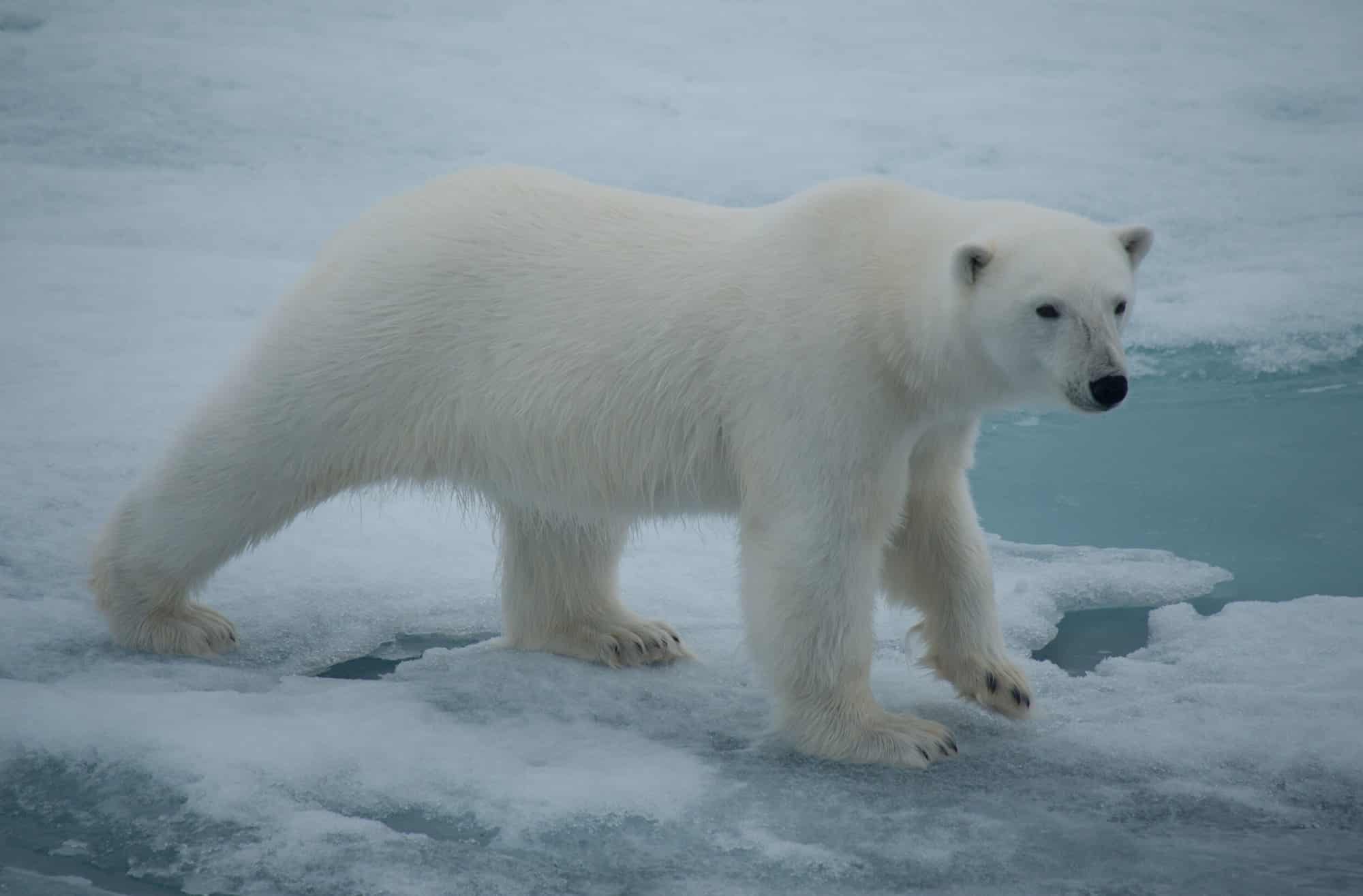
Svalbard is one of the world’s most famous regions for observing polar bears in the wild. The Barents Sea region surrounding the archipelago is home to an estimated 3,000 polar bears—one of the largest populations in the Arctic. In summer, they can often be seen along the coast or on drift ice; in spring, they are particularly easy to spot on the pack ice in the northeast. An expedition ship with an experienced guide is one of the safest and most responsible ways to encounter them. In Svalbard, there are legal minimum distances to polar bears: 500 meters until June 30, and 300 meters starting July 1—landings and observations take place exclusively under the supervision of experienced guides.
The best time of year to see polar bears on Spitsbergen depends on what you want to experience: polar bears in the pack ice under the low winter sun—spring. Polar bears on the coast with the midnight sun in the background—midsummer. Both are possible on Spitsbergen, and both are extraordinary.
Svalbard in the Spring: Pack Ice and Winter Landscape
In the spring, Svalbard shows its most Arctic side. Sea ice around the archipelago usually reaches its annual peak in March; many fjords are still frozen over, and the landscape seems quieter and rougher than in the summer.
Some of Inventia’s trips focus specifically on this phase of the season: snow-covered landscapes, snowshoe hikes across frozen bays, and expeditions along the pack ice. The chances of spotting polar bears are also considered particularly good in the spring, as many of the animals are still on the sea ice.
Excursions and Activities on Spitsbergen
Svalbard isn't a destination for sightseeing, but for getting involved. What that means depends on the trip:
- Kayak expeditions among drift ice and glacier fronts—gliding silently through landscapes undisturbed by the sound of engines
- Snowshoe hikes across the Arctic tundra and glaciers, sometimes extending to the edge of the pack ice
- Land-based wildlife viewing – guided shore excursions to walrus colonies, bird cliffs, and glacier fronts, accompanied by experienced expedition biologists
- Historical sites – abandoned whaling stations, Russian mining settlements, and polar research stations – tell the story of a bygone era in the Arctic
- Photography – the lighting conditions on Spitsbergen are exceptional in every season; several trips offer on-board photography guidance
The activities available on a particular trip depend on the ship, the route, and the season. Not every expedition offers everything—and that’s just the way it should be. A good Svalbard vacation has a specific focus.
Cruise to Spitsbergen: Expedition ship or cruise ship?
Anyone looking for a traditional cruise will find both options in Spitsbergen today: large ships with fixed itineraries as well as small expedition vessels designed specifically for voyages in Arctic waters. The difference is immediately apparent: small ships allow for flexible itineraries, Zodiac landings, and voyages to regions that are inaccessible to large ships.
inventia deliberately focuses on trips with a true expedition character—featuring small ships and experienced teams.
Svalbard and Northeast Greenland—or both?
Those who travel far often want to explore more than one region. Several itineraries in the inventia lineup connect Spitsbergen with Northeast Greenland and Iceland—a trio of Arctic islands, Greenlandic ice fjords, and Icelandic volcanic landscapes. The 14-day expedition “Svalbard – Northeast Greenland – Iceland” is one of the most geographically diverse Arctic routes: three polar regions, one route, one ship.
Northeastern Greenland is one of the most remote regions on Earth. Scoresby Sund—widely considered the world’s largest fjord system, covering approximately 38,000 km²—is accessible only by small expedition vessels and is occasionally closed due to ice conditions. Anyone wishing to go there needs flexibility and a suitable vessel.
Getting There
Many of our Svalbard trips begin and end in Longyearbyen, the archipelago’s main town, which has its own airport (LYR). There are no direct flights from Germany—the usual route is via Oslo with a connecting flight to Longyearbyen; the flight time from Oslo is about 3 hours. Some travelers plan to travel via Tromsø, from where flights to Longyearbyen also depart—and some expeditions begin or end there as well.
The total travel time from Germany to Longyearbyen is between 6 and 10 hours, depending on the connection. We recommend spending a day in Longyearbyen before the expedition begins—both as a buffer in case of flight delays and because the town itself is worth a visit.
Frequently Asked Questions About Our Spitsbergen Trips
How much does a vacation to Svalbard cost?
The prices of our expeditions vary significantly depending on the ship, duration, route, and season. What makes the difference: Small expedition yachts with few guests are more expensive than medium-sized expedition ships. Longer routes—such as a combination of Spitsbergen, Northeast Greenland, and Iceland—cost more than a compact short expedition. Trips in spring or fall have different pricing structures than those in midsummer. You can receive a detailed estimate for your desired trip upon request—inventia will advise you personally and find the trip that fits your budget and expectations.
When is the best time to visit?
Summer for the midnight sun and wildlife, spring for snow and pack ice adventures. Depending on the season, polar bears can be observed in very different environments on Spitsbergen—on the pack ice in the spring and along the coastal regions in the summer. There is no such thing as a bad season—just different ways to experience Svalbard.
How long is the flight from Germany?
The standard route goes via Oslo to Longyearbyen. From major German cities, the total travel time, including a layover, is between 6 and 10 hours—depending on the connection and layover time in Oslo. The flight from Oslo to Longyearbyen takes about 3 hours. There are no direct flights from Germany to Spitsbergen.
What is the best way to travel to Spitsbergen?
Almost all travelers arrive in Longyearbyen by plane. There is no regular ferry service from Norway to Svalbard. Those who wish can plan their trip via Tromsø and include a day’s stay there. Some expeditions also begin or end in Tromsø—this simplifies the journey and allows for a gentler introduction to the North.
Is Spitsbergen dangerous?
Svalbard is not a dangerous destination—but it is one that requires respect and preparation. Outside the settlements, special safety rules apply to protect against polar bears. For this reason, many travelers venture out only with an armed guide or the appropriate polar bear safety equipment. On our guided expedition tours, this protection is, of course, provided: landings are conducted with experienced guides who are familiar with the region’s safety protocols. For travelers on an expedition ship, Svalbard is thus one of the safest ways to experience the Arctic in an organized and guided manner.
Do you have any questions about our Spitsbergen trips?
just call