

Three Polar Bears for Breakfast: Here's How My Svalbard Expedition Went
There are some travel destinations you carry with you for years. For me, Svalbard was exactly that kind of place. The rugged beauty of the Arctic, massive glaciers, polar bears in the wild, the endless expanse of ice—all of that had long been at the top of my bucket list. In early June, that dream became a reality.
A little about me: My name is Tanita, and I’ve been working at Inventia as a Data and Content Manager for a year. I keep our travel pages up to date, adjust prices, and add new trips to our portfolio. That’s why I was especially excited to experience this expedition trip firsthand. The insights I gained on-site help me understand our trips better and present them to you even more authentically in the future.
Experience this journey for yourself: A Svalbard adventure aboard the MS Quest
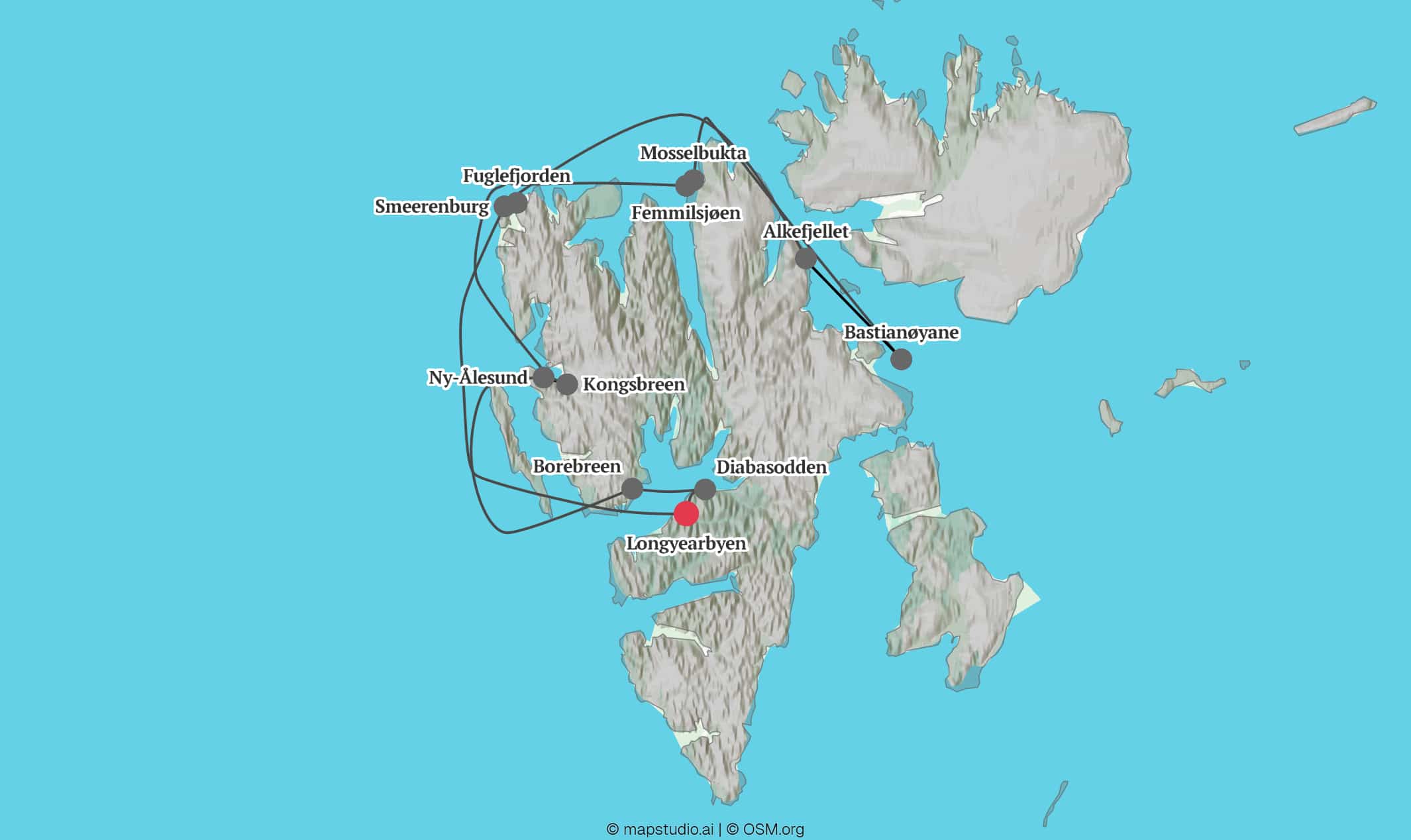
Route Map of the Svalbard Expedition | © inventia / Mapstudio
Traveling to Svalbard
The trip began on a Wednesday afternoon with a flight from Munich to Oslo. After spending the night at the airport hotel—a choice I highly recommend to everyone—we continued on to Longyearbyen, the world’s northernmost city, the next morning.
Even during the short bus ride to “The Vault” hotel, I was impressed by the first glimpses of the rugged mountains and the Arctic Ocean. After a brief break, I was drawn right out to explore Longyearbyen on my own.
On my very first walk, I came across Svalbard reindeer and numerous eider ducks. My visit to the North Pole Expedition Museum also left a lasting impression on me: It shows how many expeditions set out for the North Pole and what these people experienced.
Friday morning was also free time. Together with a fellow traveler I had met at breakfast, I walked up to the church in Longyearbyen. From there, you can look out over the town, the fjord, and the harbor, where our expedition ship, the MS Quest, was already waiting for us.
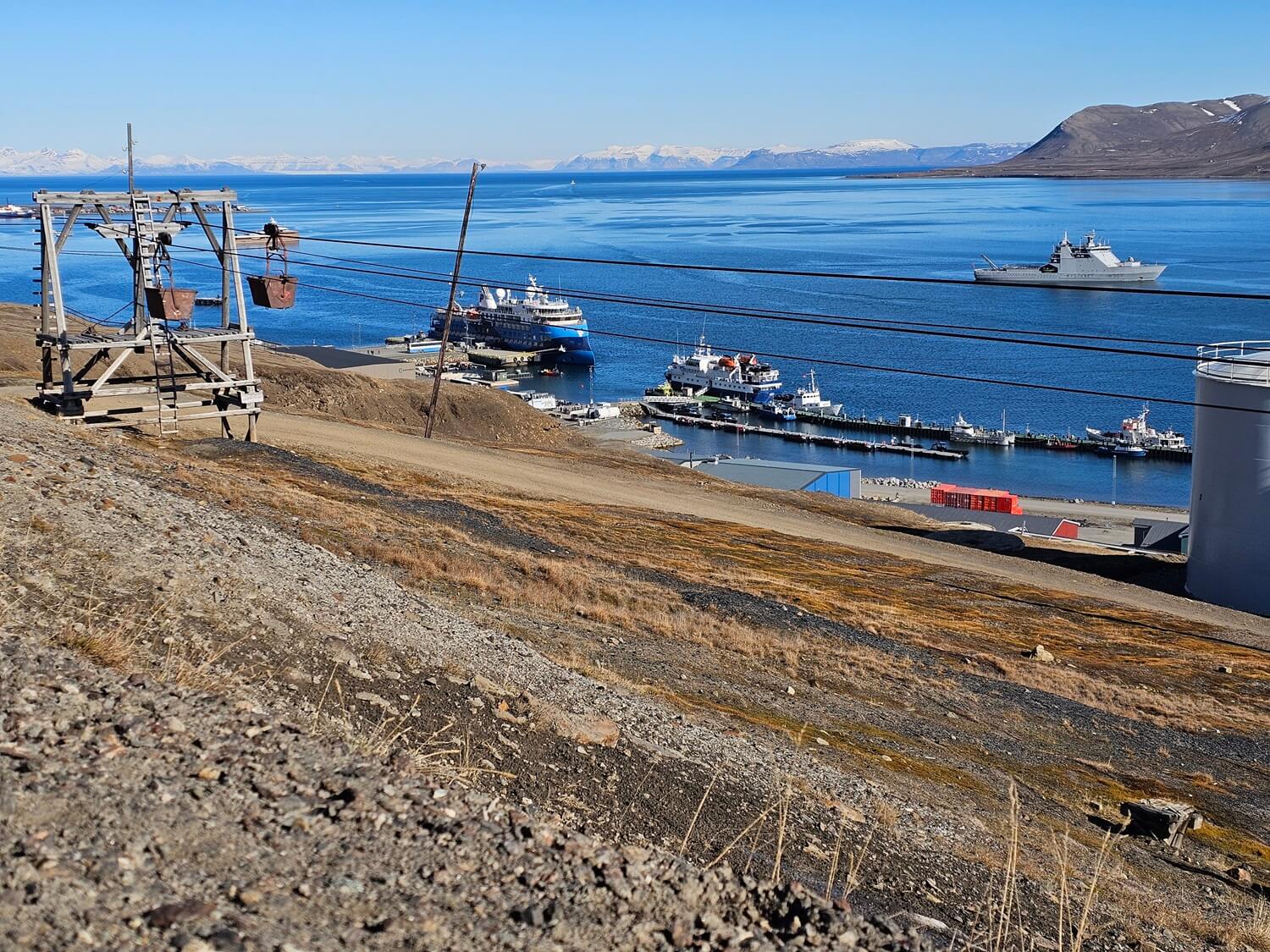
Longyearbyen with the MS Quest in the harbor | © Tanita
After having lunch with the tour group at the “Svalbar” restaurant, we visited the Svalbard Museum before finally boarding the ship. Safety briefing, introduction to the guides and crew, our first dinner together—then our journey to the Arctic began.
On board the MS Quest
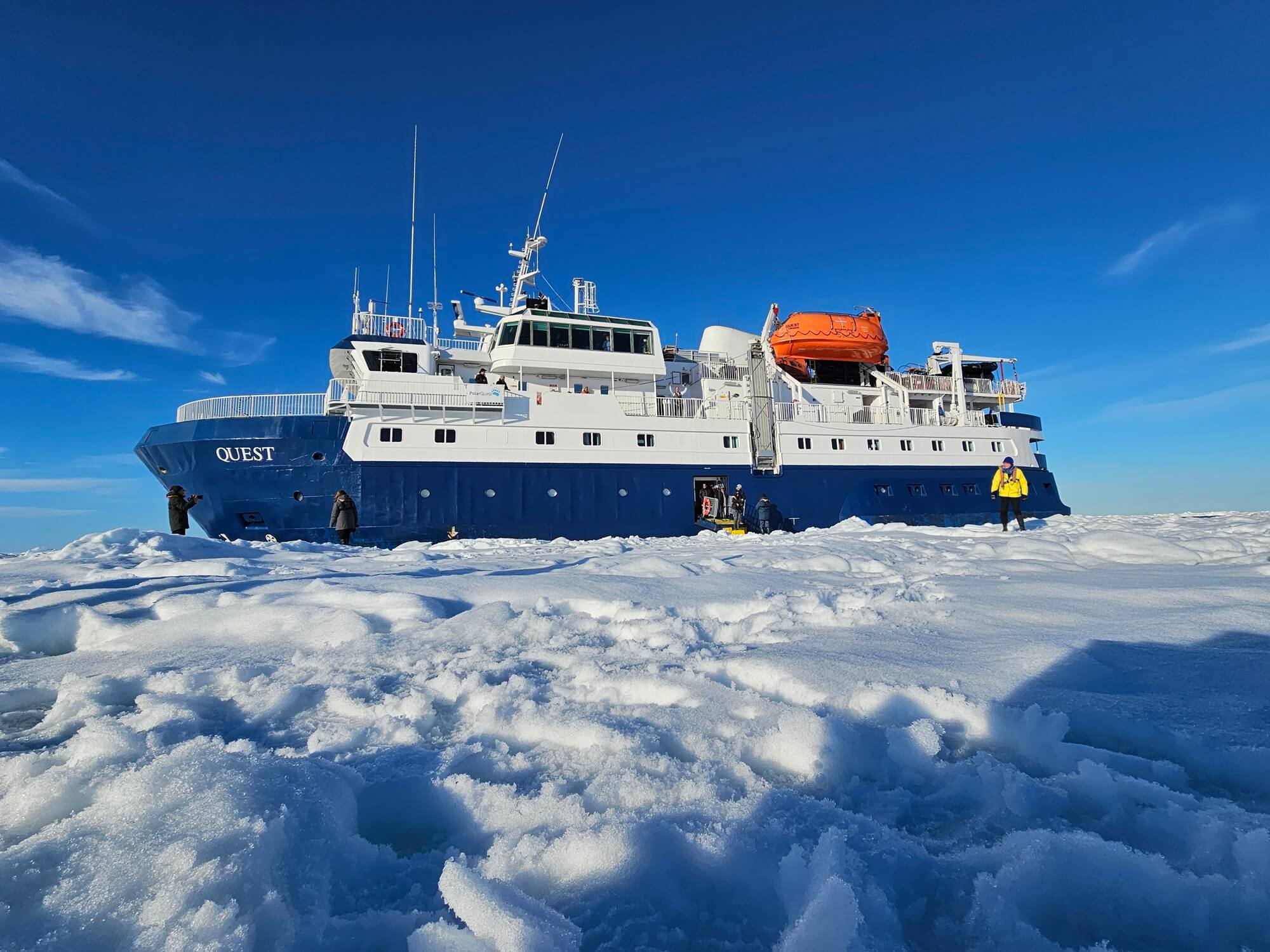
The MS Quest became our home for the next few days: an expedition ship built in 1992 with room for up to 50 passengers. Its compact size allows it to navigate remote fjords and access landing sites that larger ships are often unable to reach in Spitsbergen due to the new regulations.
It was precisely this size that made the trip so enjoyable. With only 50 guests on board, the atmosphere was relaxed and intimate. Everything ran smoothly, without long wait times. This left more time for what really matters on an expedition: nature, wildlife, and the silence of the Arctic.
The open bridge was one of the highlights for me. After a brief discussion with the crew, we were allowed to watch the captain and his crew navigate through the Arctic waters.
Every day on board followed a set routine, yet still left room for spontaneous experiences. After breakfast, depending on the weather and ice conditions, we would set out on a Zodiac trip or go ashore. Lunch was usually followed by a second activity. So every day brought new experiences.
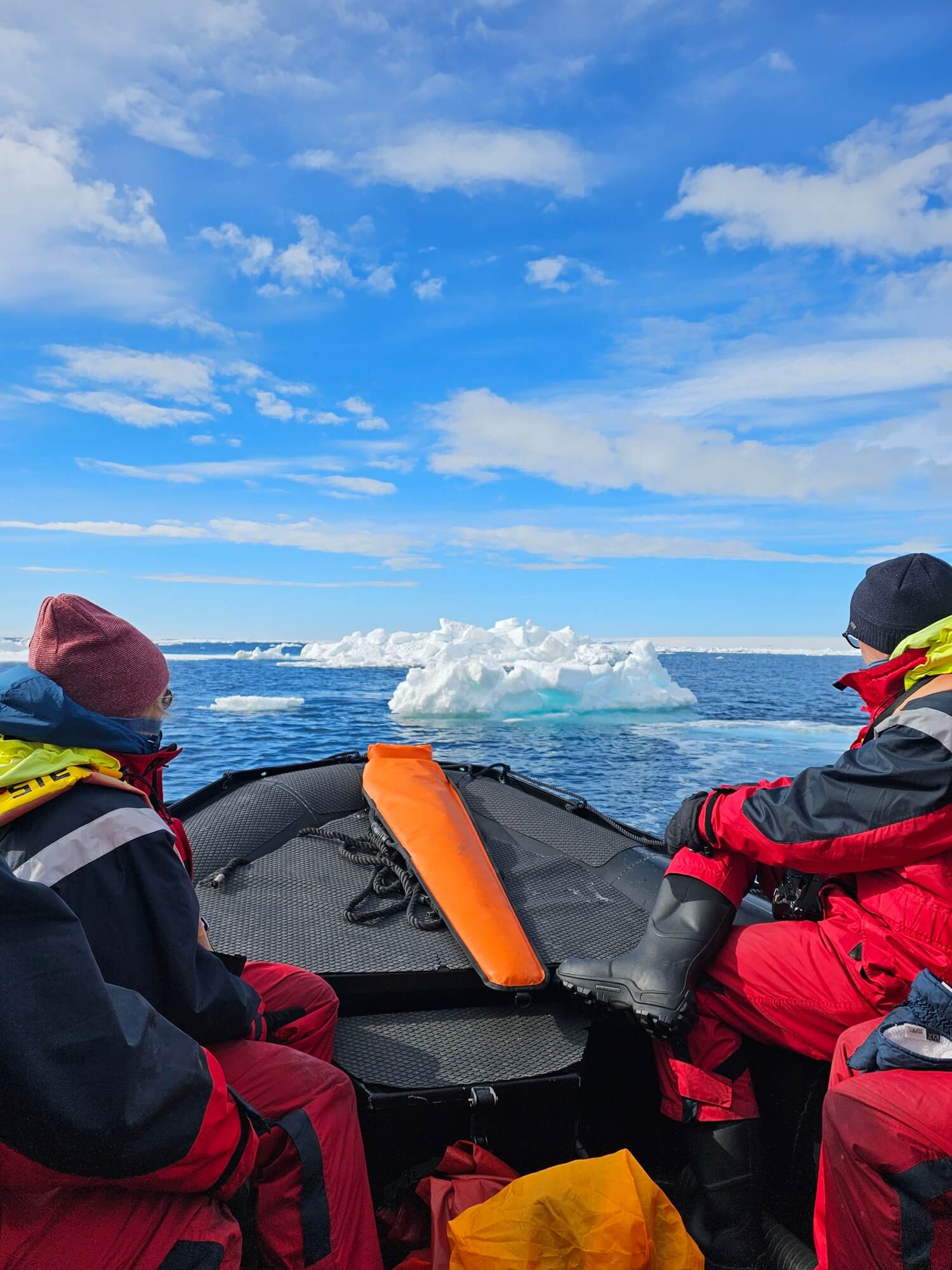
Zodiac ride through the pack ice | © Tanita
Every Zodiac trip followed a set routine: put on warm clothes, slip into the survival suit, and fasten the life jacket. Before leaving the MS Quest and upon our return, we each signed in or out on a list. That way, the crew always knew who was on board, in a Zodiac, or ashore. From Deck 2, we boarded the Zodiacs one by one with the help of the safety team. Each of the five inflatable boats could hold up to ten guests and one guide. Since the expedition was bilingual—in German and English—the boats were divided by language.
Every day before dinner, we held a recap session. The expedition team reviewed the day's events and presented the plan for the next day, always allowing for the necessary flexibility. The weather, ice conditions, and wildlife sightings determined the schedule.
Between excursions, the guides gave presentations on the wildlife and nature of Spitsbergen. Seals, walruses, pack ice, polar bears, climate change—all of this turned the expedition into an educational journey as well.
Five guides accompanied us: expedition leader Elke, as well as Johnny, Debbie, Carina, and Alex. With their expertise, enthusiasm, and connection to nature, they made every encounter with Arctic wildlife something special.
The Perfect Start—Three Polar Bears for Breakfast
The first night at sea was anything but peaceful. That made it all the more wonderful to be woken up by bright sunshine the next morning.
While we were still sitting at breakfast, an announcement suddenly came over the intercom—the kind every expedition traveler wants to hear: “We’ve spotted a polar bear!”
Within a few minutes, breakfast was forgotten. Bundled up, with cameras and binoculars in hand, everyone gathered on deck.
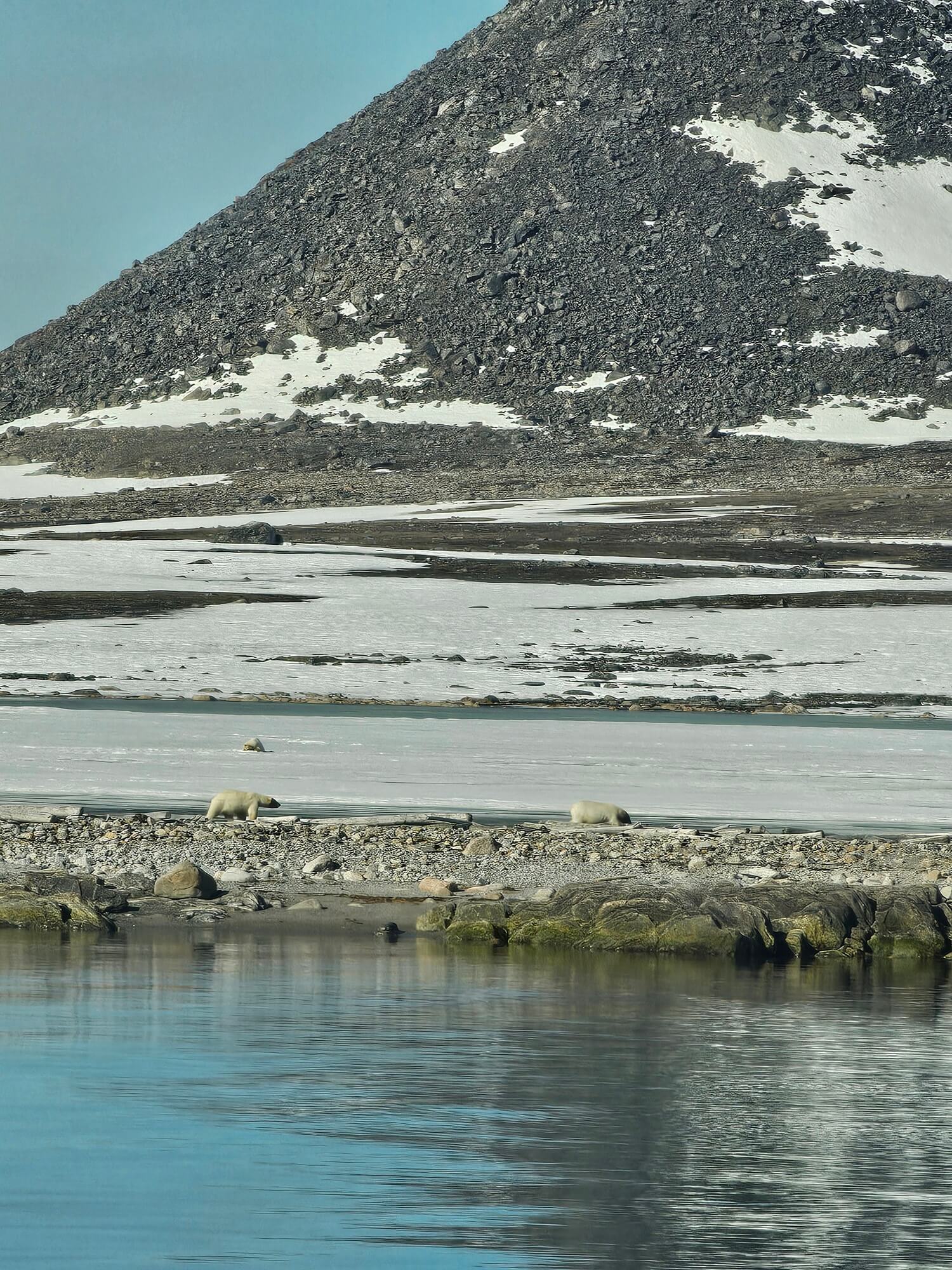
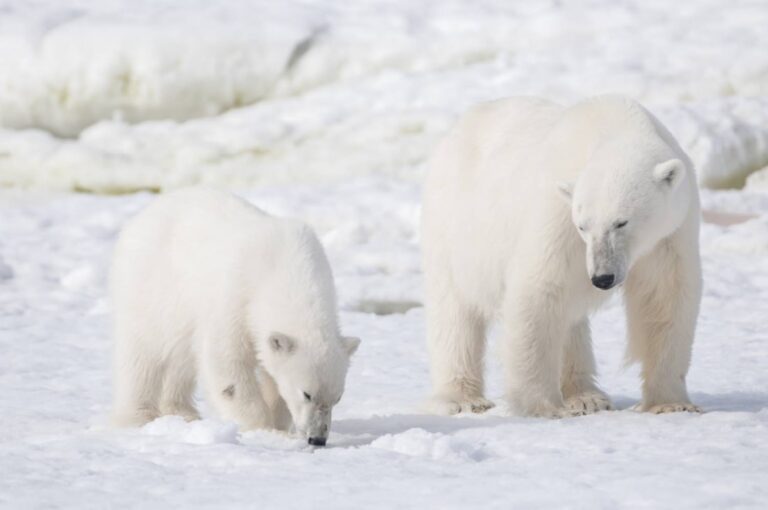
Polar bears near Smeerenburg | © Tanita
What began with a single polar bear quickly turned into an extraordinary sighting of three animals. For quite some time, we were able to observe the polar bears completely undisturbed in their natural habitat. Even today, I find it hard to put this moment into words.
On a Zodiac boat among icebergs and glaciers
In the afternoon, we reached Fuglefjord. Our first Zodiac ride was on the agenda there.
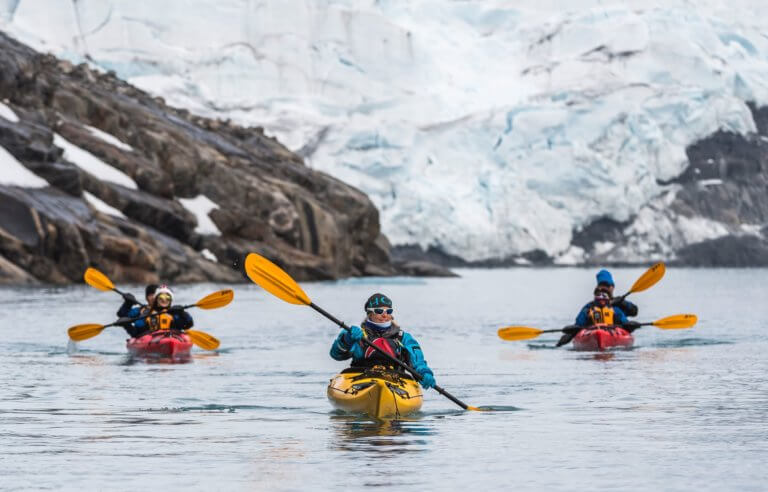
Wearing survival suits and life jackets, we set out among the icebergs and drifting ice floes. For safety reasons, we could only get within about 500 meters of the glacier, yet it seemed close enough to touch—a fascinating optical illusion.
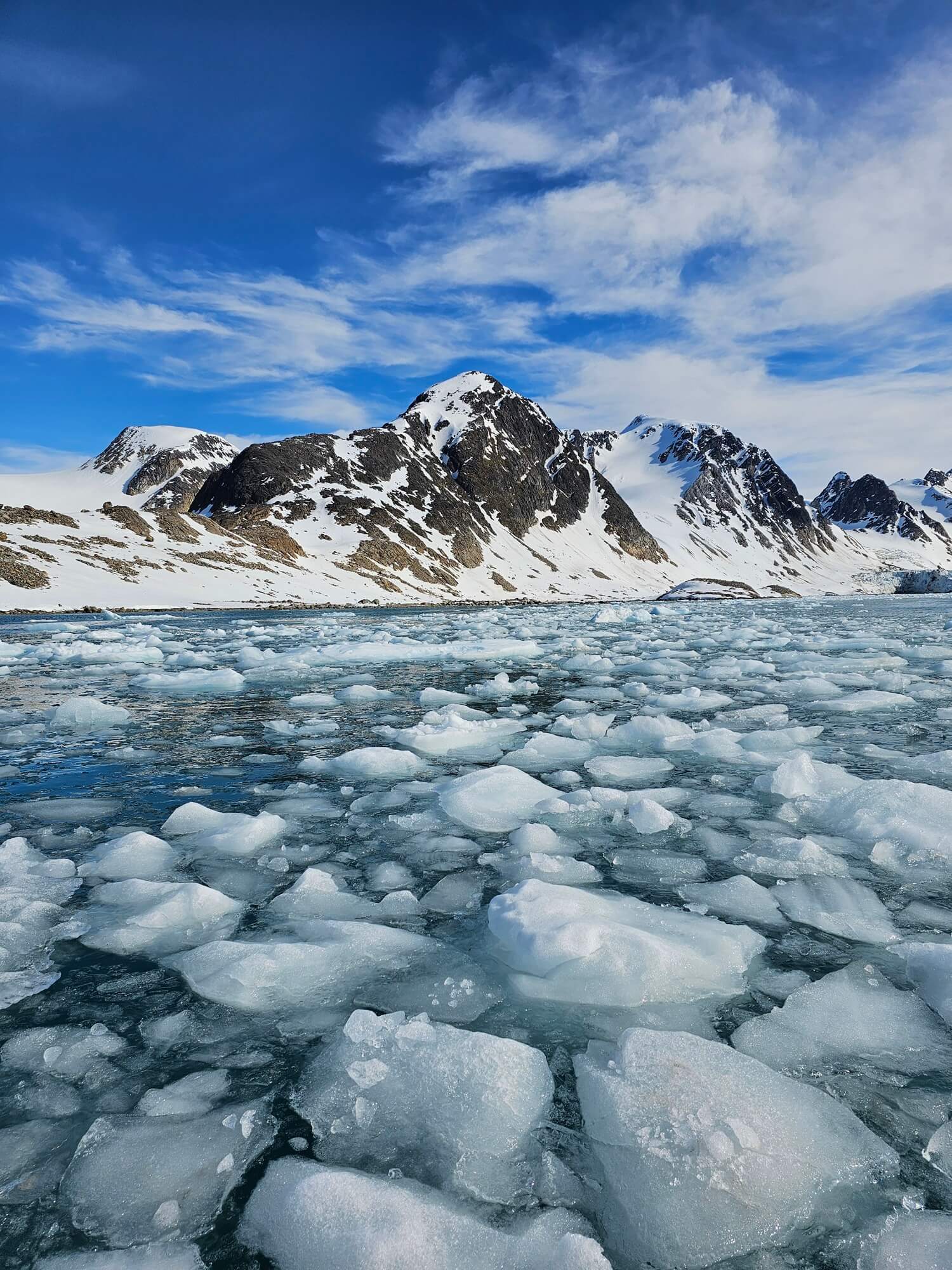
Drifting Ice in Fuglefjord | © Tanita
Gliding through the icebergs in bright sunshine: That is one of the most impressive experiences of this trip.
Bird cliffs, walruses, and a walk on the sea ice
The next morning, the Arctic showed its rougher side. Strong winds and thick fog accompanied our Zodiac ride along Alkefjellet, a massive bird cliff where some 60,000 pairs of thick-billed guillemots nest.
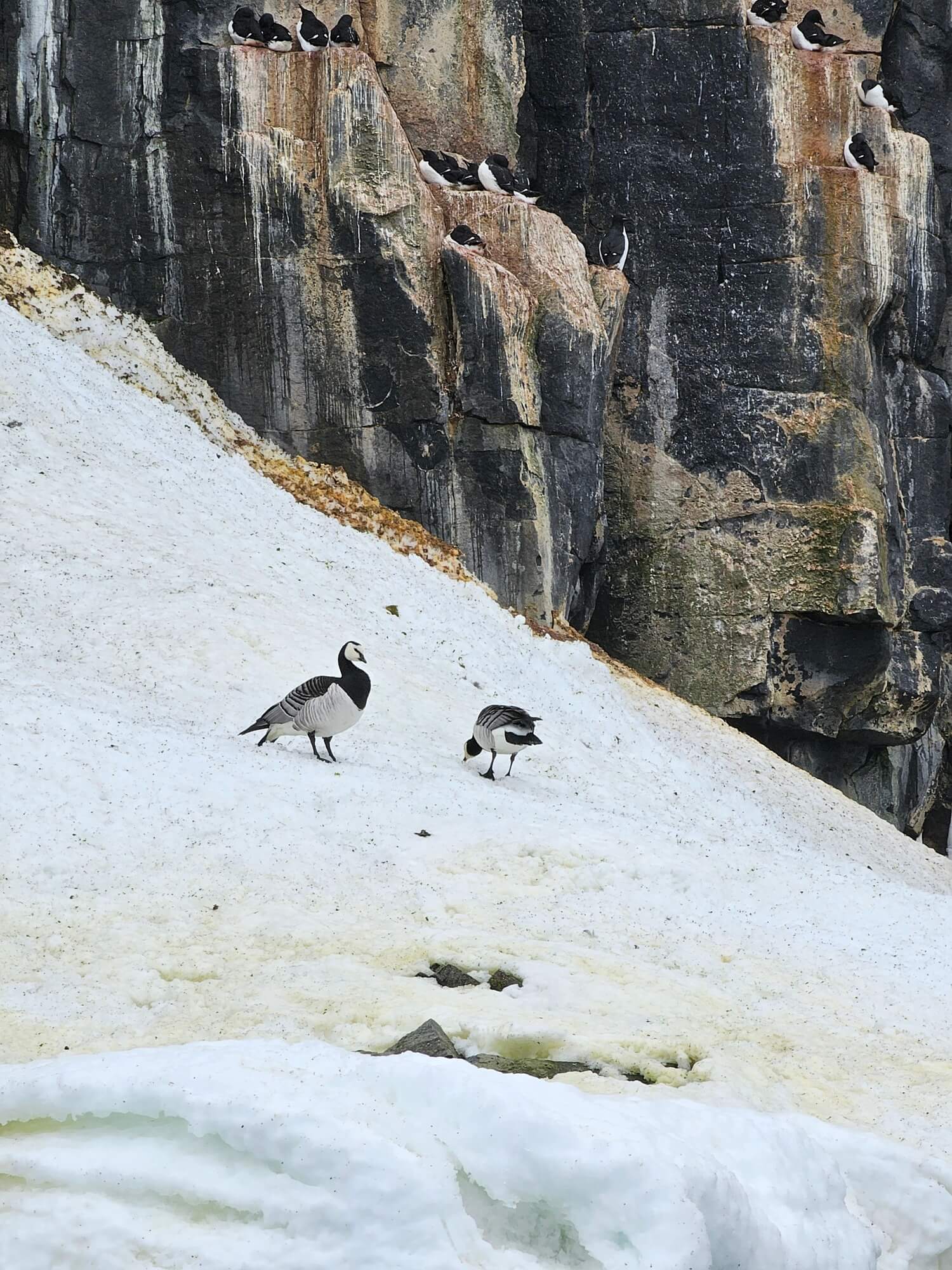
Alkefjellet Bird Cliffs with Ringed Geese | © Tanita
Among the rocks, we also spotted two arctic foxes in the middle of molting—changing from their white winter coats to their brown summer coats.
In the afternoon, our journey took us further into the Hinlopen Strait and into the pack ice. Time and again, we spotted walruses resting on ice floes. As soon as the guides or the crew spotted the animals, the captain carefully maneuvered the ship closer without disturbing them.
That evening, something special was waiting for us. After the MS Quest had safely moored in the pack ice and the guides had checked its stability, we were allowed to step out onto the pack ice ourselves, equipped with life jackets and rubber boots.
Standing on the ice in the middle of the Arctic Ocean, surrounded by complete silence: That is undoubtedly one of the most unforgettable moments of the entire trip.
Even More Encounters with Wildlife
The following day also brought more highlights. Once again, we spotted a polar bear—this time a little farther away—as it wandered leisurely across the ice. In the afternoon, another Zodiac ride took us through ice landscapes of all shapes and shades of blue.
To top it all off, there was a walrus lying relaxed on an ice floe, letting us observe it up close.
Anyone who wanted to could then take the plunge into the ice-cold water during the traditional Polar Plunge. I decided to leave that adventure to the brave ones and cheered them on from the ship along with the rest of the guests.
History, Nature, and Working Together
At Mosselbukta, a beautiful landscape and a piece of polar history awaited us. It was from here that the Swedish polar explorer Adolf Erik Nordenskiöld set out in 1872 to reach the North Pole with reindeer. The expedition failed.
During our shore leave, it became clear to us: Even the most remote regions of the world are not spared from environmental pollution. Together, we collected the trash that ocean currents had washed up onto the beach. Amid the driftwood and rocks, we found buoys, fishing gear, packaging materials, plastic canisters, and even doormats—objects that had traveled thousands of kilometers before washing up on this remote coast.
A thought-provoking moment: Even in one of the Earth’s last great wildernesses, humans leave their mark. Since we couldn’t take the trash back on board, we set up a collection point on the beach. A supply ship will pick up the trash later and dispose of it.
Later, a hike in Femmelsjön took us through a glacial landscape with small gorges, snow-covered slopes, and curious reindeer that came surprisingly close to us.
Beluga whales, bearded seals, and the world's northernmost settlement
Another highlight awaited us at the Kongsbreen Glacier. During our Zodiac ride, we saw pieces of ice breaking off, unusually shaped ice formations, as well as beluga whales and bearded seals—a natural spectacle I will never forget.
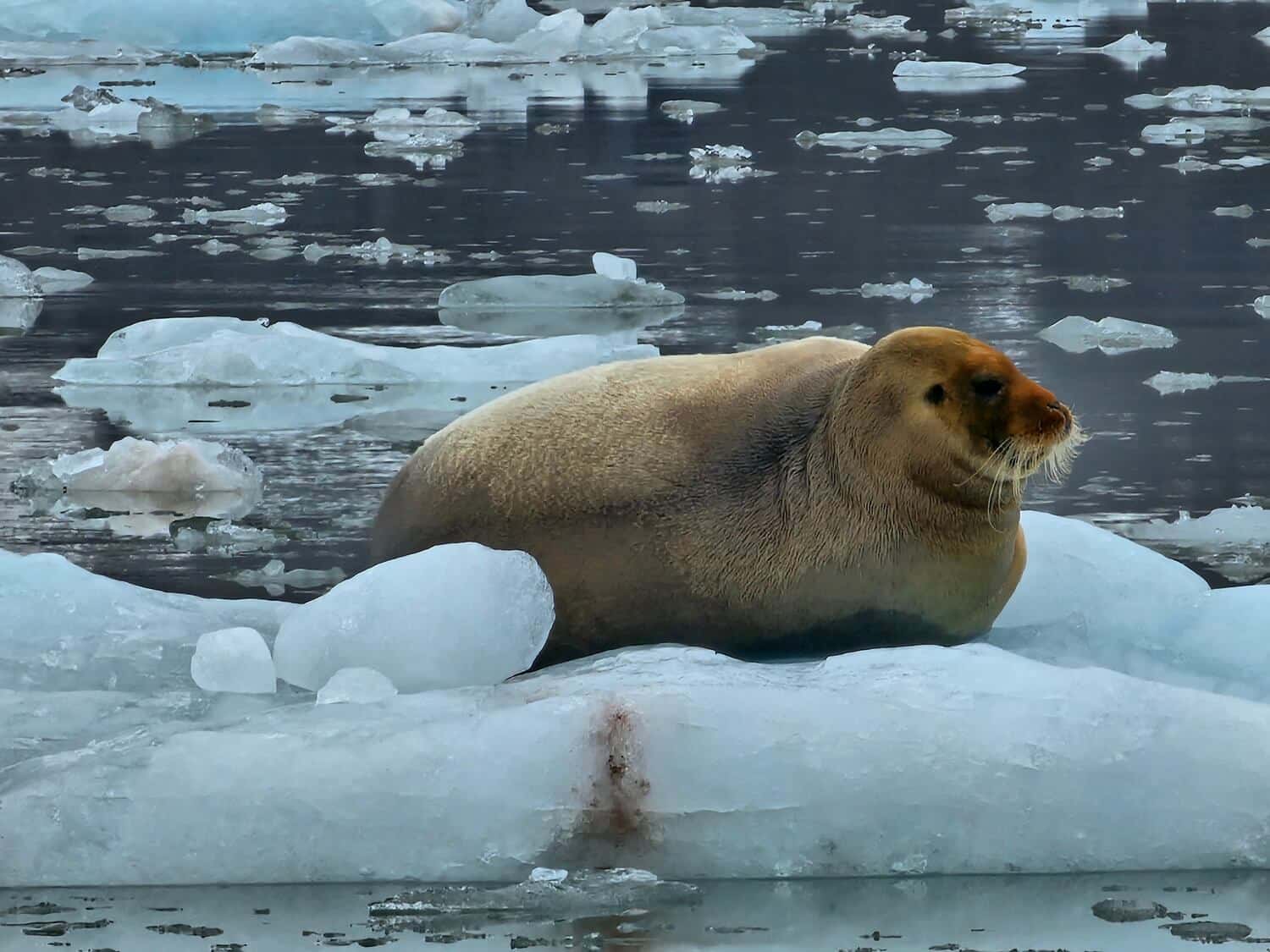
Bearded Seal at Kongsbreen | © Tanita
In the afternoon, we visited Ny-Ålesund, one of the northernmost permanently inhabited settlements in the world and now a major international research center.
Our guides told us a lot about the history of the place. I was particularly impressed by the historic anchor mast, from which Roald Amundsen, Lincoln Ellsworth, and Umberto Nobile set out for the North Pole in 1926 aboard the airship Norge and reached their destination.
We wrapped up the evening with a Polar BBQ on deck. Despite the cold temperatures, good food, music, and the setting made for a delightful end to the day.
Walruses as a Farewell
On the last day of the expedition, Svalbard once again showed off its full diversity. In Borebukta, we first approached a small island off the Borebreen Glacier. We then continued on to a headland with a walrus colony. Calmly and with great respect, we observed the impressive animals up close.
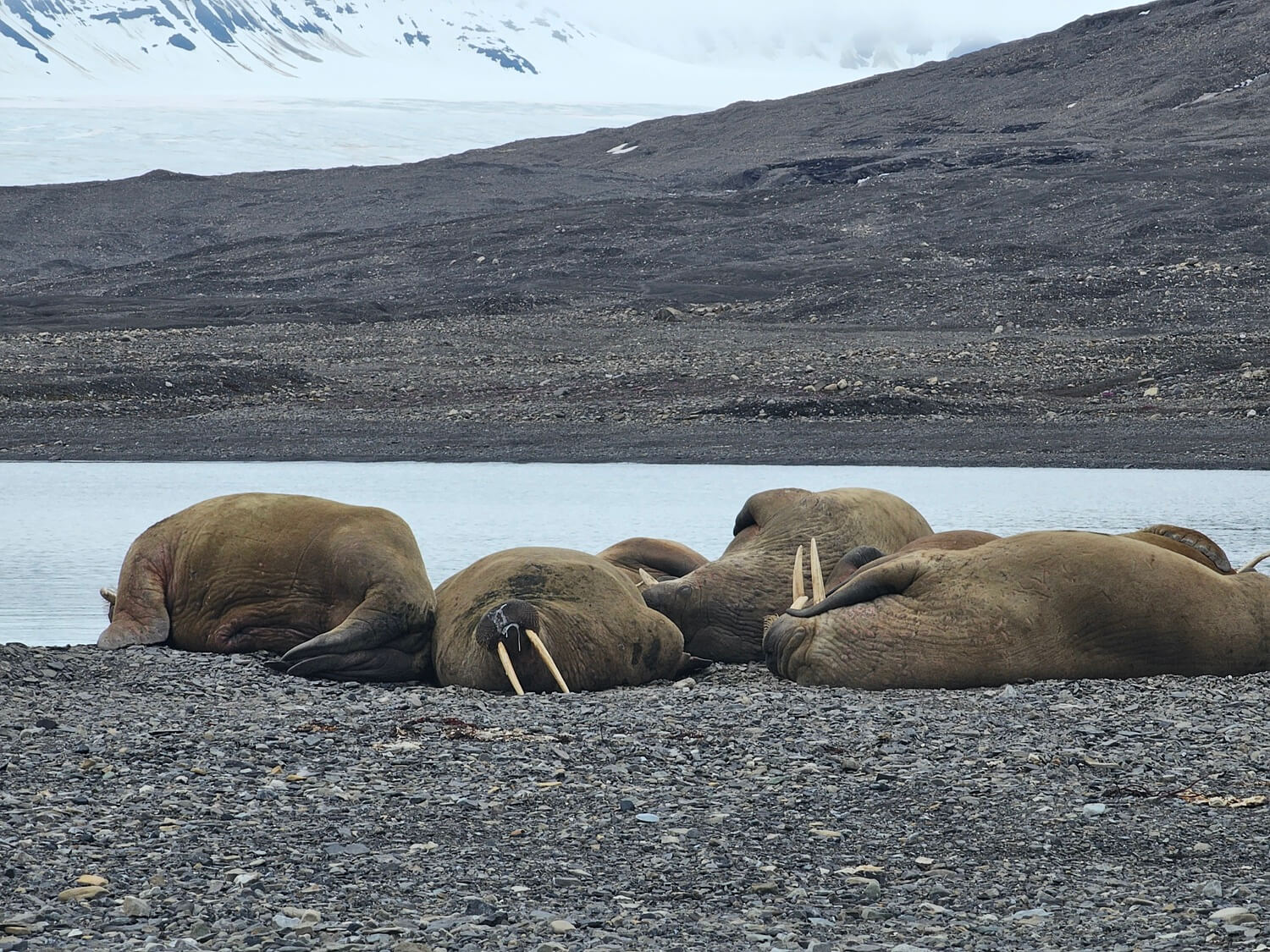
Walrus Colony in Borebukta | © Tanita
To wrap up our trip, we went for a hike at Diabasodden. The climb rewarded us with a view of puffins and little auks along the cliffs.
That evening, everyone gathered one last time for dinner together. A slideshow featuring the best photos and videos from the past few days brought those special moments back to life.
Svalbard: An Experience for All the Senses
Svalbard is more than just a travel destination. You experience it with all your senses.
Encounters with polar bears, walruses, arctic foxes, and whales; voyages through the pack ice; the majestic glaciers; the silence of the Arctic—all of this makes this expedition a journey that leaves a lasting impression.
Anyone who loves nature and is willing to embrace the unpredictability of the Arctic will experience unforgettable moments on Spitsbergen. For me, this trip was the fulfillment of a long-cherished dream, and it certainly won’t be my last visit to the far north.
It was also a valuable experience for my work at Inventia. Having experienced the trip myself gives me a much better understanding today of our expeditions and what makes them so special. This knowledge and the many personal impressions I gained motivate me in my daily work. I now know from personal experience what I’m writing about, and I’m familiar with the experiences that await our guests.
What really touches me about this is that at Inventia, we as a team get the chance not only to sell these trips but to experience them ourselves. That’s anything but a given. Sending me to the other side of the world so that I can then write about it with genuine knowledge and enthusiasm—that shows me just how seriously Inventia takes its team’s work. I’m grateful for this opportunity and for a team that fully understands just how important such experiences are for our work.
Want to go on your own Svalbard expedition?
You can book this very trip with us: the Svalbard adventure aboard the MS Quest. 9 days, including 7 nights aboard the expedition ship, with daily Zodiac excursions and shore excursions between Prince Karl’s Forland, Virgohamna, and the great fjords of Svalbard. You’ll travel during the midnight sun, experience Arctic wildlife up close, and be accompanied by an experienced, bilingual expedition team. It’s exactly the itinerary I’ve described here.
Travel finder: All Antarctic trips and offers at a glance
Browse through the calendar and find your perfect Antarctic trip

Stephanie Gräf
Owner & Founder
Since 2002, I have been personally advising clients on unique expeditions and private trips, small-ship cruises, and journeys to remote regions of the world.
We'd be happy to discuss your trip with you in person.
Why not contact me right now at Phone: +49 201 85890960 or email welcome@inventia.de.
Or schedule a free, no-obligation one-on-one phone call (also via WhatsApp or Wi-Fi), a Teams or Zoom meeting here—even in the evenings or on weekends:

Are you interested in Antarctica but don't know where to start?
Our FREE Antarctic Mini-Guide sheds light on the ice.
Newsletter: Travel beyond the ordinary
Stay in touch with us and receive our latest travel ideas on a regular basis.