Literature on Antarctica
Note: Some links on our site lead to external sites such as Amazon. If you make a purchase via these links, we receive a small commission without any change to the price for you. The provider is responsible for the sale, so we accept no liability for external products or transactions. If you have any questions, please contact the provider directly.
Gift for you
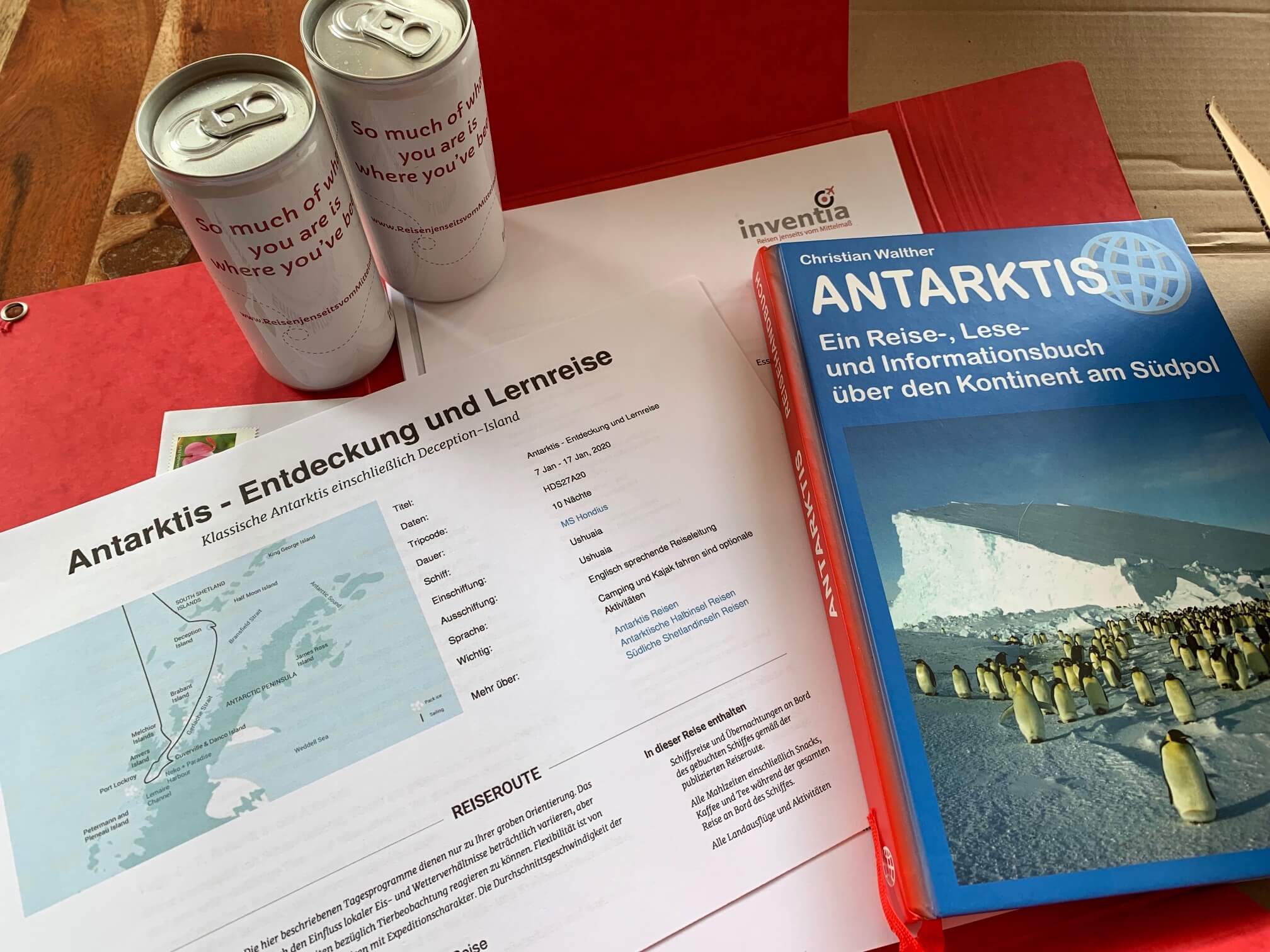
 You will receive Christian Walther's travel guide as a gift after booking your Antarctic trip with inventia. So that you can prepare for your trip in the best possible way.
This travel guide is aimed at anyone who wants to learn more about the continent at the South Pole, including those who are planning a trip to Antarctica. The first part of the book contains comprehensive information about Antarctica: its history of discovery, geosciences, climate, ozone issues, ice, research, tourism, flora, fauna, and much more are illustrated with pictures, tables, and drawings. Organized cruises are a realistic way to travel to this remote and extreme continent. In the second part of the book, the author describes over 60 places in Antarctica, on the South Shetland Islands, South Orkney Islands, Falkland Islands, South Georgia, and South America, which are popular stops for cruise ships due to their unique landscapes or because they lie on the route. The third part provides readers with travel information from A to Z on all practical questions relating to the preparation and execution of an Antarctic voyage and concludes with annotated literature recommendations, making this a richly informative volume featuring a wealth of color illustrations, excellent maps, and vivid sketches.
My personal recommendation


I – Photo travelogue and guide for cruise passengers The Antarctic mainland was first discovered almost 200 years ago by English merchant William Smith – more by accident than design. Since then, the region has fascinated researchers from all nations, as well as tourists, who are increasingly traveling to Antarctica. The Falkland Islands, South Georgia, the South Orkney Islands, the South Shetland Islands, and the Antarctic Peninsula are gems of remoteness which, when the pack ice recedes in summer, reveal an incredible diversity of species for around three months.
II – Information about landing sites This book describes over 70 landing sites, telling you what to expect there, what animals you can see, and how to find your way around. This will help you familiarize yourself with this new world and the special features of the islands and numerous bays. Detailed descriptions of the most attractive and frequently visited regions, detailed maps, and extensive photographic material will transport you to the world between the Falkland Islands, South Georgia, and the Antarctic Peninsula. Get in the mood for the exotic world of glaciers and ice towers and the animals that live there while you are still at home.


Updated throughout, the 6th edition of Bradts Antarctica: a Guide to Wildlife is the most practical guide to the flora and fauna available for those heading south.
This book is only available in English.


This is a fully updated new edition of the award-winning Complete Guide to Antarctic Wildlife, the most comprehensive and authoritative guide to the birds and marine mammals of the vast and beautiful Antarctic region. Covering Antarctica, the southern ocean, and the subantarctic islands, this unique guide illustrates all of the region’s breeding birds and mammals with some 920 color photographs and illustrations, including 300 new photographs. It features 128 color distribution maps and up-to-date species accounts that expertly detail abundance, seasonal status, and conservation prospects.
This book is only available in English.

The ultimate coffee table book! Beautiful images and epic adventure stories offer a rare look at uncharted Antarctica.
Experience true untouched beauty through nearly 200 photographs of rarely-visited locations in Antarctica. The photographer’s infectious spirit is on full display as she tells the story of how an unexpected itinerary change turned into the adventure of a lifetime. These rare photos show regions that are often inaccessible for a decade at a time due to ice.
This photography book also offers a glimpse of stunning landscapes from South America’s beautiful Patagonia region in Chile and Argentina. The enchanting full-color images interspersed with lively adventure stories will inspire every travel lover to get out and explore! This book is perfect for travelers, art aficionados, and home decor enthusiasts. Need a gift for someone who has everything?Hidden Antarcticais the perfect gift book!
This book is only available in English.


Stephanie Gräf
Owner & Founder
Since 2002, I have been personally advising clients on unique expeditions and private trips, small-ship cruises, and journeys to remote regions of the world.
We'd be happy to discuss your trip with you in person.
Why not contact me right now at Phone: +49 201 85890960 or email welcome@inventia.de.
Or schedule a free, no-obligation one-on-one phone call (also via WhatsApp or Wi-Fi), a Teams or Zoom meeting here—even in the evenings or on weekends:

Are you interested in Antarctica but don't know where to start?
Our FREE Antarctic Mini-Guide sheds light on the ice.
Are you interested in Antarctica but don't know where to start?
Our FREE Antarctic Mini-Guide sheds light on the ice.


A unique report on life and everyday routines at the geographic South Pole
When the Antarctic summer draws to a close and the last plane takes off, the crew of the Amundsen-Scott South Pole Station is left to fend for themselves. No one knows better than Robert Schwarz, who spent 13.5 years at the geographic South Pole, what you learn about space in the ice, how -80°C feels, and why vanilla ice cream tastes like kerosene. In his captivating and unique report from the coldest place on Earth, he lets us share in everyday life in Antarctica, growing lettuce and a room glacier and listening to the echo of the Big Bang and the snowstorms under the southern lights of the South Pole.
Fascinating insights into research at the Amundsen-Scott South Pole Station
Robert Schwarz takes us into the amazing world of a research station in the middle of Antarctica, a place he describes as "like being on another planet." Through his eyes, he lets us share in life far away from civilization, in extreme cold and six months of polar night—an ideal location for astronomical and particle physics experiments. We accompany him in his daily work on the research station's telescopes and learn how the latest findings from there are advancing astronomy.


EA foldout map of Antarctica continent that shows succinct biographies of Antarctic explorers from William Spiers Bruce to Edward Wilson. It is suitable for visitors arriving by sea.
This book is only available in English.


Lonely Planet Antarctica is your passport to the most relevant, up-to-date advice on what to see and skip, and what hidden discoveries await you. Get up close and personal with the local penguin populations, cruise the picture-perfect Lemaire Channel, or pay a visit to Ernest Shackleton’s eerily preserved hut, all with your trusted travel companion. Get to the heart of Antarctica and begin your journey now!


As Captain Scott lay freezing and starving to death on his return journey from the South Pole, he wrote his final words with a stub of pencil: "For God's sake look after our people." Uppermost in his mind were the three women who would now be widows: Kathleen, his own bohemian artist wife; Oriana, the devout wife of the expedition’s chief scientist, Ted Wilson; and Lois, the Welsh working-class wife of Petty Officer Edgar Evans.
When the news came that the men were dead, they became heroes, their story filling column inches in newspapers across the world. Their widows were thrust into the limelight, forced to grieve in public view, keeping a stiff upper lip while the world praised their husbands’ sacrifice. These three women had little in common except that their husbands had died together, but this shared experience was to shape the rest of their lives. This book is only available in English.


As Captain Scott lay freezing and starving to death on his return journey from the South Pole, he wrote his final words with a stub of pencil: "For God's sake look after our people." Uppermost in his mind were the three women who would now be widows: Kathleen, his own bohemian artist wife; Oriana, the devout wife of the expedition’s chief scientist, Ted Wilson; and Lois, the Welsh working-class wife of Petty Officer Edgar Evans.
Biologists Boris M. Culik and Rory P. Wilson provide insight into the world of penguins. They introduce a wide variety of species and report on their habitat, diet, reproduction, and social behavior. The authors have been working for more than 10 years in the German research group on penguins at the Institute of Oceanography in Kiel.


You can hunt whales peacefully, with the naked eye and a camera. Erich Hoyt, who has years of experience with whales, has compiled a practical handbook on whale watching for such hunters.
If you want to see whales, bottlenose dolphins, and dolphins in their natural habitat, accompany Erich Hoyt on his "hunt" for these animals. His book, which is richly illustrated, is clearly structured. A historically oriented introduction to whale watching is followed by general guidelines and tips on equipment and seasickness. The presentation of the different whale species covers important points such as their special characteristics, distribution and habitat, way of life, food, reproduction, and population of each species. Finally, Erich Hoyt introduces you to the places where you can see whales. The book is rounded off with a bibliography and a glossary.
Whale researchers and observers (The "comeback" of whales, The young science of whale watching, etc.); General guidelines; Equipment (photo and video, clothing, etc.); Seasickness; Whale species (gray whale, humpback whale, sperm whale, etc.); Whale watching locations (Europe, Australia, New Zealand, USA, Canada, etc.); Bibliography; Glossary. Erich Hoyt has many years of experience working with whales and has written several books on the subject. He also serves as a consultant to the Whale and Dolphin Conservation Society in the USA and Great Britain.


The story of a polar expedition to Antarctica is almost epic in scale and captivates with its feature film-like dynamics: When geologist William Dyer and his crew begin researching fossils in the eternal ice, they encounter a previously unknown and indescribable world of mountains of unimaginable heights and inhabitants of undiscovered species.


On December 14, 1911, Roald Amundsen became the first person in history to reach the South Pole. "The Glorious One" – the Old Norse meaning of Roald – is by far the most successful polar explorer of the Arctic and Antarctic and one of the greatest adventurers of all time. Before his mission to the South Pole, the Norwegian succeeded in the legendary first crossing of the Northwest Passage and mapped the untouched expanses of the Arctic and Antarctic. Amundsen won the tragic race to the South Pole against Robert Falcon Scott. His expedition report on The Conquest of the South Pole is more than a logbook: it is a highly exciting, vivid testimony to the many hardships and fears, but also to the indescribable feeling of triumph at reaching the lonely pole. To this day, the South Pole has lost none of its magical appeal. Researchers and adventure tourists continue to succumb to its charms, but Amundsen's writings allow us to participate in an experience that no visit today can offer: the fascination of the very first impression, captured and recorded by one of the most important explorers in world history.


In 1895/96, Fridtjof Nansen undertook a daring expedition to the North Pole on the legendary Fram. After a few months, provisions were running low. While attempting to harpoon a seal, the kayak nearly capsized, and the hunters ended up taking an ice-cold dip. Every evening, Nansen wrote down his experiences, sitting in his tent, shivering with cold, obsessed with the idea of reaching the pole. The result was this dramatic and haunting work about the indomitable willpower of man.


One of the most famous expeditions to the Arctic Ocean—the original account by Sir Ernest Shackleton
In the summer of 1914, Sir Ernest Shackleton and his crew set sail aboard the Endurance. The British expedition's goal was to cross the Antarctic continent by dog sled. But soon the ship became trapped in pack ice and shattered. For months, the crew drifted on an ice floe through the white hell, half starved and frozen.
Shackleton is determined to bring his crew home alive. And so he sets off in a tiny dinghy with five of his men to seek help. It becomes a relentless race against death.


Frank Arthur (F. A.) Worsley: The Wreck of the Endurance With a foreword by Patrick O'Brian. Ullstein Verlag, first German edition 2000. 331 pages. Paperback edition.


Three men in a tiny boat on their way to Antarctica: without money or high tech, but with a healthy dose of fearlessness. They need it more than they know, because they have to brave not only the stormy seas, but also the squabbles and crises caused by their own rough-and-ready nature. David Mercy delivers a travelogue that crackles with excitement and, through subtle self-irony, makes the description of the freezing cold and hardships not only bearable, but even highly entertaining.


The sensational news spread through almost all German media outlets: FREYDIS stranded in Antarctica! The 15-meter steel yacht, known for its extreme voyages, had failed at the start of its planned winter stay on Deception Island. Would Heide and Erich Wilts survive?
It was supposed to be a reunion with the deep south, where the Wilts had been the first German sailors to venture ten years earlier (Cape Horn lies far to the north). The start of the journey was tough enough: cruising between Tierra del Fuego, the Falklands, and Staten Island, visiting Cape Horn three times, climbing the inhospitable island, and crossing the Drake Passage to the South Shetland Islands. The landscape and wildlife of Antarctica provided Heide Wilts, who was already familiar with the fascination of the far north (Where Mountains Sail), with overwhelming experiences. But then came the day when FREYDIS crossed the crater lake to fetch coal and was surprised by a polar storm on the way home: Stranding – capsizing – water ingress – icing inside and out!
Heide and Erich Wilts narrowly escape through the icy surf to land. And now begins the struggle for their own survival and the rescue of the FREYDIS, which will last six months and demand the utmost in mental and physical strength from the two sailors.


At the end of 2004, the German research vessel Polarstern set sail for Antarctica on behalf of the Alfred Wegener Institute to conduct a unique experiment: it docked onto a huge ice floe and turned it into an open-air laboratory for scientists of various nationalities for several weeks. Photographer Ingo Arndt and journalist Claus-Peter Lieckfeld accompanied this expedition and have now produced a logbook of a special kind.
In unique images, Arndt captures the cool magic of the Arctic landscape, the diversity of the icebergs, the indescribable colors, but also the fauna of the Antarctic Ocean. With the experience of a long-serving science journalist, Lieckfeld recounts the researchers' plans, explains complex relationships, and tells of microorganisms such as copepods, king penguins, and leopard seals, as well as the astonishing manifestations of ice. Above all, however, he also reports on life aboard a research vessel, a veritable microcosm populated by scientists and technicians, sailors, and old sea dogs.
A brilliantly photographed and written reportage—both a picture book and a science book!


One of the last great adventures in the history of exploration on our planet: the dramatic competition between Englishman Robert Falcon Scott and Norwegian Roald Amundsen to conquer the South Pole. A duel to the death.


The author tells how he set out with the intention of becoming the first person to climb the highest peak in each of the world's seven continents, unaccompanied. Late in 1995, he hoped to complete the feat by reaching the summit of Everest without oxygen (only two people had ever achieved this), but after several attempts, he was thwarted by atrocious weather. This is not just an account of the climbs, but an often humorous travel book, ranging from the plains of Africa to the snows of Antarctica.

Sir Edmund Hillary described Douglas Mawson's epic and punishing journey across 600 miles of unknown Antarctic wasteland as 'the greatest story of lone survival in polar exploration'. This Accursed Land tells that story; how Mawson declined to join Captain Robert Scott's ill-fated British expedition and instead led a three-man husky team to explore the far eastern coastline of the Antarctic continent. But the loss of one member and most of the supplies soon turned the hazardous trek into a nightmare. Mawson was trapped 320 miles from base with barely nine days' food and nothing for the dogs. Eating poisoned meat, watching his body fall apart, crawling over chasms and crevices of deadly ice, his ultimate and lone struggle for survival, starving, poisoned, exhausted and indescribably cold, is an unforgettable story of human endurance.


Elibron Classics. George Back. Narrative of the Arctic Land Expedition to the Mouth of the Great Fish River, and along Replica of 1836 edition by Baudry’s European Library, Paris.
With Illustrations.
Oversize maps are available as a free download. the Shores of the Arctic Ocean, in the Years 1833, 1834, and 1835.
Admiral Sir George Back (November 6, 1796 – June 23, 1878) was a British naval officer, explorer of the Canadian Arctic, naturalist, and artist.


This book covers the two most famous expeditions of the heroic age of Antarctic exploration, Robert Falcon Scott’s Terra Nova expedition of 1910-12 and Ernest Shackleton’s Endurance expedition of 1914-16. For decades after his tragic death on the return journey from the South Pole, to which he had been beaten by five weeks by the Norwegian explorer Roald Amundsen, Scott was regarded as a saint-like figure with an unassailable reputation born from his heroic martyrdom in the frozen wastes of the Antarctic. In recent years, however, Scott has attracted some of the most intense criticism any explorer has ever received. Shackleton's reputation, meanwhile, has followed a reverse trajectory. Although his achievements were always appreciated, they were never celebrated with nearly the same degree of adulation that traditionally surrounded Scott.
Today, Scott and Shackleton occupy very different places in the polar pantheon of British heroes. Stephanie Barczewski explores the evolution of their reputations, and finds it has little to do with new discoveries regarding their lives and characters, but far more to do with broader cultural changes and changes in conceptions of heroism in Britain and the United States.


This is a reproduction of the original artifact. Generally, these books are created from careful scans of the original. This allows us to preserve the book accurately and present it in the way the author intended. Since the original versions are generally quite old, there may occasionally be certain imperfections within these reproductions. We are happy to make these classics available again for future generations to enjoy.


This work has been selected by scholars as being culturally important, and is part of the knowledge base of civilization as we know it.
This work is in the public domain in the United States of America, and possibly other nations. Within the United States, you may freely copy and distribute this work, as no entity (individual or corporate) has a copyright on the body of the work.
Scholars believe, and we concur, that this work is important enough to be preserved, reproduced, and made generally available to the public. We appreciate your support of the preservation process, and thank you for being an important part of keeping this knowledge alive and relevant.


This is a dramatic true story of Antarctic tragedy and survival among the heroic group that was to lay supplies across the Great Ross Ice Shelf in preparation for the Endurance expedition. Launched by Shackleton (and led by Captain Aenaes Mackintosh), this courageous crew completed the longest sledge journey in polar history (199 days) and endured near-unimaginable deprivation. They accomplished most of their mission, laying the way for those who never came. All suffered; some died. Now Australian writer Lennard Bickel honors these forgotten heroes. Largely drawn from the author's interviews with surviving team member Dick Richards, this retelling underscores the capacity of ordinary men for endurance and noble action.
This book is only available in English.


Quest for Adventure is a collection of stories written by Sir Chris Bonington looking at the adventurous impulse which has driven men and women to achieve the impossible in the face of Earth’s elements: crossing its oceans, deserts and poles; canoeing its rivers; climbing its mountains, and descending into its caves. Bonington selects seventeen of the most thrilling expeditions and adventures of the mid-late twentieth century, uncovering the common thread that drives men and women to achieve the impossible. Following a new preface, he charts such outstanding achievements as Thor Heyerdahl's Kon-Tiki voyage across the Pacific Ocean; Francis Chichester's round-the-world tour in his boat Gipsy Moth IV; the race for the first non-stop circumnavigation of the globe under sail; and Ice Bird's sail around Antarctica.
This book is only available in English.


This book is only available in English.


The Storied Ice: Exploration, Discovery, and Adventure in Antarctica’s Peninsula Region recounts mankind’s dramatic history—from Magellan through the first years of the twenty-first century—in the part of the Antarctic regions below South America and the Atlantic Ocean. This part of the world, by far the most visited portion of the south polar regions, is not only a place of staggering scenic beauty and amazing wildlife, but also a locale with a long and fascinating human history. Several expeditions to Antarctica’s Peninsula Region are well known, in particular, the amazing story of Ernest Shackleton’s Endurance expedition. The Storied Ice dramatically retells that story, along with many other less familiar, but fascinating, adventures—tales of early explorers, sealers, whalers, seven expeditions (including Endurance) during Antarctica’s 1897–1917 Heroic Age, pioneer aviators, and scientists. . . . All this is woven together into a coherent whole, placing the individually exciting tales in a historical context that breathes new life into even the best known of them. Abundant quotes from the explorers' accounts enrich the text, as do the nearly 100 illustrations and more than 30 maps. The Storied Ice is unique in the rich literature on Antarctica, the only modern comprehensive Antarctic history work that both focuses specifically on the historically exciting Antarctic Peninsula and tells its complete story.
This book is only available in English.


The Silence Calling is Tim Bowden's exemplary record of their [Australians in Antarctica] achievement. Peter Pierce, Australian Book Review [The Silence Calling] is full of drama and adventure and a sense of the last frontier. Yvonne Preston, Canberra Times Books simply don't get much better than this. Tim Bowden's 600-page saga about the Earth's last great wilderness, its only untamed frontier, is an epic work befitting the beauty and terror of Antarctica. Sunday Telegraph The Silence Calling is a fascinating and often moving account of the work and life of Australians in Antarctica. It traces the development of the Australian National Antarctic Research Expedition (ANARE) from the first day the Australian flag was raised on Australia's remote Southern Ocean outpost of Heard Island on Boxing Day 1947 up to the present day. Thousands of men and women from all over Australia and from many backgrounds have lived, worked and, indeed, played in that dangerous, hostile and overwhelmingly beautiful environment to become part of Australia's Antarctic legend. However, The Silence Calling is not just about personal endeavour and hardship.
This book is only available in English.


Norwegian-born Carsten Egeberg Borchgrevink (1864-1934) claimed to have been the first person to set foot on the Antarctic mainland when he first visited the continent in 1895. Becoming enthusiastic about Antarctic exploration, he was inspired to organize his own expedition on the Southern Cross, with principal funding from Sir George Newnes, an English newspaper proprietor. The British Antarctic Expedition (1898-1900) of ten men to Cape Adare comprised seven Norwegians, two British and one Australian. This was the first expedition to construct a building in Antarctica, overwinter on land, and use sledge dogs for travel. It also set a new farthest south record. Although Borchgrevink was not an effective leader, and problems developed between the Norwegians and the English speakers, the expedition’s scientific and exploratory achievements were significant. First published in 1901, and illustrated with many photographs, this work illuminates these endeavours.
This book is only available in English.


This is a second edition and updated. The Quest for Frank Wild including his original Memoirs tells the gripping story of one woman’s determination to unravel the truth of the final years of Frank Wild, one of the greatest British Edwardian Polar explorers of all time. The Memoirs stand alone as a unique account of Edwardian Polar exploration.
This book is only available in English.


The harrowing and heartfelt account of an adventurer's desire to feel true peace and isolation. Richard E. Byrd chose to stay alone in the Antarctic during the long dark nights of the Antarctic winter. The following story details his battle with carbon monoxide poisoning, depression, and utter despair. Many of the earliest books, particularly those dating back to the 1900s and before, are now extremely scarce and increasingly expensive. We are republishing these classic works in affordable, high-quality, modern editions, using the original text and artwork.
This book is only available in English.


Roald Amundsen was the most successful polar explorer of his era, using sledges, dogs, skis, and ships. He is mainly remembered for being the first man to reach the South Pole on December 14, 1911. What is less often remembered is that he was also the first man to reach the North Pole on May 12, 1926 as the leader of the Amundsen-Ellsworth-Nobile expedition in the airship Norge. His involvement in aviation from his experiments with man-lifting kites in 1909 to his death in 1928 while flying from Norway to Spitsbergen has not been the subject of a detailed study until now. From Pole to Pole explores Amundsen's enthusiasm for flight from the moment he read about Bleriot's flight across the English Channel in an airplane. In June 1928, Amundsen and five companions took off on a search and rescue flight for the missing airship Italia and were never seen again. The only traces of the men and their aircraft were a tip float and an empty fuel tank which washed up on the coast of Northern Norway several months later. Searches of the seabed near Bear Island for the remains of the Latham 47 flying boat he was flying in took place in 2004 and 2009 and interest in the mystery of his disappearance remains high.
This book is only available in English.


To all these good friends I can do no more than express my very sincere thanks. I determined that the first object of the illustrations should be descriptive of the text: Wright and Debenham have photographs, sledging and otherwise, which do this admirably. Mrs. Wilson has allowed me to have any of her husband’s sketches and drawings reproduced that I wished, and there are many hundreds from which to make a selection. In addition to the six watercolors, which I have chosen for their beauty, I have taken a number of sketches because they illustrate typical incidents in our lives. They are just unfinished sketches, nothing more: and had Bill been alive he would have finished them before he allowed them to be published. Then I have had reproduced nearly all the sketches and panoramas drawn by him on the Polar Journey and found with him where he died. The half-tone process does not do them justice. I wish I could have had them reproduced in photogravure, but the cost is prohibitive.
This book is only available in English.


A Voyage Towards the South Pole and Round the World, in two volumes, is an inspiring personal account of James Cook's second voyage, from 1772 to 1775, commissioned by the British government with advice from the Royal Society. The voyage was designed to circumnavigate the globe as far south as possible to finally determine whether there was any great southern landmass, or Terra Australis. On his first voyage, Cook had demonstrated by circumnavigating New Zealand that it was not attached to a larger landmass to the south, and he charted almost the entire eastern coastline of Australia, yet Terra Australis was believed to lie further south. Alexander Dalrymple and others of the Royal Society still believed that this massive southern continent should exist. During the voyage, he visited Easter Island, the Marquesas, Tahiti, the Society Islands, Niue, the Tonga Islands, the New Hebrides, New Caledonia, Norfolk Island, Palmerston Island, the South Sandwich Islands, and South Georgia, many of which he named in the process. Cook proved Terra Australis Incognita to be a myth and predicted that Antarctic land would be found beyond the ice barrier.
This book is only available in English.


Forgotten Books publishes hundreds of thousands of rare and classic books.
This book is a reproduction of an important historical work. Forgotten Books uses state-of-the-art technology to digitally reconstruct the work, preserving the original format whilst repairing imperfections present in the aged copy. In rare cases, an imperfection in the original, such as a blemish or missing page, may be replicated in our edition. We do, however, repair the vast majority of imperfections successfully; any imperfections that remain are intentionally left to preserve the state of such historical works. This text has been digitally restored from a historical edition. Some errors may persist, however we consider it worth publishing due to the work’s historical value.
The digital edition of all books may be viewed on our website before purchase.
This book is only available in English.


This work has been selected by scholars as being culturally important, and is part of the knowledge base of civilization as we know it. This work was reproduced from the original artifact, and remains as true to the original work as possible. Therefore, you will see the original copyright references, library stamps (as most of these works have been housed in our most important libraries around the world), and other notations in the work.
This book is only available in English.


Ranulph Fiennes has entered the public imagination as the intrepid explorer par excellence. Taunted by his wife over the challenge of the never-before attempted circumpolar navigation of the globe, he set off in 1979 on a grueling 52,000-mile adventure. Together with fellow members of 21 SAS regiment, Fiennes left from Greenwich, traveling over land, passing through both ends of the polar axis. Completed over three years later, it was the first circumpolar navigation of the globe, and justifiably entered Fiennes into the record books.
This book is only available in English.


John Knight trained as a mechanical engineer at Cambridge University and first traveled to Spitsbergen as a student, which sparked a lifelong interest in the Arctic and polar regions.
This book is only available in English.


Soldiers and sailors, geographers and geologists, submariners and balloonists all flocked to Antarctica during the ‘Heroic Age’ of Polar exploration. No one better represented this eclectic band than Frank Bickerton, engineer on Douglas Mawson’s Australasian Antarctic Expedition (AAE) of 1911–14. A true pioneer of Antarctic exploration, he piloted the expedition’s ‘air-tractor’, established the first crucial wireless link between Antarctica and the rest of the world, and discovered one of the first meteorites ever to be found on the continent.
This book is only available in English.


In May 2003, the country was gripped by the fate of Arctic explorer Pen Hadow, stranded with dwindling supplies on the ice cap after successfully reaching the Pole. Hadow was the first man to reach the North Pole alone and unsupported via the arduous Canadian route. Despite severe setbacks, he walked, skied, and swam for two months to fulfill a lifetime's dream. Solo is the gripping, inspirational autobiography of a true British hero.
This book is only available in English.


In 1911, the world was watching, waiting, hoping, attention focused on a desolate spot at the very end of the earth, as two men raced to conquer the South Pole. A hundred years after Roald Amundsen's triumph and Robert Scott's tragic demise, our fascination with the Antarctic remains as acute as ever. On the centenary of their epic expeditions, this book traces our search for the South Pole, from the earliest encounters with Antarctica's icy waters, through the Heroic Age to modern times. In addition to the words of Scott and Amundsen, vivid descriptions from the logbooks, journals, and narratives of pioneers such as Carsten Borchgrevink, Ernest Shackleton, and Douglas Mawson provide first-hand experiences of this enigmatic and unforgiving region. In our own times, there is commentary from modern explorers and travelers, writers and scientists, who explain what the South Pole means to them. Among those featured are Edmund Hillary, Vivian Fuchs, Ranulph Fiennes, and Borge Ousland. Stunning images by Herbert Ponting and Frank Hurley, and from the personal collections of explorers and adventure photographers, as well as contemporary ephemera and artifacts, illustrate the hardships of life on the ice. The authors have woven together the narrative of this enduring human quest with individual stories to place the Scott-Amundsen race in historical context and consider its legacy in the manhaulers, extreme skiers, and adventure tourists of today. In the 21st century, the South Pole remains an international stage for ambition and personal endeavour. For anyone who has felt the pull of this magnetic place—this is the book for you.
This book is only available in English.


A reflective memoir by a world-famous explorer delves into the astonishing adventures of his career, including his trips to the Himalayas, the Andes, the Arctic, and an almost fatal trip to the South Pole.
This book is only available in English.


Not many people know about these places, and only a few will ever have the opportunity to visit the abandoned huts of Scott and Shackleton on Ross Island in Antarctica. About a century after their construction, Josef and Katharina Hoflehner present this first detailed portrayal of these historic sites. Many of these fine photographs are accompanied by excerpts from diaries gathered from Antarctic historic site authority and author David L. Harrowfield. In his foreword, he wrote: "For the first time, a book now captures the true feeling and uniqueness of the huts and their contents."
This book is only available in English.


This is a reproduction of a classic text optimized for Kindle devices. We have endeavored to create this version as close to the original artifact as possible. Although occasionally there may be certain imperfections with these old texts, we believe they deserve to be made available for future generations to enjoy.
This book is only available in English.


At the beginning of the twentieth century, the South Pole was the most coveted prize in the fiercely nationalistic modern age of exploration. In this brilliant dual biography, award-winning writer Roland Huntford re-examines every detail of the great race to the South Pole between Britain's Robert Scott and Norway's Roald Amundsen. Scott, who died along with four of his men just eleven miles from his next cache of supplies, became Britain's beloved failure, while Amundsen, who not only beat Scott to the Pole but returned alive, was largely forgotten. This account of their race is a gripping, highly readable history that captures the driving ambitions of the era and the complex, often deeply flawed men who were charged with carrying them out. THE LAST PLACE ON EARTH is the first of Huntford's masterly trilogy of polar biographies. It is also the only work on the subject in the English language based on the original Norwegian sources, to which Huntford returned to revise and update this edition.
This book is only available in English.


This volume offers accounts of two of the 19th-century expeditions that took place in the so-called “heroic era” of Antarctic exploration. The first is Sir Douglas Mawson’s 1911-14 Australasian Antarctic Expedition. The other is Ernest Shackleton’s unsuccessful attempt to cross the Antarctic continent from 1914-16 and the extraordinary survival of his entire party after the expedition’s ship, Endurance, was crushed and sunk in the pack ice. Chronicled in black-and-white images by the Australian photographer Frank Hurley, these two narratives are combined within this double volume. There is also an introduction by journalist and historian Tim Bowden.
This book is only available in English.


This is an extraordinary account of explorer Tim Jarvis' attempt to retrace Sir Douglas Mawson's infamous polar journey of 1912-13. Battling extreme isolation and close to starvation, Jarvis aims to complete the journey across the South Pole in the forty-seven days that it took Mawson. He does it using exactly the same equipment, clothing, and food rations available one hundred years ago. Racing against terrifying blizzards and headwinds, Jarvis struggles to overcome equipment failure, physical deprivation, and his own self-doubt. This book is the story of an incredible journey and the limits of human endurance to undertake it.
This book is only available in English.


Dr. Kane, The Arctic Hero: A Narrative Of His Adventures And Explorations In The Polar Regions, A Book For Boys (1873) is a thrilling and captivating account of the adventures and explorations of Dr. Kane, a renowned Arctic explorer. Written by M. Jones, this book is specifically aimed at young boys who are interested in tales of adventure and exploration.The book details the incredible feats of Dr. Kane as he embarks on various expeditions to the Arctic regions, braving harsh weather conditions, dangerous terrain, and encounters with wild animals.
This book is only available in English.


The journal of British explorer Robert F. Scott’s final, ill-fated expedition to Antarctica sheds light on his fatal attempt to reach the South Pole.
This book is only available in English.


Imagine sailing alone for 14 weeks in freezing temperatures aboard a 32-foot sailboat. Imagine your boat capsizing three times, and losing your mast and rigging. And imagine doing all this without modern electronic navigational tools like the Global Positioning System. ICE BIRD: The Classic Story of the First Single-handed Voyage to Antarctica chronicles the author's 1972 trip from Australia to Antarctica aboard the sailboat ICE BIRD. Along the way, David Lewis sank into unbelievable despair as his small boat lost its mast, and he suffered frostbite and broken ribs. Eventually, he lost the use of his radio and engine, and was forced to hand-steer the boat. Though it was summer in the Southern Hemisphere, it snowed daily. Lewis faced gale-force winds and huge waves as he sailed 3,500 miles in his jury-rigged sailboat. Once I started reading this book, I couldn't put it down. It tells the wonderful, true adventure of a man forced to overcome serious injury, damage to his boat, and unbelievable stress as he captained his small craft more than halfway around the world at 60 degrees south latitude. If you enjoy sailing, read Lewis's adventure. You won't be able to put it down.
This book is only available in English.


End of the Earth brings to life the waters of the richest whale feeding grounds in the world, the wandering albatross with its 11-foot wingspan arching through the sky, and the habits of every variety of seal, walrus, petrel, and penguin in the area, all with boundless and contagious inquisitiveness. Magnificently written, the book evokes an appreciation and sympathy for a region as harsh as it is beautiful.
This book is only available in English.


This work has been selected by scholars as being culturally important, and is part of the knowledge base of civilization as we know it. This work is in the public domain in the United States of America, and possibly other nations. Within the United States, you may freely copy and distribute this work, as no entity (individual or corporate) has a copyright on the body of the work. Scholars believe, and we concur, that this work is important enough to be preserved, reproduced, and made generally available to the public. We appreciate your support of the preservation process, and thank you for being an important part of keeping this knowledge alive and relevant.
This book is only available in English.


In 1893, Fridtjof Nansen set sail in the Fram, a ship specially designed and built to be frozen into the polar ice cap, withstand its crushing pressures, and travel with the sea's drift closer to the North Pole than anyone had ever gone before. Experts said such a ship couldn't be built and that the voyage was tantamount to suicide.
This brilliant first-person account, originally published in 1897, marks the beginning of the modern age of exploration. Nansen vividly describes the dangerous voyage and his 15-month-long dash to the North Pole by sledge. Farthest North is an unforgettable tale and a must-read for any armchair explorer.
This book is only available in English.


Cold Courage relates back to Willy Mitchell's grandfather's meeting with Harry McNish in Wellington, New Zealand, and in exchange for a hot meal and a pint or two, he told his story of The Endurance.
Leafing through the London Times, McNish had come across a classified advertisement for the crew to join a ship's journey to the Antarctic and on to the South Pole. It warned of low wages and high danger, and at forty, he decided that he wanted a taste of adventure and set off for London to meet the rest of the newly recruited crew.
On August 6, 1914, the Endurance set sail from Plymouth, England, bound for Buenos Aires, Argentina, to meet up with the entire 28-man crew.
This book is only available in English.


Photographer Ponting joined Robert Scott’s expedition to the South Pole in 1910. His remarkable book not only tells of the life among Scott’s crew on board and at camp, but also provides numerous photos depicting the Antarctic landscape. Ponting also recorded, both in print and on film, the habits of the native penguins and seals, and shares stories of his arrival at volcanic Mount Erebus, nearly losing a team of dogs in a crevasse, and escaping a harrowing run-in with a pack of killer whales. Ponting also tells of the struggle to survive in the extreme conditions at the pole, and how Scott died with two of his crewmen shortly after achieving their goal.
This book is only available in English.


No. 1 bestseller Michael Palin's epic journey from the North Pole to the South Pole.
The cracked and fissured ice pack offers no comfortable reassurance—no glimmer of any reward to the traveler who has made his way to the top of the world. The Arctic Ocean, known to the Victorians as the Sea of Ancient Ice, stares balefully back as we descend towards it, reflecting nothing but the question: Why?
This book is only available in English.


More than a distant continent, Antarctica is a land of the imagination, shaping and shaped for centuries by explorers, adventurers, scientists, and dreamers. The Entire Earth and Sky, a kaleidoscope of legends, stories, field notes, images, reports, history, letters, and research, renders an impression, both vast and microscopic, of the effect of human beings on the land we call Antarctica, and its effect on us. It balances the reality of the frigid outpost populated by a ragtag alliance of international researchers against the crystalline dreamscape of a continent at the bottom of the world.
When Leslie Carol Roberts went to Antarctica for the first time with Greenpeace, she was hoping to save the world. In the twenty years since then, she has shifted to the no less difficult task of saving Antarctica itself, compiling memoirs and stories, learning the biology and geography of the icy land, and documenting her own journey. Roberts describes in detail the town of Lyttelton, New Zealand—the Cape Canaveral for so many great Antarctic expeditions—prior to the devastating 2011 earthquake in which it was the epicenter.
This book is only available in English.


Surrounded by hazardous seas and pitiless ice, Antarctica was first sighted by Europeans less than three centuries ago. Since then, hundreds of ships have voyaged around that continent, challenged by poorly charted waters, storms, pack ice, icebergs, and disease. This comprehensive and richly illustrated book tells the story of these ships and the expeditions they supported, from the fifteenth-century fleets of the Ming Emperors of China to today's tourist ships and powerful icebreakers. From extensive research, the author draws all these stories into one comprehensive record. Familiar names such as Terra Nova and Endurance feature alongside unfamiliar but equally important ships, while tales of heroic seamanship, like Captain John Briscoe's extraordinary 1830-32 circumnavigation in the tiny Tula, or Shackleton's voyage in the James Caird, illustrate the horrendous conditions that sailors and explorers faced. Plans, photos, paintings, and maps enhance a highly authoritative and readable text that will appeal to polar historians, adventurers, armchair travelers, ship enthusiasts, and visitors to Antarctica. It will fill an important gap in polar literature and is destined to become the reference book on the ships of the Antarctic as well as a superb and concise history of Antarctic exploration.
This book is only available in English.


Bestselling author Robert Ryan brings one of the greatest epic journeys of all time to life in this captivating story of Captain Scott’s last Antarctic expedition. January 18, 1912: Captain Robert Falcon Scott’s expedition reaches the South Pole. Just a few weeks later, trapped in one of the worst blizzards Antarctica has ever known, Scott and his four companions perish in subzero temperatures. How did the icy conditions overwhelm Scott, Captain Oates, and their party on the fateful return journey? The story of Scott and Oates, their incredible journey, and their tragic final days combines ambition, national pride, and the kind of bravery and dignity most men can only dream of.
This book is only available in English.


Discovery was built for Captain Scott’s first Antarctic expedition of 1901-04 and was launched more than 100 years ago in 1901, at Dundee. She had a long and intriguing career before her final voyage back there in 1986; this book tells the story of that chequered history.Despite a number of expeditions to the Southern Ocean during the nineteenth century, the continent of Antarctica remained mostly a mystery by the turn of the twentieth. To remedy this, the Royal Geographical Society proposed a National Antarctic Expedition, and a purpose-built vessel, the Discovery, was designed. Based on a whale ship, she was massively built to withstand ice and was equipped with a hoisting propeller and rudder. She set sail from Cowes on August 6 and six months later was in the Ross Sea. The southern sledging expedition, of Scott, Shackleton and Wilson, reached within 500 miles of the South Pole. In 1905, a year after her return to Britain, she was purchased by the Hudson’s Bay Company and worked as a simple cargo carrier between London and their trading posts in the Canadian Arctic. Later she was sent to rescue Shackleton's men on Elephant Island. In 1925 she became a research ship, and in 1929-31 she was used to survey what became Australian Antarctic territory. Moored on the Thames Embankment, she survived the London blitz before returning to Dundee where she is now on permanent display.
This book is only available in English.


Excerpt from The Heart of the Antarctic
Series of temperatures were taken at every 2 ft. in depth daily for about a fortnight. Afterwards, a series was taken once a month, as we did not have time to read them more often. The diagram shows the temperature curves for six months, at one reading per month, compared with the curve of mean air temperature for the four weeks preceding each reading of the temperatures of the lake ice.
This book is only available in English.


Ernest H. Shackleton was a British polar explorer during the so-called Golden Age of Antarctic exploration in the 19th century. In 1914, Shackleton set sail on the ship Endurance with a crew of 28, aiming to be the first to cross and explore Antarctica. However, the journey was halted when the Endurance encountered drift ice and became trapped. After some time of hope, the crew had to abandon the ship and prepare to spend the winter on the ice. Months followed in which they had to fight for their survival and in which Shackleton demonstrated his selfless qualities as a captain. This book tells the gripping story of the brave men in Antarctica.
This book is only available in English.


The Irish have left an indelible mark in the most hostile territory on earth, Antarctica. It was the Irish who pioneered a route to the Antarctic and whose adventures 100 years ago gripped the attention of the world. Their contribution is now told in a single volume celebrating their amazing exploits. The earliest voyages to the Antarctic ice are saluted with due consideration given to present-day adventurers who have taken up the torch. Quotations from first-hand accounts, photographs of the intrepid men, relics, medals, and sites enhance the poignant text.
This book is only available in English.


Wordie's career as both an explorer and academic geologist paved the way for his participation in Shackleton's epic Endurance expedition of 1914-1916, where he proved to be one of the most resilient of those stranded in appalling conditions on Elephant Island. He continued to lead arduous expeditions well into his forties, while building his reputation as an academic and mentor. During the Second World War, he was instrumental in safeguarding British strategic interests in the Antarctic territories, and later rose to be President of the Royal Geographical Society and Master of St John's College, Cambridge. He died in 1962. Michael Smith captures all the drama of an extraordinary life lived on the edge and goes a long way to establishing James Wordie in his rightful place in the pantheon of great British explorers.
This book is only available in English.


When Captain Scott died in 1912 on his way back from the South Pole, his story became a myth embedded in the national imagination. Everyone remembers the doomed Captain Oates's last words: "I'm just going outside, and I may be some time." Francis Spufford's celebrated and prize-winning history shows how Scott's death was the culmination of a national enchantment with vast empty spaces, the beauty of untrodden snow, and perilous journeys to the end of the earth.
This book is only available in English.


Henry ‘Birdie’ Bowers realized his life’s ambition when he was selected for Captain Scott’s Terra Nova expedition to the Antarctic, yet he also met his death on the journey. Born to a seafaring father and adventurous mother on the Firth of Clyde, Bowers' boyhood obsession with travel and adventure took him around the world several times and his life appears, with hindsight, to have been a ceaseless preparation for his ultimate Antarctic challenge. Although just 5ft 4in tall, he was a bundle of energy; knowledgeable, indefatigable and the ultimate team player. In Scott's words, he was "a marvel." This new biography, drawing on Bowers' letters, journals, and previously neglected material, sheds new light on Bowers and tells the full story of the hardy naval officer who could always lift his companions' spirits.
This book is only available in English.


In 1914, Sir Ernest Shackleton set out to make history with the first-ever crossing of the Antarctic continent. He sailed into the Weddell Sea aboard the Endurance, while a ship called the Aurora sailed into the Ross Sea to create a lifeline of vital food and fuel depots to supply the epic crossing. Yet all went tragically wrong when the Aurora broke free of her moorings in an Antarctic gale and stranded ten men ashore. Left with little more than the clothing on their backs and scavenged equipment, the men vowed to carry on in the face of impossible odds. Meanwhile, the rest of the Aurora crew, cast adrift at the mercy of the elements, battled for survival. The lost men struggled to save themselves and carry out their mission with little hope of rescue...
This book is only available in English.
Terra Incognita is a meditation on the landscape, myths, and history of one of the most remote parts of the globe, as well as an encounter with the international temporary residents of the region—living in close confinement despite the surrounding acres of white space—and the mechanics of day-to-day life in extraordinary conditions. Through Sara Wheeler, the Antarctic is revealed in all its seductive mystery.


This book is only available in English.


Antarctica, the last place on Earth, is not famous for its cuisine. Yet it is famous for stories of heroic expeditions in which hunger was the one spice everyone carried. At the dawn of Antarctic cuisine, cooks improvised under inconceivable hardships, castaways ate seal blubber and penguin breasts while fantasizing about illustrious feasts, and men seeking the South Pole stretched their rations to the breaking point. Today, Antarctica kitchens still wait for provisions at the far end of the planet's longest supply chain. Scientific research stations serve up cafeteria fare that often offers more sustenance than style. Jason C. Anthony, a veteran of eight seasons in the U.S. Antarctic Program, offers a rare workday look at the importance of food in Antarctic history and culture. Anthony's tour of Antarctic cuisine takes us from hoosh (a porridge of meat, fat, and melted snow, often thickened with crushed biscuit) and the scurvy-ridden expeditions of Shackleton and Scott through the twentieth century to his own preplanned three hundred meals (plus snacks) for a two-person camp in the Transantarctic Mountains. The stories in Hoosh are linked by the ingenuity, good humor, and indifference to gruel that make Anthony's tale as entertaining as it is enlightening.
This book is only available in English.


Sir Douglas Mawson's reputation as one of the great Antarctic explorers of the "Heroic Age" has been questioned recently. But are the critics correct? This is an examination of recent criticisms from Dr. David Day concerning Mawson and the Australasian Antarctic Expedition of 1911-1914. Drawing on evidence from expedition diaries and numerous sources, Karyn Maguire Bradford presents alternative conclusions. Does Mawson deserve a place alongside Scott, Shackleton, and Amundsen in the annals of Antarctic exploration? Or was he an inexperienced and overly ambitious man who was responsible for the deaths of two expedition members? Evaluate the evidence and decide for yourself! New to Kindle edition: An extra chapter analyzing the journals of Dr. Xavier Mertz, published after the paper edition went to press. Readers kindly note: This is not a narrative account of the Australasian Antarctic Expedition itself, nor is it a full-length work. This is an essay of approximately 30,000 words, specifically addressing recent criticisms of Mawson. The author assumes that readers are familiar with the events of the Expedition.
This book is only available in English.


National Geographic Adventure magazine hailed this volume as the #1 greatest adventure book of all time. Published in 1922 by an expedition survivor, it recounts the riveting tale of Robert Falcon Scott’s ill-fated race to the South Pole. Apsley Cherry-Garrard, the youngest member of the party, offers sensitive characterizations of each of his companions. Their journal entries complement his narrative, providing vivid perspectives on the expedition’s dangers and hardships as well as its inspiring examples of optimism, strength, and selflessness.
Hoping to prove a missing link between reptiles and birds, the author and his companions traveled through the dead of Antarctic winter to the remote breeding grounds of the Emperor Penguin. They crossed a frozen sea in utter darkness, dragging an 800-pound sledge through blizzards, howling winds, and average temperatures of 60 below zero. This “worst journey” was followed by the disastrous trek to the South Pole. Cherry-Garrard’s compelling account constitutes a moving testament to Scott and to the other men of the expedition. This new edition of the adventure classic features several pages of vintage photographs.
This book is only available in English.


‘For God’s sake look after our people’Captain Scott’s harrowing account of his expedition to the South Pole in 1910-12 was first published in 1913. In his journals Scott records his party’s optimistic departure from New Zealand, the hazardous voyage of theTerra Nova to Antarctica, and the trek with ponies and dogs across the ice to the Pole. On the way, the explorers conduct scientific experiments, collect specimens, and get to know each other's characters. Their discovery that Amundsen has beaten them to their goal, and the endurance with which they face an 850-mile march to safety, have become the stuff of legend. This new edition publishes for the first time a complete list of the changes made to Scott's original text before publication. In his Introduction, Max Jones illuminates the Journals' writing and publication, Scott's changing reputation, and the continued attraction of heroes in our cynical age. ABOUT THE SERIES: For over 100 years, Oxford World's Classics has made available the widest range of literature from around the globe. Each affordable volume reflects Oxford's commitment to scholarship, providing the most accurate text plus a wealth of other valuable features, including expert introductions by leading authorities, helpful notes to clarify the text, up-to-date bibliographies for further study, and much more.
This book is only available in English.
End of the Earth brings to life the waters of the richest whale feeding grounds in the world, the wandering albatross with its 11-foot wingspan arching through the sky, and the habits of every variety of seal, walrus, petrel, and penguin in the area, all with boundless and contagious inquisitiveness. Magnificently written, the book evokes an appreciation and sympathy for a region as harsh as it is beautiful.
This book is only available in English.


Sir Ernest Shackleton has been called "the greatest leader that ever came on God's earth, bar none" for saving the lives of the twenty-seven men stranded with him on an Antarctic ice floe for almost two years. Written by two veteran business observers, Shackleton's Way details universal leadership tactics set against the thrilling survival story of the Endurance expedition. Whether it's hiring good workers, supporting and inspiring employees to do their best, managing a crisis with limited personnel and resources, creating order out of chaos, or leading by personal example with optimism, egalitarianism, humor, strength, ingenuity, intelligence, and compassion, Ernest Shackleton set an example we can all follow. Illustrated with photographer Frank Hurley's masterpieces and other rarely seen photos, Shackleton's Way is filled with fascinating and practical lessons from a leader who succeeded by putting people first and triumphing brilliantly when all the odds were against him.
This book is only available in English.


Photographer Ponting joined Robert Scott’s expedition to the South Pole in 1910. His remarkable book not only tells of the life among Scott’s crew on board and at camp, but also provides numerous photos depicting the Antarctic landscape. Ponting also recorded, both in print and on film, the habits of the native penguins and seals, and shares stories of his arrival at volcanic Mount Erebus, nearly losing a team of dogs in a crevasse, and escaping a harrowing run-in with a pack of killer whales. Ponting also tells of the struggle to survive in the extreme conditions at the pole, and how Scott died with two of his crewmen shortly after achieving their goal.
This book is only available in English.


When Captain Scott died in 1912 on his way back from the South Pole, his story became a myth embedded in the national imagination. Everyone remembers the doomed Captain Oates's last words: "I'm just going outside, and I may be some time." Francis Spufford's celebrated and prize-winning history shows how Scott's death was the culmination of a national enchantment with vast empty spaces, the beauty of untrodden snow, and perilous journeys to the end of the earth.
This book is only available in English.


Through amazing photographs, Ice Island takes the reader on a journey to explore what giant melting icebergs mean in the context of 21st-century global warming.
This book is only available in English.


The author recounts his experiences as a sled dog handler on Byrd's first expedition to Antarctica, detailing the dangers and the historic moments.
This book is only available in English.


One murder – twelve suspects – twenty-four hours of darkness: "The Dark" is a fascinating and oppressive Antarctic thriller with a magnificent locked-room setting and a strong female protagonist. Emergency doctor Kate North doesn't hesitate when she receives an offer to fill in at a UN research station in Antarctica and replace the station doctor Jean-Luc, who has died in a tragic accident in the ice: she has reached rock bottom and just wants to get away. But soon the merciless winter traps the 13-member crew in the research station, and the months of darkness gradually push everyone to their limits. Finally, Kate begins to suspect that Jean-Luc's death was no accident. The more questions she asks, the clearer it becomes: the killer is among them. And he will kill again. In her first thriller, British author Emma Haughton vividly describes the breathtaking nature of Antarctica and the claustrophobic confines of the research station. The tension builds relentlessly—until the showdown.


Frank is a penguin with lots of ideas. Not all of them are good. That's why the other penguins are skeptical when he presents his latest creation to them—something they've never seen before in the cold and colorless Antarctic: a red hat. When one of the penguins tries on the hat, he is promptly eaten by a whale, and the group quickly decides that red hats are dangerous! But Frank refuses to be dissuaded from his idea. Maybe it was just the wrong color?


An excellent photo guide for the southern half of Chile and Argentina, along with the Falkland Islands and the sub-Antarctic seas. Over 300 species are shown with several high-quality color photos. Another 130+ species have short reports in the appendix. Most birds have two pages with photos. Typically, there is one large (half-page) photo with another 5-7 photos showing the different plumages for sex, age, and subspecies. The text in English and Spanish covers identification, habitat, range, and habits. The authors make a point of covering significant subspecies with many of the birds. While the identification section provides a good description, there is almost no mention of how the birds differ from similar species. Even a few brief notes on this would be helpful for groups such as canasteros, miners, and cinclodes. The range maps are very well done and show the outlines of the provinces in each of the countries.
This book is only available in English.


The albatrosses are long-lived birds that nest on remote oceanic islands and travel across the ocean, thousands of miles from their colonies to their feeding sites. This book is a fantastic photographic introduction to 12 species of these noble winged travelers that wander and breed across the southern seas. Species depicted include the Wandering Albatross, Gibson's Albatross, Antipodean Albatross, Northern Royal Albatross, Southern Royal Albatross, Shy (White-capped) Albatross, Salvin's Albatross, Chatham Albatross, Black-browed Albatross, Grey-headed Albatross, Buller's Albatross, and Light-mantled Sooty Albatross. Species accounts include distribution maps, descriptions, and notes on distribution, breeding, and diet.
This book is only available in English.
At the beginning of the twentieth century, the South Pole was the most coveted prize in the fiercely nationalistic modern age of exploration. In this brilliant dual biography, award-winning writer Roland Huntford re-examines every detail of the great race to the South Pole between Britain's Robert Scott and Norway's Roald Amundsen. Scott, who died along with four of his men just eleven miles from his next cache of supplies, became Britain's beloved failure, while Amundsen, who not only beat Scott to the Pole but returned alive, was largely forgotten. This account of their race is a gripping, highly readable history that captures the driving ambitions of the era and the complex, often deeply flawed men who were charged with carrying them out. THE LAST PLACE ON EARTH is the first of Huntford's masterly trilogy of polar biographies. It is also the only work on the subject in the English language based on the original Norwegian sources, to which Huntford returned to revise and update this edition.
This book is only available in English.


Sir Ernest Shackleton, known as a tough polar explorer and inspirational leader, also held the words of poets close to his heart. Poetry was his other world and he explored it as eagerly as he did the great Antarctic spaces, said his friend, Mrs. Hope Guthrie. This new biography reveals another side of Shackleton's story through the poetry he loved. It also includes, for the first time in published form, all the poems and poetic diary extracts written by the great explorer, each of which sheds light on significant milestones in his life and adventures. Shackleton, who did more than any other explorer to open Antarctica to the popular imagination, used poetry as a tool to encourage and motivate men who were frequently operating close to their physical and psychological limits. The works of Tennyson, Browning, and Robert W. Service were, in his own words, vital mental medicine throughout his life. Poems influenced his speeches, his letters to his wife, and the way he led his men. These verses, selected from his correspondence and other sources, are linked throughout the book to Shackleton's turbulent and restless life, offering fresh insights into his struggles in the Antarctic, his strained but loving marriage, and the magnetic attraction of the polar regions. Shackleton: A Life in Poetry is a love story, a new interpretation of a well-known Boy's Own adventure, and a poetic exploration.
This book is only available in English.


The Antarctic is the coldest, driest, and windiest region on Earth— yet it continues to capture our imagination. Antarctica: Secrets of the Southern Continent tells its story
as we know it so far. The book features up-to-the-minute coverage of Antarctica and the sub-Antarctic islands, including geology and geography, flora and fauna, current scientific research, conservation issues, and the impact of global warming. Antarctica also includes inspiring stories of polar exploration and scientific enterprise, from early hypotheses about an unknown southern land, through Amundsen's conquest of the South Pole in 1911, the ratification of the Antarctic Treaty of 1959, and the subsequent cooperative effort to preserve Antarctica as "a continent for peace and science." This book is only available in English.


Marco Polo, the handy travel guide series: insider tips make it easier to get in touch with locals. They open up little-known sights, inexpensive shopping opportunities, original restaurants and beaches, pubs, discos, and jazz clubs, even off the beaten tourist track. A chapter entitled "Don't" provides information on what you should avoid doing in your host country. All volumes are printed in full color and include practical, easy-to-read fold-out maps.


In 1914, Ernest Shackleton spectacularly failed in his attempt to cross Antarctica – Reinhold Messner recounts this story in a thrilling way in his book "Wild." Between November 13, 1989, and February 12, 1990, Messner and Arved Fuchs accomplished what Shackleton and his men had failed to do – a crossing from the edge of the Antarctic continent over the Thiel Mountains to the South Pole and from there to McMurdo Sound on the Ross Sea, where Robert F. Scott's South Pole expedition had started, which ended so tragically. Scotts, which ended so tragically. Shackleton called the Antarctic crossing "the last possible land journey on this earth." For Messner and Fuchs, this journey meant 2,800 kilometers on foot in 92 days, temperatures as low as minus 40°C, and blizzards with winds reaching speeds of up to 150 kilometers per hour. But Reinhold Messner was not interested in a conquest in the classic geographical sense. He was looking for an adventure: the experience of boundless space, of being alone in the sheer infinity where there are no human measures and the concepts of heaven and hell dissolve.
One of the most famous expeditions to the Arctic Ocean—the original account by Sir Ernest Shackleton


Ernest Shackleton's legendary Nimrod expedition spent the winter of 1908 in McMurdo Sound, 32 kilometers north of the Discovery winter quarters. In the fall, a team climbed Mount Erebus and surveyed its various craters. During the Antarctic spring and summer of 1908 to 1909, three sled expeditions left the winter quarters. The first advanced southward and reached the southernmost latitude ever reached by human feet; the second reached the magnetic pole for the first time, and a third surveyed the mountain ranges west of McMurdo Sound.


In their poetic travelogue, Érik Orsenna and Isabelle Autissier describe their solitary journey to Antarctica, a realm of extreme dangers and extraordinary beauty. Their trip is both a journey through the natural history of the white continent and an encounter with the people of the past who discovered, conquered, and explored Antarctica.
In January 2006, Érik Orsenna and world-famous sailor Isabelle Autissier set off for the Great South—on a sailboat. They forego safety and comfort and learn to fear as they wait for saving winds, battle icy storms, and find themselves surrounded by icebergs that could easily crush their small ship. What they gain is solitude and the perspective of the great explorers whose footsteps they follow and whose stories they tell. The peace they find is also political, because the land at the South Pole belongs to no one and is dedicated solely to peace and research. The travelers also visit researchers from various countries and learn about their unique studies of life on our planet, its conditions, and its threats. At the same time, Orsenna and Autissier tell the story of the white continent: how it was formed, how its once lush life disappeared, the amazing ways in which animals and plants adapted to the extreme conditions, how Antarctica keeps the rest of the planet alive—and what threatens it. They report on the exploitation of the continent in the past and the efforts to save it in the present. In this way, their book combines political awareness with a sense of the strange beauty of the continent.


They had actually planned to spend the winter on their own boat in the Caribbean. Then they read about Berliners Götz Schreiber and Hans-Joachim Pusch's circumnavigation of Cape Horn – and a new plan began to take shape. But it is not just Cape Horn that now poses a major challenge for the Wilts. With their 15-meter steel yacht FREYDIS and a changing crew, they are striving toward a more ambitious goal: the lonely glacier world of Antarctica, where no German yacht has ever sailed before, with blank spots on the map that no one has yet surveyed.
A modern classic on exploring and understanding the Antarctic, the most uncharted place on our planet.
Terra Incognita is a meditation on the landscape, myths, and history of one of the most remote parts of the globe, as well as an encounter with the international temporary residents of the region—living in close confinement despite the surrounding acres of white space—and the mechanics of day-to-day life in extraordinary conditions. Through Sara Wheeler, the Antarctic is revealed in all its seductive mystery.
This book is only available in English.


Beyond The Barrier With Byrd: An Authentic Story Of The Byrd Antarctic Exploring Expedition is a non-fiction book written by Harry Adams. The book provides a detailed account of the famous Byrd Antarctic Exploring Expedition, which took place in the late 1920s. The author, who was a member of the expedition, offers a first-hand account of the challenges and triumphs experienced by the team as they journeyed across the icy terrain of the Antarctic. The book covers a wide range of topics, including the preparations for the expedition, the journey to the Antarctic, the establishment of the base camp, and the various scientific and exploratory activities undertaken by the team. The author also provides insight into the personalities and motivations of the various members of the expedition, including the legendary explorer Richard E. Byrd. Beyond The Barrier With Byrd is a fascinating and engaging read for anyone interested in the history of exploration and adventure. The book is filled with vivid descriptions of the harsh Antarctic landscape, as well as the courage and determination of the men who braved it. With its detailed and authentic account of one of the most important expeditions of the 20th century, this book is a must-read for anyone interested in the history of exploration and adventure.This scarce antiquarian book is a facsimile reprint of the old original and may contain some imperfections such as library marks and notations. Because we believe this work is culturally important, we have made it available as part of our commitment to protecting, preserving, and promoting the world's literature in affordable, high-quality, modern editions that are true to their original work.


Excerpt from Two Years in the Antarctic: Being a Narrative of the British National Antarctic Expedition
I cannot recall ever reading an author's preface before I decided to write this book. Then I did read some of them to find out the purpose of the thing. Well, it seemed good to me for various reasons.
Firstly, it enables me to answer this question: Why am I writing a narrative about the expedition when Captain Scott has published two volumes on the same subject? Because I think that a great number of people to whom Captain Scott's book will be out of reach will welcome a simple tale, devoid of scientific theories and speculations, which deals chiefly with the lives, during three years, of half a hundred men who were brought together to participate in a national expedition in which the people of their native land have taken such great interest.


The electrifying true story of a race against time to solve the greatest mystery of polar exploration. Facing some of the most hostile terrain on the planet, how did Arctic pioneer Robert Peary travel 413km in just 37 days to reach the North Pole with only dogs and wooden sleds as his transportation? 100 years later, British explorer Tom Avery and his team set themselves against the elements to recreate Peary's journey, risking their lives to break the record and rewrite history.
This book is only available in English.


On December 28, 2002, 27-year-old Tom Avery became the youngest—and fastest—Briton to reach the South Pole. Written in diary form, this chronicle of modern polar expedition retains as much of the drama and emotion that Tom and his three other team members experienced en route: the team’s use of mini-parachutes that powered them across the ice; the breaking of no less than 17 ski-bindings on the journey; the privations of frostbite, altitude sickness and crevasse falls…
Tom Avery incorporates comparisons with other South Pole expeditions into his own, and the sense of other histories (Scott, Amundsen, Shackleton, etc.) makes this an informative as well as a gripping tale of polar exploration.


Fridtjof Nansen was a Norwegian explorer and scientist who made significant contributions to our understanding of the Arctic. This biography provides a detailed account of his life and work, including his famous attempt to reach the North Pole on skis.
This work has been selected by scholars as being culturally important, and is part of the knowledge base of civilization as we know it.
The 18th century saw a resurgence of hope that a Northwest Passage – that elusive target of European seamen over the centuries – might yet be found. Prompted by Irish MP Arthur Dobbs, the Admiralty sent the Furnace and Discovery to Hudson Bay in 1741 in search of a navigable passage to the Pacific. The expedition was commanded by Christopher Middleton, until his resignation in 1741 a sea captain in the service of the Hudson’s Bay Company. With his actions closely scrutinized by his former employers and colleagues, concerned about possible interference with the fur trade, Middleton wintered at the Company fort at Churchill. From there in the summer of 1742 he sailed farther north along the west coast of Hudson Bay than any previous European explorer, charting Wager Bay, Repulse Bay, and Frozen Strait; but he failed to find a passage. After his return to England, he found himself accused of negligence and corruption. Dobbs attacked both him and the Hudson’s Bay Company in a campaign that ruined Middleton’s professional reputation and paved the way for a further expedition to the Bay. The controversy surrounding the Middleton expedition helps to explain the wealth of documentation that has survived. In angry pamphlet exchanges, Dobbs and Middleton published their letters to each other; and to these the editors have added Dobbs' manuscript Memorial on the Northwest Passage, his correspondence with Judge Ward, and documents from the Admiralty and other government departments. The voyage itself is seen through the pages of Middleton's journal, supplemented with extracts from the journals, logs, and affidavits of other crew members. From the Hudson’s Bay Company’s archives, the journal of James Isham, factor at Churchill, adds to the story of the expedition’s wintering. The final section deals with the controversy that developed after Middleton’s return, and prints the more important charges and counter-charges that were made in the years 1743 to 1745.


Robert Falcon Scott's 1901–4 expedition to the Antarctic was a landmark event in the history of Antarctic exploration and created a sensation comparable to the Arctic efforts of the American Robert E. Peary. Scott's initial expedition was also the first step toward the dramatic race to the South Pole in 1912 that resulted in the tragic deaths of Scott and his companions. Since then, Scott's reputation has vacillated between two extremes: Was he a martyred hero, the ideal of a brave and selfless explorer, or a bumbling fool whose mistakes killed him and his entire party? In this work, Antarctic historian T. H. Baughman goes beyond Scott's personality to remove the first expedition from the shadow of the second, to study objectively its purpose, its composition, and its real accomplishments.
This book is only available in English.

The story of Captain Scott's first expedition, by one who went with him.
Louis Bernacchi's book Saga of the Discovery is a comprehensive history of the fascinating ship which was built specifically for Antarctic exploration, and which was used intermittently for such purposes until the early 1930s, when she was given to the Boy Scouts Association. For the next 50 years the Discovery was a training ship for the Sea Scouts and the Royal Naval Reserve, moored on the Embankment in London. Then in 1986 the Discovery returned to Dundee, where she was built, and is now berthed at Discovery Point, where visitors can go on board and learn the history of the ship in the adjoining museum.
The book covers the ship’s construction in Dundee, its first – and most famous – expedition as Captain Scott’s ship for his first foray to Antarctica, from 1901 to 1904, and its subsequent history until its retirement. Long after the return of Scott's expedition in 1904, the Discovery continued to serve the cause of Antarctic exploration, most notably when commanded by Sir Douglas Mawson on the B.A.N.Z.A.R.E expedition of 1929-1931.

This book is only available in English.


Captain Robert Falcon Scott CVO (June 6, 1868 – March 29, 1912) was a Royal Navy officer and explorer who led two expeditions to the Antarctic regions. During the second venture, Scott led a party of five who reached the South Pole on January 17, 1912, only to find that they had been preceded by Roald Amundsen's Norwegian expedition. On their return journey, Scott and his four comrades all perished from a combination of exhaustion, starvation, and extreme cold. Before his appointment to lead the Discovery Expedition, Scott had followed the conventional career of a naval officer in peacetime Victorian Britain, where opportunities for career advancement were both limited and keenly sought after by ambitious officers. It was the chance for personal distinction that led Scott to apply for the Discovery command, rather than any predilection for polar exploration. However, having taken this step, his name became inseparably associated with the Antarctic, the field of work to which he remained committed during the final twelve years of his life. Following the news of his death, Scott became an iconic British hero, a status maintained and reflected today by the many permanent memorials erected across the nation.
This book is only available in English.


When leading mountaineer Sir Chris Bonington was researching Quest for Adventure, his study of post-war adventure, he contacted Sir Robin Knox-Johnston, the first person to sail single-handed and non-stop around the world, for an interview. This simple request turned into an exchange of skills, which then grew into a joint expedition to Greenland’s unexplored Lemon Mountains. Sea, Ice and Rock is the story of this epic journey.
This book is only available in English.


The author recounts his participation in many mountain climbing expeditions from Great Britain and the Alps to the Himalayas, and describes how mountaineering has changed over the years.
This book is only available in English.


K2 is the second highest eight-thousander, yet it is far more dangerous and challenging than Mount Everest. In August 2008, 30 mountaineers in various teams set out to climb it. 18 mountaineers reached the summit. But the summit victory was followed by a merciless struggle for survival. During the descent, several climbers and the rope safety systems were torn into the depths, forcing the remaining expedition members to descend without safety equipment. Eleven of them lost their lives. The author meticulously reconstructs the course of the expedition, the hopes and dreams of the mountaineers, and what ultimately led to the drama on K2.


In 1947, Admiral Richard E. Byrd flew to the South Pole region of the world. Before embarking on his venture, Byrd made a mysterious statement: "I'd like to see that land beyond the Pole. That area beyond the Pole in the center of the great unknown." In the cockpit of his plane was a powerful, two-way radio. When Byrd and his scientific companions took off from their base at the South Pole, they managed to fly 1700 miles beyond it. That's when the radio in Byrd's plane was put into use to report something utterly incredible. There was a strange great valley below them. For some unknown reason, the valley Byrd saw was not ice-covered as it should have been in the frigid Antarctic. It was green and luxuriant. There were mountains with thick forests of trees on them, there was lush grass and underbrush. Most amazingly, a huge animal was observed moving through the underbrush. In a land of ice, snow, and almost perpetual "deep freeze" ... here was a stupendous MYSTERY.
This book is only available in English.


‘Adrian Caesar’s chilling prose transported me right back into the heart of Antarctica. This is a magnificent retelling of those two fateful expeditions of 1912.’ – Ranulph Fiennes. Mawson decided to turn north … when he was suddenly plummeted downwards with the fearful rush of nightmare. As the rope and harness attaching him to the sledge unravelled, so did his hope. But then he was arrested by a mighty jerk which felt as if it might remove his weakened arms. The rope pulled up, and he was suspended, slowly revolving fourteen feet into a giant grave of ice. He felt the sledge tugged by his weight towards the lid of the crevasse. So this is the end, he thought. It is 1912, the heroic age of Antarctic exploration. Scott's journey has ended. Mawson's is just beginning. Adrian Caesar's stunning stroke of imaginative recreation transports us to the last days of those perilous expeditions in the heart of the white continent. Sweeping through deaths and disasters with the pace and inevitability of a thriller, The White inexorably lays bare the forces that drove these two adventurers, the values that inspired them, and the remorseless obsession that dominated them.
This book is only available in English.


This book is the journal of the Second French Polar Expedition. The Voyage of the ‘Pourquoi-Pas?’ (The ‘Why Not?’) in the Antarctic. 1908 – 1910. It is based on the 1st English translation by Philip Walsh, published in 1911, by Hodder and Stoughton. Included are all the book's 40 photographs, a chart, and one line drawing. The Expedition discovered and mapped new areas of this then largely unknown continent. In addition to exploration, the Expedition carried out an extensive program of scientific research. Dr. Charcot gives a detailed and engaging account of the dangers and pleasures of day-to-day life on board ship.
This book is only available in English.


David Crane has given us a masterful portrait of one of Britain's greatest heroes and explorers, acclaimed as the 'masterpiece' on the subject. Reissued for the 100th anniversary of Scott's doomed expedition.
'It seems a pity, but I do not think I can write more... For God's sake look after our people.'
These were the final words written in Scott’s diary on March 29, 1912, as he lay dying of exhaustion, starvation, and extreme cold in his tent on his return journey from the South Pole. Since then, he has been the subject of many books. Yet in all the pages that have been written about him, the personality behind the legend has been forgotten or distorted beyond all recognition.
David Crane’s magisterial biography completely redress this. By reassessing Scott's life and his substantial scientific achievements, Crane is able to provide a fresh and exciting perspective on both the Discovery expedition of 1901-4 and the Terra Nova expedition of 1910-12. The courage and tragedy of Scott's last journey are only one part of the process, for the scientific inquiry that led up to it transformed the whole nature and ambition of Antarctic exploration.
This book is only available in English.


Since the first sailing ships spotted the Antarctic coastline in 1820, the frozen continent has captured the world's imagination. David Day's brilliant biography of Antarctica describes in fascinating detail every aspect of this vast land's history—two centuries of exploration, scientific investigation, and contentious geopolitics.
This book is only available in English.


In 1991, the Antarctic Treaty and the future of the continent came up for renegotiation. Antarctica is the last unspoiled continent. A landmass with huge potential mineral wealth and key strategic importance, it is the only place on earth where a signed treaty keeps the major nations from exploiting vast untapped resources. The view of Antarctica as an exceptional place worthy of special treatment was hard won. It occurred only after international rivalry in the race for the South Pole had taken its toll in lives, reputations, and effort. This book combines illustrations painted from life with drawings, engravings, and historic photographs covering the discovery of the continent.
This book is only available in English.


Besides the illustrations that have been taken from older works, the reader will find new ones, some now published for the first time. I owe Dr. Georg Neumayer, Privy Councillor to the Admiralty, Director of the German Marine Observatory, and a past master of Antarctic exploration, my cordial thanks for the ample assistance he has afforded from his store of scientific knowledge. Equal courtesy has been shown me by Dr. John Murray, D.Sc., Ph.D., the eminent member of the expedition, and one of the editors of the magnificent series of volumes dealing with its results. The present work is embellished by numerous illustrations of icebergs from observations made on board the c/za/zerzger, Dr. Murray having kindly entrusted me with the watercolor drawings, some not before published, for reproduction.
This book is only available in English.


In November 1915, Sir Ernest Shackleton watched in horror as the grinding ice floes of the Weddell Sea squeezed the life from his ship, Endurance. Caught in the chaos of splintered wood, buckled metalwork, and tangled rigging lay Shackleton's dream of being the first man to complete the crossing of Antarctica. Shackleton would not live to make a second attempt—but his dream endured.
, Shackleton's Dream tells for the first time the story of the British Commonwealth Trans-Antarctic Expedition, led by Vivian Fuchs and Sir Edmund Hillary. Forty years after the loss of Endurance, they set out to succeed where Shackleton had so heroically failed. Using tracked vehicles and converted farm tractors in place of Shackleton’s man-hauled sledges, they faced a colossal challenge: a perilous 2,000-mile journey across the most demanding landscape on the planet.
This book is only available in English.


Polar Tourism Tourism in the Arctic and Antarctic Regions Edited by Colin Michael Hall University of Canberra, Australia and Margaret E. Johnston Lakehead University, Canada The world's polar regions have witnessed rapid tourism growth in the past decade, and although this may have been a welcome economic boon, substantial questions are now being asked about the effects of tourism on the environment and its social impact on the indigenous peoples. This book provides the first comprehensive overview of tourism in the polar regions and addresses not only the impacts of tourism on these fragile regions, but also the ways by which it may be managed and regulated. It illustrates potential mechanisms by which tourism in environmentally sensitive and culturally unique areas can become sustainable. Polar Tourism is an invaluable book for students of tourism, northern studies, polar studies, and resource, environmental, and wilderness management.
This book is only available in English.


Marco Polo, Ferdinand Magellan, David Livingstone, Amelia Earhart, Neil Armstrong: these are some of the greatest travelers of all time. This book chronicles their stories and many more, describing epic voyages of discovery and exploration, from the extraordinary migrations out of Africa by our earliest ancestors to the latest voyages into space. In antiquity, we follow Alexander the Great to the Indus and Hannibal across the Alps; in medieval times we trek beside Genghis Khan and Ibn Battuta. The Renaissance brought Columbus to the Americas and the circumnavigation of the world. The following centuries saw gaps in the global maps filled by Tasman, Bering, and Cook, and journeys made for scientific purposes, most famously by von Humboldt and Darwin. In modern times, the last inhospitable ends of the earth were reached, including both poles and the world's highest mountain, and new elements were conquered. Here are human stories of great triumph and success, but also of terrible hardships, tragedy, and astonishing courage in adversity. An incredible team of contributors, from distinguished historians and writers to travelers and explorers, bring firsthand experience to the journeys and places they describe.
This book is only available in English.


There are more famous names than Tom Crean's from the "heroic age" of Antarctic exploration, but there are few stories as compelling as his. The Antarctic is a harsh place of bitter cold and darkness, where only the strong and resourceful can hope to survive. Crean was such a man. Time and again he was one of three—at times the only one—whose courage in the face of insurmountable odds saved the lives of his companions. Had he weakened and failed, the lives of all might well have been lost, and their stories remained untold. He left no diary or book; his few letters speak modestly of his exploits, if at all. Tom Crean: Sailor on Ice tells the story of an ordinary man in extraordinary circumstances, who met every challenge as it came with steadfast purpose. If he knew fear, he never showed it. Sailor on Ice goes with him from England to the Antarctic plateau, and back. We share his trials as they happen—the thrill of discovery, the danger of the sea ice, the terror of extreme isolation, the tragedy of the deaths of his closest friends.
This book is only available in English.


This is an authorized biography of an accomplished and greatly-loved man – a figure who left his mark on the Church, in the academic world, in scientific institutions, and in the lives of countless people who enjoyed his friendship. Bishop, Antarctic explorer, geologist, sportsman, naval chaplain, and pacifist, Fleming helped to found VSO, the Duke of Edinburgh’s Award Scheme, the Prince’s Trust, and the University of East Anglia. Much of the contemporary debate taking place between science and theology can be traced to his thought and initiative.
This book is only available in English.


Ernest Shackleton was the quintessential Edwardian hero. A contemporary – and adversary – of Scott, he sailed on the ‘Discovery’ expedition of 1900, and went on to mount three expeditions of his own. Like Scott, he was a social adventurer; snow and ice held no particular attraction, but the pursuit of wealth, fame and power did. Yet Shackleton, an Anglo-Irishman who left school at 16, needed status to raise money for his own expeditions. At various times he was involved in journalism, politics, manufacturing, and City fortune-hunting – none of them very effectively. A frustrated poet, he was never to be successful with money, but he did succeed in marrying it. At his height he was feted as a national hero, knighted by Edward VII, and granted GBP20,000 by the government for achievements which were, and remain, the very stuff of legend. But the world to which he returned in 1917 after the sensational 'Endurance' expedition did not seem to welcome surviving heroes. Poverty-stricken by the end of the war, he had to pay off his debts through writing and endless lecturing. He finally obtained funds for another expedition, but died of a heart attack, aged only 47, as it reached South Georgia.
This book is only available in English.


What qualities does a man need to become a national hero? He must be a man of action; he must be courageous; and it is a great advantage, if not a necessity, that he should die to achieve his goal.
Robert Falcon Scott was such a man. He led the British Antarctic Expedition in 1911, failed to be the first to plant his country's flag at the South Pole by a month, and died on the return journey from the Pole, just 11 miles from food and shelter.
In this biography, Huxley argues that Scott, far from being a glamorous explorer, was a reluctant hero, a complex, stubborn, and reserved man. "He was the conquest of the self," says Huxley, "an achievement perhaps more admirable than the conquest of the Pole."


APRIL 1916: After his ship Endurance was crushed by Antarctic ice and now trapped on a small inhospitable island, cut off from all hope of help, with winter approaching, Sir Ernest Shackleton made the fateful decision to attempt a risky, almost foolhardy voyage across the wild Southern Ocean to South Georgia with five of his men. From there, he would attempt to trek over unmapped and treacherous glaciers to reach safety. Neither journey had ever been attempted before. Showing the courage and leadership which would become synonymous with his name, Shackleton prevailed, and returned to rescue the entire crew of his ill-fated ship. His feat was dubbed the greatest survival journey of all time.
JANUARY 2013:
Using the same equipment as Shackleton, eating the same food, sailing a replica of the small, keel-less boat, author, explorer and environmental scientist Tim Jarvis led a six-man crew in an attempt to recreate Shackleton’s epic journey for the first time. A veteran of Antarctica’s frozen wastes, Tim found himself facing his greatest challenge yet ― a never-ending struggle against conditions that fought him all the way.
Shackleton’s Epic tells the stories of these two expeditions, separated by nearly one hundred years, but unified by the struggle to survive the timeless savagery of the Southern Hemisphere.
This book is only available in English.


Scott's last Antarctic expedition is one of the great adventure stories of the twentieth century. On November 1, 1911, a British team set out on the grueling 800-mile journey across the coldest and highest continent on Earth to travel to the South Pole. Five men battled through unimaginably harsh conditions only to find that the Norwegian flag had been planted at the Pole just weeks before. Captain Robert Falcon Scott, Lieutenant Henry Bowers, Petty Officer Edgar Evans,
Captain Lawrence Oates, and Dr. Edward Wilson all died on the return trek, starved and frozen to death, only eleven miles from a supply camp. In November 1912, a rescue party discovered their last letters and diaries, which told a story of bravery, hardship, and self-sacrifice that shocked the world.
This book is only available in English.


A literary anthology “flip book” commemorating the International Polar Year explores the natural wonders of the frozen landscapes of the Arctic and Antarctic in a unique compilation of first-person narratives, cultural histories, science and nature writing, fiction, and more, by Jon Krakauer, Jack London, Barry Lopez, Ursula K. Le Guin, Diane Ackerman, and others.
This book is only available in English.


Race to the End takes readers along on each team’s trek to Antarctica, and farther to the South Pole & a journey through Earth & harshest, most unforgiving terrain. MacPhee’s piercing insight and keen storytelling illuminates not only the natural, biological, and scientific detail, but also the human and emotional motivation. He helps answer the philosophical question asked of every person who undertakes a dangerous and epic exploration: why did he do it?
This book is only available in English.


A physician stranded at the South Pole describes how she discovered a lump in her breast, treated herself with a biopsy and chemotherapy, and was rescued by the Air National Guard, and reflects on her experiences and her colleagues.
This book is only available in English.


In the early years of Queen Victoria's reign, HMS Erebus undertook two of the most ambitious naval expeditions of all time.
On the first, she ventured further south than any human had ever been. On the second, she vanished with her 129-strong crew in the wastes of the Canadian Arctic, along with the HMS Terror.
Her fate remained a mystery for over 160 years.
Then, in 2014, she was found.
This is her story.
This book is only available in English.


Antarctic Adventure: Scotts Northern Party (1915) is a non-fiction book written by Raymond Edward Priestley. The book is an account of the expedition led by Robert Falcon Scott to the South Pole in 1910-1913. The focus of the book is on the Northern Party, a group of explorers led by Victor Campbell, who set out to explore the uncharted regions of the Antarctic. The book describes the harsh conditions faced by the Northern Party, including extreme cold, blizzards, and treacherous terrain. It also details the scientific research conducted by the party, including studies of the geology, meteorology, and wildlife of the region. The book is based on Priestley's personal experiences as a member of the expedition and includes photographs and illustrations.
This book is only available in English.


Antarctic Conquest: The Story Of The Ronne Expedition 1946-1948 is a comprehensive account of the Ronne Expedition to Antarctica, written by its leader, Finn Ronne. The book chronicles the expedition's two-year journey to the southernmost continent, where they conducted scientific research, mapped unexplored areas, and established a base camp. Ronne's vivid descriptions and personal anecdotes offer a unique perspective on the challenges and triumphs of exploring one of the most inhospitable places on Earth. The book includes numerous photographs, maps, and illustrations, as well as a detailed appendix with scientific data and charts. Antarctic Conquest is a must-read for anyone interested in the history of Antarctic exploration, as well as those fascinated by tales of adventure and endurance in extreme environments. The Story Of The Ronne Expedition 1946-1948 Which By Dog Sled, By Tractor And Plane Covered More Than A Quarter Million Miles Of New Territory.This scarce antiquarian book is a facsimile reprint of the old original and may contain some imperfections such as library marks and notations. Because we believe this work is culturally important, we have made it available as part of our commitment to protecting, preserving, and promoting the world's literature in affordable, high-quality, modern editions that are true to their original work.
This book is only available in English.


This observation plan was discontinued after the term day in February, and the simultaneous mode was changed by new instructions from Professor Lloyd. The medical officers of the expedition, whose judicious measures had been so successful in preventing even the slightest appearance of disease in any of our crew, fortunately having no professional calls upon their time, visited the more distant parts of the colony, collecting information and specimens of the geological character of the country, as well as its other natural productions. Amongst the more interesting of these, and which claims the earliest attention of geologists visiting Van Diemen's Land, is the valley of fossil trees, many of which are beautifully and perfectly opalized, and are found embedded in porous and scoriaceous basalt, and of which Count Strzelecki remarks, in his admirable physical description of this country, Nowhere to my knowledge is the aspect of fossil wood more magnificent than in the Derwent Valley, and nowhere is the original structure of the tree better preserved; while the outside presents a homogeneous and a hard glossy surface, variegated with colored stripes, like a barked pine; the interior, composed of distinct concentric layers, apparently compact and homogeneous, may nevertheless be separated into longitudinal fibers.
This book is only available in English.


This work has been selected by scholars as being culturally important and is part of the knowledge base of civilization as we know it. This work is in the public domain in the United States of America, and possibly other nations. Within the United States, you may freely copy and distribute this work, as no entity (individual or corporate) has a copyright on the body of the work.
This book is only available in English.


This work has been selected by scholars as being culturally important and is part of the knowledge base of civilization as we know it.
This work is in the public domain in the United States of America, and possibly other nations. Within the United States, you may freely copy and distribute this work, as no entity (individual or corporate) has a copyright on the body of the work.
This book is only available in English.


This spectacularly illustrated book is the only complete guide to the wildlife and natural history of the vast and beautiful Antarctic region.
Covering the Antarctic continent, the Southern Ocean, and the sub-Antarctic islands, this guide illustrates all of the region's breeding birds and marine mammals with stunning color photographs. In addition to the color plates, it features distribution maps and up-to-date species accounts expertly detailing abundance, seasonal status, and conservation prospects.
This book is only available in English.


On March 17, 1912, Lawrence "Titus" Oates crawled out of a tent without his boots and died in blizzard conditions at -40°C. Oates, who was always an outsider on Scott's polar expedition, died on his 32nd birthday. His last words were: "I'm just going outside and may be some time." Oates was the epitome of the Victorian English gentleman: a public schoolboy who became a dashing cavalry officer and hero in the Boer War. Stationed in Ireland from 1902 to 1906, his passion became horse racing and he won numerous victories at racecourses throughout Ireland. Oates' austere and dominating mother blamed Scott for her son's death and was among the first to challenge the accepted version of events. She continued to control his memory long after his death, keeping his diary and letters hidden, even ordering their destruction from her deathbed. Oates always had difficulty forming lasting relationships with women. He died without realizing that he was a father. The story of how Oates died, unaware of his daughter, has been a closely guarded secret until now. This is a compelling and heart-rending story of endurance, bravery, and folly.
This book is only available in English.


This revised pictorial biography celebrates the life of Tom Crean, a great Irish hero of Antarctic exploration in an age of epics of endurance and survival against the odds. Tom ran away from his Kerry farm at 15 to play an outstanding role in three expeditions with the legendary Shackleton and Captain Scott. His incredible story was largely forgotten until the publication of the best-selling An Unsung Hero in 2000. Only then was the modest, unassuming Irishman given due recognition.The extraordinary highlights of his adventures in the ice were captured in exceptional photographs taken under extreme conditions. Assembled here, they present a photographic record of a truly astonishing man, with other rare and previously unseen pictures. These photographs illustrate his early life, the incredible feats in the Antarctic, and a peaceful retirement in Kerry. Supported by complementary text, diary extracts, and maps, plus new information on Tom Crean's life, this is a lasting celebration of a true hero.
This book is only available in English.


“Is it a man, or is it a young polar bear standing on end?” Had anyone seen that strange figure, shuffling slowly to and fro on the snow-clad polar ice on this bitterly cold morning late in winter, he might have been excused for asking himself that question. All around was a scene of desolation such as can only be witnessed in Arctic seas at this season of the year. Desolation? Yes; but beautiful desolation—a desolation that held one spellbound in silent, solemn admiration. It had been a long, long night of just three months or nearly, and yesterday the sun—glad herald of the opening season—had glinted over the southern horizon for one brief spell, then sunk again in golden glory.
This book is only available in English.


February 1912: Harry Pennell and his Terra Nova shipmates brave storms and ice to bring supplies to Antarctica. They hope to celebrate Captain Scott’s conquest of the South Pole, but are forced by ice to return north before Scott’s party returns. In New Zealand, a reporter tells them that Roald Amundsen reached the Pole first. Returning to Antarctica in early 1913, they learn that Scott's party reached the Pole but died on the ice shelf. Back in Britain, memorial services, medal ceremonies, weddings, and resumed careers are abruptly interrupted by the First World War. Fit and able men, Scott's "Antarctics" trade one adventure for another. By 1919, Scott's 'Antarctics' have fought at Antwerp, on the Western Front, at Gallipoli, in the Channel, at Jutland, and in Arctic Russia. They serve on horseback, in trenches, on battleships and hospital ships, in armored cars and flimsy aircraft; their brothers-in-arms include a prime minister's son and poet Rupert Brooke. As in Antarctica, life is challenging and dangerous. As on the ice, not all survive.
This book is only available in English.


In “Two Years Below the Horn,” engineer Andrew Taylor vividly recounts his experiences and accomplishments during Operation Tabarin, a landmark British expedition to Antarctica to establish sovereignty and conduct science during the Second World War. When mental strain led the operation’s first commander to resign, Taylor—a military engineer with extensive prewar surveying experience—became the first and only Canadian to lead an Antarctic expedition. As commander of the operation, Taylor oversaw construction of the first permanent base on the Antarctic continent at Hope Bay. From there, he led four-man teams on two epic sledging journeys around James Ross Island, overcoming arduous conditions and correcting cartographic mistakes made by previous explorers. The editors' detailed afterword draws on Taylor's extensive personal papers to highlight Taylor's achievements and document his significant contributions to polar science.This book will appeal to readers interested in the history of polar exploration, science, and sovereignty. It also sheds light on the little-known contribution of a Canadian to a distant theater of the Second World War. Major Taylor's wartime service reveals important new details about a groundbreaking operation that laid the foundation for the British Antarctic Survey and marked a critical moment in the transition from the heroic to the modern scientific era in polar exploration.
This book is only available in English.


Apsley Cherry-Garrard (1886-1959) was one of the youngest members of Captain Scott's final expedition to the Antarctic. Cherry undertook an epic journey in the Antarctic winter to collect the eggs of the emperor penguin. The temperature fell to seventy below, it was dark all the time, his teeth shattered in the cold, and the tent blew away. "But we kept our tempers," Cherry wrote, "even with God." After serving in the First World War, Cherry was repatriated due to ill health, and with the enthusiastic encouragement of his neighbor Bernard Shaw, he wrote a masterpiece. In The Worst Journey in the World, Cherry transformed tragedy and grief into something beautiful. But as the years passed, he faced a terrible struggle against depression, breakdown, and despair, haunted by the possibility that he could have saved Scott and his companions.
This book is only available in English.


Edward Adrian Wilson is perhaps the most famous native son of Cheltenham. In the early years of the 20th century, he was one of the major influences and personalities of the heroic age of Antarctic exploration and has also been recognized as one of the top-ranking ornithologists and naturalists in the UK during this period. He was also one of the last great scientific expedition artists. This is the illustrated story of polar explorer Edward Wilson, from his boyhood in Cheltenham to the diaries and letters associated with his last days as a member of Scott's ill-fated Antarctic expedition. All royalties from this book will benefit the Wilson Collection Fund at the Cheltenham Art Gallery and Museums.
This book is only available in English.


The author documents his journey from Hobart, Australia, across the Southern Ocean, to the Ross Sea and to the edge of the Great Ice Barrier, in this account that illustrates how much the Antarctic has changed in the past century. Original.
This book is only available in English.


The author describes his journeys to East and West Antarctica and reflects on the expeditions—both successful and tragic—that have gone before him.
This book is only available in English.


Flaws in the Ice is the untold true story of Douglas Mawson's 1911-1914 Antarctic Expedition, mistakenly hailed for a century as a courageous survival story from the Heroic Age of Antarctic Exploration. Prize-winning historian David Day sets off on a five-week odyssey in search of the real Douglas Mawson, famed colleague and contemporary of Ernest Shackleton and Robert Falcon Scott.
This book is only available in English.


The tantalizing theory of a huge southern continent, Terra Australis Incognita, had haunted the imaginations of countless geographers throughout history. It was not until the second of his great voyages in 1773 that James Cook finally laid the theory to rest. This wonderfully written book tells the story of British, American, and Russian expeditions, from astronomer Halley's voyage in the Paramore in 1699 to sealer John Balleny's 1839 voyage in the Eliza Scott, all in search of land, fur, or elephant seals. These were voyages for science, national prestige, and profit. Life was incredibly harsh: crews had poor provisions and inadequate clothing and were constantly threatened by scurvy. Often they had their own charts as they sailed in the stormy waters of the Southern Ocean below the convergence, that sea frontier marking the boundary between the freezing Antarctic waters and the warmer sub-Antarctic seas. These seamen were the first to discover and exploit a new continent, which was not the verdant southern island they imagined but an inhospitable expanse of rock and ice, ringed by pack ice and icebergs—Antarctica.
This book is only available in English.


Race to the Pole is a thrilling adventure story packed with excitement, humor, and even a few tears. But with only a few months to learn cross-country skiing before the start, and with national pride at stake, can Ben and James rewrite history and beat the Norwegians?
This book is only available in English.


Published to coincide with the centenary of the first expeditions to reach the South Pole, An Empire of Ice presents a fascinating new take on Antarctic exploration. Retold with added information, it is the first book to place the famed voyages of Norwegian explorer Roald Amundsen, his British rivals Robert Scott and Ernest Shackleton, and others in a larger scientific, social, and geopolitical context. Efficient, well prepared, and focused solely on the goal of getting to his destination and back, Amundsen has earned his place in history as the first to reach the South Pole. Scott, meanwhile, has been reduced in the public mind to a dashing incompetent who stands for little more than relentless perseverance in the face of inevitable defeat. An Empire of Ice offers a new perspective on the Antarctic expeditions of the early twentieth century by looking at the British efforts for what they actually were: massive scientific enterprises in which reaching the South Pole was but a spectacular sideshow. By focusing on the larger purpose, Edward Larson deepens our appreciation of the explorers' achievements, shares little-known stories, and shows what the Heroic Age of Antarctic discovery was really about.
This book is only available in English.


Heavily illustrated with spectacular pop-ups, flaps, tabs, and contemporary newspaper reports, The Voyage of Shackleton’s Endurance tells the remarkable story of Ernest Shackleton’s attempt to cross the Antarctic. This book contains everything for which this series of informational books for children has come to be known.
This book is only available in English.
Lonely Planet Antarctica is your passport to the most relevant, up-to-date advice on what to see and skip, and what hidden discoveries await you. Get up close and personal with the local penguin populations, cruise the picture-perfect Lemaire Channel, or pay a visit to Ernest Shackleton’s eerily preserved hut, all with your trusted travel companion. Get to the heart of Antarctica and begin your journey now!
This book is only available in English.
“Is it a man, or is it a young polar bear standing on end?” Had anyone seen that strange figure, shuffling slowly to and fro on the snow-clad polar ice on this bitterly cold morning late in winter, he might have been excused for asking himself that question. All around was a scene of desolation such as can only be witnessed in Arctic seas at this season of the year. Desolation? Yes; but beautiful desolation—a desolation that held one spellbound in silent, solemn admiration. It had been a long, long night of just three months or nearly, and yesterday the sun—glad herald of the opening season—had glinted over the southern horizon for one brief spell, then sunk again in golden glory. Yesterday all hands had crowded the deck, the frozen rigging, and the tops themselves of the good barque Walrus, to welcome with cheers and song the first appearance of the god of day...
This book is only available in English.


Thirty years ago, Antarctica was primarily frequented by explorers, scientists, and their support staff. Very few people had yet had the opportunity to visit just to say they had been there; the continent was too far away, too cold, and too expensive to reach. Now things are different. Antarctica is still far away and still exceedingly cold, but it has become more accessible and known to millions, mainly through television. Antarctica is the world's fifth largest continent. It is not just the snow and ice of popular imagination—though both are abundant—but it also has a fascinating wealth of birds and mammals and even plant life. Professor Stonehouse has drawn on more than 50 years of experience in Antarctica to produce a guide that will appeal to all. History, geology, wildlife, and the environment are here with plenty of jargon-free scientific information, all written in an engaging and refreshing style.
This book is only available in English.


The Antarctic Research Series is a medium for authoritative reports on the extensive scientific research being done in Antarctica. The series has elicited contributions from leading scientists; it seeks to maintain high scientific and publication standards. The scientific editor for each volume is chosen from among recognized authorities in the discipline or theme that it represents, as are the reviewers on whom the editor relies for advice. Research results appearing in this series are original contributions too long or otherwise inappropriate for publication in standard journals. The material is directed to specialists actively engaged in the work, to graduate students, to scientists in closely related fields, and to laymen versed in the environmental sciences. Some volumes comprise a single monograph. Others are collections of papers with a common theme.
This book is only available in English.


Antarctica is the most spectacular destination Olivia can imagine. Excited, she moves into her cabin on the icebreaker that has been converted into a luxury ship. The first giant icebergs with their jagged edges fill her with awe—until the events on board take her breath away: two passengers die! Was it murder? In Antarctica, there is no police, no telephones, and no rescue. Under the endless midnight sun, Olivia can trust no one, because someone on board wants to prevent her from returning to civilization alive.


Photographic portfolio of the nine penguin species inhabiting the southernmost region of South America, Antarctic Peninsula and surrounding islands, including the Falklands and South Georgia.The species account section provides concise descriptions of the biology, ecology, and life history of these charismatic flightless birds. The species covered in this book include the king penguin, emperor penguin, gentoo penguin, Adélie penguin, chinstrap penguin, rockhopper penguin, macaroni penguin, Humboldt penguin, and Magellanic penguin.
This book is only available in English.


The southernmost, coldest, and driest region on Earth is becoming increasingly popular with travelers. This illustrated book selects the 50 most beautiful highlights of Antarctica, such as the Lemaire Channel and Paradise Bay. Discover breathtaking landscapes, premium photo opportunities, and spectacular wildlife. Circumnavigate Antarctica, see the Antarctic Peninsula and the South Pole. An adventurous journey into the eternal ice!


In August of 1914, the British ship Endurance set sail for the South Atlantic. In October, 1915, still half a continent away from its intended base, the ship was trapped, then crushed in the ice. For five months, Sir Ernest Shackleton and his men,driftingon ice packs, were castaways in one of the most savage regions of the world.
This book is only available in English.
“The Worst Journey in the World is to travel writing what War and Peace is to the novel . . . a masterpiece.”&;The New York Review of Books
“When people ask me, ‘What is your favorite travel book?’ I nearly always name this book. It is about courage, misery, starvation, heroism, exploration, discovery, and friendship.” Paul Theroux
National Geographic Adventure magazine hailed this volume as the #1 greatest adventure book of all time. Published in 1922 by an expedition survivor, it recounts the riveting tale of Robert Falcon Scott’s ill-fated race to the South Pole. Apsley Cherry-Garrard, the youngest member of the party, offers sensitive characterizations of each of his companions. Their journal entries complement his narrative, providing vivid perspectives on the expedition’s dangers and hardships as well as its inspiring examples of optimism, strength, and selflessness.
Hoping to prove a missing link between reptiles and birds, the author and his companions traveled through the dead of Antarctic winter to the remote breeding grounds of the Emperor Penguin. They crossed a frozen sea in utter darkness, dragging an 800-pound sledge through blizzards, howling winds, and average temperatures of 60 below zero. This “worst journey” was followed by the disastrous trek to the South Pole. Cherry-Garrard’s compelling account constitutes a moving testament to Scott and to the other men of the expedition. This new edition of the adventure classic features several pages of vintage photographs.
This book is only available in English.
In 1914, Sir Ernest Shackleton set out to make history with the first-ever crossing of the Antarctic continent. He sailed into the Weddell Sea aboard the Endurance, while a ship called the Aurora sailed into the Ross Sea to create a lifeline of vital food and fuel depots to supply the epic crossing. Yet all went tragically wrong when the Aurora broke free of her moorings in an Antarctic gale and stranded ten men ashore. Left with little more than the clothing on their backs and scavenged equipment, the men vowed to carry on in the face of impossible odds. Meanwhile, the rest of the Aurora crew, cast adrift at the mercy of the elements, battled for survival. The lost men struggled to save themselves and carry out their mission with little hope of rescue... This book is only available in English.


There have been many books about Antarctica in the past, but all have focused on only one aspect of the continent—its science, its wildlife, the heroic age of exploration, personal experiences, or the sheer awesome beauty of the landscape, for example—but none has managed to capture the whole story, until now.
Gabrielle Walker, author, consultant to New Scientist, and regular broadcaster with the BBC, has written a book unlike any that has ever been written about the continent. Antarctica weaves all the significant threads into an intricate tapestry, made up of science, natural history, poetry, epic history, what it feels like to be there, and why it draws so many different kinds of people back there again and again. It is only when all the parts come together that the underlying truths of the continent emerge. Antarctica is the most alien place on Earth, the only part of our planet where humans could never survive unaided. It is truly like walking on another planet. And yet, in its silence, its agelessness, and its mysteries lie the secrets of our past and of our future.


Antarctica is not only the coldest, driest, and windiest region on our planet, it is also one of the most fascinating landscapes on Earth. This book tells the story of Antarctica from its origins to the present day. The knowledgeable authors are scientists, expedition participants, and historians. They bring us closer to the incredibly diverse world of Antarctica and the sub-Antarctic islands: the history of their formation and exploration, their rich flora and fauna, the current state of research, the lives of researchers in Antarctica, and environmental issues. More than 800 magnificent photos and illustrations convey a vivid picture of the last largely untouched region on Earth. The standard work on Antarctica!


To mark the 100th anniversary of the death of Robert Falcon Scott, the famous polar explorer and tragic hero of the South Pole, the British explorer's own travelogue is now available for the first time as an e-book. The bodies of the expedition members were found in the eternal polar desert on November 12, 1912, eight months after their disappearance. They were found just eleven miles from a large, life-saving food depot. Among the dead, Robert Falcon Scott's original diary was found, which describes the exciting expedition in thrilling and captivating words. The notes break off dramatically with Scott's last written words.


This is a reproduction of a book published before 1923. This book may have occasional imperfections such as missing or blurred pages, poor pictures, errant marks, etc. that were either part of the original artifact, or were introduced by the scanning process. We believe this work is culturally important, and despite the imperfections, have elected to bring it back into print as part of our continuing commitment to the preservation of printed works worldwide. We appreciate your understanding of the imperfections in the preservation process, and hope you enjoy this valuable book.
This book is only available in English.


"Had we survived, I would have had a story to tell of the boldness, endurance, and courage of my companions that would have touched the heart of every Briton." R.F. ScottRobert Falcon Scott went down in history as a tragic figure among the great explorers: 35 days after his Norwegian rival Roald Amundsen, he reached the South Pole on January 16, 1912, and died along with his four comrades on the grueling return journey to England in the freezing temperatures of Antarctica. He left posterity only the diary he kept during the expedition. Unlike the records of other explorers, this diary is much more than a scientific document of the individual discoveries and observations of a passionate researcher. It is the tragic and moving autobiography of a man who, in the face of disappointment, hunger, and cold, stood up for himself and his comrades with great courage and willpower and was ultimately able to accept his fate without regret.


At the South Pole, the penguins stand around waiting impatiently. They patiently await the things to come, and they are always perfectly dressed in their tuxedos. What are they waiting for? Thankfully, Elke Heidenreich has found out: not too often, but every now and then, the opera ship comes from Vienna and invites the penguins to a grand opera gala on board. They want to be ready for this day at any time. What will be performed this time? Who will sing this time? It's hard to believe, but it's the three tenors. And when they sing "La Traviata," even the cold penguins get all hot and bothered—but even after the performance, they stand there as neat and tidy as ever!


In the Heart of Solitude: Jonathan Waterman paddles his kayak for hundreds of kilometers through the icy waters of the Northwest Passage, gliding over pack ice and inhospitable land. Belugas and birds, herds of caribou, and grizzly bears are often his only companions. While his experiences in nature save him from despairing over his isolation, it is ultimately his interactions with the Inuit—and his understanding of their history and daily lives—that transform the long journey into an adventure of friendship and humanity.


No other German sailing couple visits such extreme regions as Heide and Erich Wilts. They have sailed around Cape Horn five times, spent the winter in Antarctica after being stranded there, and are now on the second leg of their grand circumnavigation of Antarctica, following the routes of the albatrosses.
Animals that have never seen humans, volcanic beaches that have never been set foot on: Freydis is the first German yacht to venture to the sub-Antarctic islands, where icebergs, fog, and the storms of the high southern latitudes put the ship and crew in mortal danger almost daily. Nevertheless, they manage to call at such remote islands as South Georgia, South Sandwich, Tristan da Cunha, Prince Edward, the Crozets, the Kerguelens, Heard, and St. Paul. There, the wild landscape and encounters with seals, penguins, sea lions, whales, and petrels compensate the exhausted crew for all their hardships.
This spectacularly illustrated book is the only complete guide to the wildlife and natural history of the vast and beautiful Antarctic region.
Covering the Antarctic continent, the southern ocean, and the subantarctic islands, this guide illustrates all of the region’s breeding birds and marine mammals with stunning color photographs. In addition to the color plates, it features distribution maps and up-to-date species accounts expertly detailing abundance, seasonal status, and conservation prospects.
This book is only available in English.


Roald Engelbregt Gravning Amundsen (July 16, 1872 – c. June 18, 1928) was a Norwegian explorer of polar regions. He led the first Antarctic expedition to the South Pole between 1910 and 1912. He was also the first person to reach both the North and South Poles. He is known as the first to traverse the Northwest Passage. He disappeared in June 1928 while taking part in a rescue mission. Along with Douglas Mawson, Robert Falcon Scott, and Ernest Shackleton, Amundsen was a key expedition leader during the Heroic Age of Antarctic Exploration.
This book is only available in English.


In August 1914, Ernest Shackleton and his crew sailed from England on the Endurance in an attempt to become the first team of explorers to cross Antarctica from one side to the other. Five months later and still 100 miles from land, their ship, Endurance, became trapped in ice. Defying the odds, the expedition survived another five months camping on ice floes, followed by a perilous journey through stormy seas to remote and unvisited Elephant Island. In a dramatic climax to this amazing survival story, Shackleton and five others navigated 800 miles of treacherous open ocean in a 20-foot boat to fetch a rescue ship.


This is the gripping true story of how Briton Tom Avery led three men, one woman, and sixteen dogs to the North Pole in just under thirty-seven days, breaking the world record and solving the greatest mystery of polar exploration. Nearly 100 years after Robert Peary controversially told the world that he had reached the North Pole for the very first time, and in just thirty-seven days, explorer Tom Avery set out to show that he had been telling the truth. Navigating treacherous pressure ridges, deadly channels of open water, bitterly cold temperatures, and traveling just as Peary did with dog teams and replica wooden sleds, Avery and his team covered the 413 nautical miles to the North Pole in just 36 days and 22 hours, setting a new world record and reaching the pole some four hours faster than Peary. Weaving Arctic expedition history with thrilling extreme adventure, "To the End of the Earth" is Avery's story of how he and his team risked their lives to solve polar exploration's greatest mystery. This book is suitable for fans of books by Ewan McGregor, Charlie Boorman, Fergus Fleming, Bruce Henderson, and Robert Macfarlane, as well as explorers like Hillary, Shackleton, and Scott.
This book is only available in English.


A hero of the polar exploration age, Sir Douglas Mawson is profiled in this biography, which recounts his Antarctic expeditions of 1911–1914 and 1929–1931, which resulted in Australia claiming 40 percent of the sixth continent. The personal letters and professional correspondences included reveal Mawson's relationships with influential friends and rivals. Recounted are such adventures as Mawson's confrontation with a delusional explorer in Antarctica who believed he was Jesus Christ, his trip on an advanced monoplane, and his inspections of English war factories for chemical weapons.


Noel Barber's 'The White Desert' is a thrilling adventure set in the unforgiving terrain of the Sahara. Filled with danger, romance, and intrigue, this book is perfect for fans of action-packed stories.
This work has been selected by scholars as being culturally important, and is part of the knowledge base of civilization as we know it.
This work is in the public domain in the United States of America, and possibly other nations. Within the United States, you may freely copy and distribute this work, as no entity (individual or corporate) has a copyright on the body of the work.
Scholars believe, and we concur, that this work is important enough to be preserved, reproduced, and made generally available to the public. We appreciate your support of the preservation process, and thank you for being an important part of keeping this knowledge alive and relevant.
Sir Edmund Hillary described Douglas Mawson’s epic and punishing journey across 600 miles of unknown Antarctic wasteland as ‘the greatest story of lone survival in polar exploration’.
This Accursed Land tells that story; how Mawson declined to join Captain Robert Scott’s ill-fated British expedition and instead led a three-man husky team to explore the far eastern coastline of the Antarctic continent.
But the loss of one member and most of the supplies soon turned the hazardous trek into a nightmare. Mawson was trapped 320 miles from base with barely nine days' worth of food and nothing for the dogs.
Eating poisoned meat, watching his body fall apart, crawling over chasms and crevices of deadly ice, his ultimate and lone struggle for survival, starving, poisoned, exhausted and indescribably cold, is an unforgettable story of human endurance.
This book is only available in English.


Although the Antarctic ice pack and some offshore islands had been sighted and even landed upon briefly as early as the 1820s, it was not until an eccentric Anglo-Norwegian explorer, Carsten F. Borchgrevink, went ashore in 1895 that a human being set foot on the Antarctic continent. Borchgrevink, snubbed by the British establishment, had stolen a march on several planned competing expeditions from Germany and Scandinavia. Borchgrevink returned to Antarctica in 1899 with a party that was the first to winter over on the continent. Regrettably, bad weather and unscalable mountains limited their forays inland. Borchgrevink's survival was proof that with adequate supplies, the Antarctic winter was survivable, and that with a better geographic position, the enormous unknown of the continent could be investigated. Borchgrevink galvanized the British geographical authorities who had come to consider polar exploration their exclusive province. Led by Sir Clements Markham of the Royal Geographic Society, the British keenly felt his blow to their national pride delivered by an explorer they regarded as an arrogant upstart. The RGS pushed forward with its plans, and a tragic competition to be the first to reach the South Pole was set in motion between the British and the Scandinavians. This work is an account of the first tentative human gropings in Antarctica, concentrating on the coalescing of official and popular attitudes that later resulted in the polar races of Robert Falcon Scott and Roald Amundsen, which dominate the story of the "Heroic Era" of Antarctic exploration, from 1901 to 1922.
This book is only available in English.
Sir Edmund Hillary described Douglas Mawson's epic and punishing journey across 600 miles of unknown Antarctic wasteland as 'the greatest story of lone survival in polar exploration'. This Cursed Land tells that story; how Mawson declined to join Captain Robert Scott’s ill-fated British expedition and instead led a three-man husky team to explore the far eastern coastline of the Antarctic continent. But the loss of one member and most of the supplies soon turned the hazardous trek into a nightmare. Mawson was trapped 320 miles from base with barely nine days' worth of food and nothing for the dogs. Eating poisoned meat, watching his body fall apart, crawling over chasms and crevices of deadly ice, his ultimate and lone struggle for survival, starving, poisoned, exhausted, and indescribably cold, is an unforgettable story of human endurance.
This book is only available in English.


Antarctica, a vast land remote from the other continents and still the least known of them all, provides a unique international laboratory for science. Despite the costs, a growing number of countries are supporting basic scientific research on the continent and in its surrounding seas. Our knowledge of life in this extreme environment, although limited, suggests that it is a key environment for many areas of science. Potential economic developments for food and minerals as well as increasing political complications might jeopardize the present scientific accord in the future. Now is the time to take stock: what do we know about Antarctic ecology? What are the threats and how can they be met? In this volume Antarctic scientists from six countries write about the Antarctic ecosystem.
This book is only available in English.


Sir Chris Bonington is a household name as a result of his distinguished mountaineering career during which he has led pioneering expeditions to the summits of some of the most stunning mountains in the world. The Everest Years sharesthe story of his relationship with the highest and most sought-after peak on the planet, Everest, and his ultimate fulfillment upon finally summiting in 1985 at the age of fifty.
This book is only available in English.
Quest for Adventure is a collection of stories written by Sir Chris Bonington looking at the adventurous impulse which has driven men and women to achieve the impossible in the face of Earth’s elements: crossing its oceans, deserts and poles; canoeing its rivers; climbing its mountains, and descending into its caves.
This book is only available in English.


Here is the remarkable story of the life-and-death decisions made by the early Antarctic explorers. Packed with jaw-droppingly unforgettable, true adventures, this book reveals how the explorers risked life and limb for science, ego, national recognition, and being first to the South Pole. They all came close to death all the time. Survival depended on mutual respect, camaraderie, loyalty, and the ability to resolve conflict. All of which can be summarized in one word – teamwork. Filled with insights for modern people like you and your friends, Brad Borkan and David Hirzel (co-authors of Audacious Goals, Remarkable Results) demonstrate, in this thrill-a-minute read, how these adventures reveal valuable life skills.
This book is only available in English.
Surrounded by hazardous seas and pitiless ice, Antarctica was first sighted by Europeans less than three centuries ago. Since then, hundreds of ships have voyaged around that continent, challenged by poorly charted waters, storms, pack ice, icebergs, and disease. This comprehensive and richly illustrated book tells the story of these ships and the expeditions they supported, from the fifteenth-century fleets of the Ming Emperors of China to today's tourist ships and powerful icebreakers. From extensive research, the author draws all these stories into one comprehensive record. Familiar names such as Terra Nova and Endurance feature alongside unfamiliar but equally important ships, while tales of heroic seamanship, like Captain John Briscoe's extraordinary 1830-32 circumnavigation in the tiny Tula, or Shackleton's voyage in the James Caird, illustrate the horrendous conditions that sailors and explorers faced. Plans, photos, paintings, and maps enhance a highly authoritative and readable text that will appeal to polar historians, adventurers, armchair travelers, ship enthusiasts, and visitors to Antarctica. It will fill an important gap in polar literature and is destined to become the reference book on the ships of the Antarctic as well as a superb and concise history of Antarctic exploration.
This book is only available in English.


Interviews and addresses by influential Americans are collected here, featuring the words of Robert Ballard, Don Walsh, Ernest Borgnine, Herman Wouk, Gene Hackman, David McCullough, Shelby Foote, Jim Lovell, Walter Cronkite, and many others.
This book is only available in English.


American hero and explorer Admiral Richard E. Byrd, Jr. tells the story of his first journey through Antarctica and the founding of a series of camps and bases referred to as “Little America.” Over the years, many similar areas were developed as camps and research areas on Byrd’s Antarctic missions, but the founding of “Little America” required great courage and leadership. In awe of the unforgiving landscape, he eagerly met its treacherous challenges. Byrd outlines the blueprint for his first mission to Antarctica and provides a glimpse into the obstacles he and his team overcame at the world's end.
This book is only available in English.


The nuclear-powered USS Skate was the first submarine to break the surface of the North Pole. Author James Calvert captained the Skate and his book details a series of exploratory underwater voyages north before he and his crew finally found a way to the top and triumphantly smashed through the polar ice cap on March 17, 1959.
This book is only available in English.


At the age of sixteen, Andy Cave followed in his father's and grandfather's footsteps and became a miner – one of the last recruits into a dying world. Every day he would descend 3,000 feet into Grimethorpe pit. But at weekends Andy escaped from the pithead to a very different world – testing his nerve on the cliffs and mountains around Britain, and forging endearing friendships with his new companions. Enduring the 1984-5 miners’ strike – the guilt, the broken friendships, the poverty – Andy continued to indulge his passion. In 1986, after much soul searching, he quit his job as a miner in order to devote himself to mountaineering. At the same time he decided to educate himself, acquiring almost from a standing start academic qualifications including a PhD in socio-linguistics. This extraordinary twin odyssey is graphically recalled in this remarkable book. In the Himalayas in 1997, Andy achieved a courageous first ascent on one of the steepest and most difficult summits in the world – the North Face of Changabang. Seventeen days later, he and only two of his teammates crawled into base camp, frostbitten, emaciated, and traumatized. His account of this terrifying experience provides a dramatic climax to this compelling story.
This book is only available in English.


Douglas Mawson was determined to make his mark on Antarctica as no other explorer had done before him. What really happened on the ice has been buried for a century.
Flaws in the Ice is the untold true story of Douglas Mawson's 1911-1914 Antarctic Expedition, mistakenly hailed for a century as a courageous survival story from the Heroic Age of Antarctic Exploration. Prize-winning historian David Day sets off on a five-week odyssey in search of the real Douglas Mawson, famed colleague and contemporary of Ernest Shackleton and Robert Falcon Scott.
This book is only available in English.


The James Caird is an unlikely hero, a 23-foot lifeboat that completed the most desperate and celebrated open boat voyage in history. On board were Ernest Shackleton, Tom Crean, and Frank Worsley, now some of the most recognized names in Antarctic history.
This book is only available in English.


This book is the first to describe the development of scientific activity in the Antarctic (as distinct from exploration) in all its aspects. Coverage spans three centuries, starting with Halley who laid the foundations of geophysics which was to be the principal driving force behind Antarctic science for most of its history. Although early researchers built up a picture of the main features of the Antarctic environment, the idea of science specific to the continent emerged only later. As the main disciplines of oceanography, earth sciences, the sciences of atmosphere and geospace, terrestrial biology, medicine, and conservation developed, the clear interactions between them within an Antarctic context led to the emergence of the holistic view of Antarctic science which we hold today. For anyone with an interest in the history, conservation, or politics of this special part of the world, or in the history of the development of science, this book will provide a wealth of information and will serve as a rich source of reference for many years to come.
This book is only available in English.


This book was converted from its physical edition to digital format by a community of volunteers. You can find it for free on the web. Purchase of the Kindle edition includes wireless delivery.
This book is only available in English.


Originally published in 1989, this book lists Antarctic expeditions and related historical events from ancient times to the time of publication. With 3342 entries, covering the period from 700 BC to 1988, it is a completely revised and expanded version of a list compiled by Dr Brian Roberts and first published in 1958. The addition of maps, references, and an index containing approximately 27,000 entries greatly improved the quality and accessibility of the information. The region covered is the far south in general and the Antarctic in particular, including all areas covered by the Antarctic Treaty. The book will be of interest to polar, maritime, and science historians and professionals concerned with all aspects of the Antarctic.
This book is only available in English.


This volume is produced from digital images created through the University of Michigan University Library's preservation reformatting program. The Library seeks to preserve the intellectual content of items in a manner that facilitates and promotes a variety of uses. The digital reformatting process results in an electronic version of the text that can both be accessed online and used to create new print copies. This book and thousands of others can be found in the digital collections of the University of Michigan Library. The University Library also understands and values the utility of print, and makes reprints available through its Scholarly Publishing Office.
This book is only available in English.


The atlas consists of 136 topographic maps derived from satellite radar altimetry (Geosat and ERS-1 data). Each map is presented together with a description of glaciological and topographical features. The main section is preceded by an introduction and three up-to-date topics and followed by applications. Applications are in monitoring changes in Antarctic glaciers, ice streams and ice shelves, and in detailed regional studies of outlet glaciers of the inland ice. The reader will also find index maps, an exhaustive list of references on related subjects in glaciology, geodesy, geomathematics, remote sensing, and an index of Antarctic place names.
This book is only available in English.


Scott's Northern Party played an important role in his iconic last expedition, but how did they survive?
Their tents were torn, their food was nearly finished, and the ship had failed to pick them up as winter approached. Stranded and desperate, the six men dug out an ice cave with no room to stand upright. Circumstances forced them closer together, and somehow they made it through the longest winter. Working from diaries, journals, and letters written by expedition members, Meredith Hooper tells the intensely human story of Scott's other expedition.
This book is only available in English.


Behind the great polar explorers of the early twentieth century—Amundsen, Shackleton, Scott in the South, and Peary in the North—looms the spirit of Fridtjof Nansen (1861–1930), the mentor of them all. He was the father of modern polar exploration, the last act of territorial discovery before the leap into space began.
Nansen was a prime illustration of Carlyle's dictum that 'the history of the world is but the biography of great men'. He was not merely a pioneer in the wildly diverse fields of oceanography and skiing, but one of the founders of neurology. A restless, unquiet Faustian spirit, Nansen was a Renaissance Man born out of his time into the new Norway of Ibsen and Grieg. He was an artist and historian, a diplomat who had dealings with Lenin, Trotsky, and Stalin, and played a part in the Versailles Peace Conference, where he helped the Americans in their efforts to contain the Bolsheviks. He also undertook famine relief in Russia. Finally, working for the League of Nations as both High Commissioner for Refugees and High Commissioner for the Repatriation of Prisoners of War, he became the first of the modern media-conscious international civil servants.
This book is only available in English.


Sir Douglas Mawson, Australia's greatest Antarctic explorer, made four trips to the Antarctic: in 1907-09 with Shackleton's British Antarctic Expedition; in 1911-14, having declined to join Scott’s ill-fated Antarctic journey, as leader of the Australasian Antarctic expedition; and twice between 1929 and 1931 as leader of the British, Australian and New Zealand Antarctic Research Expedition (BANZARE).
Mawson's Antarctic Diaries brings together for the first time all his descriptive writings while in the Antarctic. An uncensored record of events, they reveal Mawson's innermost thoughts at times of great stress and conflict on ship and on shore, through achievement and failure, joy and tragedy. This book includes some of Frank Hurley's most famous Antarctic photographs, as well as some not reproduced before.
This book is only available in English.


A lavish account of pioneering polar photography and modern portraiture, “Face to Face: Polar Portraits” brings together in a single volume both rare, unpublished treasures from the historic collections of the Scott Polar Research Institute (SPRI), University of Cambridge, ‘face to face’ with cutting-edge modern imagery from expedition photographer Martin Hartley.This unique book by Huw Lewis-Jones is the first to examine the history and role of polar exploration photography, and showcases the very first polar photographs from 1845 through to images from the present day. It features the first portraits of explorers, some of the earliest photographs of the Inuit, the first polar photographs to appear in a book, and rare images never before published from many of the Heroic Age Antarctic expeditions.
This book is only available in English.
Scott's last Antarctic expedition is one of the great adventure stories of the twentieth century. On November 1, 1911, a British team set out on the grueling 800-mile journey across the coldest and highest continent on Earth to travel to the South Pole. Five men battled through unimaginably harsh conditions only to find that the Norwegian flag had been planted at the Pole just weeks before. Captain Robert Falcon Scott, Lieutenant Henry Bowers, Petty Officer Edgar Evans,
Captain Lawrence Oates, and Dr. Edward Wilson all died on the return trek, starved and frozen to death, only eleven miles from a supply camp. In November 1912, a rescue party discovered their last letters and diaries, which told a story of bravery, hardship, and self-sacrifice that shocked the world.
This book is only available in English.


On March 29, 1912, as Scott and his two companions lay dying in their tent, elsewhere on the polar ice cap six members of his ill-fated expedition were fighting for their lives. This was the so-called Northern Party, hand-picked by Scott to undertake his most significant program of scientific research. The unsung hero of this group was Dr. Murray Levick, whose attention to diet and mental and physical fitness played a major part in their survival. The doctor was a sensitive recorder and a talented photographer, and this book is based on his previously unpublished diaries, monographs, photographs, and sketches.
This book is only available in English.


"After conquering the South Pole, Antarctic explorers have only one major undertaking left: crossing the southern polar continent from sea to sea. (...) It is the last of the great expeditions."
Ernest Shackleton said this when he set off on his voyage with the Endurance in the summer of 1914. As we know today, it was not he who successfully completed this "last great expedition," but Vivian Fuchs and Edmund Hillary several decades later. However, Shackleton was right in his assessment: when the Commonwealth Trans-Antarctic Expedition (TAE) succeeded in crossing Antarctica for the first time in the southern summer of 1957-58, it was indeed one of the exploration triumphs of the twentieth century. It demonstrated not only what incredible technological ambition can achieve, but also what sheer, stubborn human willpower can accomplish. Moreover, the expedition was a journey that had long been considered impossible. It took almost five years of preparation and effort to finally make Shackleton's dream come true.


The Unbelievable Story of Six Men Who Trekked Across the Great Ice Barrier in Support of Ernest Shackleton’s Antarctic Expedition
One hundred years ago, Sir Ernest Shackleton embarked on the legendary 1914–1917 Imperial Trans-Antarctic Expedition, defying the odds and accomplishing one of history’s most remarkable feats of endurance while narrowly escaping death, even though his crew failed in their mission to cross Antarctica. His story, inflated by time and celebrity, has come to personify the Heroic Age of Antarctic Exploration.
This book is only available in English.


In trying to elucidate the origin as well as to describe the events of the various expeditions, I have assumed that from the historical point of view the motive and the aim are as important as the resulting achievement or failure. The story is told to the best of my ability with an impartial mind, and scrupulously follows the facts; if any error has been made as to the narrative, it is a mistake and not due to any bias. Where an opinion is expressed, that opinion is my own, and although I consider it right, it may possibly seem wrong to some.
This book is only available in English.


High on any list of polar explorers would be the names Crozier, McClintock, McClure, and Shackleton. But how many know they were all Irish? Seek the Frozen Lands unveils an array of Irish heroes largely unknown in modern Ireland. The saga begins with Edward Bransfield, who made one of the first sightings of the Antarctic in 1820. The story ends with the heroic age of Antarctic exploration and the burial of Shackleton in 1922 in South Georgia. Truly a story of heroism, drama, and tragedy. * Similar to: Tom Crean – An Unsung Hero, Captain Francis Crozier – Last Man Standing?, Everest Calling, Ger McDonnell: His Life and His Death on K2.
This book is only available in English.


Sir Ernest Shackleton has been called "the greatest leader that ever came on God's earth, bar none" for saving the lives of the twenty-seven men stranded with him on an Antarctic ice floe for almost two years. Written by two veteran business observers, Shackleton's Way details universal leadership tactics set against the thrilling survival story of the Endurance expedition.
Whether it’s hiring good workers, supporting and inspiring employees to do their best, managing a crisis with limited personnel and resources, creating order out of chaos, or leading by personal example with optimism, egalitarianism, humor, strength, ingenuity, intelligence, and compassion, Ernest Shackleton set an example we can all follow.
Illustrated with photographer Frank Hurley’s masterpieces and other rarely seen photos, Shackleton’s Way is filled with fascinating and practical lessons from a leader who succeeded by putting people first and triumphing brilliantly when all the odds were against him.
This book is only available in English.


Ernest Shackleton and Robert Scott are names familiar to most of us, but few know the compelling details of their Antarctic explorations and those of other early explorers who opened up this forbidding region to future discovery. In this single volume, the author tells their story, voyage by voyage, in language that is as accessible to the general reader as it is to scholars and polar buffs. Taking a refreshingly different approach from other writers, Michael Rosove skillfully weaves together the explorers' own insightful and inspiring comments with a narrative that puts readers in the midst of events. From Captain James Cook's expedition in 1772 to Shackleton's final expedition in 1922, he describes these small parties of intrepid men. Heroes to many, the pioneers discovered the continent, explored its perilous coasts, penetrated its interior, and reached the South Pole, making the technically sophisticated expeditions of later years possible. With their words, Rosove helps readers appreciate their struggles against almost inconceivable hardships, the challenges to their leadership, their awe at the magnificent natural wonders they beheld, and the profound spiritual effects of their polar experiences. The book is based on some two hundred primary and secondary sources and provides more than thirty photographs and maps that draw readers even further into the story. For those who need a convenient reference, this book’s organization and comprehensive index make it easy to find information about a particular voyage or expedition.
This book is only available in English.
‘For God’s sake look after our people’Captain Scott’s harrowing account of his expedition to the South Pole in 1910-12 was first published in 1913. In his journals Scott records his party’s optimistic departure from New Zealand, the hazardous voyage of theTerra Nova to Antarctica, and the trek with ponies and dogs across the ice to the Pole. On the way, the explorers conduct scientific experiments, collect specimens, and get to know each other's characters. Their discovery that Amundsen has beaten them to their goal, and the endurance with which they face an 850-mile march to safety, have become the stuff of legend. This new edition publishes for the first time a complete list of the changes made to Scott's original text before publication. In his introduction, Max Jones illuminates the writing and publication of the Journals, Scott's changing reputation, and the continued attraction of heroes in our cynical age.
This book is only available in English.


Many of the earliest books, particularly those dating back to the 1900s and before, are now extremely scarce and increasingly expensive. We are republishing these classic works in affordable, high-quality, modern editions, using the original text and artwork.
This book is only available in English.


Crean was among the last to see Scott alive a few miles from the Pole in 1912. His astonishing 56km trek to save the life of Lt Evans is the finest act of individual heroism in the history of exploration. He returned to the ice months later to bury Scott. Crean was at the heart of historic events on Shackleton's epic Endurance expedition, which featured the 1,200 km open boat journey and the desperate march across the mountains and glaciers of South Georgia to rescue marooned comrades. But Tom Crean returned to Ireland during the War of Independence and would never speak about his exploits, taking his incredible story to the grave – until the publication of An Unsung Hero, the biography that unearthed his story and saw him rightfully placed among the annals of the great explorers. This newly illustrated edition of the bestselling classic is a must for anyone with a taste for adventure.
This book is only available in English.


Ernest Shackleton is one of history's great explorers, an extraordinary character who pioneered the path to the South Pole over 100 years ago and became a dominant figure in Antarctic discovery. A charismatic personality, his incredible adventures on four expeditions to the Antarctic have captivated generations. He joined the Empire's last great endeavor of exploration: to conquer the South Pole with Scott on the Discovery expedition. A clash with Scott led to Shackleton being ordered home and started a bitter feud between the two. Shackleton's riposte was the Nimrod expedition, which uncovered the route to the Pole and honed the leadership skills that later encouraged men to overcome unimaginable hardship on the Endurance expedition of 1914. But Shackleton was a flawed character whose chaotic private life, marked by romantic affairs, unfulfilled ambitions, and failed business ventures, contrasted with his celebrity status as a leading explorer. Persistent money problems left his men unpaid and his family in debt.
This book is only available in English.


The 15,000 alphabetically-arranged and cross-referenced entries cover geographical features, explorers, scientists, scientific stations, vessels, tour operators, scientific terms, birds, animals, insects, flora, etc. – Provided by publisher.
This book is only available in English.


When Sir Ranulph Fiennes and Mike Stroud ended their journey on foot across Antarctica in early 1993, they were frostbitten and close to starvation. They had made the first coast-to-coast crossing of the continent unsupported by men, animals or machines, and were too weak to continue over the floating Ross ice shelf to open water. They had begun 95 days earlier by pulling nearly 500 lbs each of essential food and fuel on sledges, and on the way endured windchill temperatures as low as minus-85 degrees Celsius. Mike Stroud, doctor, nutritionist, and survival consultant to the Ministry of Defense, is no stranger to the polar regions, north and south. He was previously a member of the Swan/Mear "In the footsteps of Scott" expedition and has made several attempts with Fiennes to reach the North Pole. His account of their 1350-mile traverse at the South Pole is as moving as it is surprising, for this territory is also the no-man's land where mind and body interact, and psychological as well as physical stress provide a greater challenge than the landscape and the weather. Stroud's revelations of what happens should interest readers, when habits and fears, misconceptions and self-esteem, compassion and resentment, fortitude and physical limitations are magnified and brought into collision in a one-to-one relationship over a long period in the close proximity of death.
This book is only available in English.


Frank Worsley shared with Sir Ernest Shackleton one of the greatest adventures of the Heroic Age of Antarctic exploration. After their ship Endurance was crushed in the ice in 1915, they made what is perhaps the most famous small-boat journey in history, across 800 miles of the world’s roughest seas to get help. Worsley's diaries and notes still provide the main records of that journey, yet the fame of Shackleton rather overshadowed the modest New Zealander. This first ever biography of Worsley sets out to restore the balance. It tells the full story of his extraordinary life, from childhood as a larrikin in Akaroa, New Zealand, to his apprenticeship at sea, and the development of his remarkable skills as navigator and sailing master. It also provides background on the special friendship that flourished between Worsley and Shackleton. In an age of mass communications, Frank Worsley would have been a public figure as famous as Sir Edmund Hillary. This biography gives an unsung yet eminent New Zealander his rightful place in history.
This book is only available in English.


James Weddell (1787-1834), a self-taught navigator, began his sailing career at the age of 9 and later led several voyages to the Antarctic. This book, first published in 1825, is his account of the voyage of the Jane, which went on a sealing trip to the Falklands and beyond, but turned back before reaching Antarctica itself. It features detailed scientific measurements, careful observations of wildlife, and descriptions of the islands and coasts visited by the expedition, including an important early account of the South Shetlands. It also provides first-hand insight into the hardships of a long and perilous voyage. Weddell speaks warmly of the Jane's crew, who withstood frostbite, reduced rations, and frequent danger from icebergs. He also reports encounters with other ships, mutiny, scurvy, and even the alleged sighting of a mermaid. His thoughtful approach to his mission makes this fascinating exploration narrative an especially valuable historical source.
This book is only available in English.


William Speirs Bruce was a Scottish nationalist and naturalist who led the Scottish National Antarctic Expedition (1902–04) as well as participating in or leading many other polar expeditions from 1892 through to 1919, particularly to Spitsbergen. He is now largely forgotten compared with the ‘greats’, Shackleton, Scott, and Amundsen. This biography returns to primary sources to provide a new and controversial view of the relationship between Bruce and the then President of the Royal Geographical Society, Sir Clements Markham, and also draws conclusions about Bruce's personality, in particular suggesting that he was probably on the autistic spectrum.
This book is only available in English.


On October 29, 1908, a party of four men, led by Ernest Shackleton, set out to be the first to reach the South Pole. Three months later, their mission was in ruins and they faced certain death if they carried on. Just 97 miles from the South Pole, Shackleton turned back. One hundred years on, in October 2008, a team that included descendants of that original party, led by Henry Worsley, set out from Shackleton's hut to celebrate the centenary of his expedition by retracing the exact 870-mile route and going on to finish the last 97 miles. This captivating book explores the history of the original expedition and reasons behind its failure, while capturing the meticulous planning, fundraising, and training for the new expedition. There is also the team’s first days on the ice, Christmas on the polar plateau, the brutal reality of crossing the Beardmore Glacier, and the final miles to the South Pole. In Shackleton’s Footsteps is a unique story of adventure, pioneering spirit, and man’s triumph over nature.
This book is only available in English.


Edward Wilson (1872-1912) accompanied Robert Falcon Scott on both his celebrated Antarctic voyages: the Discovery Expedition of 1901-1904 and the Terra Nova Expedition of 1910-1913. Wilson served as Junior Surgeon and Zoologist on Discovery and, on this expedition, with Scott and Ernest Shackleton he set a new Furthest South on December 30, 1902. He was Chief of Scientific Staff on the Terra Nova Expedition and reached the South Pole with Scott, Lawrence Oates, Henry Robertson Bowers, and Edgar Evans on January 18, 1912, arriving there four weeks after the Norwegian explorer Roald Amundsen. Wilson and his four companions died on the return journey. Trained as a physician, Wilson was also a skilled artist.
This book is only available in English.


A year at an outpost at the end of the world! For Gavin Francis, a dream comes true when he lands a position as a doctor at a British research station in Antarctica. Once there, he learns that ice and cold, loneliness and darkness can lead to depression, but the small team at Halley tries to adapt to the circumstances and carry out their duties. This includes collecting climate data. Whenever he can, Francis seeks out the company of the emperor penguins. These fascinating and whimsical creatures provide him with just as much comfort and distraction as the literature on famous Antarctic expeditions. The book is a moving account of a doctor’s time serving on the loneliest continent on our planet. It is also a declaration of love for a vulnerable part of the Earth that is threatened by global warming.
What qualities does a man need to become a national hero? He must be a man of action; he must be courageous; and it is a great advantage, if not a necessity, that he should die to achieve his goal.
Robert Falcon Scott was such a man. He led the British Antarctic Expedition in 1911, failed to be the first to plant his country's flag at the South Pole by a month, and died on the return journey from the Pole, just 11 miles from food and shelter. In this biography, Huxley argues that Scott, far from being a glamorous explorer, was a reluctant hero, a complex, stubborn, and reserved man. "He was the conquest of the self," says Huxley, "an achievement perhaps more admirable than the conquest of the Pole."
This book is only available in English.


Ernest Shackleton is best known for his ENDURANCE expedition, but he took part in four Antarctic expeditions in all – the DISCOVERY (1902-4), the NIMROD expedition (1907-9), the ENDURANCE – AURORA expedition (1914-17) and QUEST, his final journey in 1921. Roland Huntford looks at Shackleton, the explorer and leader of men, the hero of his day, who was knighted by King Edward VII. This is a riveting story in words and pictures of rivalry, survival, comradeship, and courage in the face of danger and hardship. Includes 100 photographs not published before, including Shackleton's own, and from personal archives in the UK, New Zealand, and Australia.
This book is only available in English.


Young, up-and-coming illustrator William Grill weaves a detailed visual narrative of Shackleton’s journey to Antarctica. Grill’s beautiful use of colored pencils and vibrant hues effortlessly evokes the adventure and excitement that surrounded the expedition. His impeccably researched drawings, rich with detail, fastidiously reproduce the minutiae of the expedition. Children will love examining the diagrams of the peculiar provisions and the individual drawings of each sled dog and packhorse. This book takes the academic and historical information behind the expedition and reinterprets it for a young audience.
This book is only available in English.


In this illustrated narrative, Basilisk, acknowledged as the top sled dog, recounts the adventures and misadventures of Douglas Mawson's historic Australasian Antarctic Expedition. It was a tough assignment: traveling by ship from his Arctic home, through the tropics (no place for a Greenland dog with thick fur), to unknown Antarctic regions, enduring storms at sea, facing blizzards in the windiest place on earth, then leading a team of dogs over treacherous ice fields; but Basilisk was a tough, resilient dog, who could enjoy the moment. He was proud to claim northern wolves as his ancestors; he adored the beautiful Alexandra; he smelt the salt on the ocean wind and the strange odour of penguins; and he chased those penguins at every opportunity. He observed the strange behavior of the men, but adapted to their ways as he established his leadership and kept his pack of dogs in check. He formed a close bond with his trainer Dr. Xavier Mertz, the first Swiss in Antarctica. They worked hard and had fun together, but the challenges they faced were huge—and then things got worse.
This book is only available in English.


Cold Courage relates back to Willy Mitchell’s grandfather’s meeting with Harry McNish in Wellington, New Zealand, and in exchange for a hot meal and a pint or two, he told his story of The Endurance. Flipping through the London Times, McNish had come across a classified advertisement for the crew to join a ship’s journey to the Antarctic and on to the South Pole. It warned of low wages and high danger and at forty, he decided that he wanted a taste of adventure and set off to London to meet the rest of the newly recruited crew. On August 6, 1914, The Endurance set sail from Plymouth, England, on its way to Buenos Aires, Argentina, to meet up with the entire 28-man crew. This is a tale of the great age of exploration and the extraordinary journey that these men endured, not only in Antarctica but upon their return to England amidst the Great War and their legendary lives thereafter.
This book is only available in English.


Bird Island in Antarctic Waters was first published in 1980. Minnesota Archive Editions uses digital technology to make long-unavailable books once again accessible, and they are published unaltered from the original University of Minnesota Press editions. Few maps show the location of Bird Island—a lonely outcrop in the South Georgia group where Antarctic waters push against the Atlantic east of Cape Horn. Its forbidding flanks invite few human visitors. But for those who reach its shores there are rich rewards. Ornithologist David Parmelee was one of the fortunate ones. Nowhere in the bird world has he seen anything to match the incredible numbers and unusual gathering of birds on this teeming speck of land. A quarter million penguins on Macaroni Point, the enormous wandering albatross, petrels, skuas, pintails, pipits, and shags, as well as nearly 80,000 ferocious fur seals, all inhabit Bird Island.
This book is only available in English.


South is Ernest Shackleton's account of the Imperial Trans-Antarctic Expedition, which took place from 1914 to 1917. This was an attempt to cross the South Pole from sea to sea. Disaster struck this expedition when its ship, Endurance, became trapped in pack ice and was slowly crushed before the shore parties could be landed. The crew escaped by camping on the sea ice until it disintegrated, then by launching the lifeboats to reach Elephant Island and ultimately South Georgia Island, a stormy ocean voyage of 720 nautical miles. Shackleton's most famous exploit brought him praise for his leadership abilities in saving all the men. The expedition was launched just as World War I started. The men knew nothing about the war until they were rescued.
This book is only available in English.


This is a book about international cooperation in the Antarctic, written by political scientists and international lawyers. They examine whether the Antarctic Treaty System succeeds in helping solve major problems in the region and they investigate its position in the wider international community. Areas covered include fisheries, the environment, tourism, mineral activities, the role of NGOs in Antarctic affairs, and the policy of neighboring countries toward the Antarctic.
This book is only available in English.


This book, based on the proceedings of the third symposium held on August 17, 1977, during the 10th INQUA Congress in Birmingham, UK, focuses on the influence Antarctic glaciation had on global paleoenvironments.
This book is only available in English.


Herbert Ponting (1870-1935) was a young bank clerk when he bought an early Kodak compact camera. By the early 1900s, he was living in California, working as a professional photographer, known for stereoview and enlarged images of America, Japan, and the Russo-Japanese War. In 1909, back in Britain, Ponting was recruited by Captain Robert Scott as photographer and filmmaker for his second Antarctic expedition. In 1913, following the deaths of Scott and his South Pole party companions, Ponting's images of Antarctica were widely published, and he gave innovative 'cinema-lectures' on the expedition. When war broke out, Ponting's offers to serve as a photographer or correspondent were declined, but in 1918 he, Ernest Shackleton, and other Antarctic veterans joined a government-backed Arctic expedition. During the economically depressed 1920s and 1930s, Ponting wrote his Antarctic memoir, re-worked his Antarctic films into silent and ‘talkie’ versions, and worked on inventions. Like others, he struggled financially but was sustained by correspondence with photographic equipment magnate George Eastman, a late-life romance with singer Glae Carrodus, and knowing that his images of Antarctica had secured his place in photographic and filmmaking history.
This book is only available in English.
Shall we stay in touch?
Further wiki articles about Antarctica

What do I absolutely need to do right before leaving for Antarctica…
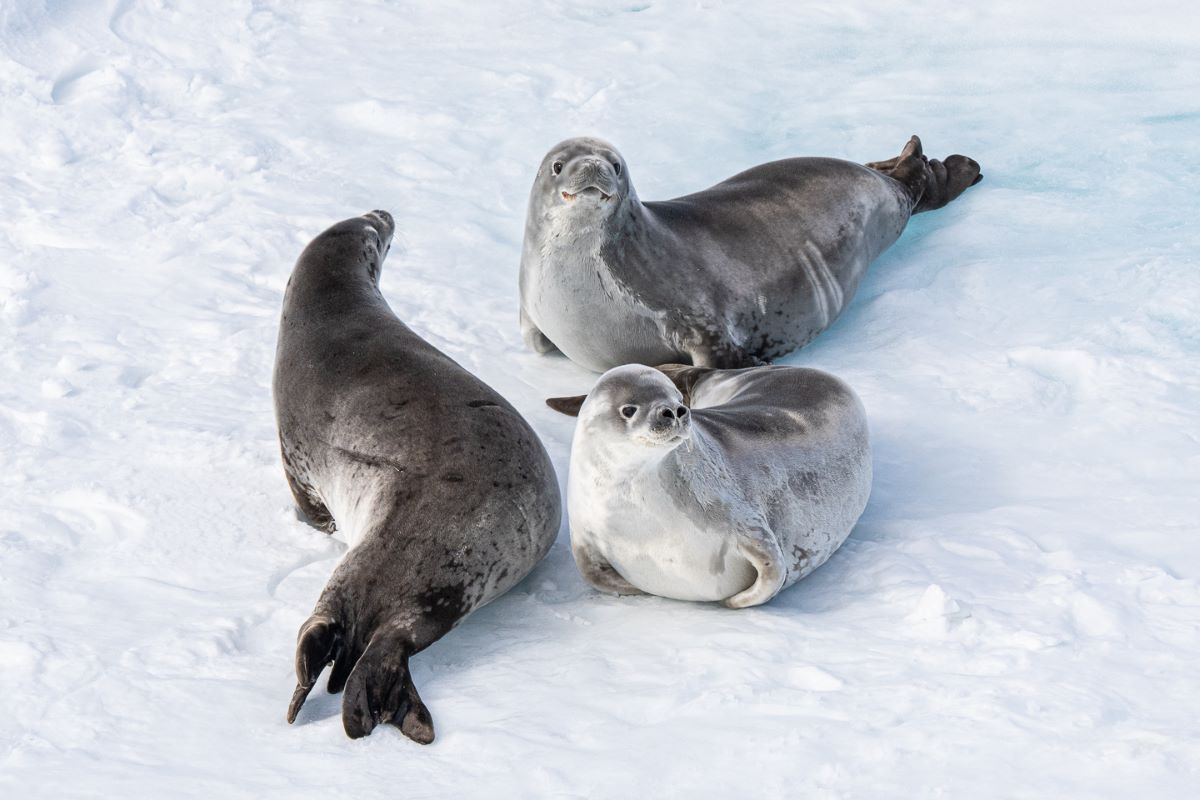
Antarctic voyage: What costs should I expect?
Where does my trip to Antarctica start, and how do I get there?
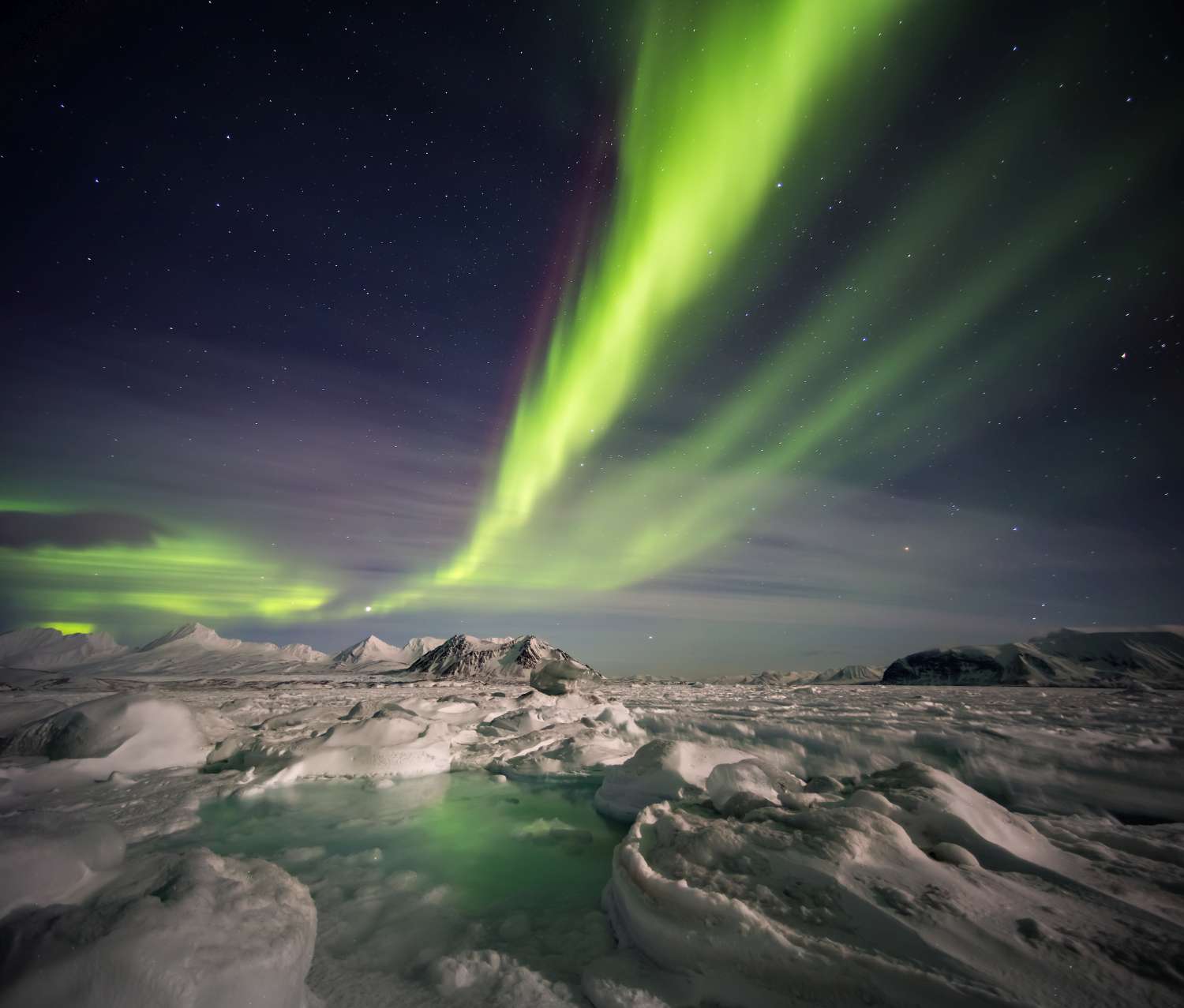
My personal travel favorites in the Arctic and Antarctic
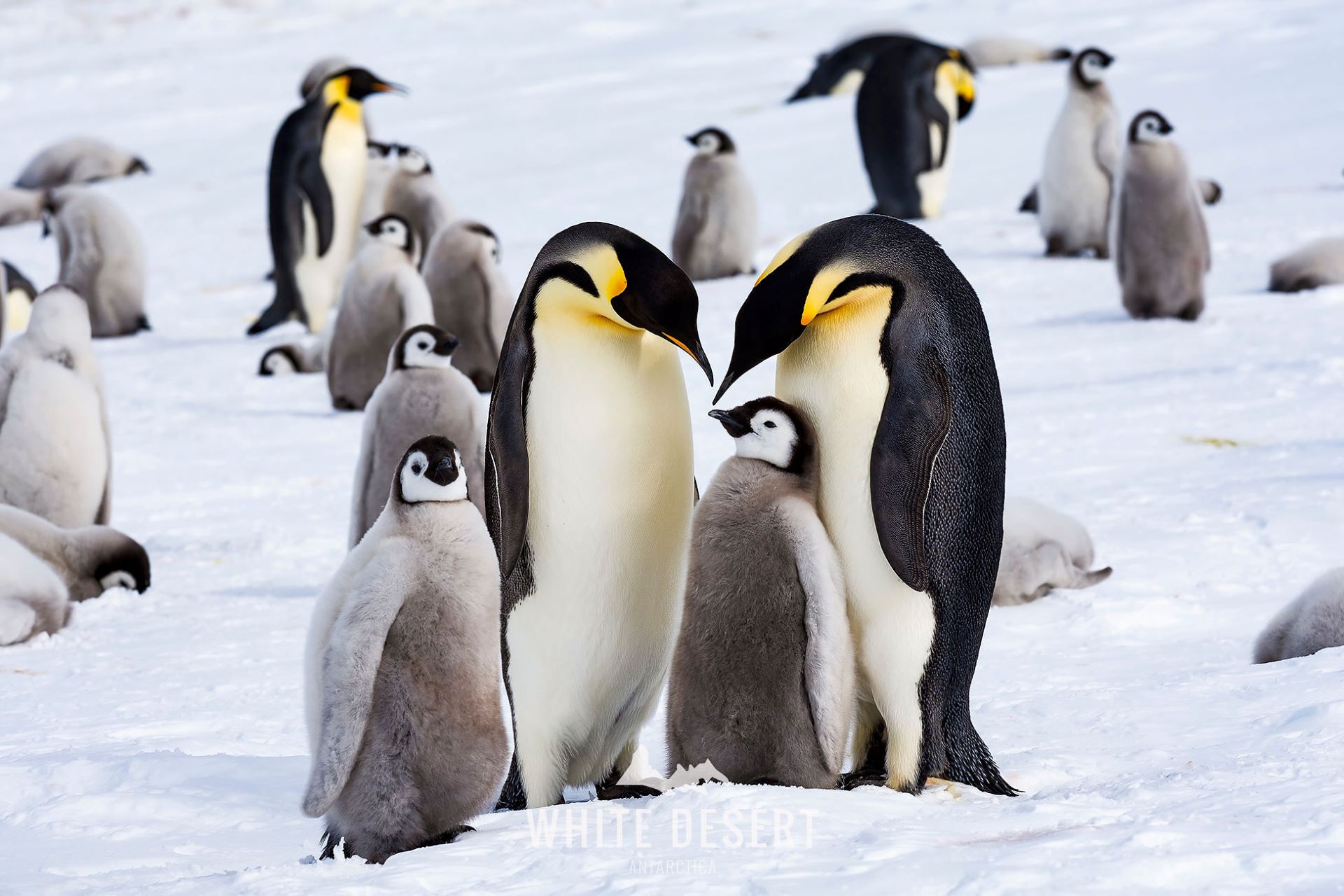
Hapag-Lloyd Antarctic Expeditions: Entirely in German
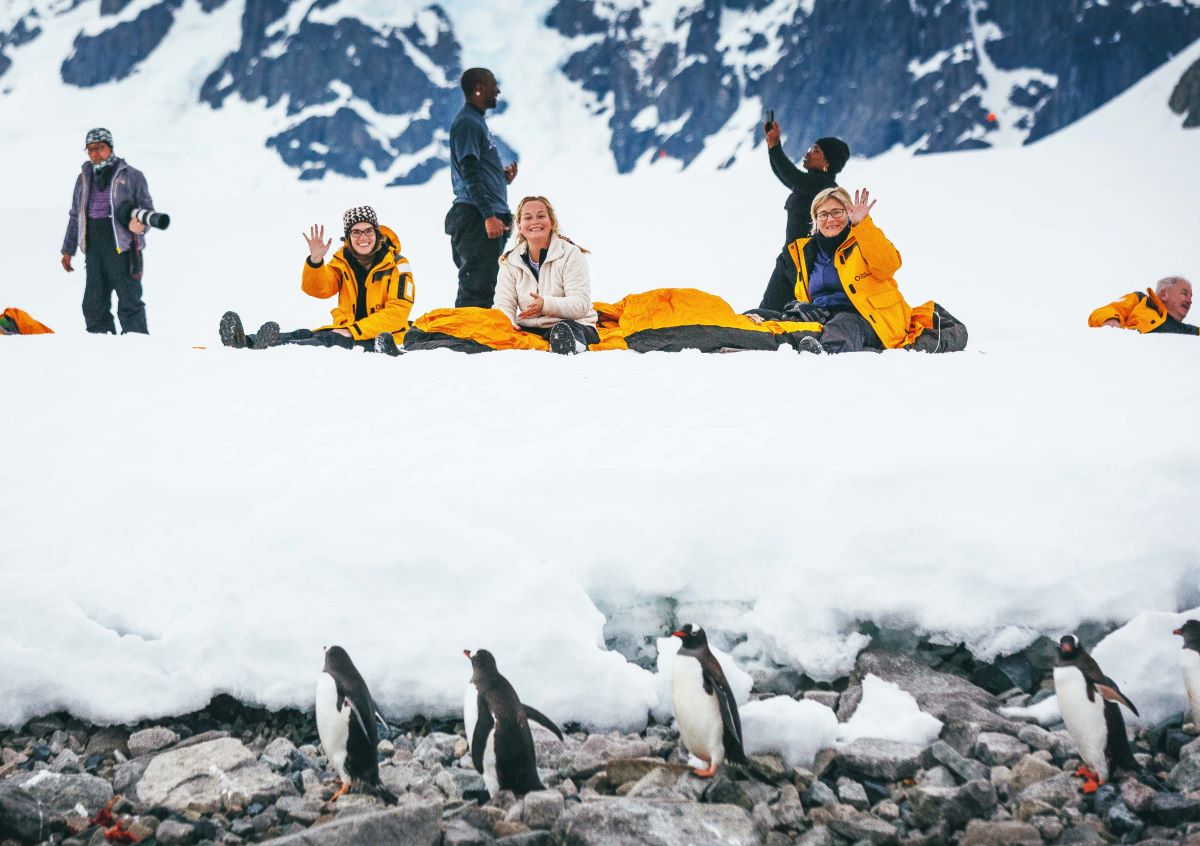
The benefits of booking your Antarctic trip with inventia
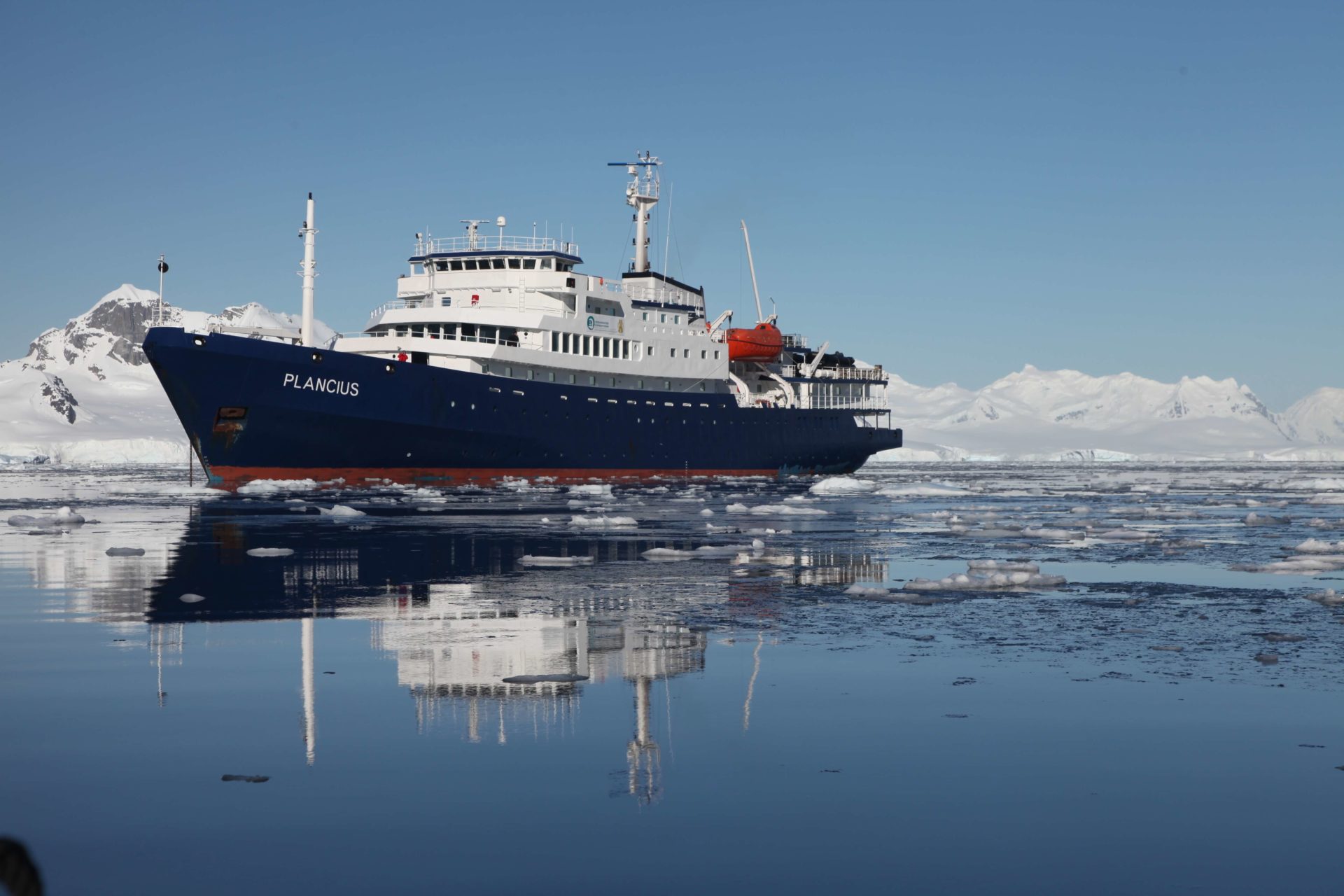
[Travel information] Your polar voyage with the MS Plancius, MS Ortelius, or MS...
What is the best way to book my trip to Antarctica?
How much time should I set aside for a trip to Antarctica?

What is a typical day like on board during an Antarctic cruise?
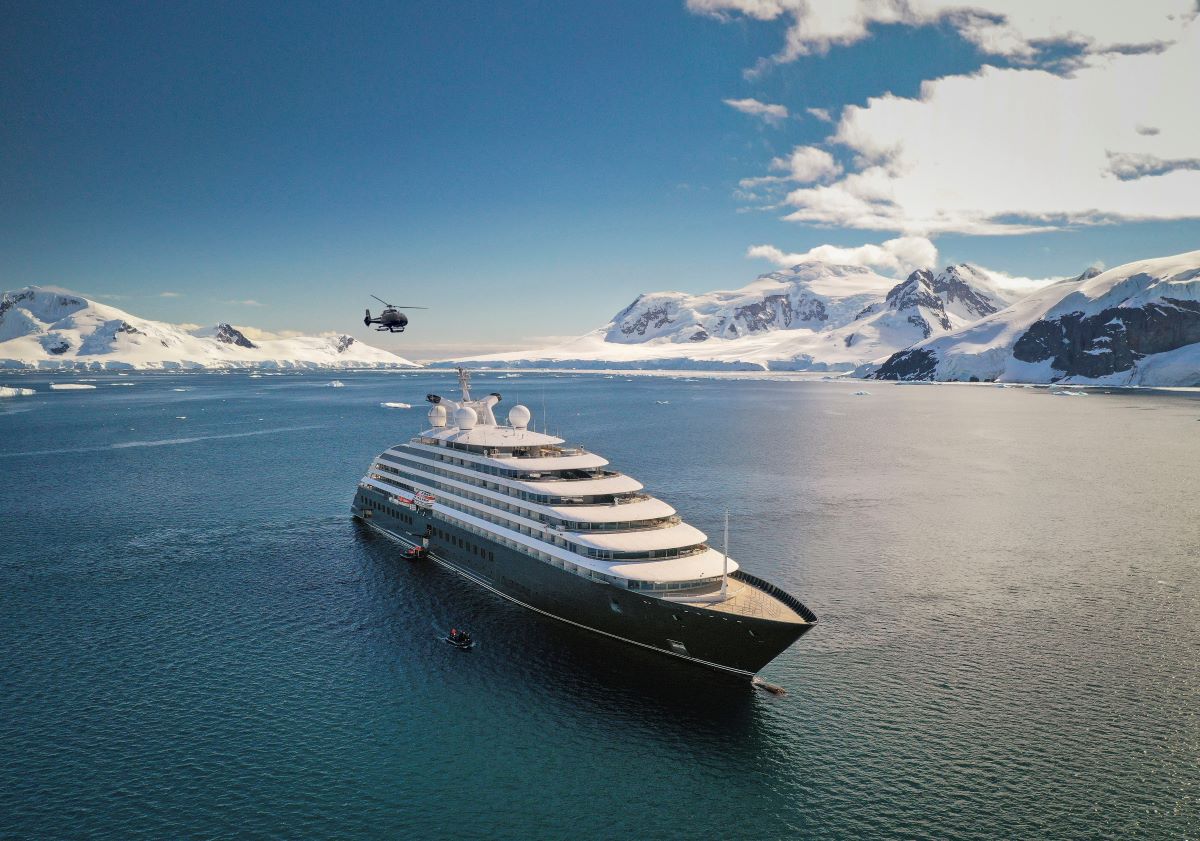
Your Trip to Antarctica: Cruise or Expedition?