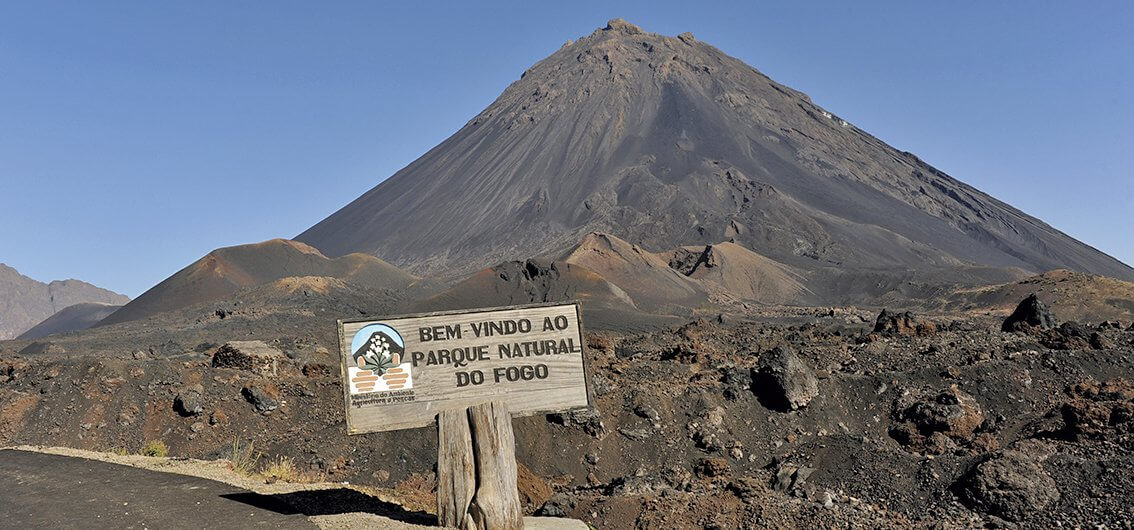
Two camps, with eighteen kilometers of rainforest in between

from/to Libreville

12 days (11 nights)

Max. 8 guests
12 days / 11 nights | from/to Libreville | Sette Cama Eco Camp and Loango Savannah Camp, Loango National Park, Gabon | maximum of 8 guests | English-speaking guides
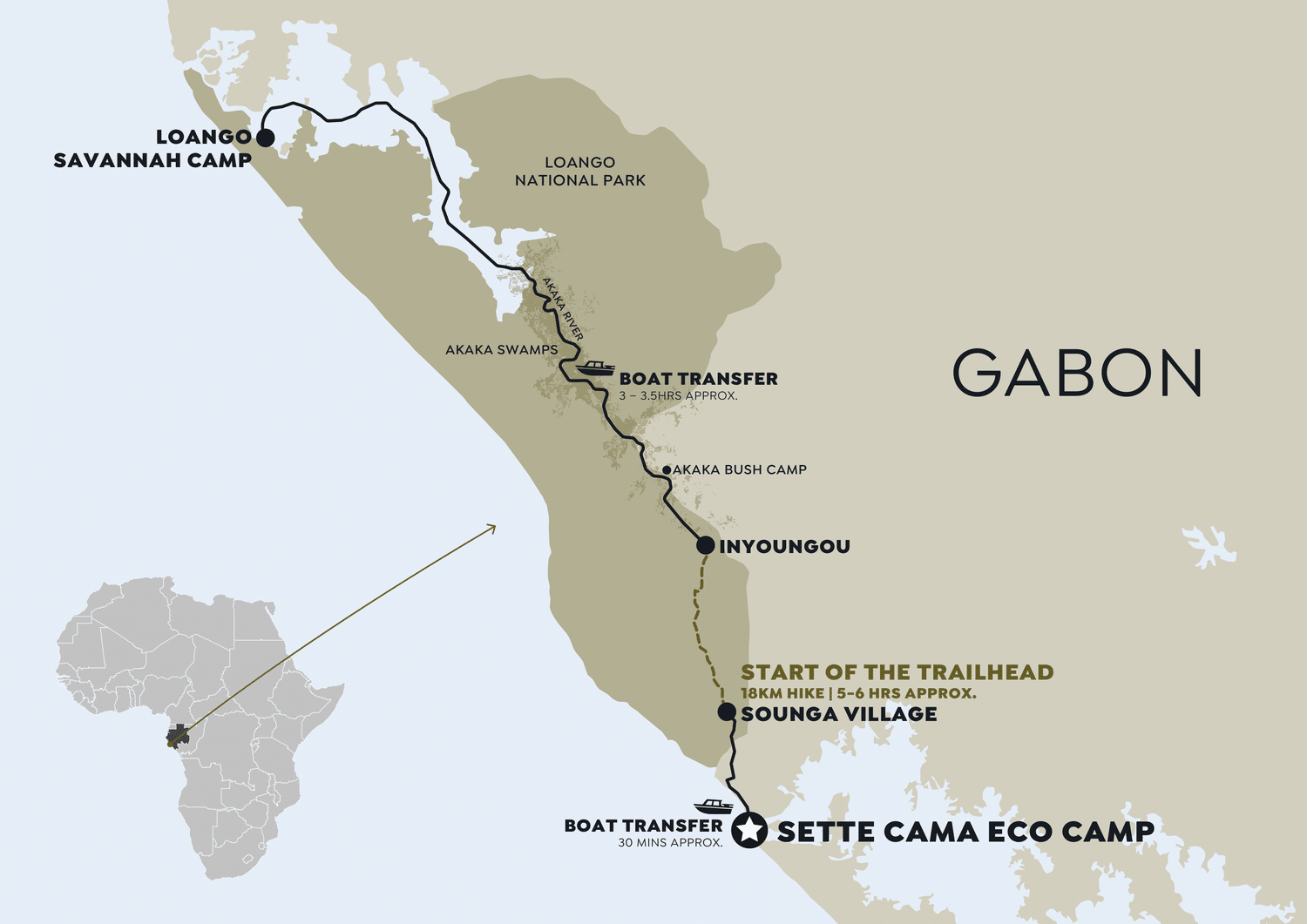
The Loango National Park Gabon's Atlantic coast has two distinct faces. In the south, Sette Cama lies between the Ndogo Lagoon and an uninhabited coastline where forest elephants wander along the beach and hippos wade through the surf. To the north, the forest gives way to grasslands, coastal forest, and the Iguela Lagoon, and in the rainforest behind it lives a group of gorillas that a research team from the Max Planck Institute This route takes you from the south to the north of the park in a single day, on foot along the Sounga Trail and by boat down the Akaka River.
Continue reading
For a week, the four Meru tents at Sette Cama Eco Camp will be your base. You’ll track animals in the rainforest, set up camera traps, paddle a kayak into the mangroves, take a boat out at night, and wait at the coastal lagoons at dawn for the hippos to come out to “surf.” The gorillas and chimpanzees in these forests are unaccustomed to human presence; here, you’ll learn to interpret their signs.
Then comes the day this trip is all about: the Sounga Trail. A narrow path leads north through rainforest—the wildest Gabon has to offer. Porters carry the luggage on their shoulders; the picnic is unpacked halfway along the trail beneath the canopy; and you’ll usually encounter at least one forest elephant along the way. At the end of the trail, the boat awaits: down the Akaka River, through the marshes, until the river opens into the Iguela Lagoon.
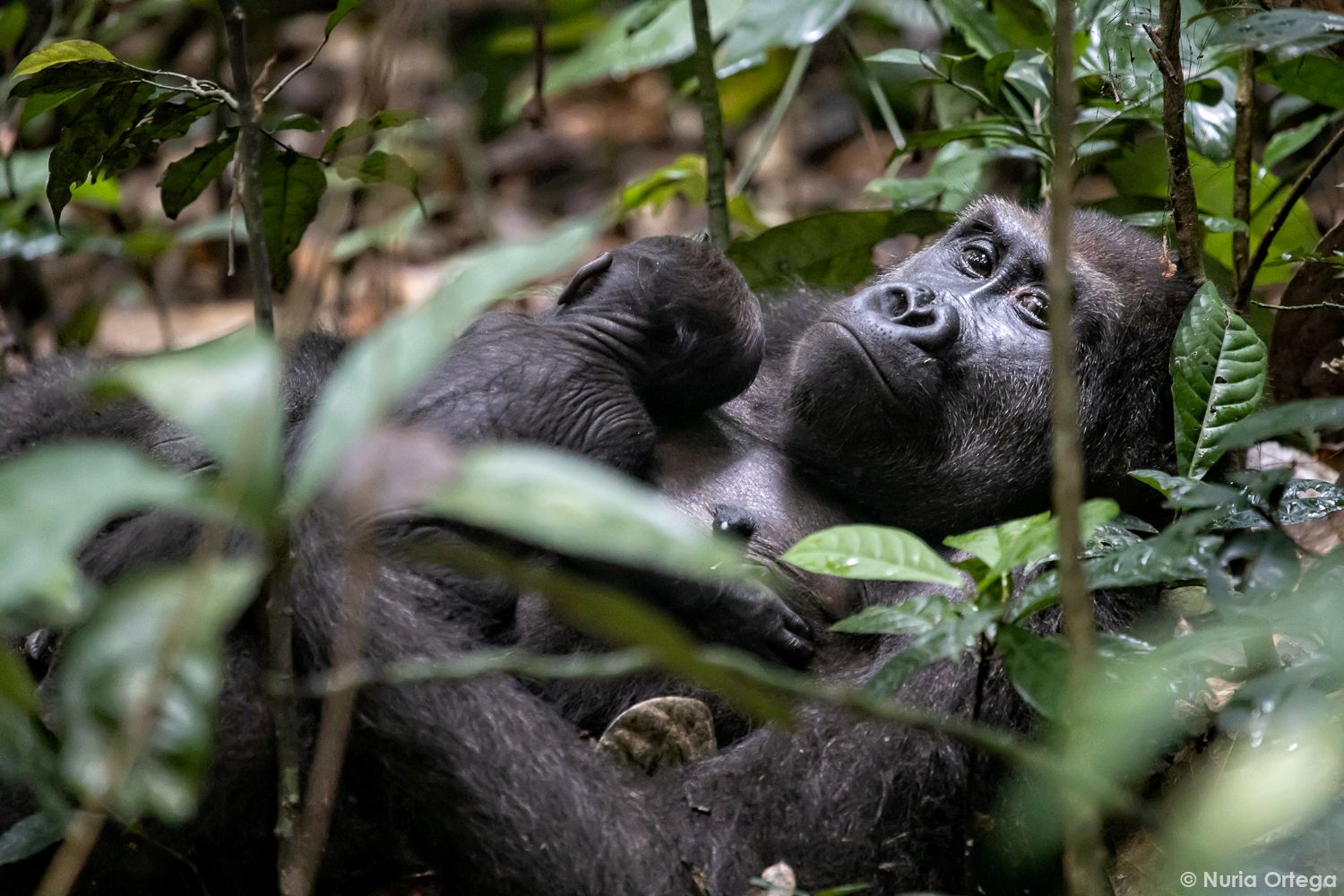
You’ll spend the last three nights at Loango Savannah Camp on the edge of the vast grasslands, which features eight spacious tents, a restaurant, and a bar overlooking the lagoon. From here, you can explore the savanna by vehicle or take a boat across the Iguela Lagoon; one morning, the boat will take you to the Yatouga Habituation Project, where you’ll spend the morning with a group of western lowland gorillas.
What makes this route so compelling: It offers two ways to encounter great apes, both showing them as they truly are. In the south, the forest dictates what you see: You follow trails, your camera traps capture the images, and the camp supports the great ape researchers. In the north, you’ll encounter a group that’s being scientifically monitored, with a strict limit of four visitors per day. In between lies a trail that you have to earn by hiking.
Anyone booking this itinerary should be a good hiker. The rainforest hikes in Sette Cama cover eight to twelve kilometers, the trail day is over 18 kilometers, you’ll have to carry your own daypack, and there’s a minimum age of 15 for both the trail and the gorilla trek. If you meet these requirements, you’ll get to experience both ends of the park: the lagoon coast of Sette Cama and the savanna with the gorillas in the north.
For the days before or after your gorilla safari in Gabon, Libreville is worth a visit in its own right. In Akanda National Park, ornithologist François Boussamba leads a boat tour through the mangroves of Baie de la Mondah—home to red-billed pelicans, African fish eagles, and sacred ibises—followed by lunch at a beachside restaurant. A city tour includes a visit to the carved wooden pillars of St. Michael’s Church in Nkembo, as well as the National Museum of Arts, Rites, and Traditions and a tasting at Les Chocolats Gabonais de Julie. Feel free to contact us—we’ll be happy to put together a customized pre- or post-safari itinerary for you.

Stephanie Gräf
Owner & Founder
Since 2002, I have been personally advising clients on unique expeditions and private trips, small-ship cruises, and journeys to remote regions of the world.
We'd be happy to discuss your trip with you in person.
Why not contact me right now at Phone: +49 201 85890960 or email welcome@inventia.de.
Or schedule a free, no-obligation one-on-one phone call (also via WhatsApp or Wi-Fi), a Teams or Zoom meeting here—even in the evenings or on weekends:
Good to know
Entry Requirements: German citizens must have a valid passport and a visa for Gabon, which the tour operator will arrange for you on site for an additional fee; please allow at least 30 days before departure for this process. A yellow fever vaccination is required and will be checked upon arrival. You can find the latest travel and safety advisories from the German Foreign Office for Gabon. Regulations may vary for other nationalities. Please contact us.
Climate and Clothing: At the equator, there are two rainy seasons and two dry seasons: The long dry season lasts from May through September, and a short one occurs around the turn of the year. Daytime temperatures are usually between 18 and 29 degrees, reaching as high as 32 during the rainy season. Pack lightweight clothing in muted colors, a rain jacket, and waterproof overpants, along with warm layers for mornings and evenings, and shoes that can handle long walks and wading through water; binoculars and a camera are essential for this trip. For each day on the trail, you’ll need a daypack; your main luggage will be transported in soft bags with carrying straps so that the porters can carry them on their shoulders.
Type of Trip and Comfort: You’ll spend one night at the Park Inn by Radisson in Libreville, followed by two nights in camps. Seven nights in one of Sette Cama’s four Meru tents, each with a private bathroom and air conditioning, electricity from a generator, intermittent cell service and Wi-Fi, and a satellite phone for emergencies. Three nights at the Loango Savannah Camp, which features eight tents, private bathrooms with hot water, air conditioning, a restaurant and bar overlooking the lagoon, Wi-Fi, and laundry service. The itinerary is guided; at Sette Cama, it does not follow a fixed schedule but rather what the forest, coast, and lagoon allow on any given day. Exploration takes place on foot, by kayak, by boat, and by vehicle.
Money and Tips: The local currency is the CFA franc (XAF). Payments are made in cash; credit cards are accepted only at larger establishments in Libreville, and even there, you should carry cash. You should tip once at the end of your stay at each camp, in euros or U.S. dollars, using small, clean bills. As a guideline, the tour operator suggests 15 to 20 euros per person per day for the guide and 10 to 15 euros for the camp team. For gorilla trekking, add 25 to 30 euros per person per trek; the lead guide will share this amount with the rangers, trackers, and the research team.
HIGHLIGHTS
- An 18-kilometer hike through Loango —the Sounga Trail winds through the rainforest from camp to camp, with porters carrying your luggage and a picnic halfway through the hike.
- The habituated group at Yatouga —A morning with western lowland gorillas that researchers from the Max Planck Institute are acclimating to the presence of humans, four visitors per day.
- Down the Akaka —A three-hour boat ride through the Akaka Marshes, which, at the end of the dry season, teem with forest elephants, red buffalo, and thousands of waterbirds.
- Waiting in the First Light – At the coastal lagoons north of the camp, the Loango hippos return to shore through the waves at sunrise.
- Elephants on the Sand – Just a short walk from the camp, and you’ll find yourself on a beach that’s home to forest elephants, red buffalo, and brush-eared pigs.
- Trails and camera traps —The gorillas and chimpanzees around Sette Cama are unaccustomed to human presence: They interpret their own signs, and the images from their camera traps are sent to researchers.
- A Night at Point Milongo —A fire burns on the beach beneath the milkwood trees at the tip of the headland, and between August and October, the view of the ocean is well worth seeing: humpback whales.
- Savanna and Iguela Lagoon – In the northern part of the park, game drives through open grasslands alternate with boat trips across the lagoon and trails leading to the Atlantic beach.
route
itinerary
Day 1 | Arrival in Libreville
As soon as you arrive in the arrivals hall at Libreville Airport, a representative will meet you, escort you to the visa counter, assist you with the paperwork, and take you to your hotel.
With about 48 kilometers of coastline, beaches, and seaside restaurants, Libreville—located in the northwest of the country—is a city by the water, and a third of all Gabonese live here. If you have some free time in the afternoon, the beach in front of the hotel is the perfect place to unwind.
The first night is at the Park Inn by Radisson Libreville: The hotel is located on the city’s waterfront, the rooms overlook the ocean or Libreville, and breakfast is served in the morning.


Day 2 | By charter flight to Gamba, then by boat to the camp
Early in the morning, we head back to the airport; the charter flight to Gamba departs on Thursdays. After landing, it’s a 15-minute drive to the shore of the Ndogo Lagoon. The Ndogo Lagoon is as wide as a lake; for an hour, the boat winds its way between forested islands until the camp comes into view on the southern shore: four tents in a clearing, with the forest behind them. Lunch is already waiting.
In the afternoon, our first boat trip: out to the estuary and into the mangroves, to where the lagoon flows into the Atlantic Ocean, at one of Africa’s last undisturbed estuaries. Herons and kingfishers perch on the shore, and if we’re lucky, we’ll spot our first hippo.
For our first sundowner, we'll head to the beach in front of the camp; dinner will be served afterward in the dining area.
Day 3 | Camera traps in the rainforest, hornbills over the lagoon
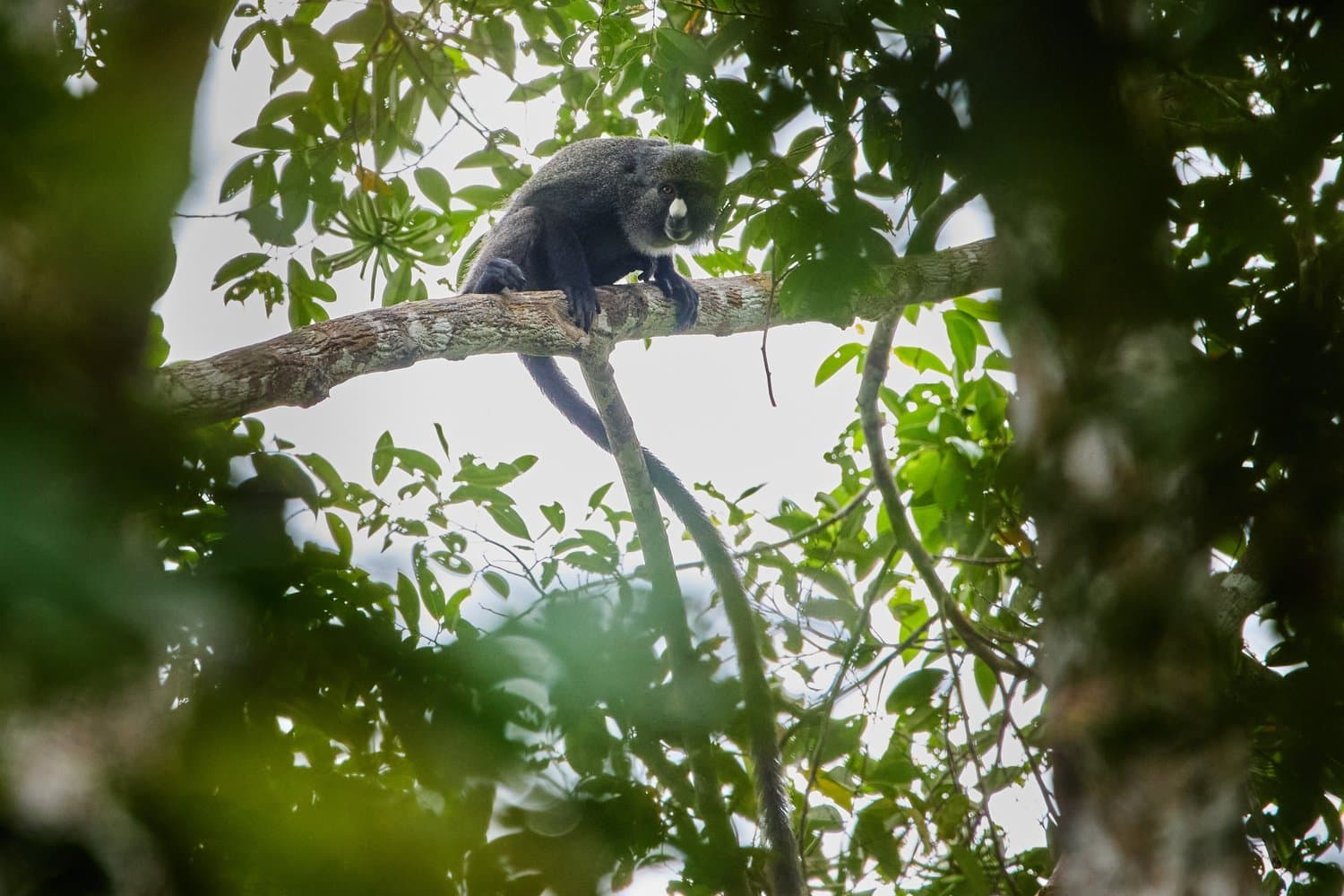
The boat will take you to the starting point of your first rainforest hike—a three- to five-hour walk—before the heat sets in: interpreting tracks, identifying signs of feeding, and listening for calls in the canopy. Together with the guide, you’ll set up your first camera traps; the footage they capture this week will contribute to the scientific documentation of Sette Cama’s wildlife. Tea will be served along the way in the forest.
After lunch and a siesta, the boat trip takes us into the innermost coves of the lagoon, where giant turacos perch high in the treetops along the shore and palm vultures circle overhead. As the sun sinks below the lagoon, the evening flight begins: Hundreds of black-helmeted hornbills and African grey parrots head for their roosting trees on the lagoon islands, and the boat is right in the middle of it all.
Back at camp, the guide will show you the sea turtle hatchery and explain how the nests on this coast are protected. Then dinner will be ready.

Day 4 | Kayaking to the mangroves, walking to Point Milongo
The morning is devoted to kayaking: three to five hours without a motor, close to the shore, where the African reed warbler makes an appearance and the calls of the forest carry across the water, sometimes mingling with the distant cries of the great apes.
During the siesta, pack the essentials for a night outdoors. It’s a half-hour boat ride to the estuary, then an hour and a half walk along the beach to Point Milongo, with the chance to spot a sitatunga or a forest elephant at the water’s edge.
The campsite is located on a headland beneath milkwood trees, with an unobstructed view northward across the coast. The rest of the day is spent enjoying the Atlantic Ocean and the hammock; between August and October, it’s worth taking in the view of the sea, as humpback whales migrate along the coast during this time. After dinner by the fire, you’ll sleep in the small tent camp beneath the trees.
Day 5 | The Surfing Hippos
We set out at 5:30 a.m., traveling an hour north along the coast in the first light of dawn. At the coastal lagoons, we wait for the hippos to return from their nighttime grazing grounds, wading through the Atlantic surf. During the dry season, which lasts until September, brush-eared pigs are out hunting for crabs along the water’s edge at the same hour. We enjoy tea in hammocks suspended among the palm trees.
The two-hour return trip takes you through the rainforest; your guide listens for primate calls and interprets tracks until you reach the lagoon, where the boat is waiting. Lunch at the camp.
The afternoon is spent in the plains south of Sette Cama: a game drive through open grasslands, a swim in the Atlantic, and as we enjoy a sundowner, the guide points out the birds and mammals of the coastal strip.

Day 6 | Twelve kilometers through the rainforest, across the lagoon at night
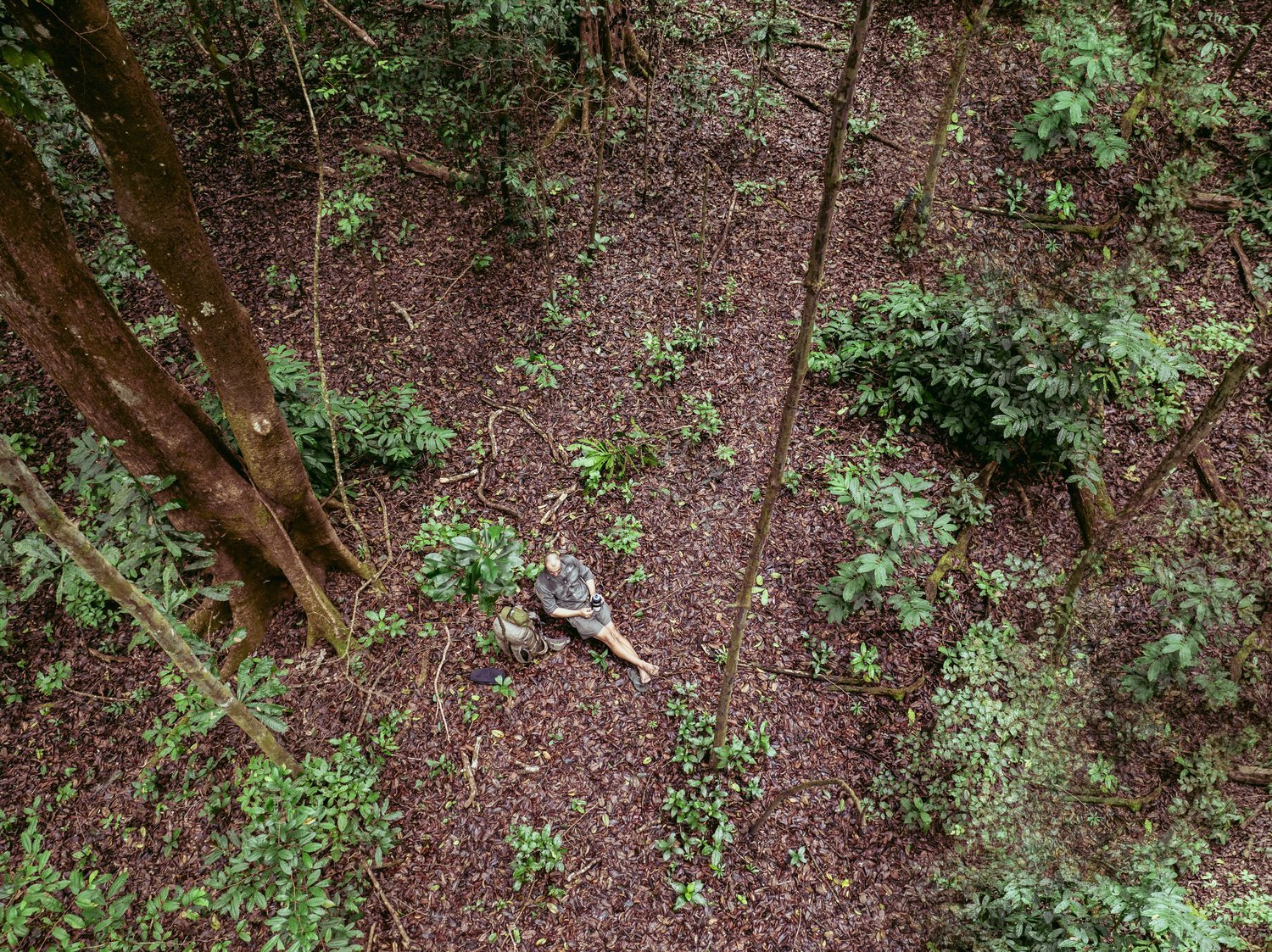
The longest forest hike of the week: twelve kilometers, three to four hours. The guide examines every track to see if gorillas or chimpanzees have passed through here; neither species is habituated in these forests. During the Rainforest Immersion, hammocks hang between the tree trunks, and for a while, the forest takes center stage.
In the afternoon, we’ll head to Sounga Bay; if the water level is right, you can pick up the kayaks from the boat there for a paddle through the salt marshes. At sunset, a fire will be burning at the mouth of the estuary.
The return trip takes place in the dark, and the journey turns into a nighttime boat safari: stump-nosed crocodiles on the shore, perhaps an African duiker or a banded fish owl perched on a branch, and forest elephants venturing closer to the water in the darkness. Dinner is served late.
Day 7 | Signs of nesting in the sand, medicinal plants on the plantation
At first light, you walk along the beach and examine the sand: Where did a sea turtle bury its nest during the night? Nowhere else in the world do more leatherback turtles come ashore to nest than in Gabon, and whatever the patrol finds is taken to safety at the hatchery. Afterward, a picnic brunch is laid out in the coastal forest, and the ocean is close enough for a swim.
The afternoon takes us to a nearby plantation: which plants have medicinal properties, how labor-intensive it is to grow food for one’s own table, and what it means to tend fields through which wild animals roam.
At sunset, the boat is out on the water, and afterward, the nighttime hunt begins—by boat across the dark lagoon or on foot through the forest—to where the nocturnal inhabitants of Sette Cama make their appearance.


Day 8 | Downloading camera trap images, ethnobotany on the islands
To wrap up the week, you’ll head back to the primate habitat—a trip of about ten kilometers that takes roughly three hours. Along the way, you’ll retrieve your camera traps; in the forest, a hammock awaits for a tea break; and you’ll paddle back to camp in a kayak.
During the siesta, the footage plays: What animals did the cameras capture this week while you had long since moved on? Then the boat drops you off on the lagoon islands, where the guide explains during the ethnobotanical hike why the forest serves as a pharmacy, a workshop, and a site for Bwiti ceremonies. In the mangroves, it’s not uncommon to see ring-necked mangabeys hunting for crabs.
The sundowner at Vogelinsel is the last one at Ndogo Lagoon. Over dinner, the conversation turns to the great ape research project the camp is participating in, your camera trap photos, and tomorrow’s plans: Pack your bag so the porters can carry it on their shoulders.
Day 9 | The Sounga Trail: On Foot and by Boat to the North
An early start. The boat takes you across Ndogo Lagoon to Sounga Bay in half an hour; along the way, you’ll spot several species of kingfishers and collared mangabeys among the mangrove roots. The trail heading north begins in the small village of Sounga.
About 18 kilometers in five to six hours, along a narrow trail, deeper and deeper into the rainforest: forest animals, birds, primates, and—if you’re lucky—signs and calls of great apes. The area is popular with forest elephants; you’ll usually encounter them at least once. The porters carry your main luggage; you’ll only carry your daypack. Halfway through the trek, enjoy a picnic under the canopy; here, the Sette Cama team says goodbye, and the Loango Savannah Camp team takes over.
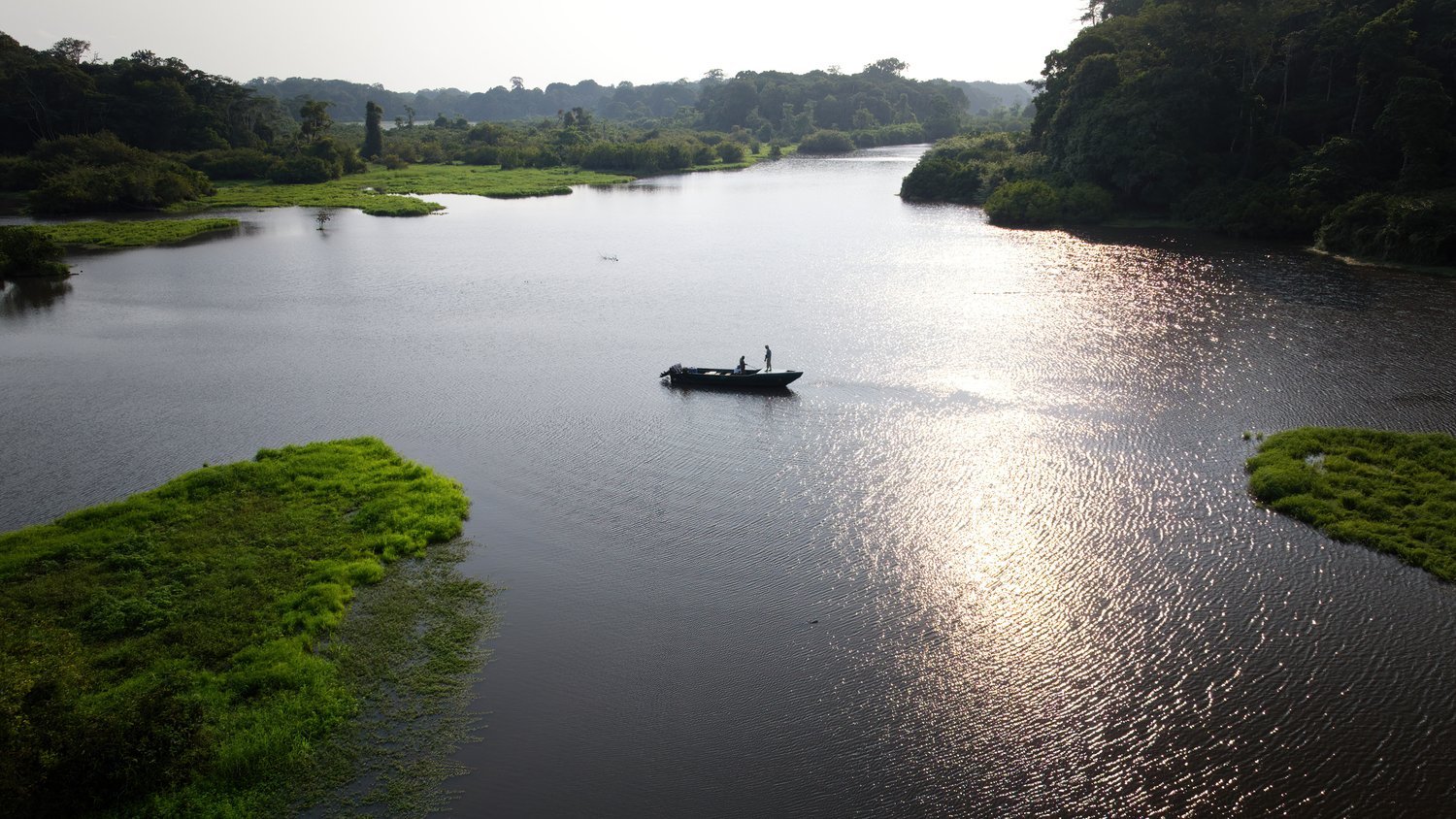
At the Inyoungou terminus, the boat is waiting: a three- to three-and-a-half-hour journey down the Akaka River, through the vast wetlands of the Akaka Marshes. Toward the end of the dry season, well into September, forest elephants and red buffalo gather here, along with thousands of waterbirds—from herons and storks to moorhens and pelicans, all the way to the hard-feathered duck. During the last hour of the trip, the river opens up into the Iguela Lagoon, and in the late afternoon you’ll dock at Loango Savannah Camp, just in time for sunset.
Day 10 | Gorilla Trekking at Yatouga
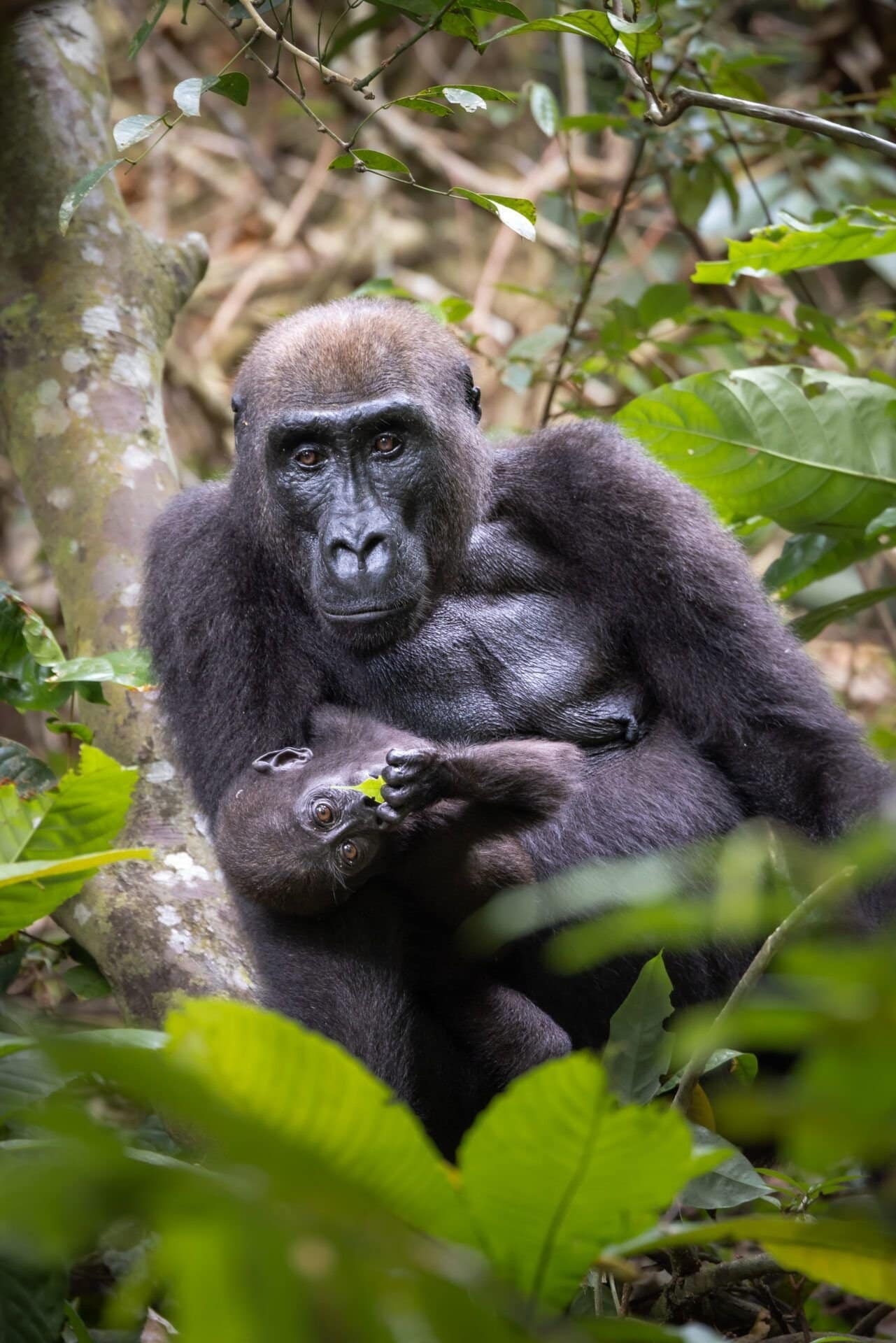
Breakfast at 6:30 a.m.; the boat departs at 7:30 a.m. for the 45-minute trip to the Yatouga Habituation Project. You’ll spend the morning with a group of western lowland gorillas being studied by a research team from the Max Planck Institute; you’ll receive details about the day’s schedule in advance. At 1:00 p.m., enjoy a picnic lunch from your packed lunch.
The trek is limited to four participants per day; the minimum age is 15; a medical certificate is required for those aged 65 and older; and reservations must be made in advance.
The afternoon is all about the camp, its restaurant, and the bar overlooking the Iguela Lagoon.
Day 11 | Savannah, Coastal Forest, and Iguela Lagoon
In the morning, the car rolls out onto the open grasslands, where forest elephants and red buffalo graze. After lunch, the boat sets off: across the Iguela Lagoon and its waterways, to see the animals in this part of the park, including hippos and an extraordinary variety of birds.
The exact route of each trip is determined by the guide, the weather, and the movement of the wildlife; the coastal forest and the Atlantic beaches to the north are also within reach, either on foot or by car. From the lagoon and forest to the savanna and coast, each outing reveals a different side of this wilderness.


Day 12 | Via Port-Gentil to Libreville
At breakfast, take one last look out over the Iguela Lagoon—where forest elephants may make an appearance along the shores in the morning—then say goodbye to Loango Savannah Camp. The transfer to Port-Gentil takes about three hours; from there, a scheduled flight will take you to Libreville. You’ll be met at the airport and escorted to the departure lounge for your international flight home. If your flight doesn’t depart until the next day, we’ll book an additional night in Libreville for you for an extra charge.
This is where you'll be staying
Sette Cama Eco Camp · Seven Nights in Four Tents



location
The camp is located where Loango National Park ends: in a clearing in the coastal forest on the park’s southern edge, with Ndogo Lagoon right outside the door and the Atlantic Ocean just a short walk away. If you walk along the deserted beach in the morning, you’ll find tracks of forest elephants and sitatungas in the sand; half an hour by boat further on, the lagoon flows into the sea at one of Africa’s last undisturbed river mouths.
tents
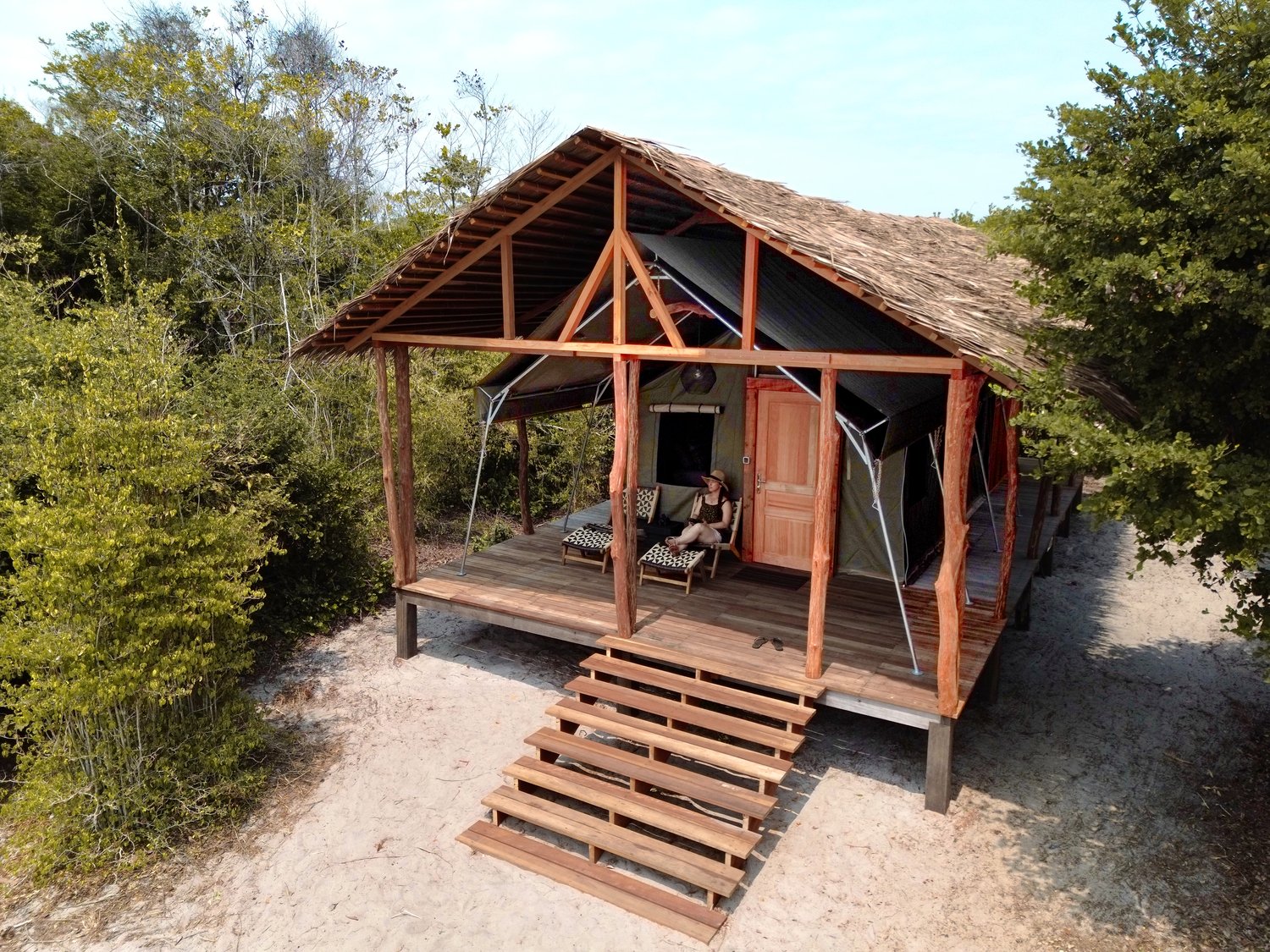
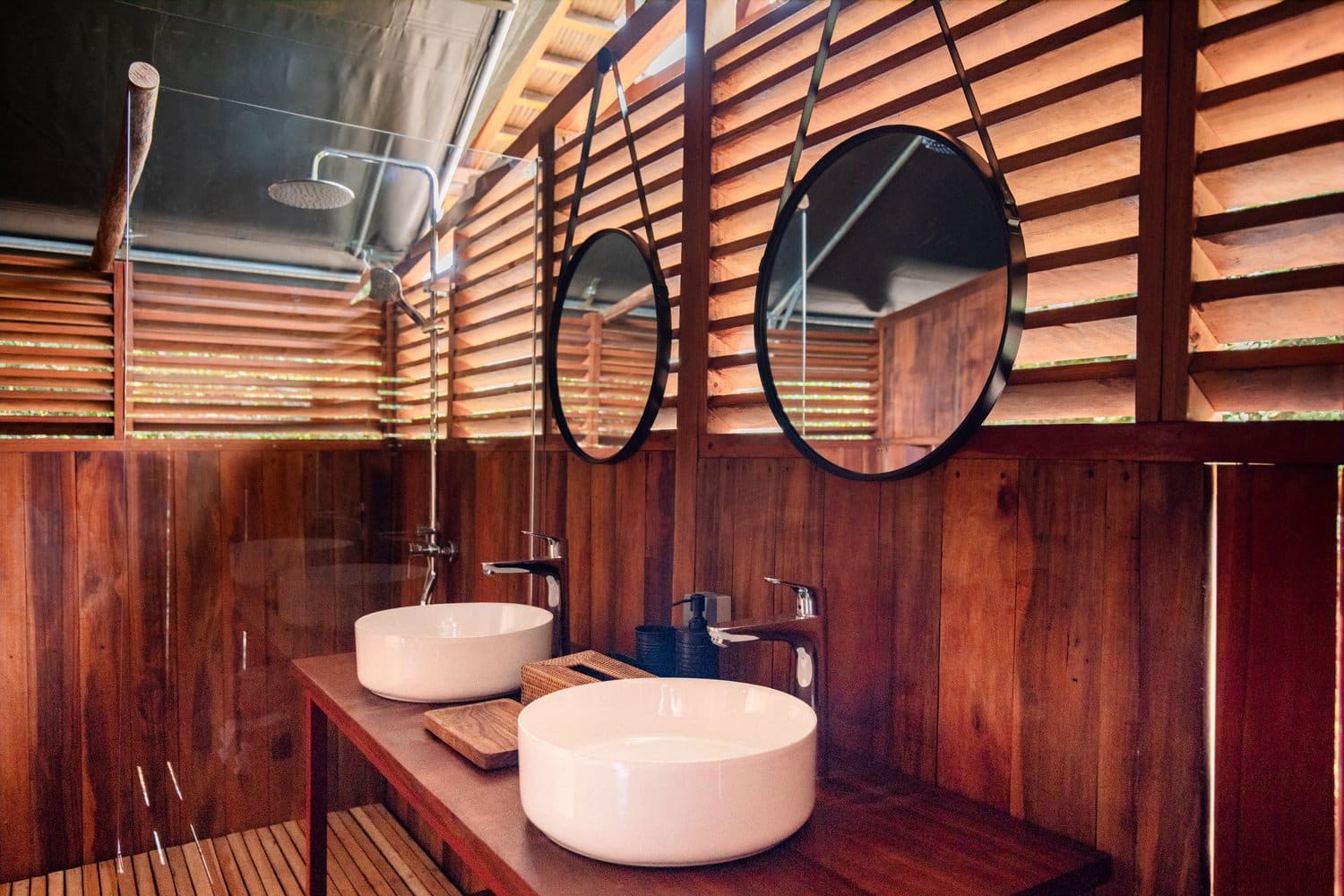
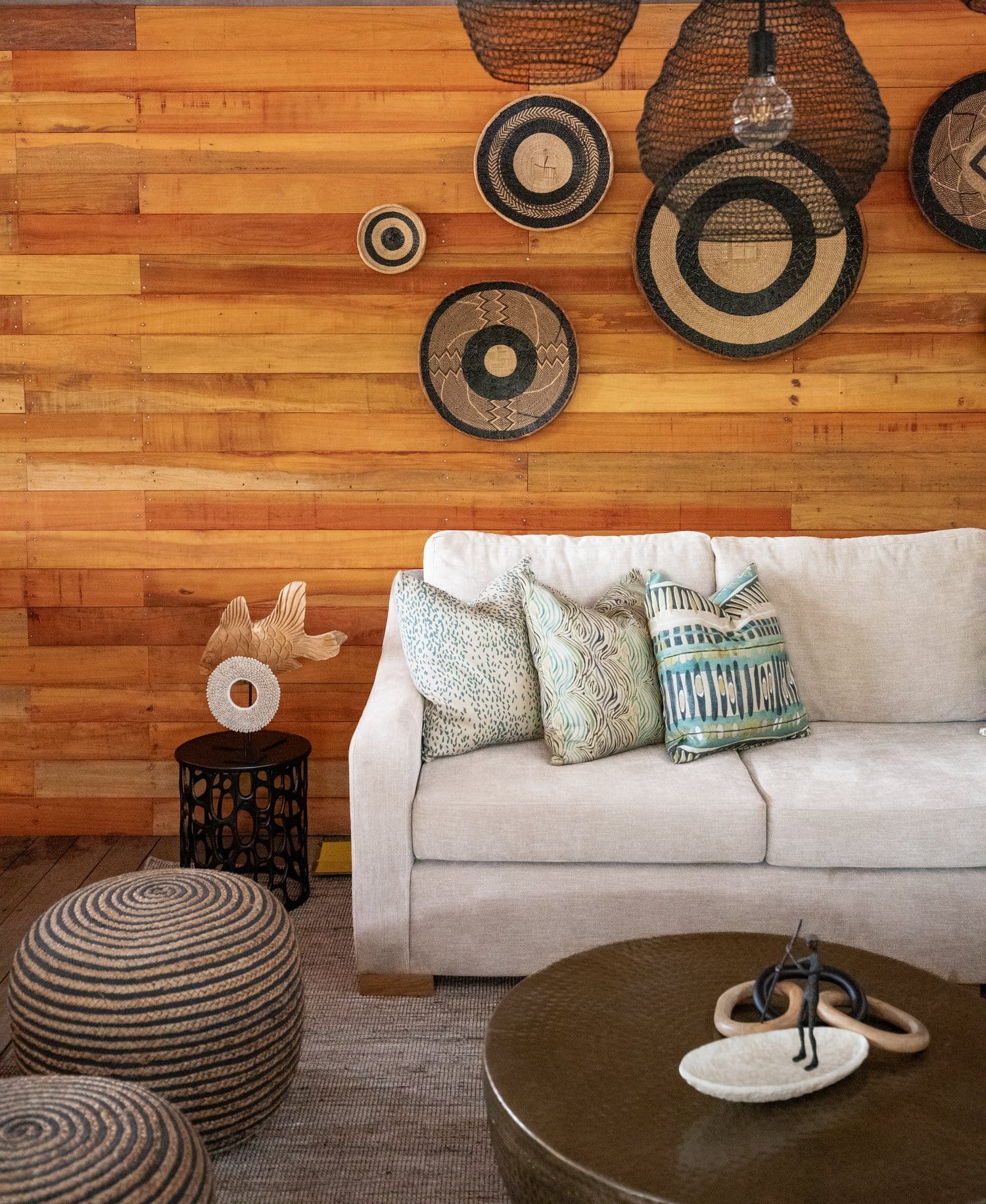
Four Meru tents on wooden decks, each with two single beds, a private bathroom made of local hardwood, and air conditioning. Comfort is deliberately kept within the limits of what a remote eco-camp can offer.
Living Area and Kitchen
The dining area, lounge, bar, and deck are nestled in the coastal forest. A set menu featuring freshly caught fish from the region is served, and local beverages are included.
Good to Know at Camp
Electricity is provided by a generator; cell service and Wi-Fi are available intermittently; and a satellite phone is available for emergencies. The camp is designed to accommodate six to eight guests; due to the Sounga Trail and gorilla trekking, the minimum age for this trip is 15.
Loango Savannah Camp · Three Nights on the Edge of the Savannah


location
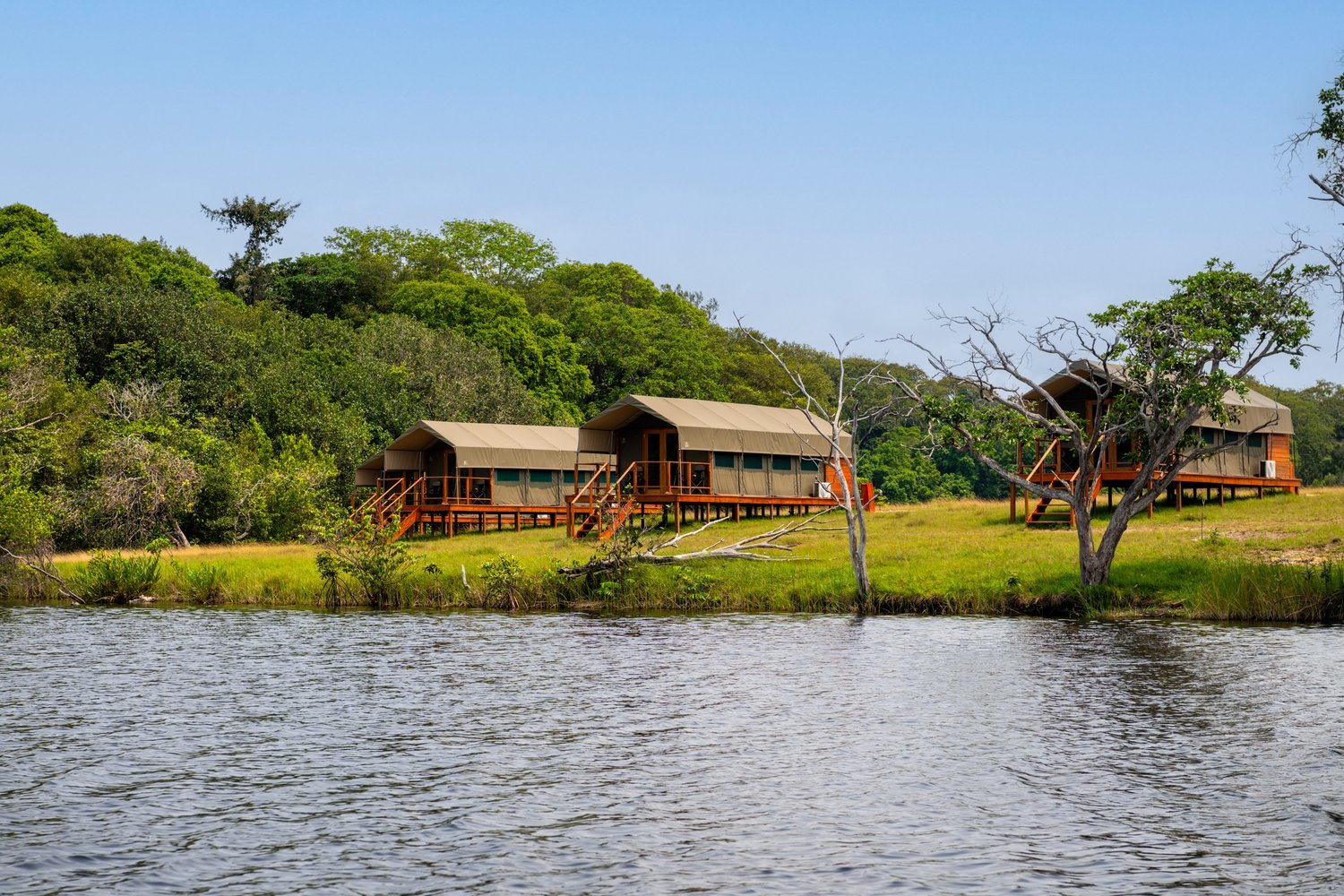
On the edge of the vast grasslands in the northern part of Loango National Park, overlooking the tranquil Iguela Lagoon; the Iguela airstrip is a 20-minute drive away. Around the camp, open savanna, coastal forest, lagoons, rivers, and wild Atlantic beaches alternate within a small area.
tents
Eight spacious tents, available with either a king-size bed or two single beds, each with a private bathroom, hot water, and air conditioning.
Living Area and Kitchen
Restaurant and bar with a view of the lagoon. All meals, water, soft drinks, beer, house wines, and house spirits are included; laundry service is available.
Good to Know at Camp
Electricity from a generator, Wi-Fi, and cell service. Check-in starts at 1:00 p.m.; check-out is by 11:00 a.m. The camp can accommodate up to 16 guests; the minimum age for this trip is 15.
Park Inn by Radisson Libreville · The First Night

You’ll spend the night before your charter flight on the waterfront in Libreville: The Park Inn by Radisson is located right on the waterfront, and the rooms offer views of the ocean or the city. There are 140 rooms and suites, with free high-speed Wi-Fi; your Standard Room features a double bed or two single beds and a coffee and tea station, and an iron is available upon request. Breakfast is included before your early morning trip to the airport.
Your Program in Detail
Rainforest Hikes (included)
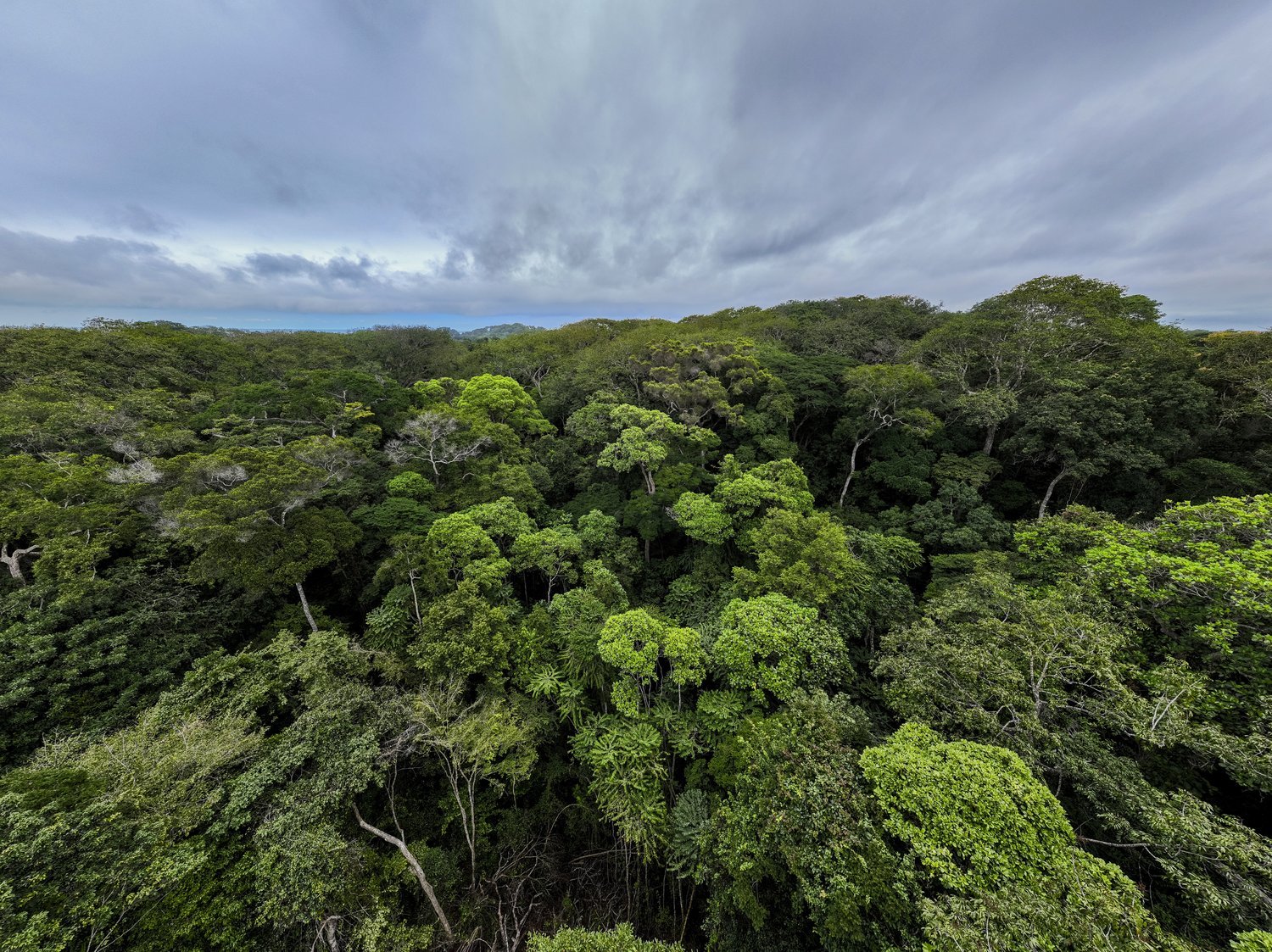

The Sette Cama Forest reveals its inhabitants only to those who rise early: the primates are loudest in the first few hours after sunrise. The boat drops you off at the trailhead, and depending on the availability of tracks, you’ll hike eight to twelve kilometers for three to five hours. You’ll be looking for signs left by Western lowland gorillas and chimpanzees —nests, feeding traces, and tracks—as well as tracks from brush-eared pigs and forest elephants, rare duikers, and the monkeys of the canopy. Breaks to interpret the tracks and a cup of tea under the canopy are all part of the experience.
Two elements make these hikes special. The Rainforest Immersion: Hammocks are strung between tree trunks, and for a while, the group simply listens to the forest. And the camera traps: You set up the devices yourself at the beginning of the week and retrieve them at the end; their images are incorporated into the scientific documentation of Sette Cama’s wildlife.
Coastal Hikes (included)
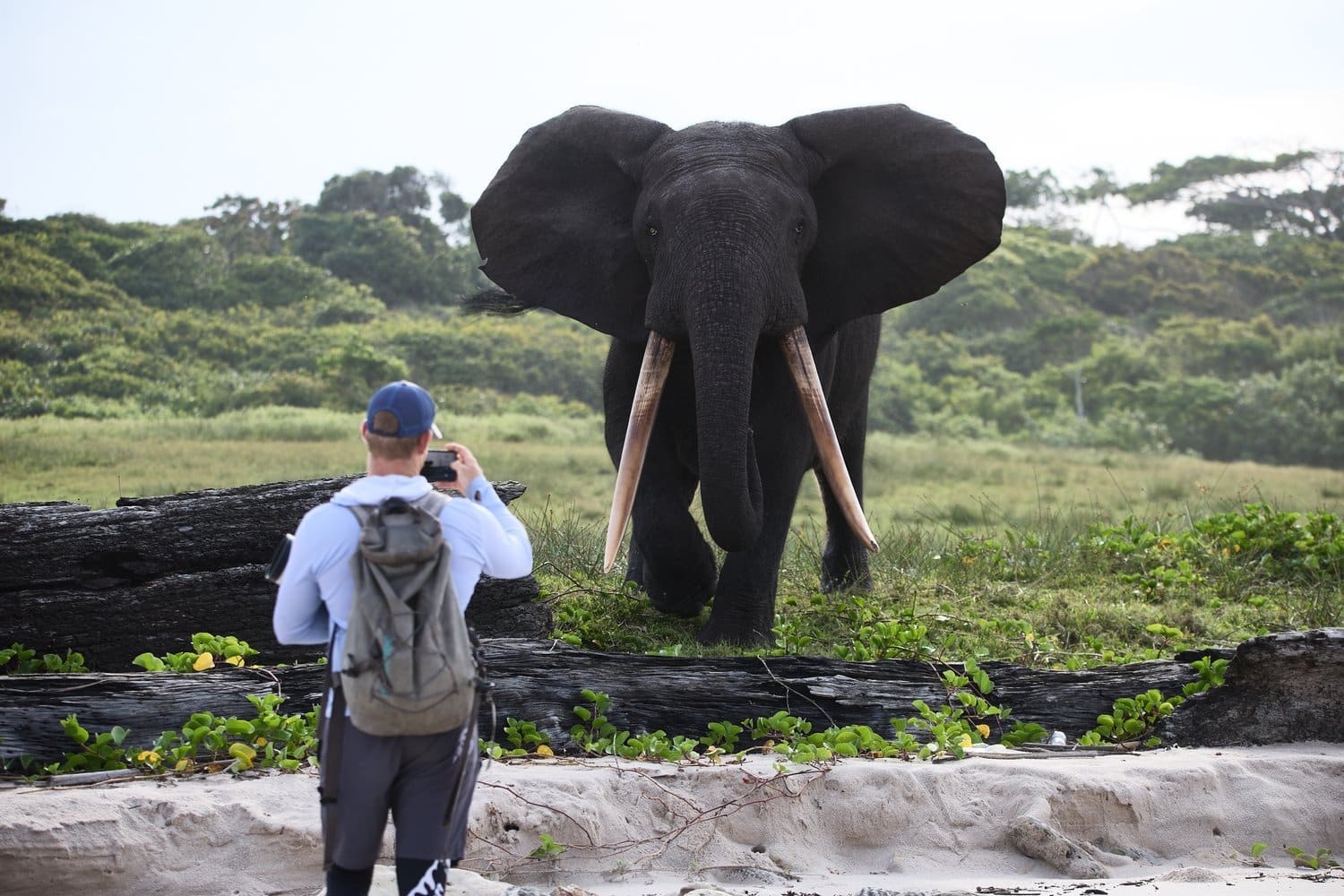

A short walk from camp, and the forest ends: before you lies a beach that forest elephants, red buffalo, and brush-eared pigs use as a grazing ground and playground. You walk along the water’s edge, binoculars trained on the shallows, where the surfing hippos emerge, and, depending on the season, sea turtles make their way across the sand at night. After the forests, the coast feels like another world: surf, wind, and a sky without limits.
Boat tours on Ndogo Lagoon (included)
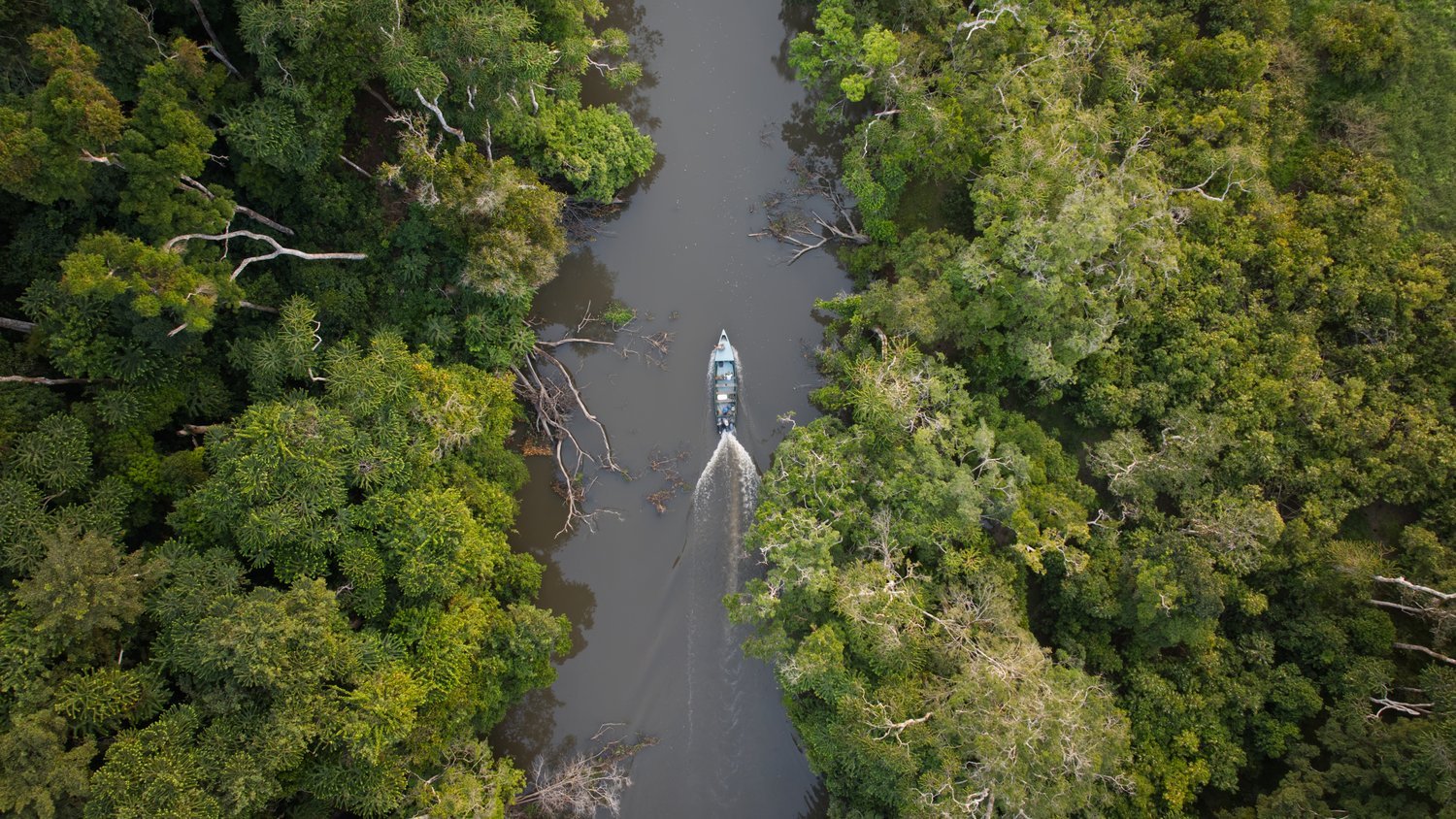
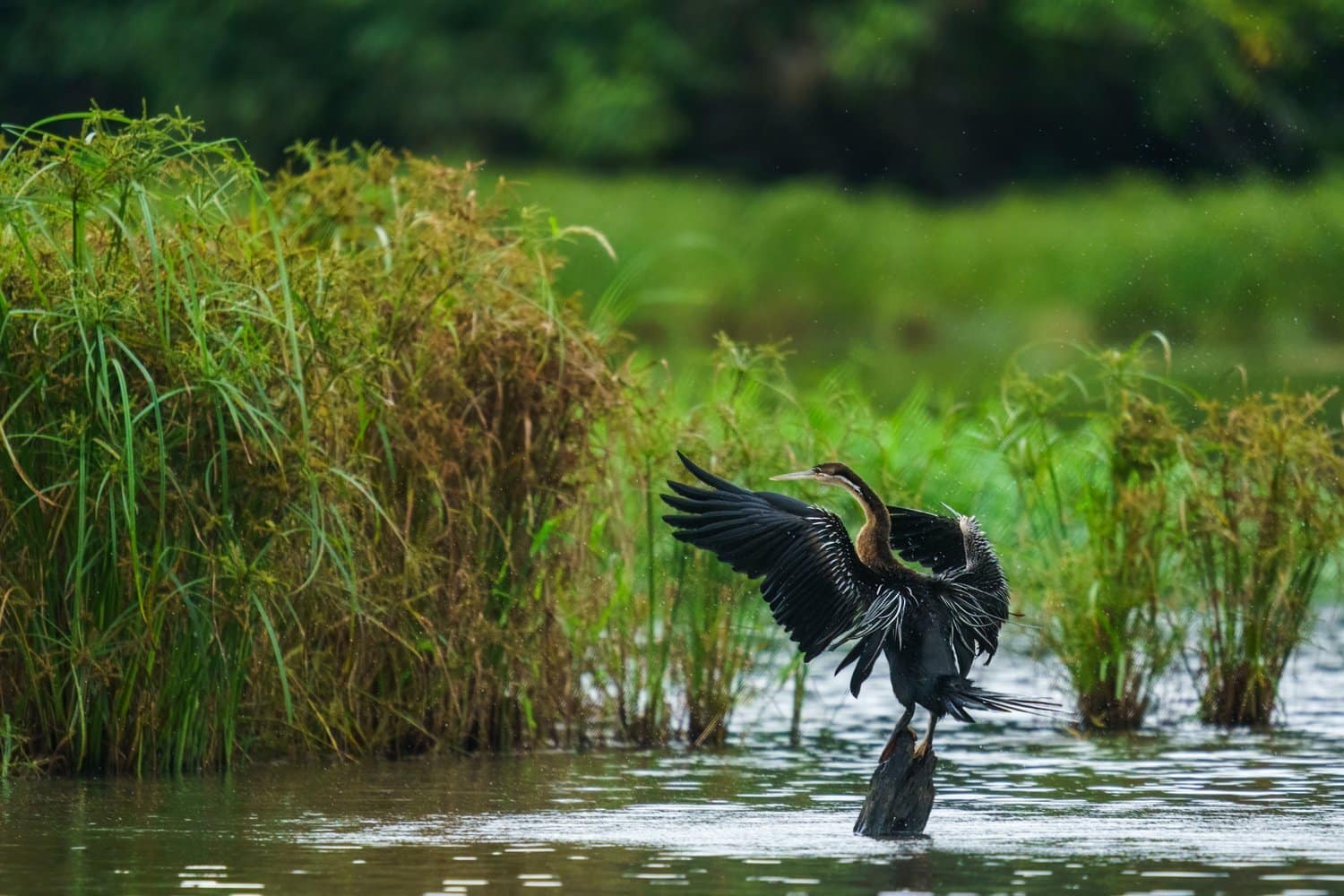
The Ndogo Lagoon covers 50,000 hectares—a labyrinth of mangroves, islands, and quiet coves where boats are the primary means of transportation. With a little luck, you might spot giant turacos, palm vultures, and several species of kingfishers from the water, as well as hippos that live permanently in the lagoon and primates on the shore. During the rainy season, the forest elephants become bolder near the water; a bull may even swim across the estuary with only his forehead and the tip of his trunk protruding from the water. And as the day draws to a close, the boat waits off the lagoon islands for the black-helmeted hornbills and African gray parrots to return to their roosts.
Kayaking on the lagoon and salt marshes (included)

The paddle makes no sound. From your kayak, you can get very close to the African reed warbler, which hides among the mangrove roots, and to the giant turacos in the trees along the shore. Across the smooth water’s surface, the sounds of the forest carry farther than they do on land, all the way to the distant calls of the great apes. When the salt marsh is flooded during the rainy season, you’ll paddle among storks, herons, and kingfishers through channels that don’t exist during the dry season.
Nighttime boat stalking (included)


Once the campfire at the estuary has burned out or the sundowner has been enjoyed on the water, the second shift begins: at least an hour in the dark across the lagoon. What remains hidden during the day now reveals itself along the shores: stump-tailed crocodiles and Central African armored crocodiles, the African duiker on its way to the water, and, with a bit of luck, a banded or marbled fish owl perched on its perch. Forest elephants also venture closer to the shore at night than they do during the day.
Overnight stay at Point Milongo (included)


One night a week, you’ll sleep outside the camp, in a small tent camp under the milkwood trees at Point Milongo. The journey there is part of the experience: by boat to the estuary mouth, then an hour and a half on foot along the beach. Once you reach the top, the view stretches far north along the coastline; the afternoon is all about the Atlantic Ocean and the hammock, and between August and October, it’s worth bringing binoculars because humpback whales migrate off the coast. After dinner by the fire, the night is short: at 5:30 a.m., the game drive to spot the surfing hippos begins from here.
Turtle Monitoring (included, November through March)

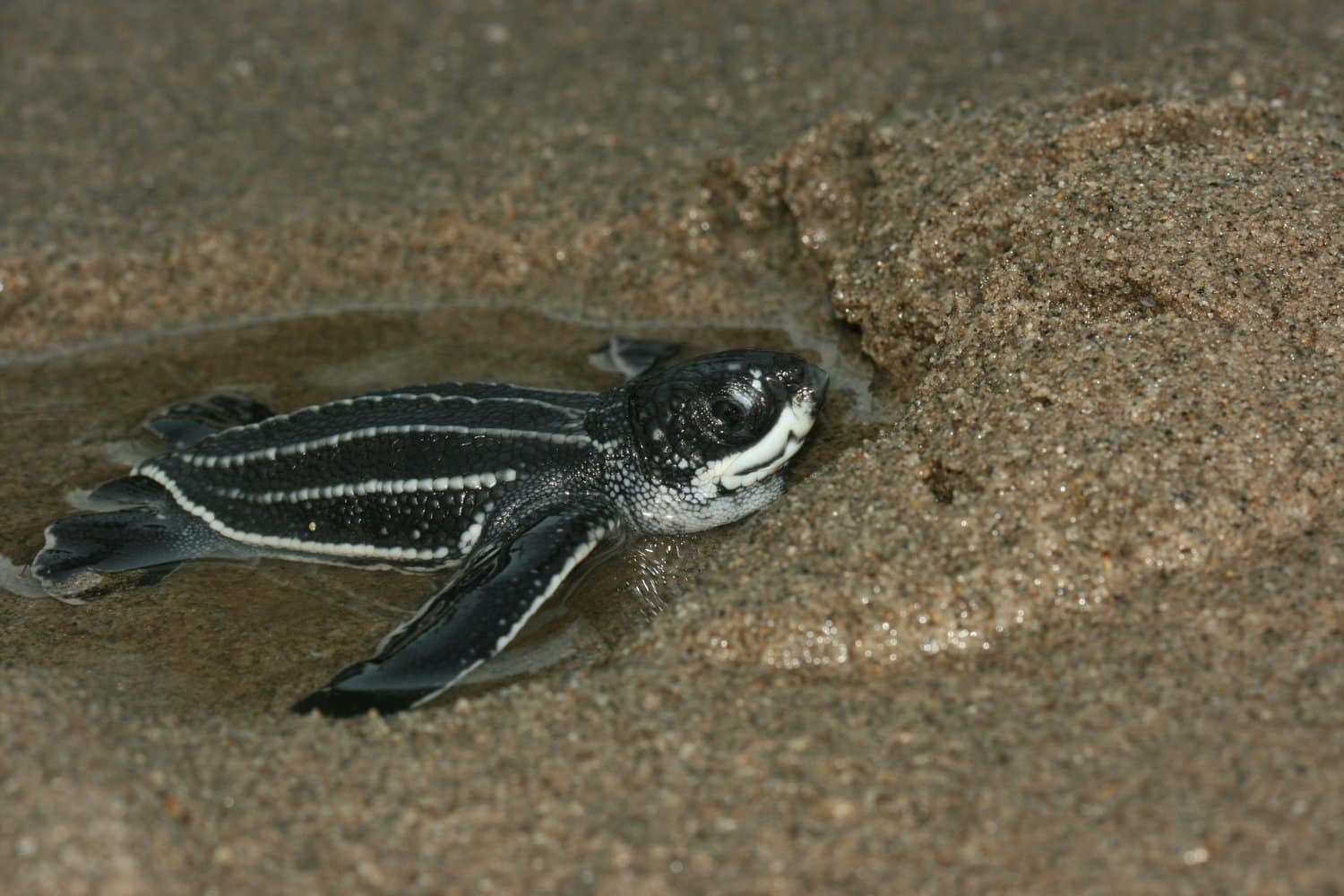
No other country has as many nesting leatherback turtles as Gabon. Between November and March, patrols set out from the camp to survey the coast and look for signs in the sand where a female has come ashore during the night. Endangered nests are relocated to the camp’s hatchery, and starting in January, you’ll accompany the hatchlings on their first few meters into the ocean. Young sea turtles live year-round in the shallow waters off the coast.
Birdwatching (included)


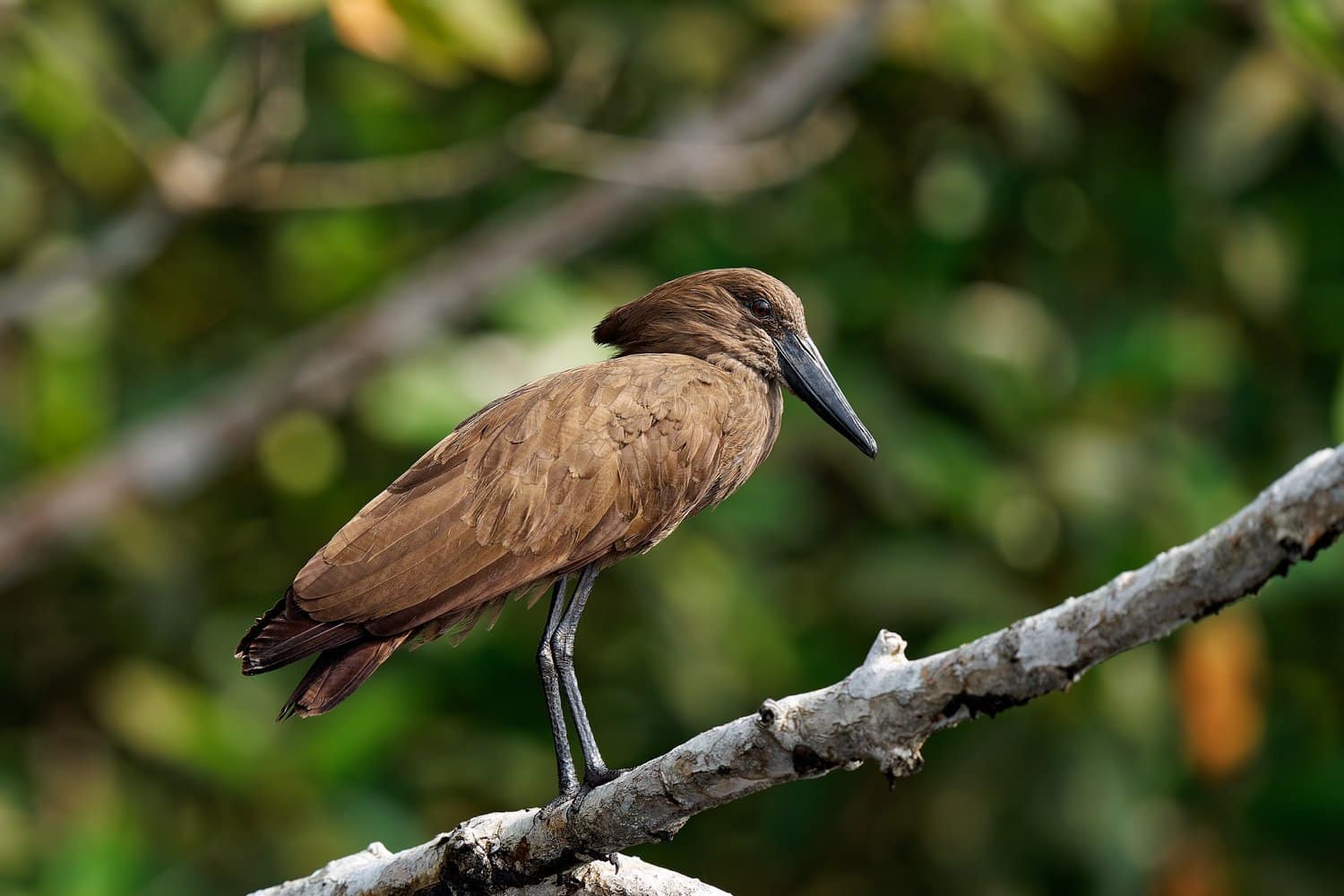
More than 395 bird species have been recorded in Loango National Park, and many of them have made this their permanent home: at night, the banded fish owl and the marbled fish owl call out over the lagoon; the white-crested heron stands motionless by the waterways; and the Loango weaver builds its nest in the coastal shrubs. Starting in September, things really come alive as the rose-breasted pitta and red-eyed swallows arrive to breed, and the most productive weeks of the year begin. A regular event every evening: the arrival of African grey parrots and hornbills at the lagoon islands.
Ethnobotanical excursions (included)
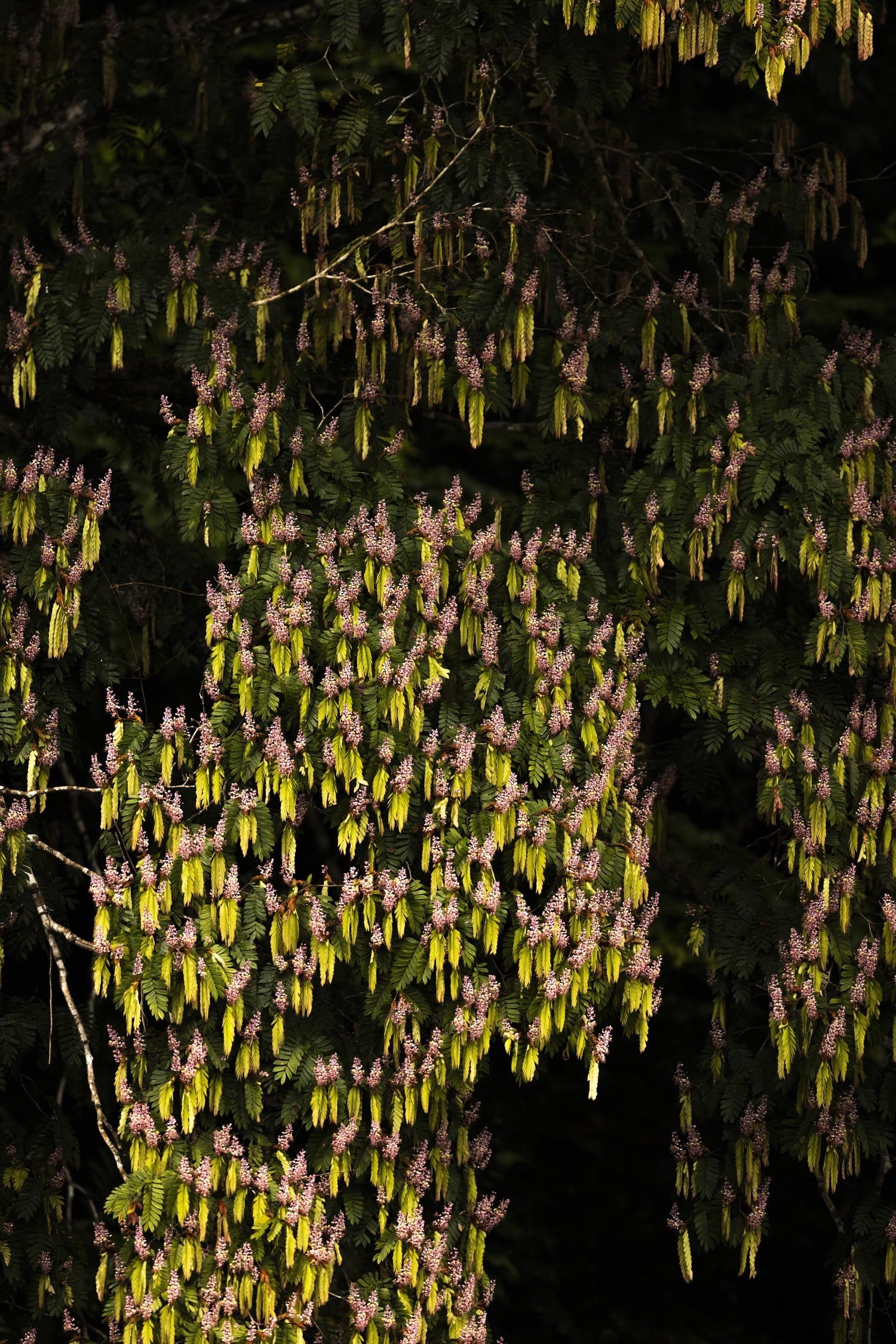


The guide explains which roots chimpanzees chew on when they are sick, which tree sap can catch fire even when wet, and why chimpanzees drum on the buttress roots of certain trees. It’s about trees that live in symbiosis with ants, the roots to which Gabon’s Bwiti ceremonies owe their power, and the question of how one can even find one’s way under a dense canopy of leaves.
Sundowners and a campfire (included)

The location changes every evening: the beach in front of the camp, the fire at the estuary, the boat off the lagoon islands, the open grasslands south of Sette Cama, and, for the last three evenings, the bar overlooking the Iguela Lagoon. What remains is that hour when the day draws to a close and the sounds of the night begin.
Sounga Trail from Sette Cama to the North (included, full day)


The Sounga Trail is a full day in the wilderness, traveling on foot and by boat. In the morning, you’ll cross the Ndogo Lagoon to the village of Sounga, then follow the trail north to Inyoungou, and from there take a boat down the Akaka River to the Iguela Lagoon. Your main luggage is carried on the porters’ shoulders and must therefore be packed in soft bags with carrying straps; the porters may refuse other items of luggage, or you may be charged for a rental bag. You’ll only carry your daypack yourself. The trail is physically demanding and is reserved for participants ages 15 and up.
Gorilla Trekking at Yatouga (included, Day 10)
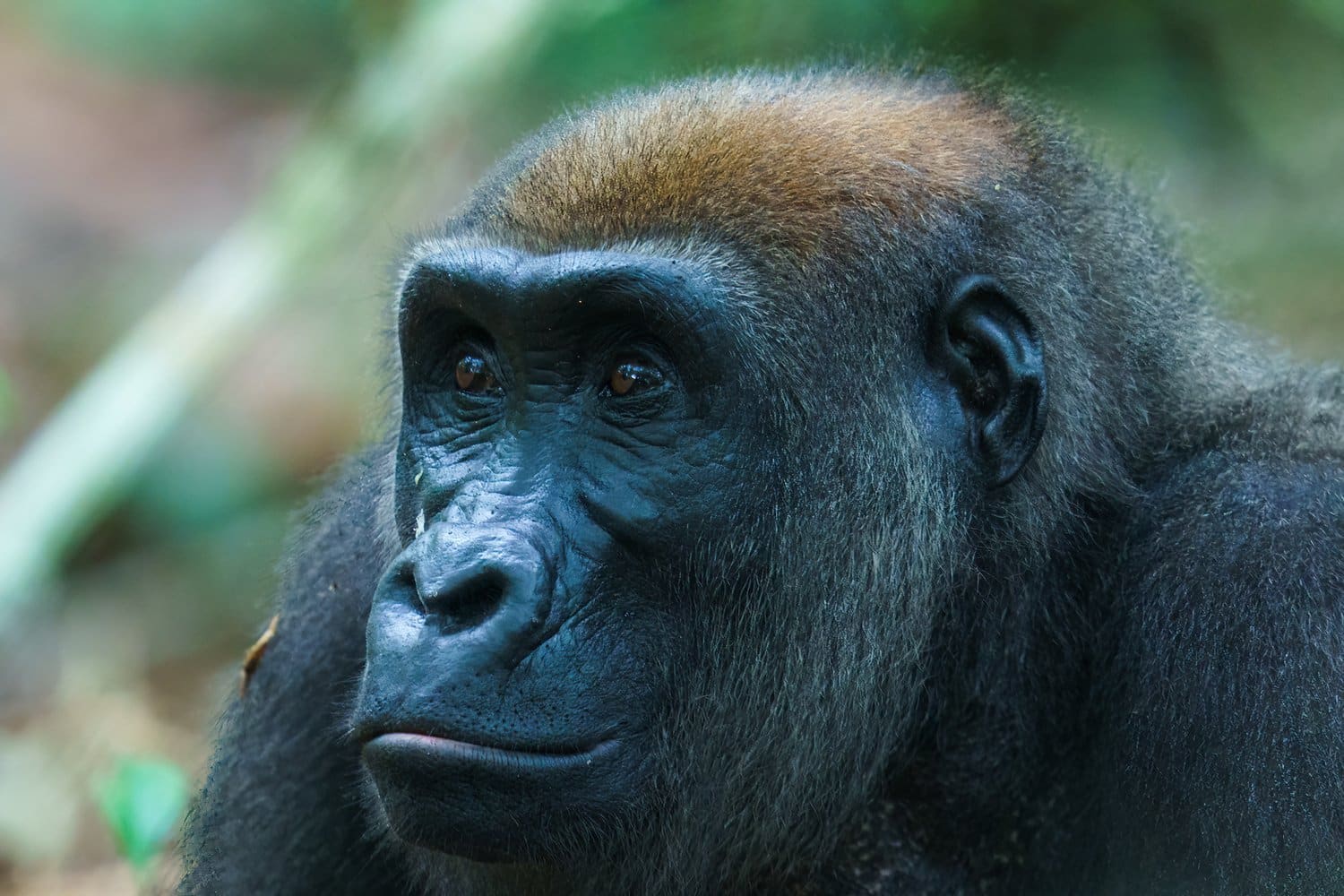

In the northern part of Loango National Park, a research team from the Max Planck Institute is habituating a group of western lowland gorillas to the presence of humans: the Yatouga Habituation Project. After a 45-minute boat ride, you’ll spend the morning with this group, and at noon you’ll enjoy a picnic lunch from your packed lunch. Visits are by reservation only and limited to four people per day; the minimum age is 15, and those aged 65 and older must provide a doctor’s note certifying their physical fitness.
Savanna game drives and Iguela Lagoon (included)


The northern part of Loango is more open than the southern part: Here, there are grasslands that vehicles can traverse and a lagoon whose waterways can be explored by boat. The excursions alternate between car, boat, and on-foot exploration; the wildlife in this part of the park includes forest elephants, red buffalo, hippos, and an extraordinary variety of birds, and the coast, with its wild Atlantic beaches, is within easy reach of the camp.
Dates & Prices
Request your trip here!
| Period | Price per person | further information |
|---|---|---|
| Dates available upon request | Price upon request | 12 days / 11 nights, itinerary as described |
Information
Included services:
- Meet & Assist upon arrival and departure at Libreville Airport, including assistance at the visa counter
- Transfers between the airport and the hotel in Libreville
- One night's stay at the Park Inn by Radisson Libreville (Standard Room) with breakfast
- Charter flight from Libreville to Gamba, road and boat transfer from Gamba to the camp, about an hour across the Ndogo Lagoon
- Seven nights at the Sette Cama Eco Camp in a Meru tent with a private bathroom and air conditioning, including park fees and the conservation fee
- Full board at Sette Cama with set menus featuring fresh, locally sourced fish, accompanied by local beverages (beer, wine, spirits, soft drinks, water)
- Guided daily activities in Sette Cama with local guides: rainforest hikes with camera traps, coastal hikes, boat tours on the Ndogo Lagoon, kayaking, nighttime boat safaris, overnight stay at Point Milongo, ethnobotanical excursions, and birdwatching
- Sounga Trail: Boat transfer to Sounga Bay, guided hike with a picnic, porters for your main luggage, and a boat ride down the Akaka River to Loango Savannah Camp
- Three nights at Loango Savannah Camp in a tent with a private bathroom, hot water, and air conditioning
- Full board at Loango Savannah Camp, including water, soft drinks, beer, house wines, and house spirits
- Guided excursions from Loango Savannah Camp (game drives, boat tours, hikes) as well as park fees
- Gorilla Trekking with the Yatouga Habituation Project, Including Boat Transfer and a Packed Lunch
- Transfer from Loango Savannah Camp to Port-Gentil and scheduled flight to Libreville
- Sundowners and campfires as listed in the itinerary
Not included:
- International flights to and from Libreville (we can handle flight planning upon request)
- Visa for Gabon: The tour operator will arrange for the visa locally for an additional fee; you will pay the visa fee in cash upon arrival in Libreville
- Additional night in Libreville if your return flight is the following day, for an additional fee
- International health insurance with emergency evacuation coverage and trip cancellation insurance
- Premium Spirits at the Camps
- Optional excursions in and around Libreville for an additional fee
- Tips and Personal Expenses
Important:
- We recommend arriving one to two days before the trip begins to allow for any flight or baggage delays.
- Travel health insurance with unlimited coverage is mandatory, and proof of coverage must be provided.
- The trip takes you to remote areas without access to advanced medical facilities. People with life-threatening conditions or who require daily medical care cannot participate.
- The guides speak English. There are no plans to provide a German-speaking guide.
- This trip is not suitable for people with limited mobility.
- A yellow fever vaccination is required for entry into Gabon; it must be administered at least two weeks before departure and will be verified upon arrival.
- The rainforest hikes cover eight to twelve kilometers and take several hours; the Sounga Trail covers about 18 kilometers and takes five to six hours on uneven terrain. Both require stamina, sure footing, and a willingness to wade through streams and creeks.
- Gorilla trekking is limited to four participants per day and must be reserved in advance; a medical certificate attesting to physical fitness is required for those aged 65 and older.
- The minimum age for the Sounga Trail and gorilla trekking is 15; this trip is therefore intended for families with teenagers aged 15 and older.
- For the charter flight to Gamba, the baggage limit is 20 kg of checked baggage plus 5 kg of carry-on baggage. Baggage must be packed in soft travel bags with carrying straps so that the porters can carry them on their shoulders along the trail; the porters may refuse other types of luggage, or a fee will be charged for a rental bag. Excess baggage can be stored at the hotel in Libreville; since the return trip via Port-Gentil leads directly to the international departure area, we will coordinate the pickup with you.
- Please let us know about any food allergies or intolerances well in advance of your arrival.
Frequently Asked Questions
How do I get to Gabon, and when do I return?
Your destination is Libreville. Since the charter flight to Gamba departs only early on Thursdays, you must be there by Wednesday at the latest; an overnight stay at a hotel the night before is included in the itinerary. Good options include Ethiopian Airlines via Addis Ababa and Air France from Paris—both arrive on Wednesdays—as well as Turkish Airlines from Istanbul, which arrives on Tuesday. The return trip on this route takes you through the northern part of the park: you’ll leave Loango Savannah Camp on the twelfth day, a Sunday, via transfer to Port-Gentil and a scheduled flight to Libreville. We’ll work with you to schedule your international flight home for the evening of the same day or for the following day, with an additional night in Libreville (for an extra charge). Upon request, we’ll handle the flight arrangements for you.
Do I need a visa for Gabon?
Yes, and because Sette Cama is your first stop in Gabon, you are required to obtain your visa through the tour operator’s agent in Libreville; there is an additional fee for this service. Here’s the process from your perspective: At least 30 days before departure, please send us a copy of your passport, a passport photo with a white background, and your flight details. After landing, your first stop is the visa counter, where a representative from the tour operator will be waiting with your documents, and the visa will be affixed to your passport; you’ll pay the fee—currently 70 euros—in cash on site, preferably with exact change. U.S. citizens travel with a pre-arranged e-visa (currently 85 euros or 100 U.S. dollars at the counter). We advise against submitting your own application through the public online portal, as applications there often go unanswered. Regulations may vary for other nationalities; please contact us.
Which vaccinations are required?
Gabon requires proof of yellow fever vaccination upon entry. Get vaccinated no later than two weeks before departure, and carry your vaccination certificate in your carry-on luggage, as it will be checked at the airport. For information on other recommended vaccinations and health precautions, please refer to the German Foreign Office’s current travel and health advisories for Gabon; discuss these with your doctor well in advance.
When is the best time to take this trip?
The route is available from September through April. If you want to see the surfing hippos, come between January and April: that’s when they’re most often found on the beach, and the coast is teeming with forest elephants and red buffalo. September has two highlights: In the south, the first trees in the coastal swamps bear fruit, increasing the chances of spotting gorillas and chimpanzees around Sette Cama, and the breeding season for birds—including rose-breasted finches and red-eyed swallows—begins in September and October. Turtles nest starting in September (olive ridley sea turtles) and from November through January (leatherback sea turtles); the hatchlings make their way to the sea starting in December. A morning visit with the habituated gorilla group at Yatouga is firmly scheduled for Day 10 of every travel month. Let us know what you’d like to see, and we’ll recommend the best date for you.
How fit do I need to be for this trip?
You’ll need to be in much better shape than for a vehicle safari. For seven days in Sette Cama, you’ll be traveling under your own power: on foot through the rainforest—covering eight to twelve kilometers in a single morning, often wading through water—as well as by kayak, setting out before sunrise and spending one night in a tent camp at Point Milongo. The most challenging day is the Sounga Trail: about 18 kilometers in five to six hours over uneven terrain, followed by three hours by boat; the porters carry your main luggage, while you carry your daypack. What’s required is endurance, sure-footedness, and composure when the weather or wildlife change your plans—not personal bests in athletics. For those aged 65 and older, the gorilla trek requires a medical certificate attesting to physical fitness.
Will I see gorillas?
In the south, it’s a matter of luck; in the north, it’s a matter of planning. Western lowland gorillas and chimpanzees live in the wild around Sette Cama, unaccustomed to humans; you may encounter them on any hike, though there’s no guarantee, and most often it’s their tracks, calls, and the images from your camera traps that reveal their presence. In the northern part of the park, you’ll visit the Yatouga Habituation Project, where a research team from the Max Planck Institute monitors a gorilla group; there, you’ll spend a morning with the animals. Visits are limited to four people per day and must be reserved in advance; the minimum age is 15.
Is this trip suitable for children?
For teens ages 15 and up who are good walkers. Although the Sette Cama Eco Camp accepts children ages 12 and up who are in good physical condition, the Sounga Trail and the gorilla trek have a minimum age requirement of 15, and both activities are integral parts of this trip. For families with younger children, we recommend our seven-night trip to Sette Cama, which does not include the trail or the trek.
What should I pack in my travel bag, and how do I pack for the trail?
First, the bag itself: On the Sounga Trail, the porters carry your main luggage on their backs like a backpack, so it should be packed in soft duffel bags with carrying straps; the porters may refuse other types of luggage, or you may be charged for a rental bag. For the day itself, you’ll need your own small daypack. Pack lightweight clothing in muted colors, a rain jacket and waterproof overpants, warm layers for mornings and evenings, shoes for long hikes and wading through water, as well as sandals with a secure fit; binoculars and camera gear are essential. For the charter flight to Gamba, the baggage limit is 20 kilograms plus 5 kilograms of carry-on luggage. Anything you don’t need at the camp will be stored at the hotel in Libreville; we’ll coordinate with you on when you’ll get it back, as the return trip goes via Port-Gentil directly to the international departure terminal.
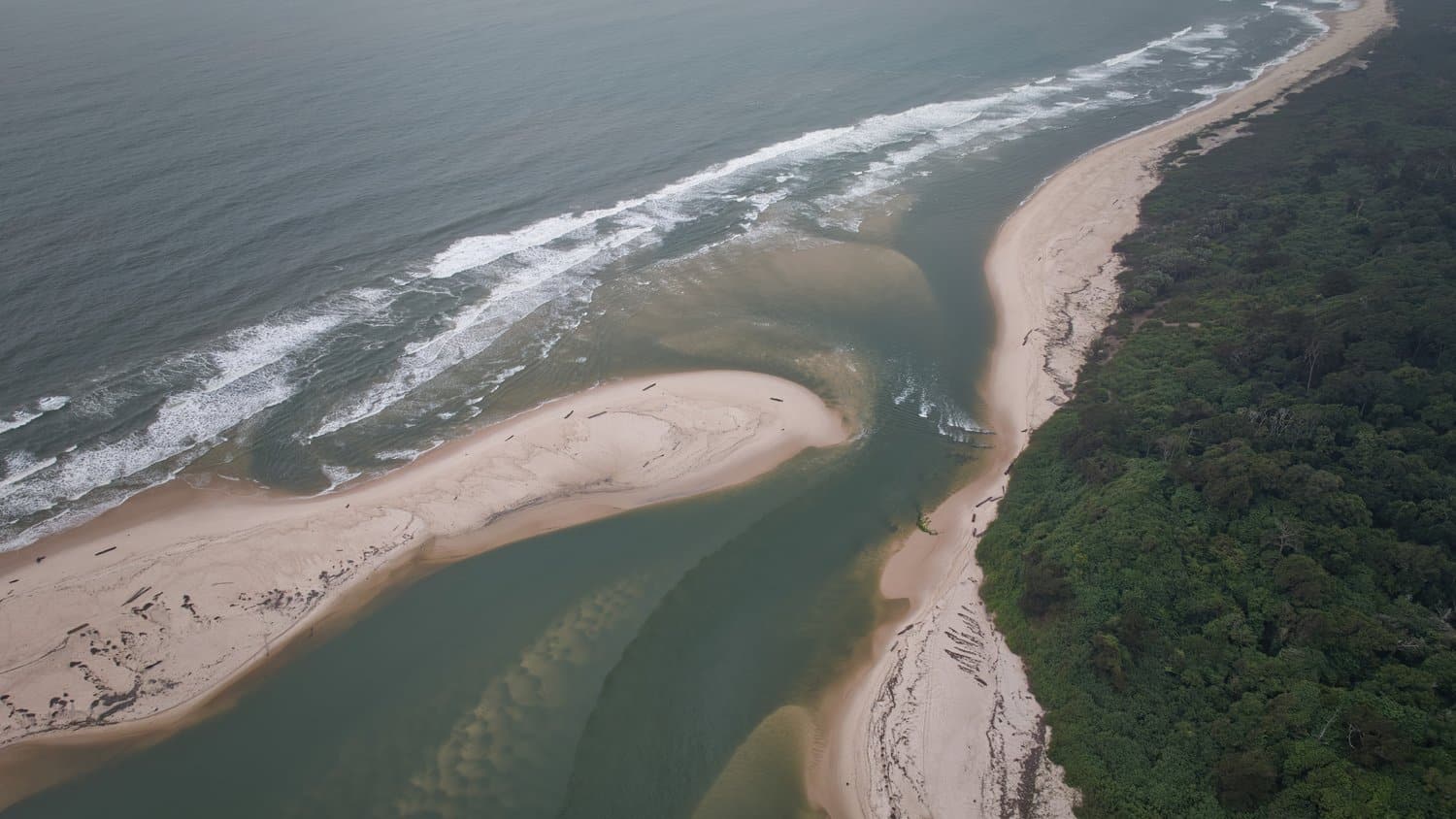
11 Nights in North and South Gabon—Estuary Mouth, Aerial View by Sean Bellon, Machaba Safaris
Where the lagoon flows into the Atlantic Ocean | © Sean Bellon

11 Nights: North and South Gabon Coastal Trail—Aerial View—Machaba Safaris
A bright path winds through the coastal vegetation

A mist of sea spray settles over the wild palm-lined beach
A mist of sea spray settles over the wild palm-lined beach

11_Nights_North_and_South_Gabon—Red Buffalo on the Atlantic Beach—Sean Bellon—Machaba Safaris
A red buffalo in the middle of the beach in front of the surf | © Sean Bellon

11_Nights_North_and_South_Gabon—Forest Elephant on the Dune—Machaba Safaris
A male forest elephant with long tusks on the dune; a cattle egret in the grass

11 Nights in Northern and Southern Gabon—Bristled-Ear Pigs in the Coastal Plain—Machaba Safaris
Tufted-ear pigs graze among the palm trees above the beach
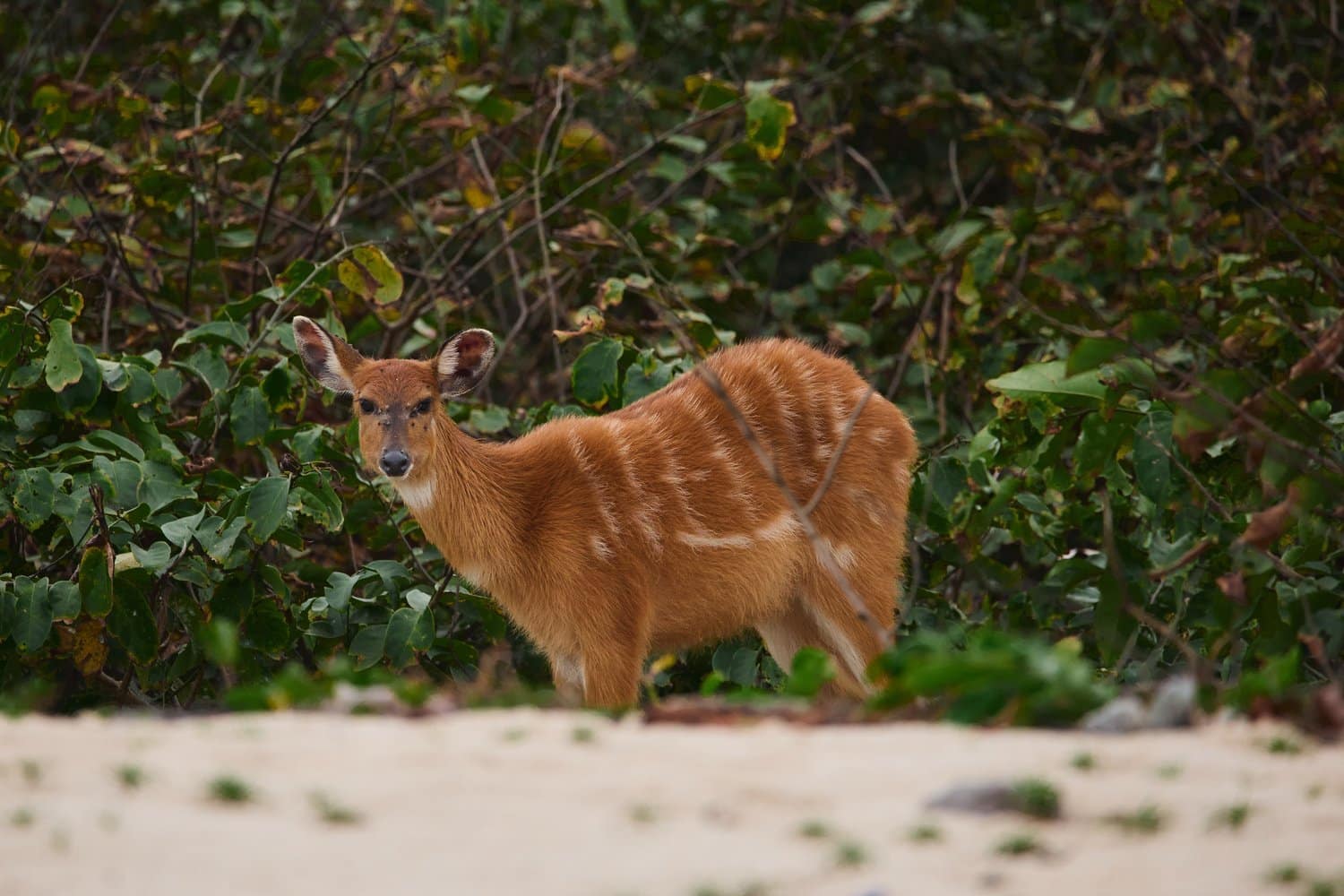
11 Nights: North and South Gabun—Sitatunga at the Edge of the Forest—Machaba Safaris
A sitatunga at the edge of the forest overlooking the beach
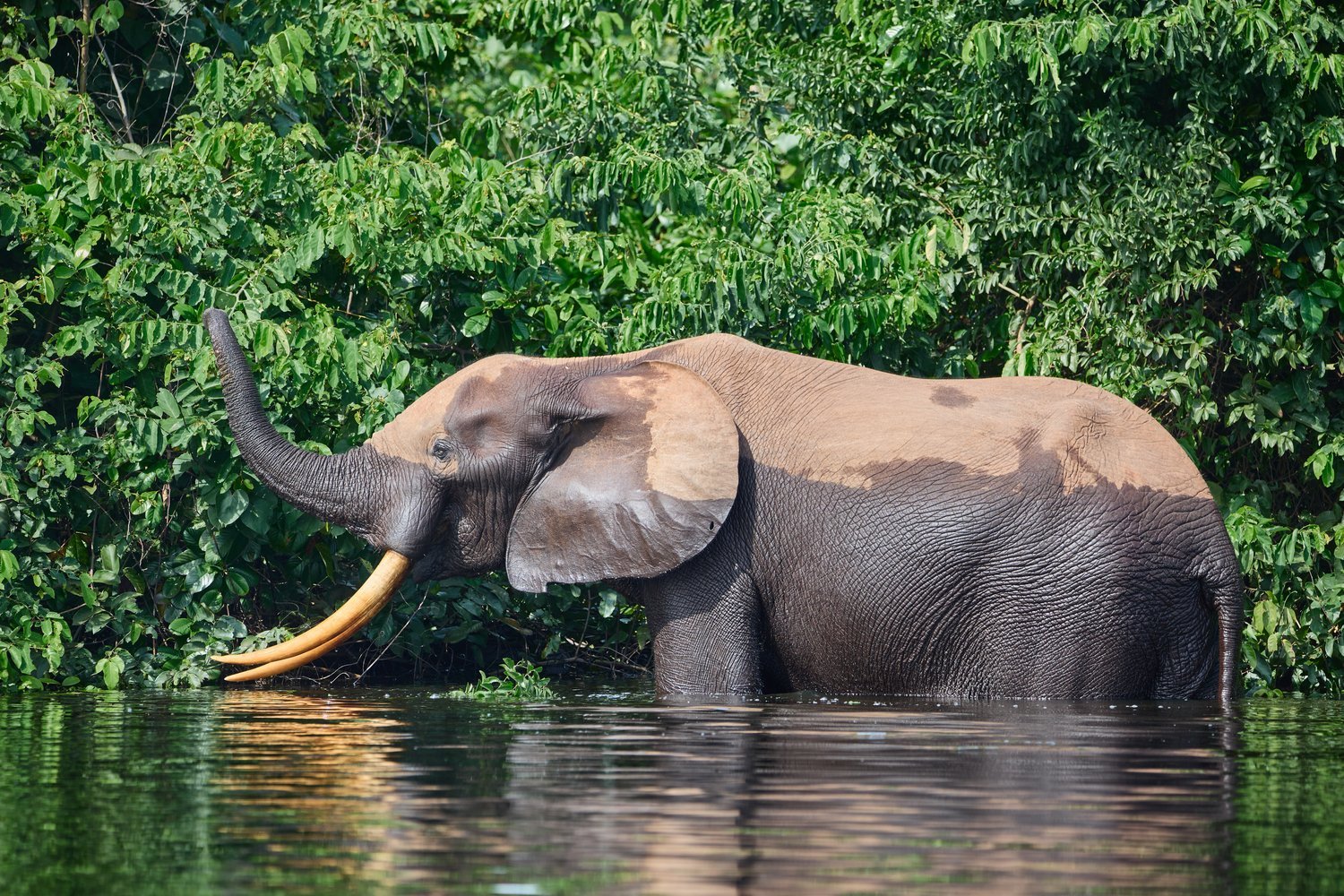
11_nights_north_and_south_Gabun-Forest_Elephant_in_the_Estuary-Machaba_Safaris
A forest elephant is bathing in the estuary; its tusks are reflected in the water

A Show of Strength Among the Mangroves
A Show of Strength Among the Mangroves
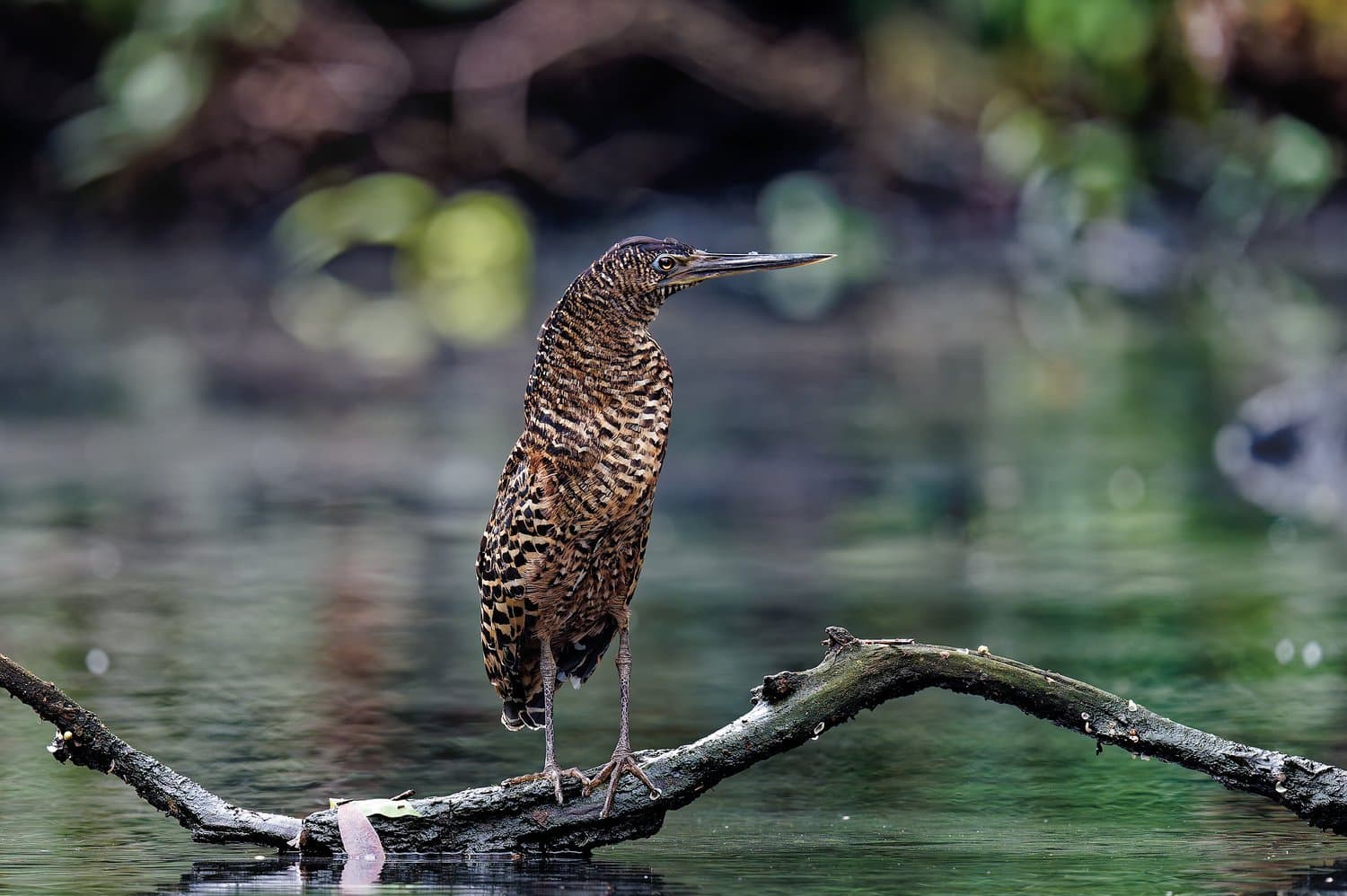
11_nights_north_and_south_Gabun-White-crested_Heron_on_a_branch-Machaba_Safaris
A white-crested heron perches on a branch over the water

11_nights_north_and_south_of_Gabun—Pelicans_in_the_Surf—Machaba_Safaris
Pelicans in the Atlantic surf

11_nights_north_and_south_Gabun-kingfisher_against_a_dark_background-Machaba_Safaris
A kingfisher glows cobalt blue against a dark background

11_nights_north_and_south_Gabun-Akaka_Swamps_aerial_view-Sean_Bellon-Machaba_Safaris
The waterways of the Akaka Marshes, viewed from above | © Sean Bellon

11_nights_north_and_south_Gabun_swamp_forest_with_water_lilies-Sean_Bellon-Machaba_Safaris
Swamp forest: light-colored trunks stand in the still water | © Sean Bellon
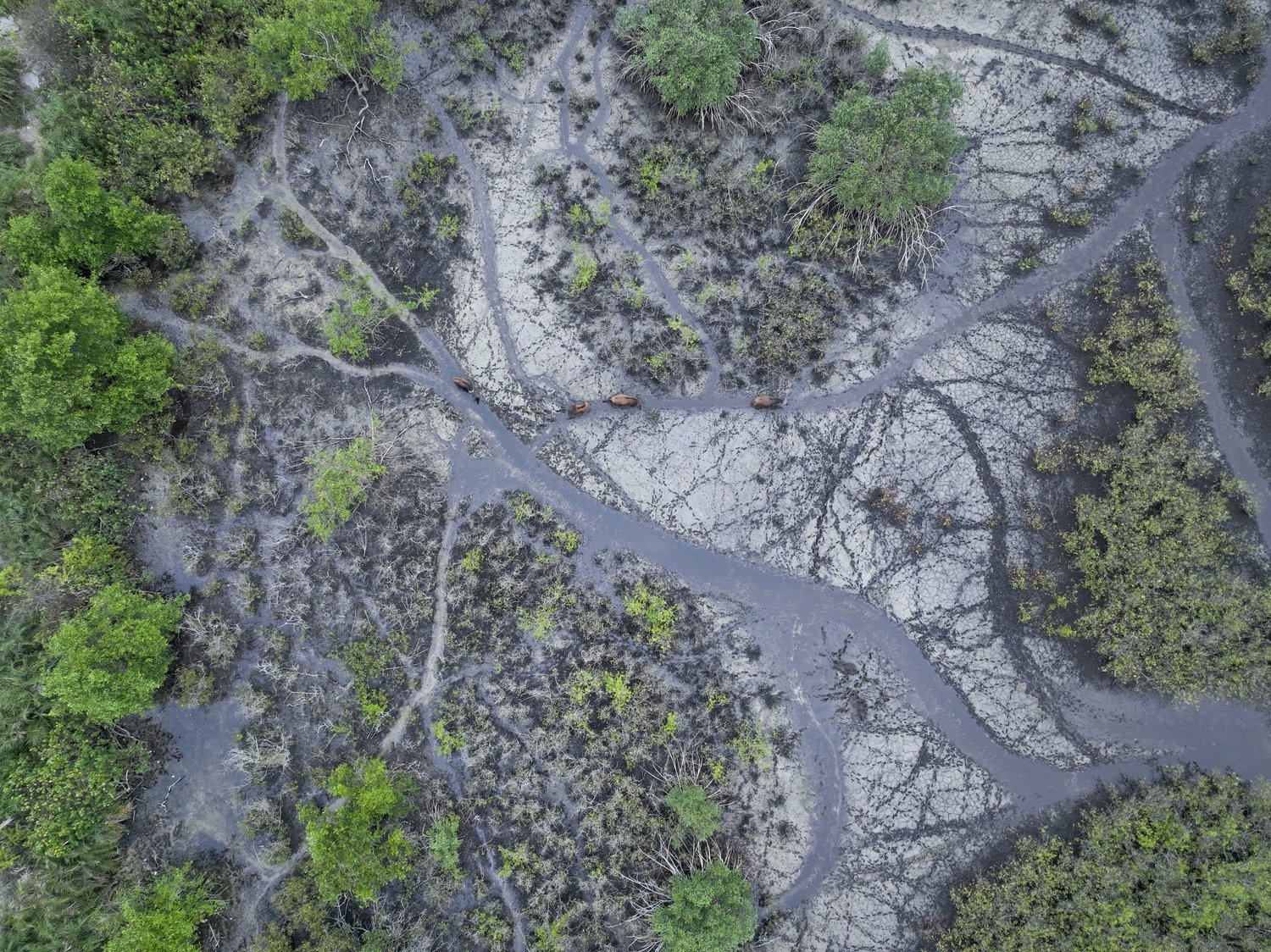
11 Nights in Northern and Southern Gabon—Wildlife Crossings from Above—Machaba Safaris
Wildlife Crossings: Trail-like paths across the plain, as seen from above

11 Nights in Northern and Southern Gabun—Gorilla Trekking with the Machaba Tribe—Safaris
A gorilla's hand wraps around the trunk
Further travels in Africa

Hippos Surfing Along Gabon's Wild Coast
From Victoria Falls to the Indian Ocean (2026)
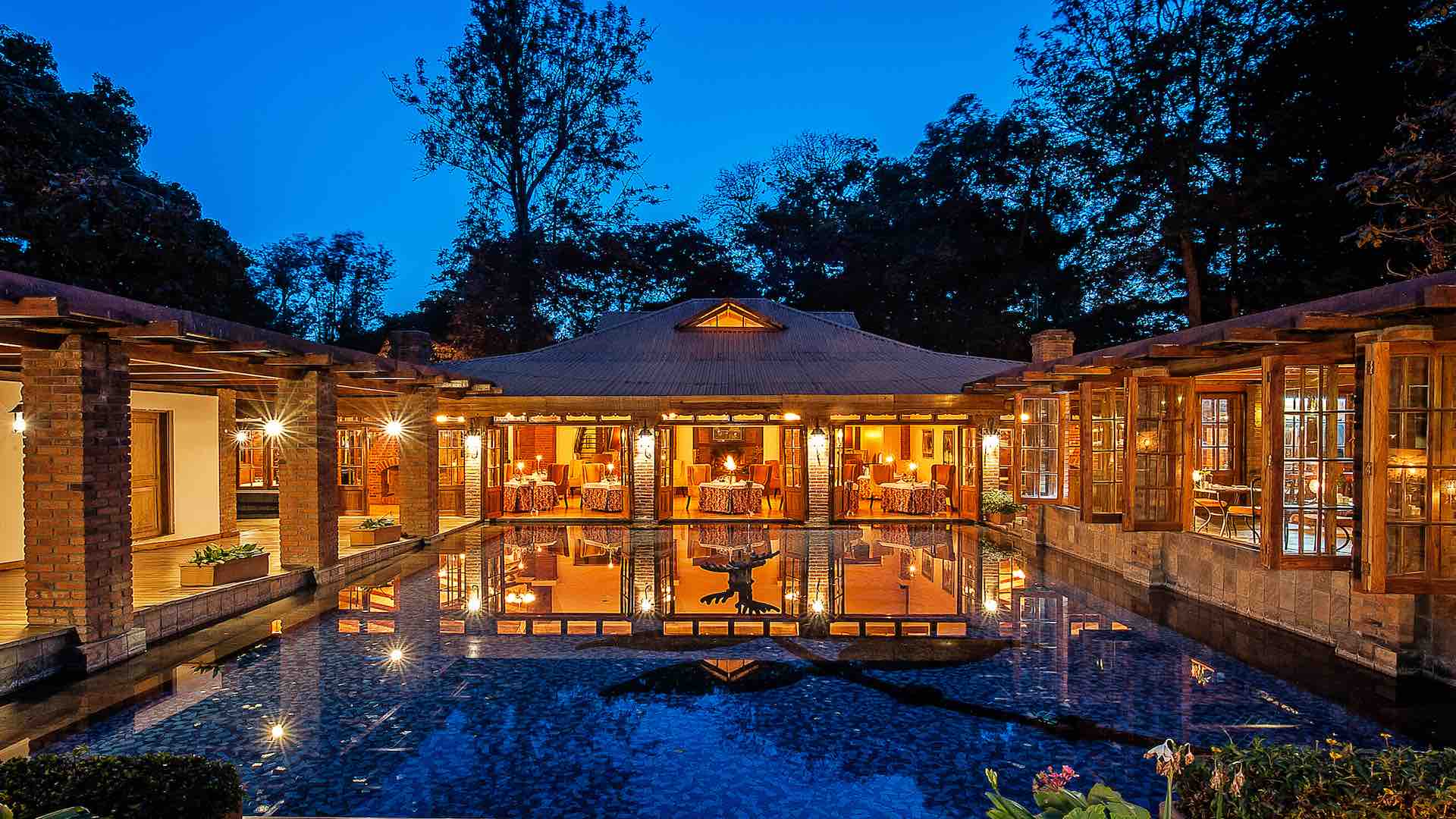
Elewana Arusha Coffee Lodge – Coffee traditions at the foot of Mount Meru

Elewana The Manor at Ngorongoro – This Side of Africa
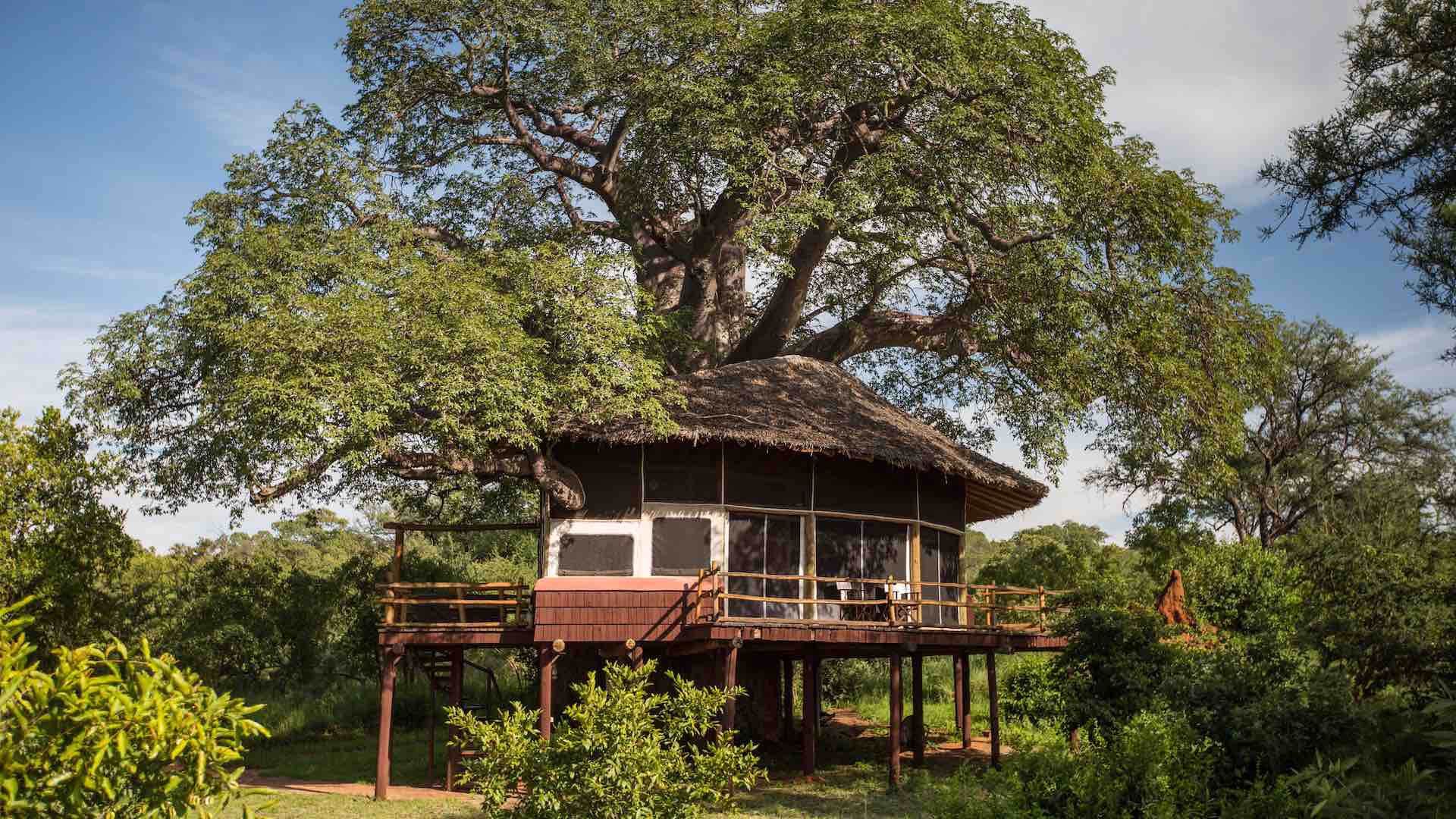
Elewana Tarangire Treetops – Treehouse dream & baobabs

Elewana Serengeti Migration Camp – Glamping Safari Style
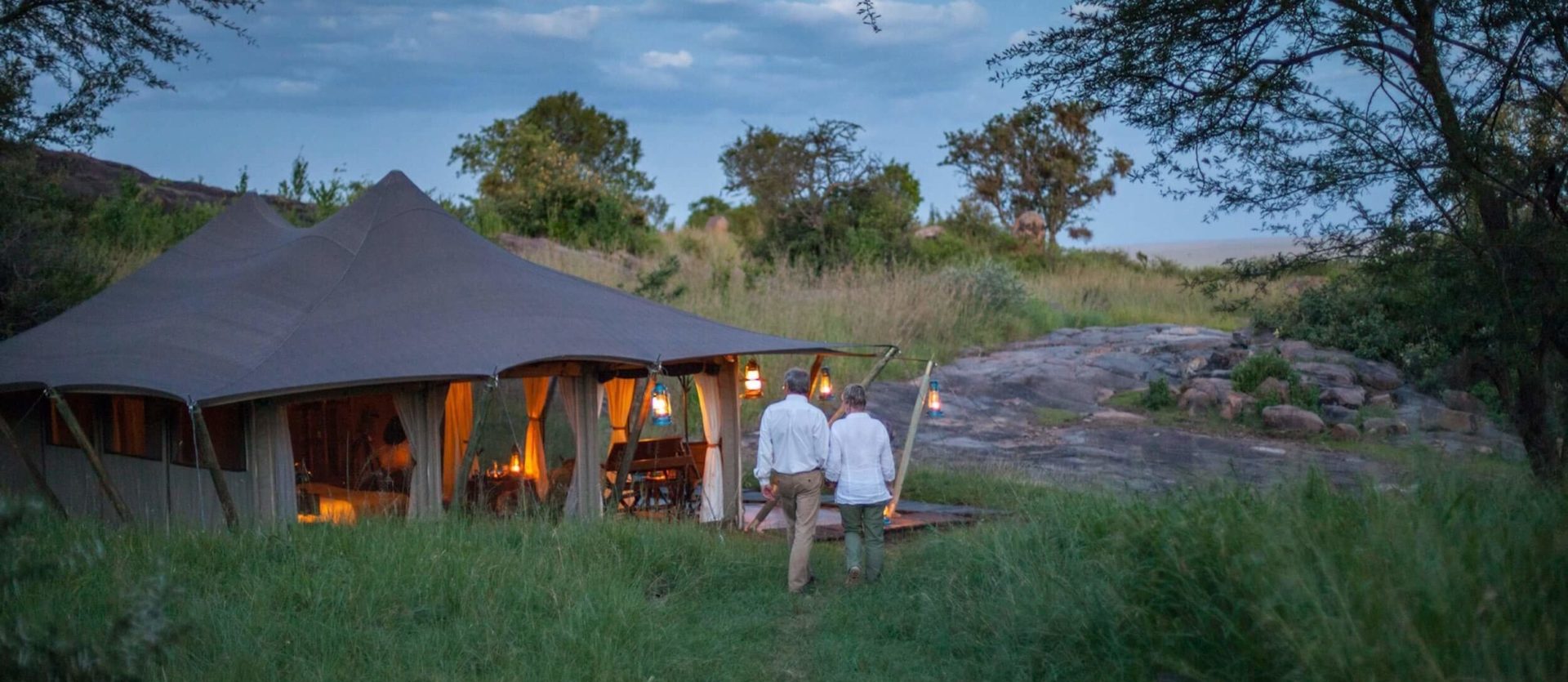
Elewana Serengeti Pioneer Camp – Experience the wilderness up close in the heart of the Serengeti

Boutique hotel dream in white pavilions on Zanzibar | All inclusive
13.208 €
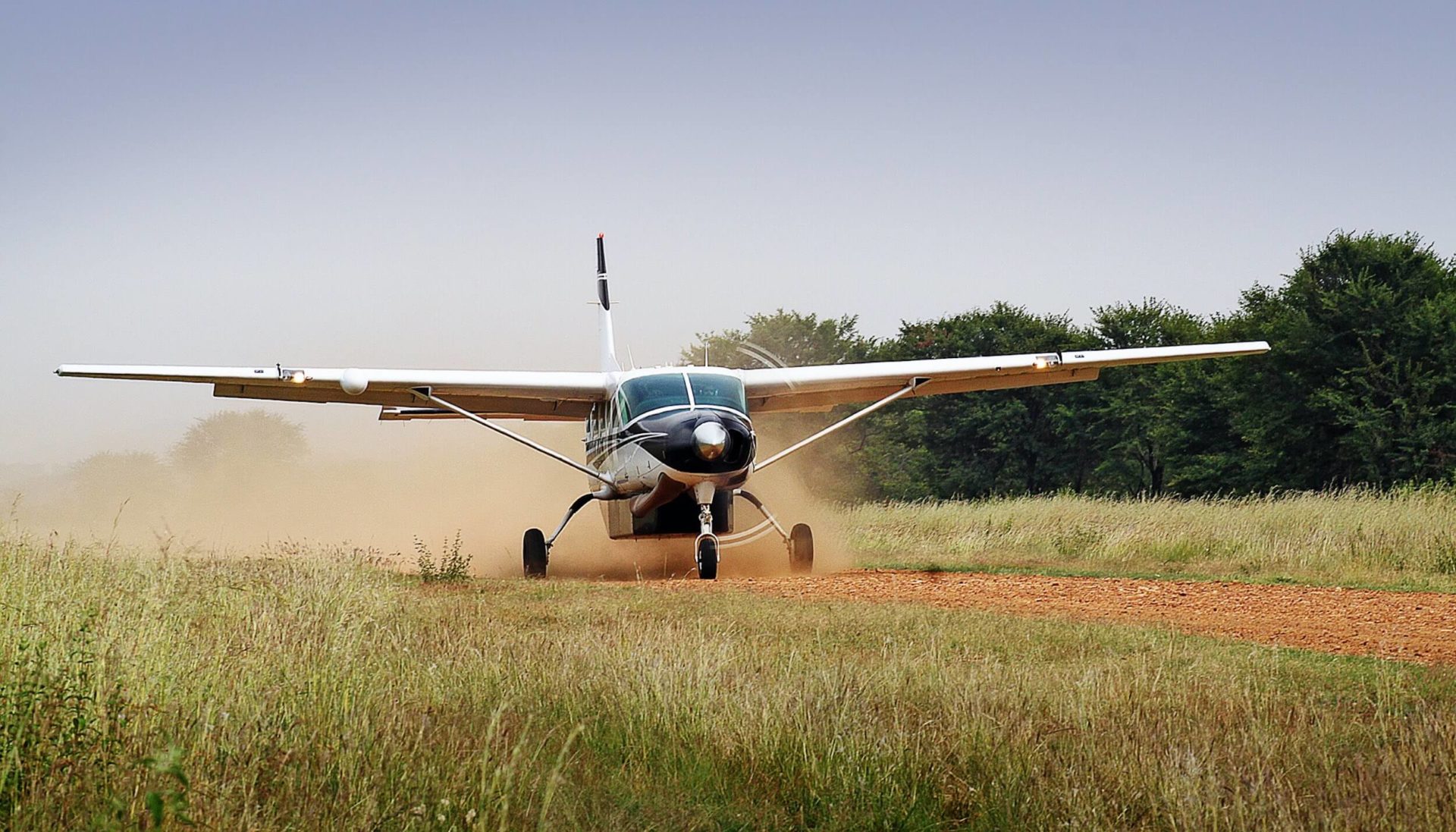
SkySafari | Classic Tanzania – Travel in Style & Lodges
10.120 €
Impressive Congo Basin with river safari & gorilla tracking
6.587 €

Walking safari in Zambia
5.640 €