Day 1 Departure from Germany
Day 2 Arrival on Australia's Gold Coast
With one stopover, you’ll fly to Australia today—your destination is Cairns in the state of Queensland. The comfortable hotel where you’ll be staying for the next three nights is just a kangaroo’s leap away from the harbor and the palm-lined waterfront promenade!
Day 3 UNESCO World Heritage Site Great Barrier Reef
Enjoy a day off in tropical Cairns on Australia’s Gold Coast. How about a shopping trip in the pedestrian zone, a stroll along the man-made lagoon, or a visit to the colorful aquarium? If you’d like, you can take a boat trip to the world-famous Great Barrier Reef. Whether snorkeling, swimming, or riding a glass-bottom boat, you’ll experience the incredible underwater world of this UNESCO World Heritage Site! In the evening, you’ll get to know your fellow travelers over a welcome dinner. (FA)
Day 4 Kuranda Rainforest
Marvel at Kuranda’s lush green rainforest from a breathtaking vantage point: on a train ride lasting just under two hours through spectacular gorges, past picturesque waterfalls to Kuranda and back—even from a bird’s-eye view—via the Skyrail cable car soaring above the rainforest canopy! (F)
Day 5 Cast off in Cairns!
In the morning, your comfortable expedition ship, the Coral Discoverer, will be waiting for you in the port of Cairns, your floating home for the next ten nights. After a cheerful champagne reception, you can settle into your cabin. But don't miss the departure maneuver as your ship leaves the port of Cairns and Queensland's green mountains gradually sink behind you into the Pacific Ocean. (FA)
Day 6 A day on the Pacific Ocean
Today you will cross the Coral Sea. Enjoy the service and comfort on board the Coral Discoverer and get to know your fellow travelers. Exciting lectures on board will whet your appetite for your great adventure: ahead of you lies an archaic world – the myth-shrouded Papua New Guinea! (FMA)
Day 7 Green Samarai
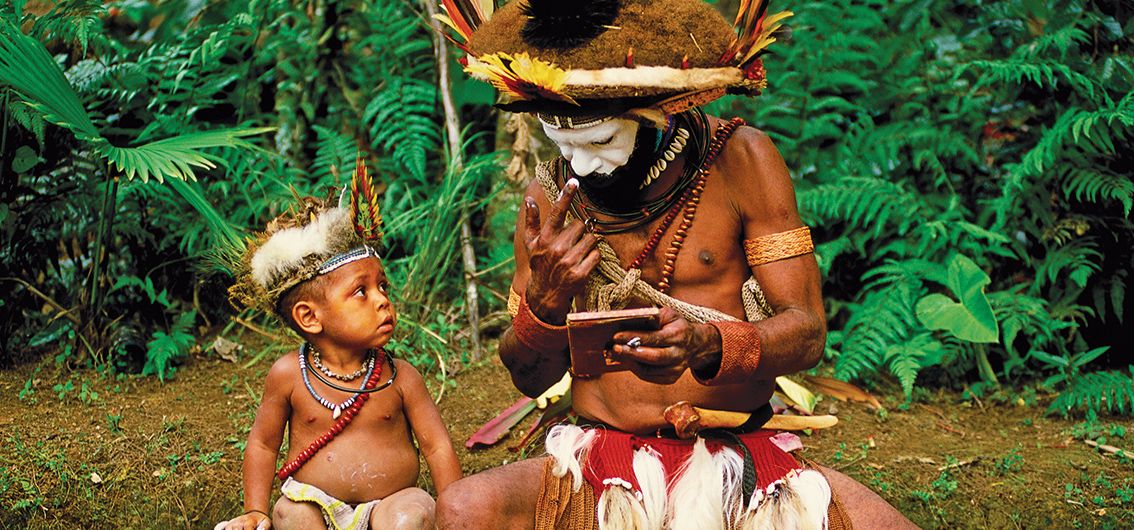
When you wake up, you rub your eyes in amazement: Behind your ship, traditional outrigger canoes laden with fresh fruit, fish, and vegetables have gathered to form a floating market! Here, at the southeasternmost tip of Papua New Guinea, lies Samarai. This small island was once an important trading hub between Australia and East Asia. When you go ashore, the locals welcome you with a traditional “sing-sing.” Afterward, you’ll stroll with the islanders past former trading buildings overgrown with tropical greenery, whose golden age has been all but forgotten. With a little luck, you might snag some local pearl jewelry. (FMA)
Day 8 Kula Ring and Black Magic
Today you’ll anchor off the large, mountainous Ferguson Island. The island is known for the impressive Dei Dei geysers—natural thermal and sulfur springs that spout steam at regular intervals. Everything is bubbling and gurgling! The naturally formed pools, each a different color, are lined with carnivorous pitcher plants. Some locals can’t resist cooking their meals in the scalding-hot pools. In the afternoon, you’ll cross over to Dobu Island, which is feared by the inhabitants of neighboring islands as a place of magic. The welcome, however, is extremely peaceful. To this day, Dobu plays a significant role in the Kula Ring, a ritual barter system involving mostly red and white shell necklaces that permanently ensures social contact and cohesion among the islands. (FMA)
Day 9 The Islands of Love
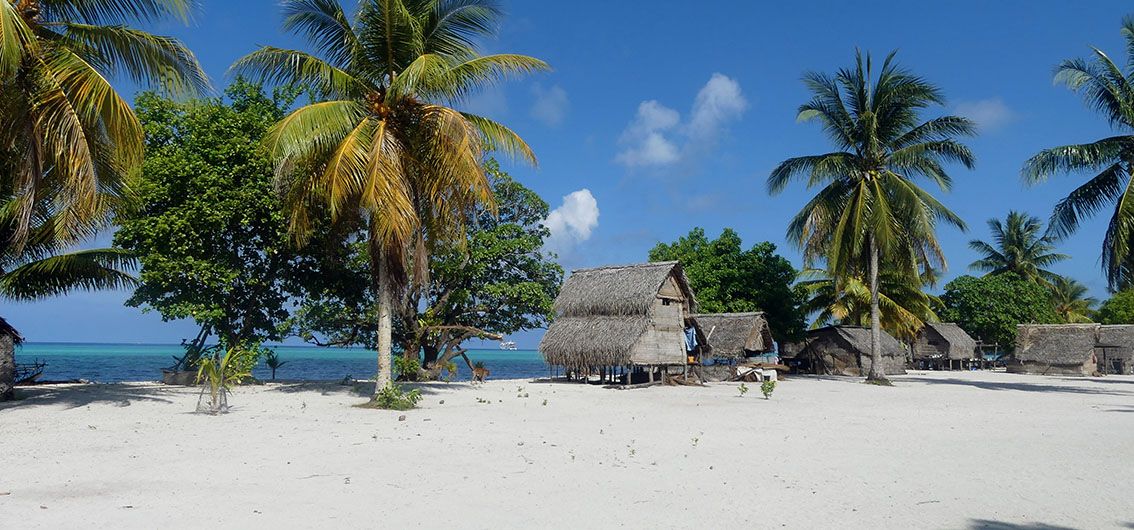
The largely undeveloped Trobriand Archipelago is a world unto itself. The islanders are related to the Polynesians and have a fairly open attitude toward sexuality and a cult centered on the yam. The greeting ceremony differs significantly from the welcome rituals in other regions of Papua New Guinea. Even from a distance, you’ll spot the flower-adorned canoes. Their paddlers will accompany you, singing, to the beach of the small island of Kuiawa. Here, the Sing-Sing is especially colorful! Bird-of-paradise feathers rise and fall to the rhythm of the drums. As you stroll through the village, you’ll experience the daily life of the residents and see the typical yam huts. Keep an eye out for the handicrafts the islanders have for sale—the workmanship here is particularly intricate. (FMA)
Day 10: In the Land of the Tufi Fjords
Early in the morning, your ship will reach the fantastic world of the Tufi Fjords in southeastern Papua New Guinea. The day offers plenty of variety: You’ll have the chance to take a hike to a lookout point high above the fjords. Along the way, you’ll pass carefully tended fruit and vegetable gardens, learn about butterfly breeding, and enjoy the breathtaking panorama. A special highlight is a ride on flower-adorned outrigger canoes. Local rowers will glide with you across the deep-green fjord—a moment of wonderful tranquility against a stunning backdrop. The region is also known for its colorfully painted tapa cloths: The bark of the mulberry tree is pounded, washed, dried, and shaped by the women of the community in a process that takes several days. It is then artistically painted. If you’d like, you can even go snorkeling here in the deep-green waters of the Tufi Fjords! (FMA)
Day 11: In the footsteps of German colonists
In 1884, the German explorer Otto Finsch discovered a natural harbor on the east coast of New Guinea. The following year, Finschhafen was established there as an outpost of the German New Guinea Company. Even today, the German colonial era continues to influence the people of this region, as evidenced by a distinct sense of order in their daily lives. After the welcome ceremony, you’ll walk with the villagers to the local market, known for its carved paddles and ritual wooden bowls, or you can visit the local cemetery. There’s also an opportunity to go snorkeling today. (FMA)
Day 12 In the Bismarck Archipelago
Today you’ll anchor off the island of Umboi. The first Christian missionary efforts in Papua New Guinea took place here in the 1850s. The Lutheran mission station Lab Lab bears witness to this. The local boarding school and infirmary are also affiliated with the mission and inspired by Prussian principles. The students are just as eager to meet you as you are to meet them, and they’ll do their best to share a bit about their lives with you. On Tuam, you’ll be treated not to just one, but three sing-sings. The local dancers regularly win nationwide competitions. The beach on the wind-sheltered side of the island offers not only a pleasant way to cool off but also the house reef with the greatest abundance of fish—be sure to pack your snorkel! (FMA)
Day 13 Mountains of Fire in the Sea
The stratovolcano on the island of Karkar is one of the most active volcanoes in the South Pacific and still holds religious significance for the locals today. When you go ashore, the entire population will be waiting for you on the palm-fringed beach. Several sing-sings and the local mambo band will give you an unforgettable welcome. Karkar’s soil is extremely fertile. In small groups, you’ll explore a plantation of coconuts, cacao, and tropical fruits. The plantation is managed by a German woman: Barbara, originally from Nuremberg, moved here for love over twenty years ago and still lives here today—a fascinating encounter! In the afternoon, accompanied by the curious local children, you’ll go snorkeling to explore the island’s coral reefs. As you cross back toward the mainland, keep an eye out for the volcanic islands on the horizon. It’s quite possible that you’ll witness an eruption from aboard the boat—especially impressive at night! (FMA)
Day 14 On the Sepik River
It’s worth getting up early today: At sunrise, your small expedition ship will sail into the mouth of the mighty Sepik River. If the river becomes too shallow, you’ll transfer to a dinghy. As you travel down the river, lined with sago palm plantations and traditional palm huts, the locals’ outrigger canoes will accompany you. In the small village of Bien, you’ll go ashore and walk to the main square together with the villagers. Here, a gathered crowd of children will welcome you with cheerful singing. The market next door offers a wide selection of ornate wooden masks, for which the Sepik region is so famous. Back on board, you’ll sail out of the Sepik Delta into the Pacific Ocean. Be sure to stay on deck, because soon the fire-spewing volcano on Kadovar Island will rise out of the sea. With a little luck, you’ll once again have the chance to watch the eruptions with the naked eye from the ship—a magnificent natural spectacle! (FMA)
Day 15 Excursion to the mountains
In the morning, you’ll arrive at the port of Madang, which was founded in 1891 during the German colonial era as Friedrich-Wilhelmshafen. After breakfast, it’s time to say goodbye to your expedition ship and its warm-hearted crew. You’ll take a short tour of this tropical town. Then you’ll travel by minibus along a bumpy dirt road into the lush hinterland. In the pottery village of Bil Bil, you’ll be welcomed one last time with a traditional SingSing. Afterward, the villagers will give you a glimpse into the craft of making ornate clay bowls. You’ll enjoy the evening at a comfortable hotel with a farewell dinner. (FA)
Day 16: Thank you, Papua New Guinea!
In other words: Thank you, Papua New Guinea, for showing us a little bit of your mythical world. Today, you’ll fly back home with a layover. If you’ve booked the extension to the Highlands (Trip ID: 2908), you’ll fly to Mount Hagen. If you’ve booked the extension to Australia’s Golden Coast (Trip ID: 2802), you’ll fly to Cairns.