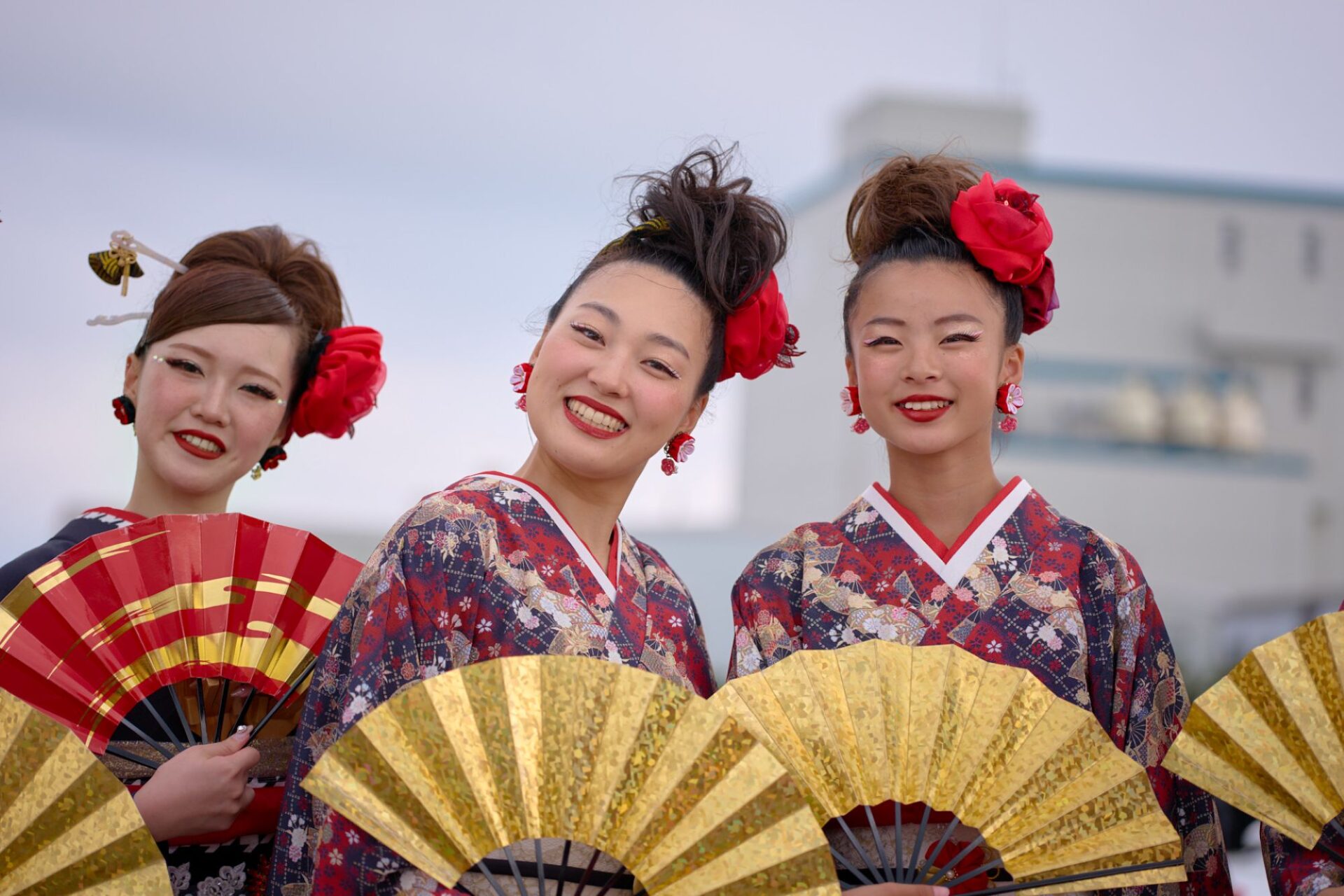
Southern Japan, including South Korea

from / to Osaka

12 days (11 nights)

MS Heritage Adventurer
12 days (11 nights) aboard a small ship (max. 140 passengers) from/to Osaka, cruising through the archipelago in southern Japan, with a day trip to Busan, South Korea, including a flight from Niigata to Osaka
+++ Up to 20% early-bird discount for trips in 2027 when booked by August 31, 2026 +++
Aboard the Heritage Adventurer, a small expedition ship with room for just 140 passengers, you will embark on an intensive voyage through Japan's southern islands. Discover Japan's iconic highlights as well as rarely visited islands and destinations off the beaten track.
Japan consists of 6,852 islands – and the best way to authentically explore its lesser-known regions is by ship. This journey uniquely combines culture, history, and nature: look forward to venerable castles, picturesque gardens, and magnificent temples and shrines – nestled in some of Japan's most impressive landscapes.
Continue reading
Other highlights of this multifaceted route include the famous Kenroku-en Gardens and the 28-hectare Koraku-en, one of the most beautiful formal gardens from the 17th century. In Yuushien Garden, you can experience the annual peony festival and, if possible, visit the fairytale-like private Kawachi Fuji Garden in Fukuoka and stroll through its world-famous wisteria tunnels.
In Nagasaki, immerse yourself in the city's turbulent history—from World War II to the era of international trade during Japan's isolation. Before you have the opportunity to explore important cultural sites such as the 16th-century Dazaifu Tenmangu Shrine in lively Fukuoka in northern Kyushu.
Another highlight is, of course, the trip to South Korea: You’ll spend a day in the laid-back metropolis of Busan, South Korea, which is known for its beautiful beaches, markets, mountains, and temples.
An immersive boat trip to the land of a thousand contrasts
Throughout the trip, you will be accompanied by experienced guest speakers and Japanese tour guides, who will greatly enhance your understanding of and enjoyment of this fascinating country.

Stephanie Gräf
Travel expert, inventia | Travel beyond the ordinary
Specialist in personalized and exciting trips around the globe.
I am your contact person for questions and bookings regarding your trip.
You can reach me by phone or email:
+49 (0)201 858 90 960
welcome@inventia.de
Good to know
Arrival and departure: We offer a variety of customized travel packages including flights, hotels, transfers, and activities. We are also happy to suggest pre- and post-programs to extend your trip.
A heart for solo travelers: If you do not wish to have a single cabin, accommodation on board is possible in shared cabins. In this case, you will be accommodated with other travelers of the same gender.
Entry requirements: German citizens require a valid passport. The current entry requirements for Japan can be found here. The current entry requirements for South Korea are available from the German Foreign Office here.
Insurance: Taking out international health insurance policy with medical repatriation must be provided.
Medical questionnaire:You are required to completea medical questionnaire before departure.
HIGHLIGHTS
- Nagasaki, with its Peace Park, Atomic Bomb Museum, and Dejima Island, is a city of remembrance and cosmopolitanism.
- Yakushima, a jungle island and UNESCO Natural Heritage Site with mystical cedar forests and endemic animal species such as the Yakushima macaque
- Traditional Japanese pearl culture in Uwajima
- The magnificent gardens of Yuushien
- Matsue Castle, one of Japan's last remaining original castles
- The expansive Kenroku-en Garden in Kanazawa, one of Japan's Three Great Gardens
- Traditional pottery in Hagi
route

itinerary
Preliminary Information:
Your travel to and from Osaka is not included in the tour price.
Since our customers all have individual wishes for their trip, we are happy to book flights separately. Of course, the flights then become part of a secure package tour. We recommend an overnight stay in Osaka to cushion any irregularities with your flight or lost luggage. We are happy to organize everything for you on request. Please contact us.


Day 1: Osaka
Today you’ll arrive in Osaka, Honshu’s largest port city, where modern architecture and a vibrant culinary scene stand alongside the 16th-century Osaka Castle. Head to your hotel, where you’ll spend the first night of the expedition. In the evening, you’ll meet your fellow travelers and expedition leader over dinner at the hotel.
Day 2: Osaka & Boarding
Enjoy breakfast at the hotel before exploring Osaka. Options here include a visit to Minoh Park and Osaka Castle. Covering an area of just 9.6 square kilometers (963 hectares), Minoh Park is one of Japan’s smallest national parks and is home to the iconic 33-meter-high Minoh Waterfall, as well as a diverse array of wildlife, including the Japanese giant salamander and the protected Mino monkeys.


Day 3: Tamano / Uno-Ko
From Uno-Kō Harbor, you’ll visit one of Japan’s most famous gardens, Kōraku-en, whose name translates to “Garden of Future Delights.” This formal 17th-century garden spans 28 acres and features walking paths, ponds, and plum and cherry trees.
In the afternoon, you’ll continue your journey to Kurashiki. There, you’ll explore the old merchant district with its 17th-century wooden warehouses, painted white and topped with traditional black tile roofs. Along a canal lined with weeping willows and teeming with koi carp, you’ll experience a particularly atmospheric setting.
You can also visit the Ohara Museum of Art, which features rare works by Matisse, Picasso, and Renoir, as well as collections from the famous Japanese Mingei movement, including ceramics by Hamada Shōji.
Day 4: Uwajima
Your destination today is Shikoku Island and the port city of Uwajima, nestled deep within the rugged coastal landscape of Uwajima Bay. The city of Uwajima is rapidly emerging as the country’s largest center for pearl farming.
During a visit to a pearl farm, you’ll learn about the entire process—from implanting the nuclei to harvesting the pearls, and then opening and sorting them. You’ll also visit Uwajima Castle, which sits on a hill and offers sweeping panoramic views of the city and the harbor, as well as Tenshaen Garden, which was laid out during the samurai era.
The afternoon is free


Day 5: Yakushima
Today you will travel to the southernmost tip of Kyūshū to the island of Yakushima, which became Japan’s first UNESCO World Natural Heritage Site in 1993 and is renowned for its exceptionally diverse flora.
You’ll spend the afternoon enjoying a selection of nature walks in the Yakusugi region of Yakushima National Park. The island is home to the endemic Yakushima macaque and is home to many of the famous millennia-old cedars, including the Buddha-Sugi, the Futago-Sugi, and the Sennen-Sugi, which are over 3,000 years old.
Day 6: Nagasaki
This morning you will arrive in Nagasaki—the second city, after Hiroshima, to be destroyed by an atomic bomb during World War II. You will visit theimpressive Peace Park, theAtomic Bomb Museum, and the artificialisland of Dejima. Dejima was built during the Edo period to house Portuguese Christian missionaries and prevent the spread of Christianity. Later, it became a residential and trading center for the Dutch—the only Europeans permitted to trade with Japan during the country’s policy of national isolation (Sakoku). For over 200 years, Dejima was Japan’s sole window to the world, until the country reopened in the 19th century.
With the reopening of the port to Western trade, Nagasaki developed into a prosperous, cosmopolitan city. Numerous stone and wooden residences in the Western style were built for the influx of international merchants and diplomats. Many of these houses can be seen today inGlover Garden, which you will visit in the afternoon. Of particular note is Glover House—built in 1863 and known as the setting for Puccini’s operaMadame Butterfly.


Day 7: Hagi
Hagi was an insignificant fishing port until Mori Terumoto had it fortified in 1604. It was ultimately the samurai of the Mori clan who played a key role in the uprising against the Tokugawa shogunate in the mid-19th century. Today, Hagi is best known for itstraditional pottery.
In the morning, you’ll explore theTeramachi districtwith its many temples and shrines, as well as the Jokamachi district, home to oldsamurai residences. You’ll also have time to visitHagi Castle, Shizuki Park, and Tokoji Temple.
In the afternoon, we’ll head to the area surrounding the city to visitthe Yoshika Taibi Memorial Museum, which houses an important collection of Hagiyaki ceramics. This highly prized ceramic art was used primarily for tea ceremonies during the Edo period.
Alternatively, exploreAkiyoshido Cave, an impressive underground cave system formed from 300-million-year-old limestone.
Day 8: Busan – A Side Trip to South Korea
Today, you’ll cross the Sea of Japan to the South Korean metropolis of Busan, known for its beautiful beaches, lively streets, Buddhist temples, cinematic heritage, mountains, and South Korea’s largest fish market. This coastal city is rightly famous for its seafood, surfing scene, and street food.
Among today’s attractions is a stroll through the winding alleys of Gamcheon Culture Village, which is adorned with numerous murals and works of art created by the residents themselves. Its colorful houses have earned it the nickname “the Santorini of South Korea.”
Stroll through the countless aisles of the Jagalchi Fish Market and sample local specialties. As one of the few Buddhist temples located right by the sea, Haedong Yonggungsa Temple—accessible via 108 steps—offers the chance to have at least one wish granted through sincere prayers.


Day 9: Matsue
Day 10: Kanazawa


Day 11: Sado Island
Day 10: Niigata/Osaka

The daily programs described here are for your guidance. The itinerary may vary due to local weather conditions, last-minute permit procedures, and organizational requirements.Theexpedition leader on board will determine the final itinerary and daily program. Flexibility is of utmost importance during our expedition-style voyages.
DATES & PRICES
Request your trip here!
Submit questions via email Arrange a callback Call now: +49 201 85890960
or please select your preferred date
April 25, 2027 – May 6, 2027
From €9,988 €7,991 per person
12 days/11 nights
MS Heritage Adventurer (Maximum occupancy: 140)
Osaka Niigata
20% early-bird discount for new bookings made by August 31, 2026
Includes flight from Niigata to Osaka
Selected date
April 25, 2027 – May 6, 2027 (12 days/11 nights)
MS Heritage Adventurer | Japan's Far Eastern Island Worlds
Main Deck Triple
Superior Triple Room
Deck 4 Superior
Deck 5 Superior
Main Deck Single
Superior Single Room
Worsley Suite
Heritage Suite
cabin
options
personal data
By clicking on the "Request now" button, you agree to the Processing of your personal data to complete the reservation.
Summary
activities
Information
Included services:
- One night's hotel accommodation (corresponding to your booked cabin on board) in Osaka on day 1, including dinner and breakfast
- Charter flight from Niigata to Osaka
- Transfer to the ship
- Accommodation on board during the sea voyage, including full board
- House beer, wine, and non-alcoholic beverages with lunch and dinner
- All shore excursions and activities
- Lecture program with renowned guest lecturers
- Port fees, permits, and landing fees
Not included in the price:
- International or domestic flights
- Transfers – unless specified in the itinerary
- Costs for passport, visas, etc.
- travel insurance
- All personal expenses, including alcoholic beverages and soft drinks (outside of meals), gratuities, laundry service, personal clothing, medical expenses, or telephone charges
Important:
- Language spoken on board: English
- Expedition leaders and lecturers are English-speaking
- Currency on board: US dollar
- A doctor is on board
Your ship during the voyage
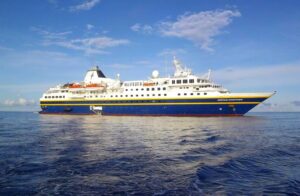
Your ship: The MS Heritage Adventurer
Click here for deck plans, cabin categories, facts & figures
> View here

far-eastern-islands_heritage-adventurer_i-wilson_heritage-expeditions.jpg
The Heritage Adventurer | © I. Wilson

far-eastern-island-worlds_kenrokuen_t-todd_heritage-expeditions
Kenroku-en Garden in Kanazawa | © T. Todd
far-eastern-island-worlds_kanazawa-kenroku-en_c-finch_heritage-expeditions.jpg
Harmony in Kenroku-en | © C. Finch

far-eastern-island-worlds_kanazawa-kenroku-en_r-morris_heritage-expeditions.jpg
Gardener in Kenroku-en | © R. Morris

far-eastern-island-worlds_kanazawa-farewell_e-bell_heritage-expeditions.jpg
Farewell in Kanazawa | © E. Bell

Far Eastern Island Worlds_Matsue_R. Morris Heritage Expeditions
Temple in Matsue | © R. Morris

far-eastern-island-worlds_sakaiminato_c-finch_heritage-expeditions
Adachi Museum of Art | © C. Finch

far-eastern-island-worlds_ulsan-bulguksa-temple_e-bell_heritage-expeditions.jpg
At Bulguksa Temple | © E. Bell
far-eastern-island-worlds_yakushima_f-wardle_heritage-expeditions
Hiking in Yakushima National Park | © F. Wardle

far-eastern-island-worlds_yakushima-macaques_f-wardle_heritage-expeditions.jpg
Yakushima macaques | © F. Wardle
Far Eastern Island Worlds_Uwajima_F. Wardle_Heritage Expeditions
Tenshaen Garden in Uwajima | © F. Wardle

Far Eastern Island Worlds_UNO Channel_C Finch Heritage Expeditions
Tranquil canal in Uno | © C. Finch
Sounds interesting?
You can book your trip here
Do you have any questions?
just call
Further trips to Japan
7.970 €

South Korea and Japan Then and Now (2026/2027)
5.980 €

Sake, sushi, samurai – Comprehensive train journey through Japan from north to south (2026/2027)
10.583 €
Honshu intensive
6.418 €