Cosmic spectacle in East Greenland: Travel to the solar eclipse
August 12, 2026 | 4:37 p.m. | Blosseville Coast, East Greenland
On August 12, 2026, eastern Greenland will witness a spectacular celestial event: a total solar eclipse. This eclipse will begin in the northernmost part of Russia and stretch across the Arctic Ocean to Greenland, Iceland, and Spain.
The umbra reaches its maximum duration of 2 minutes and 18 seconds west of Iceland. In Greenland, observers can follow the totality along the eastern coast.
This rare eclipse promises particularly good viewing conditions and is generating considerable public interest as it takes place during the holiday season. Some cabin categories are already fully booked. Register quickly at welcome@inventia.de or by phone at +49 (0)201 85890960.
Due to its northern location, the solar eclipse takes an unusual course: it begins far to the east and ends much further west. This happens when the moon's shadow falls across one of the Earth's poles onto the night side. The eclipse begins at sunrise in the northernmost part of the Krasnoyarsk region of Russia, far away from any major settlements. The moon's shadow moves quickly northward, just past the North Pole, and reaches Greenland via the Arctic Ocean.
The zone of totality then extends south along the east coast of Greenland and across the North Atlantic, just past Iceland.
Only the westernmost part of Iceland lies within the zone of totality. Since the Vestfirðir peninsula in the northwest of the island is close to the location of maximum eclipse, up to 2 minutes of totality can be observed there. The last total solar eclipse in Iceland on June 30, 1954, only just grazed the island.
The fascination of solar eclipses: a cosmic spectacle
A solar eclipse is a fascinating phenomenon that has captivated humanity for thousands of years. During a solar eclipse, the moon moves between the Earth and the sun, partially or completely blocking the sun's light. This spectacular event can be divided into three main types: total, partial, and annular eclipses.
What is a total solar eclipse?
A total solar eclipse occurs when the moon completely covers the sun, causing day to turn into night for a few minutes. During this brief phase of totality, you can see the sun's corona—the sun's outermost atmosphere, which is normally outshined by the sun's bright light.
Why doesn't a solar eclipse occur every new moon?
Although the moon passes between the Earth and the sun once a month, a solar eclipse does not occur every new moon. The reason for this is the slightly inclined orbit of the moon around the Earth. This inclination means that the moon's shadow often passes above or below the Earth. A solar eclipse only occurs when the moon reaches its nodes, where its orbit crosses the Earth's ecliptic plane.
The different types of solar eclipse
- Total solar eclipse: The moon completely covers the sun, and day turns into night for a few minutes.
- Partial solar eclipse: Only part of the sun is covered by the moon, making it look as if a "bite" has been taken out of the sun.
- Annular solar eclipse: The moon is too far away from Earth to completely cover the sun, so a bright ring of the sun remains visible around the moon, known as the "ring of fire."
Scientific significance and observation
Solar eclipses offer scientists unique opportunities for research. Observing the solar corona during a total solar eclipse led to the discovery of helium and a better understanding of solar winds. Modern research also uses solar eclipses to test the general theory of relativity by measuring the deflection of light from stars by the sun's gravity.
The upcoming solar eclipse in 2026 in East Greenland
On August 12, 2026, a total solar eclipse will be visible over eastern Greenland. This region offers clear, unpolluted skies that are ideal for observation. Greenland, with its dramatic landscape and low light pollution, is a perfect place to experience this rare event.
How can you safely observe a solar eclipse?
It is extremely important to observe a solar eclipse safely. Here are some safety tips:
- Special glasses: Always use solar eclipse glasses to protect your eyes from harmful sunlight.
- Telescopes and binoculars: These should only be used with special solar filters.
- Never look directly at the sun: Even during a partial or total solar eclipse, looking directly at the sun without protection can cause serious eye damage.
The magic of cosmic shadow play
A solar eclipse is not only a scientific event, but also a cultural and spiritual one. In many cultures, solar eclipses have inspired myths and legends, often with dramatic interpretations ranging from dragons devouring the sun to divine signs. These stories reflect the awe that people have always felt toward this rare natural phenomenon.
The 2026 solar eclipse in East Greenland will undoubtedly be an unforgettable experience. Not only does it offer the chance to witness a rare astronomical event, but also the opportunity to experience the breathtaking beauty and rich culture of one of the world's most remote and fascinating regions.
For further information and fascinating infographics on the solar eclipse, I recommend the following resources:
Immerse yourself in the world of astronomy and experience the magic of a solar eclipse—an event you will remember forever.
Our expeditions to the total solar eclipse in 2026 in East Greenland

Travel finder: All trips and offers at a glance
Browse through the calendar and find your best

Stephanie Gräf
Owner & Founder
Since 2002, I have been personally advising clients on unique expeditions and private trips, small-ship cruises, and journeys to remote regions of the world.
We'd be happy to discuss your trip with you in person.
Why not contact me right now at Phone: +49 201 85890960 or email welcome@inventia.de.
Or schedule a free, no-obligation one-on-one phone call (also via WhatsApp or Wi-Fi), a Teams or Zoom meeting here—even in the evenings or on weekends:

Are you interested in Antarctica but don't know where to start?
Our FREE Antarctic Mini-Guide sheds light on the ice.

Newsletter: Travel beyond the ordinary
Stay in touch with us and receive our latest travel ideas on a regular basis.

Shall we stay in touch?
Aurora Borealis Tours

MS Heritage Discoverer | Polar Expedition Ship
26.236 €

The Great Loop through the Southern Ocean
33.386 €

Among the King Penguins of South Georgia
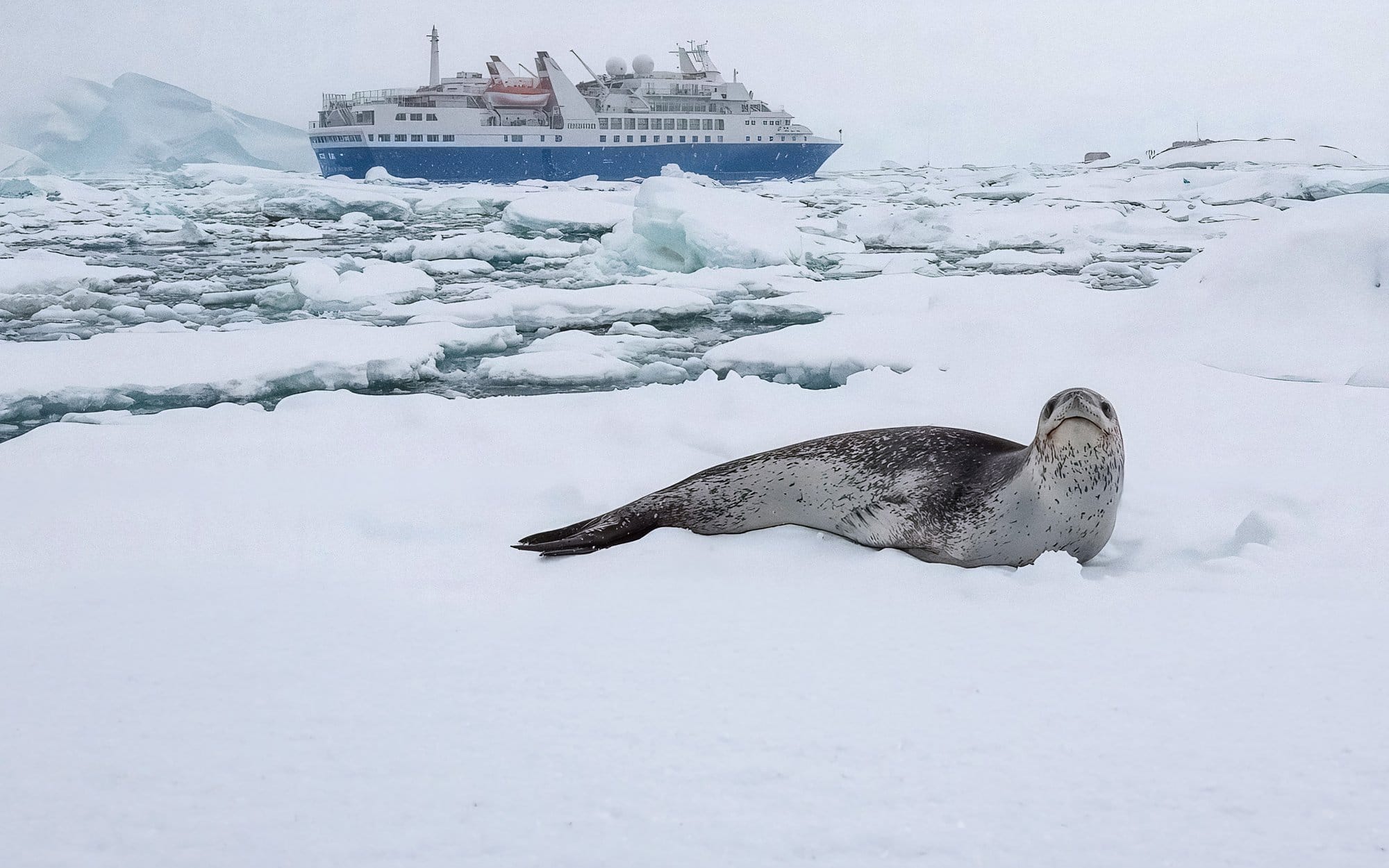
MS Discoverer | Expedition Ship for 140 Passengers

Terra Nova Adventurer | Expedition ship for 98 passengers
18.101 €

Midsummer in the Antarctic Ice
14.276 €

Penguin chicks in the Antarctic midnight sun
12.227 €

Kingdom of Kings | Falkland Islands, South Georgia & Antarctica
18.856 €

Antarctic Expedition | From Expedition Ship to Sailing Yacht
15.041 €

Falkland Islands and South Georgia
64.055 €

World premiere: Complete circumnavigation of Antarctica in 2028 | Le Commandant-Charcot
10.400 €