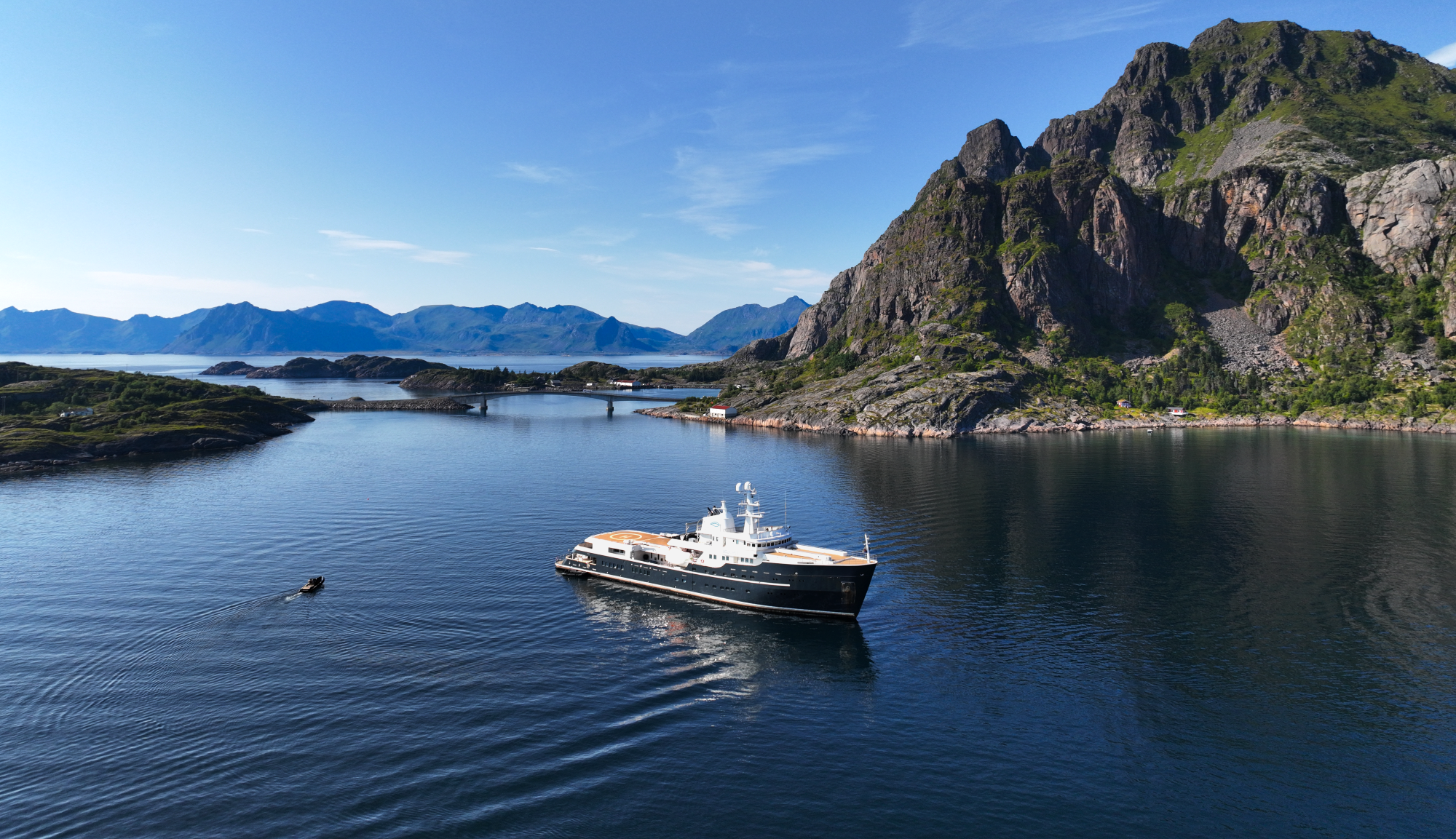
Just a few hours of daylight, and the rest belongs to the sky

Støtt Island, Helgeland Coast

Winter · 4 days (3 nights)

Private Lodge Tour
Private Lodge Tour on the Island of Støtt | 4 Days / 3 Nights | Helgeland Coast, Nordland, Norway | Winter Season: November 1 through March 30 | Guides in Norwegian and English
Between the November 1 and March 30 things quiet down on the Helgeland coast. A winter trip to Norway doesn’t take you to a ski resort here, but to an island in the sea. Snow covers the fishing village; the light lasts only a few hours, but in colors you don’t see anywhere else, and on clear nights, the Aurora. The setting for these four days is Support, a small island north of the Arctic Circle, on which a 19th-Century Trading Post stands as one of the best-preserved examples of Nordland's coastal culture.
Continue reading
Who this trip is for: Støtt is a small private lodge, run by Eva and her brother Sven, and owned by a family that has passed it down through generations. The restored trading post buildings can accommodate several groups at once, which is why the island is booked for family celebrations —such as milestone birthdays, when everyone travels there—as well as for retreats and closed-door meetings. And because Støtt lies along the coastal shipping route, a stay here can be planned as a stopover on a Hurtigruten cruise: disembark in Ørnes, stay for a few days, then reboard later. The island can also be reached from the Lofoten Islands.
What makes this place so special is that it’s not just a backdrop. About 25 people live here year-round; families still live in the old wooden houses today, and the outpost is being restored building by building, rather than rebuilt. Those who stay don’t just live next to history—they live within it. To the north, the view from the island stretches across the Vestfjord to the peaks of the Lofoten Islands; to the south, it extends across a multitude of small islands all the way to the Meløy Alps.
The fishing village was first mentioned in 1530; its name means “islands by the towering mountain.” For generations, the villagers traded in whatever the sea provided. During the fishing season, up to a thousand fishermen would gather off the island; there was a bakery, a telegraph station, and a general store, which remained in operation until 1959. The outpost was run by the Gotaas family for generations; until 1884, it was managed by Kristiane Bolette Gotaas and her heirs.
Over the course of three full days, local guides will lead you through the program. Meals are served at Gammelbutikken, the old general store, whose kitchen relies on what’s caught right outside the door. The harbor in front of it is considered one of the best-protected on the coast: Because the mainland mountains and the Svartisen Glacier shield it from the southeast wind, fishermen have sought shelter here for generations before crossing the Vestfjord. In winter, they came by the thousands to catch cod.
For the days before or after, the surrounding region is well worth exploring. Just outside Bodø, at Saltstraumen, the tide surges through a 150-meter-wide strait four times a day—the world’s strongest tidal current. The Nordlandsbanen railway also runs from Bodø across the Arctic Circle; if you get off at Lønsdal, you’ll find yourself in the heart of Saltfjellet after just under two hours. Further south along the Helgeland coast lie the Vega Islands, a UNESCO World Heritage Site since 2004, because their inhabitants have lived off the eiderdown harvest for centuries. Feel free to contact us—we’ll put together a customized itinerary for your pre- or post-trip activities.

Stephanie Gräf
Travel expert, inventia | Travel beyond the ordinary
Specialist in personalized and exciting trips around the globe.
I am your contact person for questions and bookings regarding your trip.
You can reach me by phone or email:
+49 (0)201 858 90 960
welcome@inventia.de
Good to know
Entry Requirements: German citizens must have a valid passport. You can find the latest travel and safety advisories from the Federal Foreign Office for Norway. Regulations may vary for other nationalities. Please feel free to contact us.
Weather and Clothing: Winter on the Helgeland Coast brings snow, short days, and long, clear nights. For excursions on land and at sea, we recommend windproof and waterproof outerwear, along with warm woolen layers underneath, sturdy winter boots, a hat, and mittens.
Type of trip: Private lodge trip with a guided daily itinerary in Helgeland, the coastal region in northern Norway, on an island with about 25 year-round residents. Dates can be chosen freely during the winter season, from November 1 to March 30.
HIGHLIGHTS
- Reindeer Roasted Over an Open Fire in a Lavvo – In the traditional Sami tent, the meat cooks slowly over the embers, accompanied by berries, wild herbs, and root vegetables.
- Northern Lights hunt after dinner —first myths and a film at the Fishing Museum, then a bonfire at base camp and gazing up at the sky.
- Snowshoeing Across the Island – Through the snow-covered fishing village and beyond, with views of fjords, islands, and mountains stretching to the horizon.
- Lunch in the bunkers – The table is set between the gun emplacements of the German coastal fortifications on the Svenningen Plateau.
- White-tailed Eagles Over the Archipelago – The boat tour through the islands takes you through one of the most important breeding grounds of Northern Europe’s largest bird of prey.
- The Blue Hour – In winter, light is scarce but all the more extraordinary; this walk takes place during precisely this hour.
- Six courses from the sea —to top it off, the chef’s tasting menu, with each dish described and each wine explained upon request.
- Stay Overnight in a Historic Landmark – A bakery, a fisherman’s cottage, and a granary from the 18th and 19th centuries, restored and furnished with antique furniture.
route

itinerary
Day 1 | From the Museum to the Bunkers
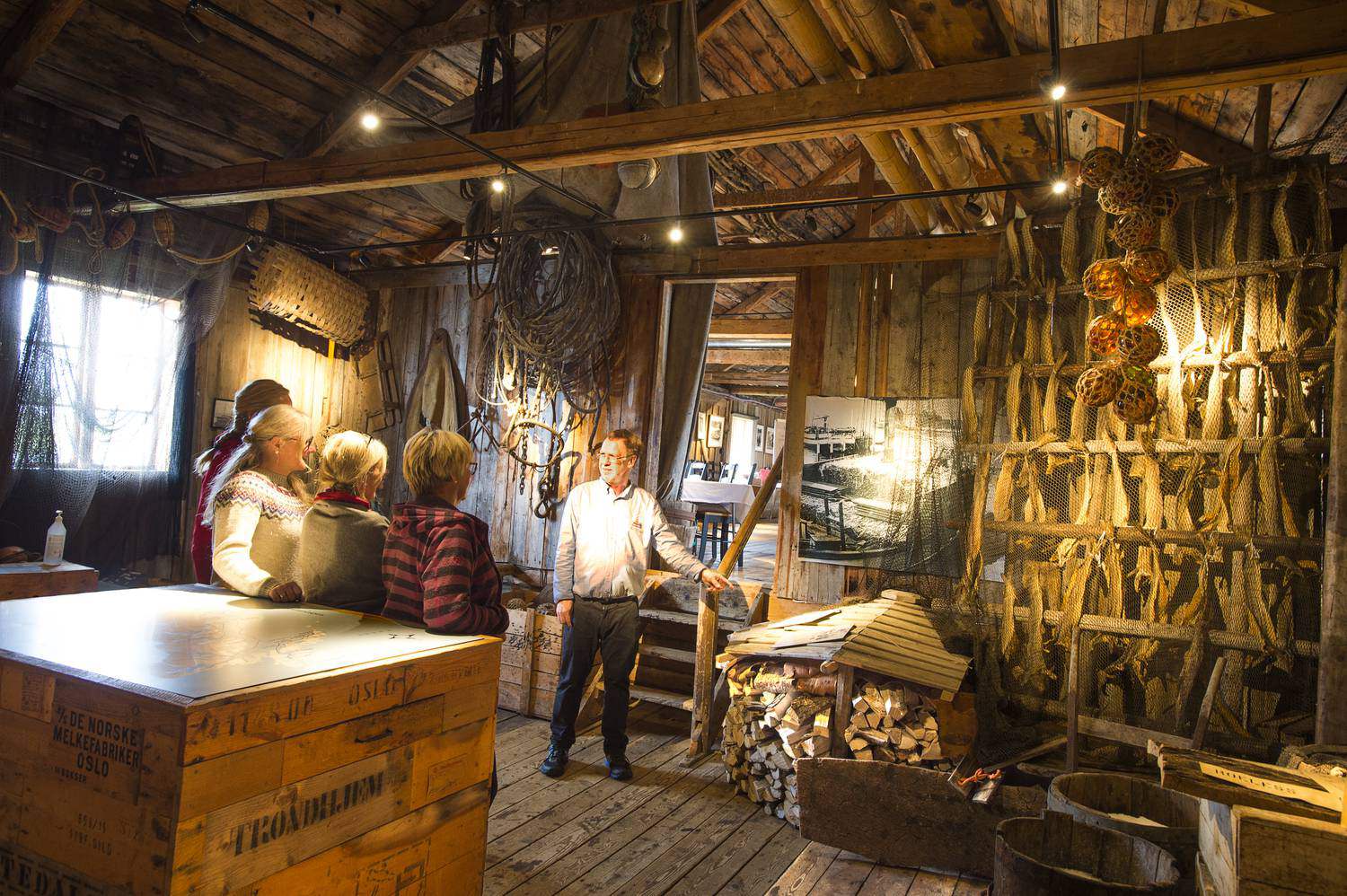
The first day begins where the island preserves its history: at the Fishing Museum on the upper floor of the old general store. Your guide will tell you about the lives and hardships of the fishermen, the merchants who ran the trading post, and the ancient craft of cod drying, which connected Støtt to Bergen and beyond. Hanging on the walls are the illustrations that Kaare Espolin Johnson created for Johan Bojer’s novel.
The tour then continues out into the snow-covered fishing village and up to the Svenningen Plateau. At the top are bunkers and gun emplacements from World War II. The islands around Støtt were strategically important for monitoring shipping routes along the Norwegian coast; as part of the Atlantic Wall, these installations controlled maritime traffic. Lunch is served within these walls while your guide recounts what happened here between 1940 and 1945.
In the afternoon, the sauna at the edge of the restaurant, right by the water, warms you up. The contrast between the heat inside and the cold sea air outside is what makes these hours so special.
In the evening, a three-course meal awaits at the Gammelbutikken, prepared according to the specifications set by the merchants at the trading post. Afterward, the Northern Lights guide leads the group up to the museum, shows a film about the Northern Lights, and recounts the myths surrounding them. Then everyone heads out together to the base camp, where a fire is burning, a hot drink is served, and everyone gazes up at the sky.

Day 2 | White-tailed Eagle, Blue Light, and a Fire in the Lavvo
In the morning, we set out among the islands. The boat winds its way through the archipelago, past rugged cliffs and hidden coves, while white-tailed eagles circle overhead—Støtt is one of the most important breeding grounds for these birds in Northern Europe. Along the way, the guides tell stories about the lives of the islanders, the heyday of the trading post, and the years of occupation.
In the afternoon, the light shifts. The sky hovers between day and night, casting a soft, pink glow over the island, while the sea and the horizon blend into a single line. Your guide will accompany you through this blue hour, as the colors gradually fade from the landscape. In winter, this light is scarce, and that is precisely what makes it so special.
The evening is all about the lavvo, the traditional Sami tent. Reindeer meat simmers slowly over an open fire, accompanied by berries, wild herbs, and root vegetables from the region. Dinner is served by the light of the flames from 6:30 p.m. to 9:00 p.m. On this evening, the restaurant kitchen will remain closed.
Day 3 | Snowshoeing and a Six-Course Farewell Dinner
The last morning is all about the snow. On snowshoes, you’ll walk through the fishing village and continue across the island. From Støtt, the view stretches out over fjords, islands, and mountains all the way to the horizon.
There’s a crunching sound under the snowshoes; other than that, there’s hardly a sound to be heard. It’s precisely this silence that defines the morning, along with the cold, crisp air and the tracks in the snow that your guide knows how to interpret.
The final evening is all about the kitchen. The head chef serves a six-course tasting menu featuring small dishes from the sea and the very best the restaurant has to offer. For each course, the chef explains where the ingredients come from, and for each paired wine, he describes the grape variety and how it’s made. Outside, the island lies shrouded in darkness, and if the sky is clear, the Northern Lights shine once more over the Vestfjord.


Day 4 | Saying Goodbye to the Island
On the last morning, the Gammelbutikken sets the breakfast table one last time. Outside, snow lies on the roofs of the trading post, and dawn is just breaking over the Vestfjord.
Then the speedboat sets off. From the water, the island slowly recedes into the line of other islands until it is just one among many along this coast.
This is where you'll be staying
Bakeriet · The Old Bakery


location
The bakery building stands in the heart of the historic trading post, just a few steps from the old general store—which houses a restaurant and a fishing museum—and from the pier where the speedboat docks. On this island, it takes no more than a few minutes to get anywhere anyway.
Rooms
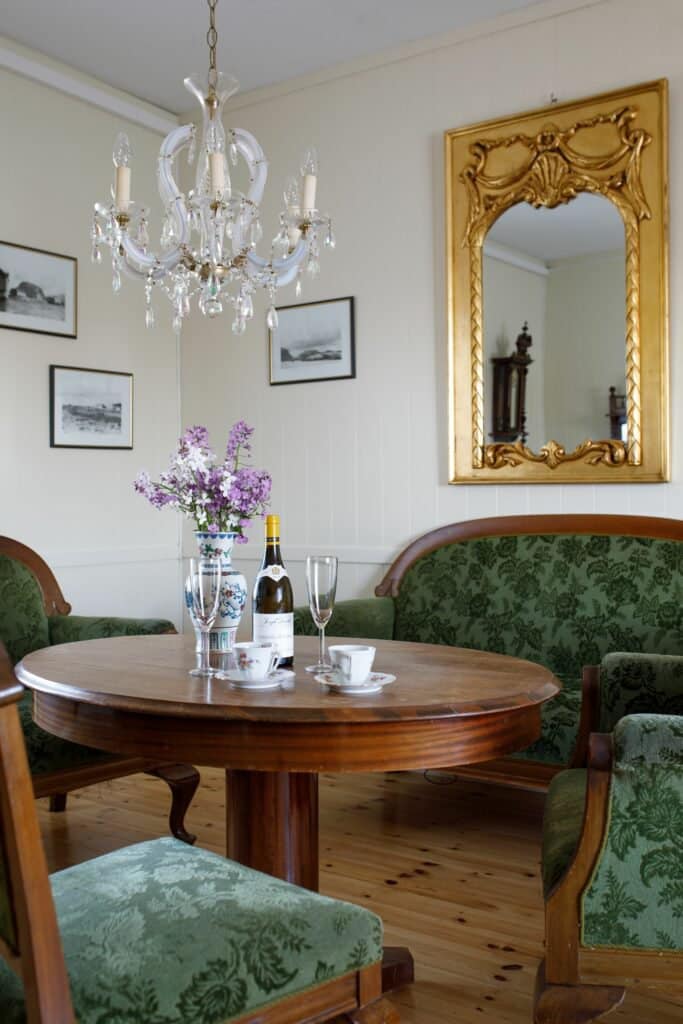
The bakery has eight double rooms, which are the best in the building. Six of them have private bathrooms, and two share one; one of these two has its own kitchenette, a sitting area, and a view of the harbor. The rooms are available with either a double bed or two single beds.
Facilities
The building has been carefully restored and updated with modern amenities without losing its character. Amenities include down comforters, bed linens and towels, bathrobes and warm slippers, a hair dryer, toiletries in the bathroom, chocolate, coffee, and tea with a kettle, as well as an umbrella for the walk to the restaurant. The room also features a history of the trading post, an overview of activities, and the speedboat schedules. The decor reflects the period style of the house: antique furniture and elegant details from the trading post era.
The History of the House
In its heyday, up to a thousand fishermen —in addition to the island’s residents—would gather off the island during the fishing season, and they needed bread. According to tradition, the oven at the old bakery could bake sixty loaves at a time and ran from early morning until late at night. When the building burned down completely in 1878, the merchant Gotaas sailed to Åsvær, another trading post on the Helgeland coast, bought the entire post—including the bakery—and had everything transported by sea to Støtt. That’s how the house where you’re staying today ended up on this island in the first place. It has been open to guests again since 2018.
For whom
For anyone looking for the highest level of comfort on the island. Six of the eight rooms have private bathrooms; two share one.
Rorbua · The Fisherman's Cabin on the Pier

location
The Rorbua stands where people used to work: right on the water, at the heart of the trading post. The restaurant, museum, and pier are all within walking distance, and the sheltered harbor with its pier begins right outside the door.
Rooms
The house is divided into two sections, each with its own entrance. Rorbua Nord has three double bedrooms, one bathroom, and a living room. Rorbua Sør has four double bedrooms, two bathrooms, and a living room. Both sections can be rented as a single unit, giving a group its own private space without having to share the house with strangers.
Facilities
The atmosphere and furnishings reflect the trading post’s heyday: period-style antique furniture and heavy down comforters, along with bed linens and towels, slippers, a hair dryer, toiletries in the bathroom, chocolate, coffee, and tea, as well as umbrellas. The living room serves as the common gathering place where guests hang their wet clothes to dry after their excursions. The bathrooms are shared within each section of the house; in Rorbua Nord, three rooms share one bathroom, while in Rorbua Sør, four rooms share two bathrooms.
The History of the House
A rorbu was the cabin where fishermen slept and ate during the fishing season. Here they prepared their fishing gear and baited the hooks on their longlines, often late into the night. Typically, these houses consisted of just two rooms: a storage area for food and equipment, and a living area with beds. With their bright red color and white trim, rorbu cabins remain a symbol of Norway’s maritime heritage to this day, and along the Helgeland coast, they stand where cod has been landed for centuries.
For whom
For families and groups of friends who live together and want to get together in their own living room in the evening. For many guests, the Rorbua is the top choice on Støtt.
Stabburet · The oldest building on the island

location
The Stabburet is also part of the trading post complex and is thus just a few steps away from the restaurant, museum, and pier.
Rooms
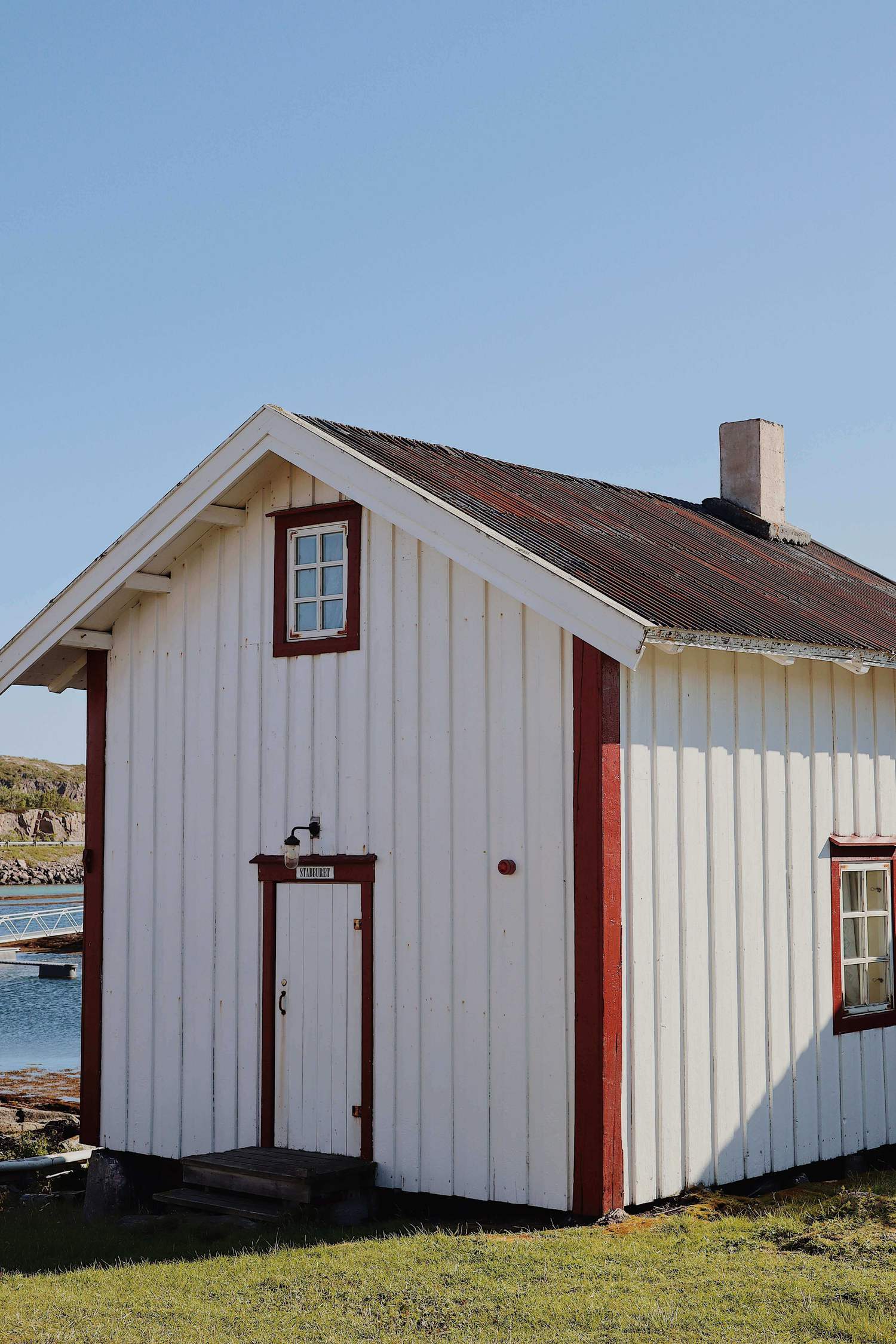
The Stabburet is a two-story apartment that sleeps up to four people. The ground floor features the entrance, a cozy living room, and a restroom with a sink; the upper floor has a large bedroom with a double bed and two single beds. So you’re not staying in a single room here, but in a small house all to yourself.
Facilities
Just like in the other buildings at the post: period-style antique furniture, heavy down comforters, and charming details from the days when this was a trading post rather than a place to stay the night.
The History of the House
Every major trading post along the coast had a stabbur, where grain and food were stored, safe from moisture and rodents. The one at Støtt dates back to the 1700s, making it the oldest building on the island. The timber used for its construction must have been brought in entirely by sea; there was no other way out here. Later, the trading post’s staff lived in the granary.
For whom
For a couple or a family of four. The house is considered the most romantic in the area.
Gammelbutikken Restaurant · Cuisine and Meals

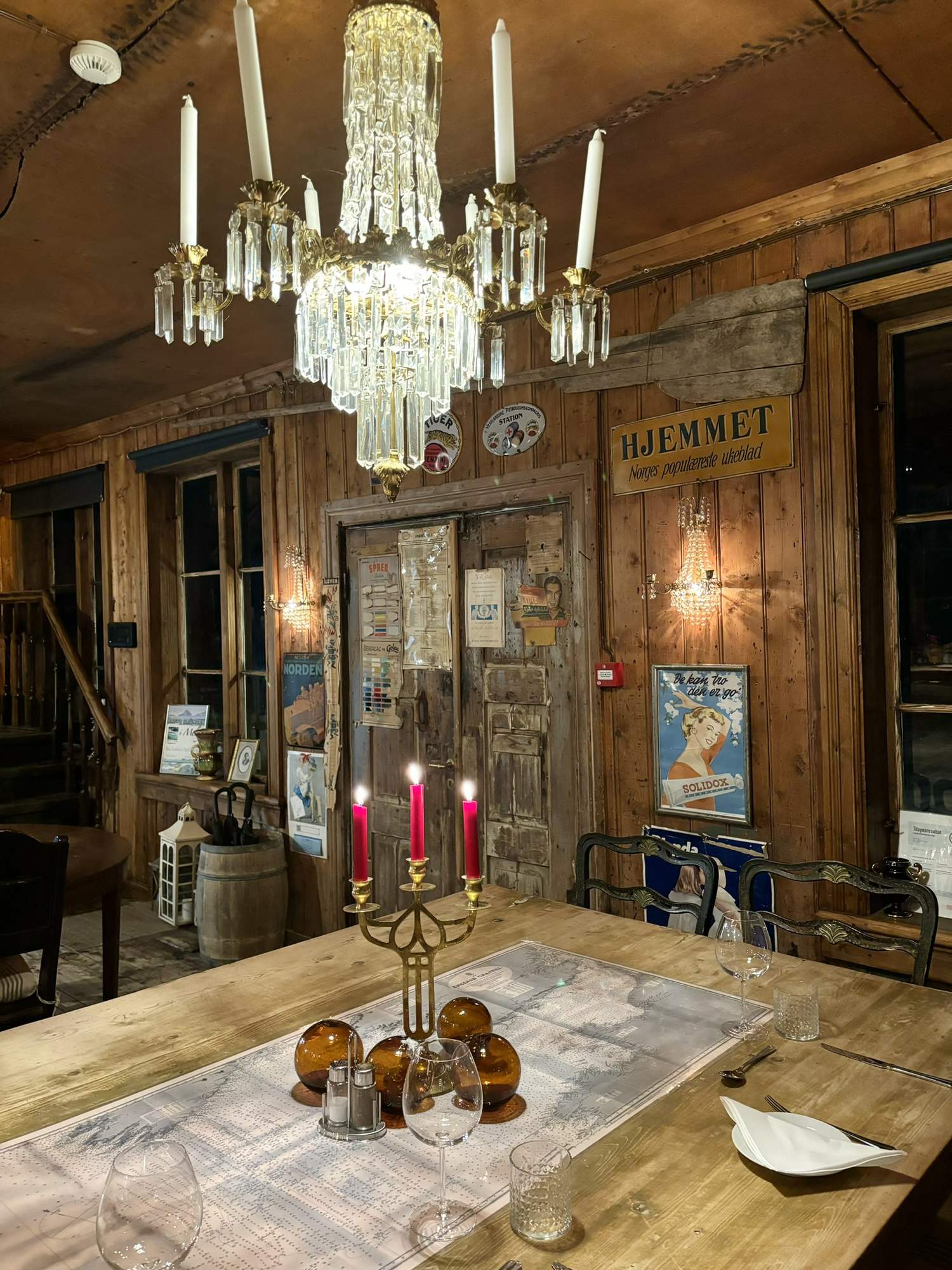
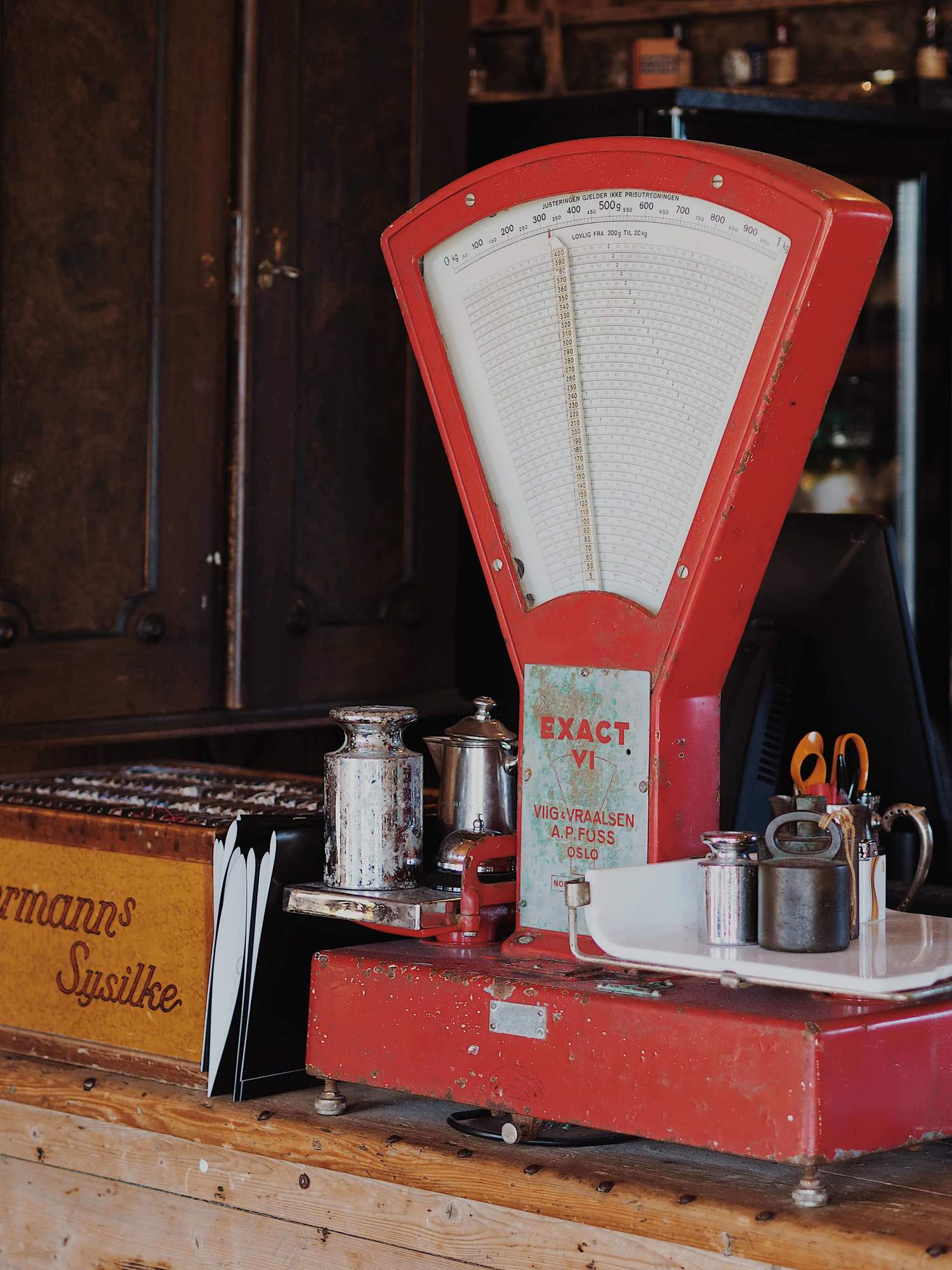

The Old Toy Store
Meals are served at Gammelbutikken, the trading post’s old store. Until 1959, this is where everything the island and the fishermen needed was sold: a wide range of goods, provisions, and equipment for the fishing season, plus a separate bar for spirits. The building itself was once moved from Åsvær to Støtt and was larger back then than it is today. A table is automatically reserved at the restaurant for overnight guests.
The Daily Routine
Breakfast is served from 7:30 a.m. to 9:00 a.m., and on Sundays until 9:30 a.m. Lunch is served from 1:00 p.m. to 3:00 p.m., with the last seating at 2:30 p.m. For dinner, starting at 6:30 p.m., all guests sit down together at the table. On weekdays, a three-course menu that changes daily is served, depending on which ingredients are at their best; on Saturdays, a five-course menu is served.
The Kitchen
The culinary concept draws on the town’s history: For centuries, merchants have served their guests generous portions of cod and halibut, whale meat, clipfish, stockfish, bacalao, and fish soup. A carefully selected wine pairing is offered with each meal; an expert advises the restaurant on putting together the wine list, and the bar also serves spirits and cocktails.
In-House Stockfish Drying
The restaurant is the only one in Norway that dries its own stockfish. Every March, large batches of cod and coastal cod are purchased directly from local fishermen, deboned, and hung on large racks outdoors. Ideal conditions include a good breeze and temperatures between zero and three degrees, which is exactly what March and April bring to Støtt. After about two months, the fish is taken down, soaked to prepare it, and skinned. The back pieces and the finer cuts are served as the main course, while smaller pieces go into the stockfish soup. Historically, Støtt was also the first production site for cod liver oil on the Helgeland coast.
Good to know
Please let us know about any food allergies or intolerances well in advance of your arrival so that the kitchen can make the necessary accommodations.
The Ensemble · Kai, Mole, and the Other Houses

An item that is gradually making a comeback
The trading post is being restored building by building, as work progresses. In 2012, the restaurant opened in the old store; in 2014, the Stabburet and Rorbua were completed as accommodations; in 2015, the fishing museum and conference rooms on the upper floor were added; and in 2018, the bakery opened. So what you’ll see on your tour is a place still under construction, not a finished museum.
Rødbrygga
The red warehouse on the pier, dating from the 1820s or 1830s, is the building that dominates the view of the trading post. This is where the catch arrived and was processed: gutted, filleted, and salted. From this building, the clipfish set off on its journey to Bergen and onward to other countries. Inside, the warehouse is still awaiting restoration, which is planned for the coming years. From the outside, it remains the island’s landmark.
Telegraph Stations
The telegraph station, established in 1858, was the first between Sandnessjøen and Bodø, built on the initiative of the merchants Bonsak and Kristiane Bolette Gotaas. It moved into its own building in 1884, after the post office’s large main building had been demolished. For decades, this station provided the island’s fastest connection to the rest of the world.
Fishing Museum
On the upper floor above the restaurant, the museum tells the story of the fishermen’s lives, coastal trade in the age of sailing ships, and the craft of cod drying. Also on display there are the illustrations that Kaare Espolin Johnson created for Johan Bojer’s novel. In the summer, the room also serves as a second dining room.
Port and Wharf
The harbor is considered one of the best-protected on the coast, sheltered by the breakwater as well as offshore islets and reefs. The entrance faces southeast—precisely the direction from which the wind never blows here, because the mainland mountains and the Svartisen Glacier shield the archipelago. Coastal vessels used to dock at the steamship pier; today, that’s where the guided tour begins. Historically, the island also had its own excellent well water.
Support Kolonial
The island store on the pier serves both locals and visitors and also serves as a social gathering place, a post office, and a rental station for bicycles, kayaks, small boats, and fishing gear. For a community of about 25 year-round residents, this store is of vital importance. In the southern part of the main island, there are also barbecue areas and a shelter on the beach.
Your Program in Detail
Fishing Museum, Fishing Village, and Svenningen Plateau (included, 10:00 a.m. to 1:00 p.m.)

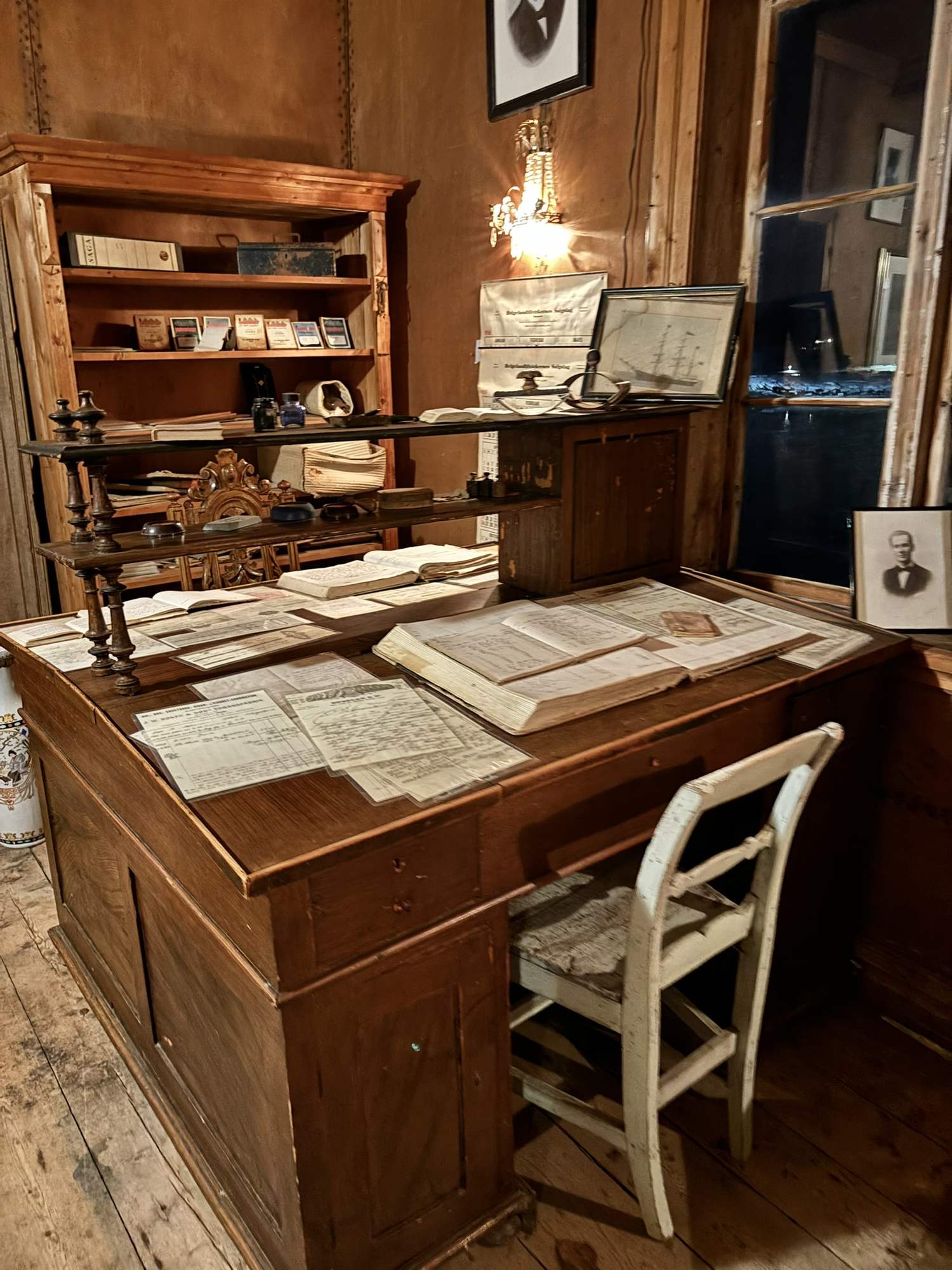
The guided tour weaves together three locations into a single narrative. The Fishing Museum, located on the upper floor of the old general store, focuses on the fishermen, the merchants, and coastal trade in the age of sailing ships, as well as stockfish and clipfish, and the artwork of Kaare Espolin Johnson. The subsequent walk through the fishing village showcases the trading post buildings and their former uses.
Finally, the trail climbs up to the Svenningen Plateau, home to bunkers and gun emplacements from World War II. From the top, the view extends north across the Vestfjord to the peaks of the Lofoten Islands and south across the islands to the Meløy Alps.
Lunch in the bunkers (included, 12:30–1:30 p.m.)


During the German occupation of Norway from 1940 to 1945, the islands around Støtt were strategically important for monitoring shipping along the coast. As part of the Atlantic Wall, concrete bunkers and fortifications were built to control maritime traffic and repel Allied attacks. Some of these structures served as observation posts and gun emplacements overlooking the open sea, while one bunker was used as a field hospital.
Today, the ruins lie silent in the landscape. The table is set among them, and the guide explains what the structures meant to the people on the island.
Arctic Sauna (included, 3:00 p.m. to 5:00 p.m.)


You have two hours all to yourself, from 3:00 p.m. to 5:00 p.m. The sauna is located at the edge of the restaurant building, right above the water; it’s less than two minutes from your room.
From the pier, the path leads straight into the sea. The Gulf Stream keeps the water off Støtt ice-free even in winter. It’s still cold enough, though, and that’s exactly the point. Those who prefer to stay seated won’t miss a thing: the window looks out onto the sound, and at this time of day, the blue hour is casting its glow over it.
This hour falls between the daytime activities and dinner. It's the part of the winter program where nothing has to happen.
Northern Lights Tour (included, in the evening after dinner)
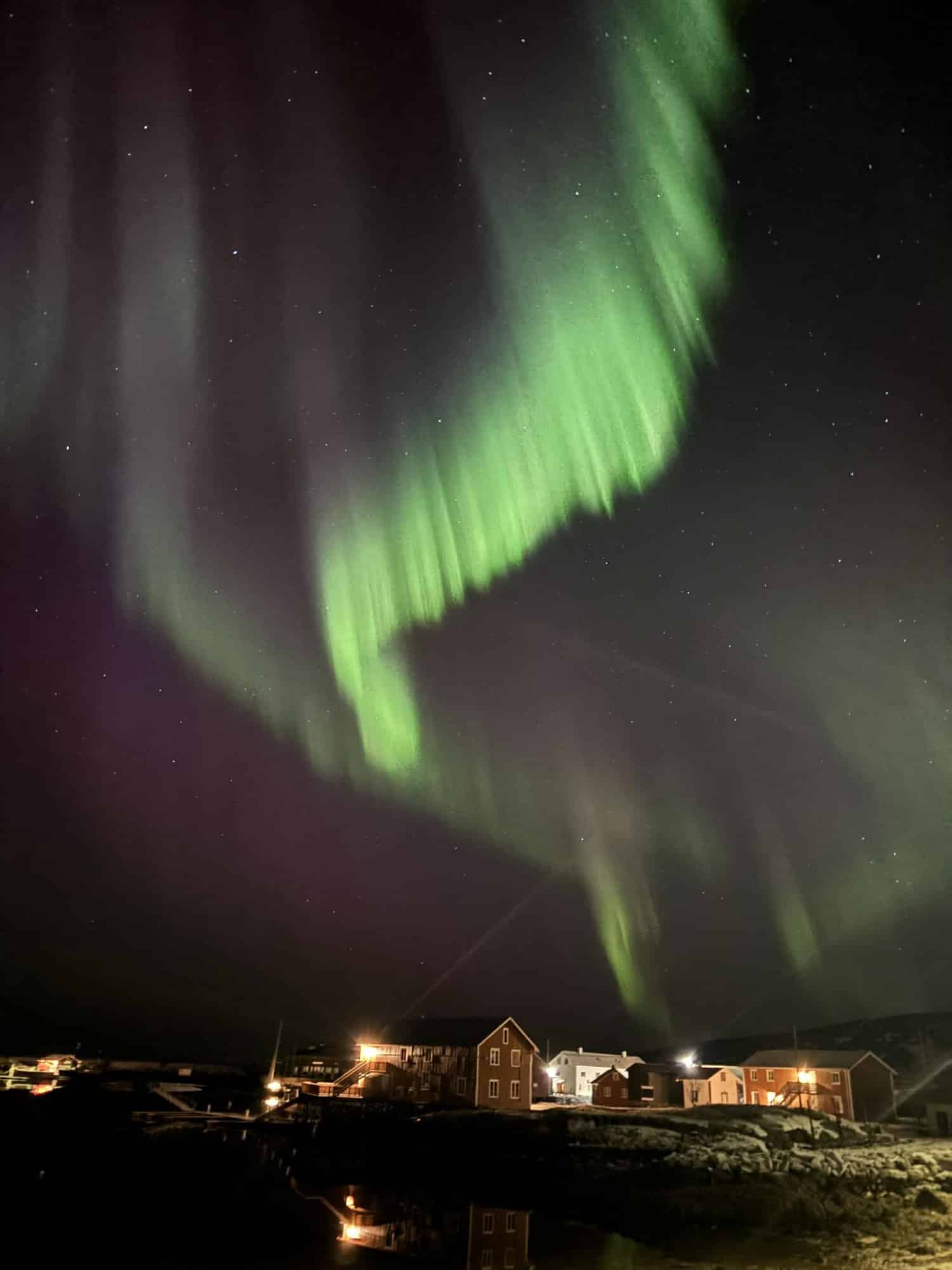

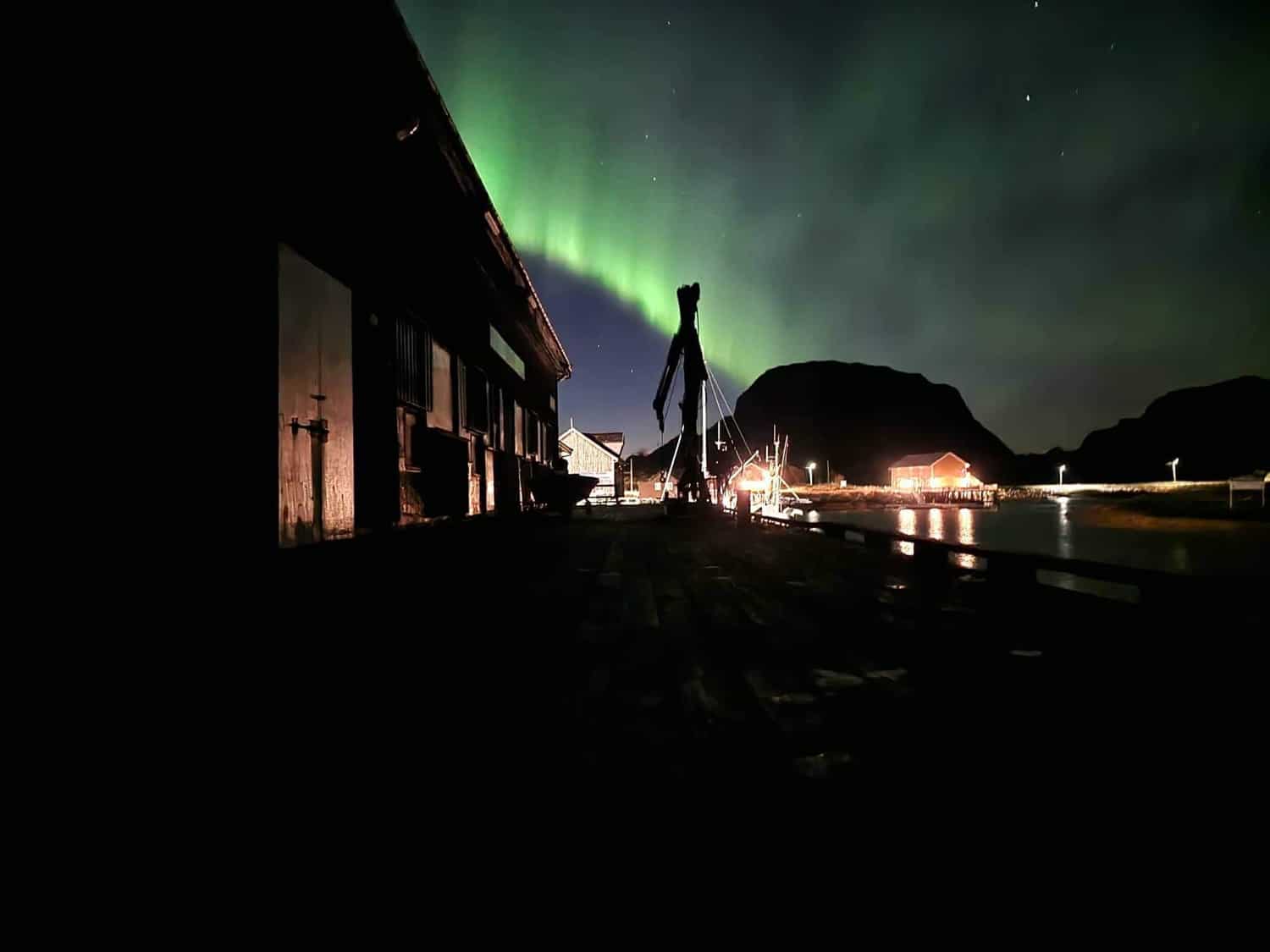
After dinner at the restaurant, the Northern Lights guide will take you up to the museum and show you a film about the Northern Lights. The film explores the myths and stories surrounding this phenomenon, as well as the scientific explanation behind it.
Afterward, we’ll head out together. The path leads to base camp, where a fire will be lit and a hot drink served while you gaze at the sky. Away from the houses, the starry sky above the island is exceptionally clear and free of light pollution. When conditions are right, all you need to do is step outside. Naturally, we can’t promise that the Northern Lights will appear.
Archipelago and White-tailed Eagle Safari (included, 10:00 a.m. to 1:00 p.m.)


The trip takes you between the rugged islands and into the hidden coves of the archipelago. White-tailed eagles circle above the boats: Støtt is an important breeding ground for Northern Europe’s largest bird of prey, and around 200 bird species have been recorded on the islands and the Kunna Peninsula.
The trip begins with a tour of the sheltered harbor. Along the way, your guides will tell you about the lives and heritage of the islanders, the trading post’s heyday, the years of occupation, and the community that lives here today. The islets and skerries around Støtt are part of the Støttværet Nature Reserve. You’ll enjoy your packed lunch either on board or on a small island.
Fishing for halibut, cod, or pollock (your choice, included; 10:00 a.m. to 2:00 p.m.)
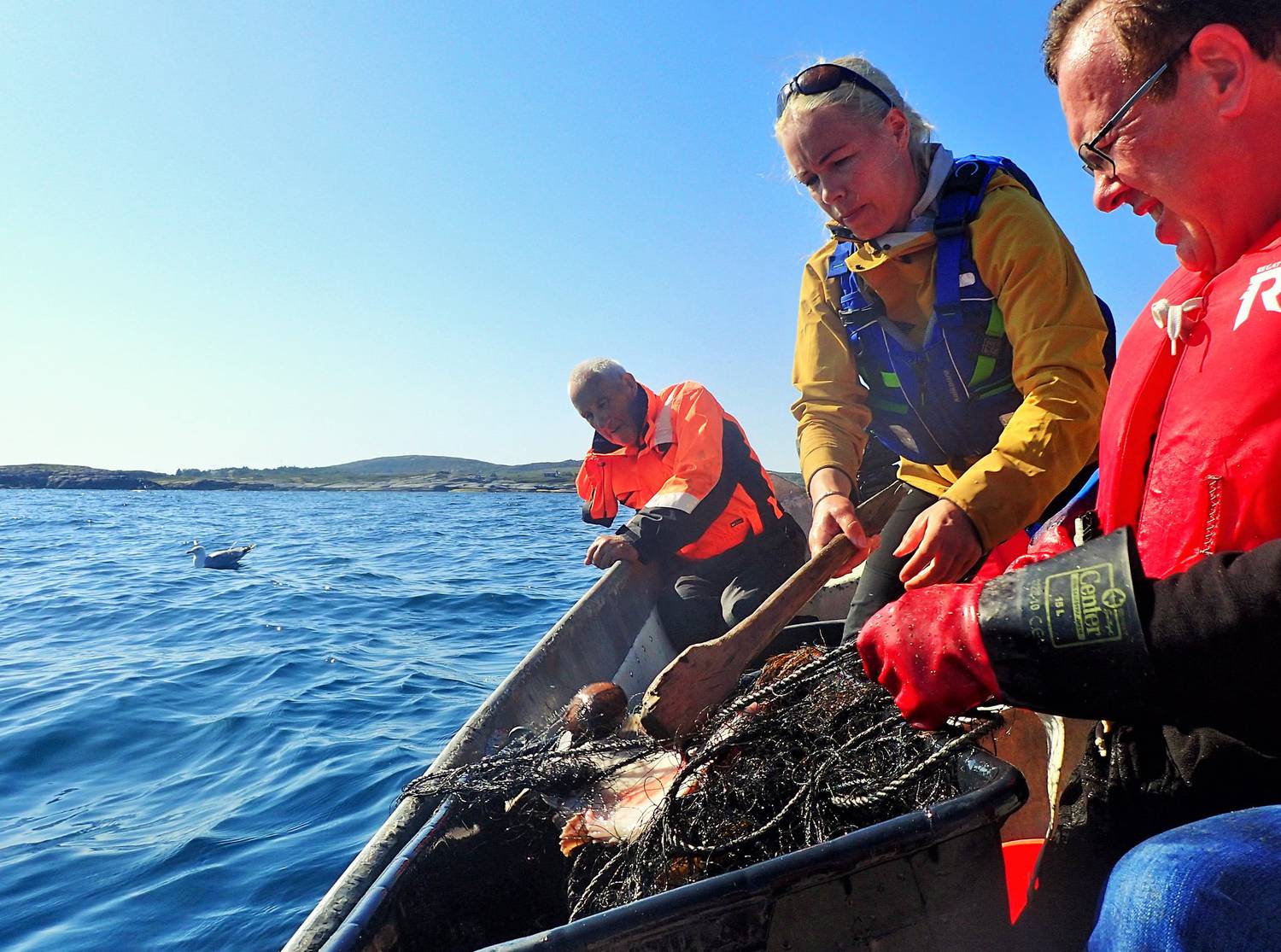

In traditional coastal fishing, you head out to sea to catch cod, pollock, and halibut, and set gillnets the way they’ve always been set along this coast. In addition, you use crab traps, which are baited, lowered to the seabed, and later pulled back up.
The waters off the Helgeland coast are among the most productive in Norway: Here, the cold, harsh climate meets the warm waters of the Gulf Stream, creating a nutrient-rich sea. In winter, the trip is short and rough; warm clothing is provided by the lodge.
Walk at the Blue Hour (included, approx. 1 hour)


An hour, scheduled for twilight. In winter, it falls in the middle of the afternoon. In early December, the sun sets before two o'clock, and because it remains low on the horizon, the blue hour stretches out afterward.
The trail stays within the village and along the pier, and the pace is leisurely. Sturdy, warm shoes with good traction are essential, as the pier may be icy; be sure to bring a headlamp for the return trip, as there is hardly any street lighting on the island. If you’d like to take photos, bring a tripod.
Dinner in the lavvo (included, 6:30 p.m. to 9:00 p.m.)


The reindeer meat cooks slowly over the embers, not in the flames. That’s why the evening takes its time, and that’s why it tastes different from when it’s pan-fried. It’s served with fresh berries, wild herbs, and root vegetables from the region.
Dinner in the tent will replace the restaurant menu this evening; it is scheduled from 6:30 p.m. to 9:00 p.m. Reindeer has been a staple of Northern Scandinavian cuisine ever since the Sami people migrated with their herds between the coast and the interior. So what’s on the plate isn’t anything fancy, but rather what has been eaten here since time immemorial.
Wear something that can get smoky: Smoke clings to wool. And expect it to be significantly warmer right by the fire than just a couple of steps away.
Snowshoe Hike (included, 10:00 a.m. to 1:00 p.m.)


A three-hour hike at a leisurely pace, from 10:00 a.m. to 1:00 p.m. The route takes you through the fishing village and continues around the island. Snowshoes and poles are provided by the lodge; you’ll need sturdy winter boots and layered clothing, because you’ll warm up quickly while walking but get cold again as soon as you stop.
No mountaineering experience is necessary; the route stays on the island and does not include any steep sections. Along the way, the guide will point out which tracks in the snow belong to otters and sea eagles, and where the wind has exposed the rock.
The morning is intentionally scheduled so that you can spend the brightest hours of the winter day outdoors. By the time you return, the sun will already be low in the sky again.
Chef's Tasting Menu (included, 6:30 p.m. to 9:00 p.m.)
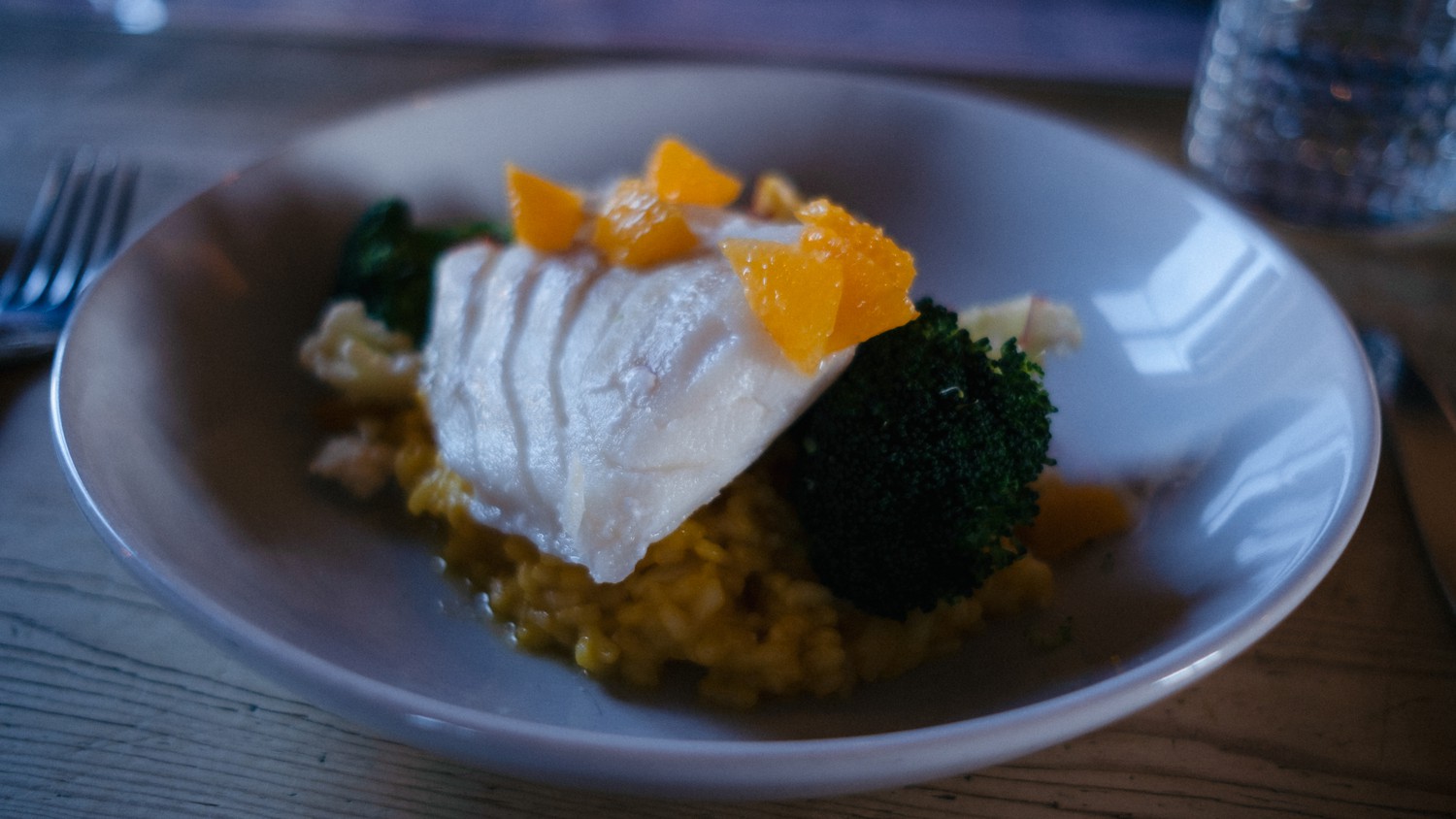
Two and a half hours, from 6:30 p.m. to 9:00 p.m., at the restaurant in the old store. The chef serves six courses, explaining the origin of each one. Most of the ingredients come from the waters right outside the door or from the restaurant’s own stockfish-drying facility.
Wine pairings are not included in the tour price but can be ordered on site; a carefully selected pairing is available for each menu. Guests who do not wish to have wine can choose from local beers or non-alcoholic beverages.
Please let us know about any food allergies or intolerances before your arrival, so that the kitchen can adjust the courses accordingly. Outside of peak season, the menu can be adapted more flexibly to the group’s preferences anyway.
Additional experiences available upon request
You can extend your stay beyond the scheduled program. Guided kayaking tours through the protected waters around the harbor are available year-round, even in winter, as is birdwatching on the island and the Kunna Peninsula. If you’d like to kayak under the Northern Lights on a clear winter night, ask about the Northern Lights kayaking tour. You don’t need any kayaking experience—the guide will choose the route based on your skill level and the weather.
Next, we'll head out to Svartisen, the second-largest glacier on the Norwegian mainland. Prices and availability upon request.
Dates & Prices
Request your trip here!
| Period | Price per person | further information |
|---|---|---|
| November 1 through March 30 | Price upon request | 4 days / 3 nights, itinerary as described |
Information
Included services:
- Three nights' lodging in the restored buildings of the old trading post
- Breakfast buffet at Gammelbutikken Restaurant
- Guided tour of the fishing museum and walk through the fishing village
- Guided hike up to the Svenningen Plateau, featuring bunkers and gun emplacements
- Lunch in the Bunkers
- Arctic Sauna
- Three-course meal at the restaurant in the old store
- Guided Northern Lights tour with a film at the museum, a bonfire, and a hot drink at base camp
- Choice of boat trip: Archipelago tour with white-tailed eagle safari and a packed lunch, or traditional fishing with a net and crab trap
- Guided Walk During the Blue Hour
- Dinner in a lavvo featuring reindeer meat cooked over an open fire
- Guided snowshoe hike
- Six-course tasting menu by the head chef
- Guides in Norwegian and English
Not included:
- Beverages served with meals, including wine pairings for the menus
- Travel to and from Støtt, including speedboat tickets and transfers by helicopter, seaplane, or charter boat (upon request, we can handle all your travel arrangements for you)
- Personal gear: windproof and waterproof outerwear (water-repellent isn't enough on this coast), woolen layers to wear underneath, sturdy shoes, a hat, and gloves
- Rental of bicycles, kayaks, boats, and fishing equipment not included in the program
- Tips and Personal Expenses
Important:
- We recommend arriving one to two days before the trip begins to allow for any flight or baggage delays.
- Travel health insurance with unlimited coverage is mandatory, and proof of coverage must be provided.
- The trip takes you to remote areas without access to advanced medical facilities. People with life-threatening conditions or who require daily medical care cannot participate.
- The guides speak Norwegian and English. There are no plans to provide a German-speaking guide.
- This trip is not suitable for people with limited mobility.
- The Northern Lights are a natural phenomenon and cannot be guaranteed.
- In winter, weather conditions along this coast can be harsh. If transportation to Støtt is canceled due to the weather, we will work with you to find an alternative.
- Please let us know about any food allergies or intolerances well in advance of your arrival.
Frequently Asked Questions
How do I get to Støtt?
Støtt is located along the coastal shipping route and is served by a high-speed boat several times a day: the crossing from Bodø takes about an hour, and from Ørnes, 15 to 30 minutes. You can reach Bodø by plane, train, or bus; a scheduled bus runs to Ørnes several times a day, a trip of about two hours along the coast.
Important for scheduling: The program begins on Day 1 at 10:00 a.m. with a visit to the Fisheries Museum. The first boats depart from Ørnes early in the morning, while the ferry from Bodø does not reach the island until the afternoon. Therefore, if you want to be on the island when the program starts, you should travel via Ørnes or plan to stay overnight beforehand.
Upon request, we can also arrange transportation by private helicopter, seaplane, or charter boat; the island has its own landing strip. You should book your speedboat tickets early and, if possible, at the same time you book your stay. Upon request, we can handle all your travel arrangements for you, from flights to your final boat connection.
Do I need a visa?
German citizens must have a valid passport; a visa is not required for Norway. You can find the latest travel and safety advisories for Norway on the website of the Federal Foreign Office. Different regulations may apply to citizens of other countries. Please feel free to contact us, and we will review your specific situation.
When are the best chances of seeing the Northern Lights?
Winter is the best time for this because it combines both: long nights and regular activity. The Northern Lights are visible along this coast from early September through mid-April, and in December, the sun sets in Støtt before 2:00 p.m. So you don’t just have one chance per night—you have many hours.
Støtt is located north of the Arctic Circle and thus within the auroral oval. Away from the houses, the night sky is clear and free of light pollution; when conditions are right, all you have to do is step outside. Observations are usually made between 8 p.m. and 2 a.m.
What can’t be planned is cloud cover; that’s the biggest obstacle, not the sun’s activity. Still, there’s no guarantee the phenomenon will occur—that’s true for any location in the Arctic. What the program does offer for sure are the stories and the scientific explanations behind them, a fire at base camp, and a hot drink under the open sky.
How cold will it get, and what should I wear?
Although Støtt lies north of the Arctic Circle, the Gulf Stream keeps the waters off the coast ice-free and makes winters significantly milder than one might expect given the latitude. It’s not just the cold that’s a challenge, but the wind over open water. Accordingly, the recommendation is: windproof and waterproof outerwear, warm woolen layers underneath, sturdy winter boots, a hat, and mittens. For time spent on the boat, an extra layer is advisable, and for the evening in the lavvo, one that can withstand smoke.
What is a lavvo?
A lavvo is the traditional tent of the Sami, the indigenous people of Northern Scandinavia: a frame of slanted poles covered with a canvas, with an open fire pit in the center and a smoke vent above it. It takes just under an hour to set up, as it had to keep pace with the reindeer herds. You sit on animal skins in a circle around the fire; the smoke rises, and it gets noticeably warmer the closer you get to the embers. The evening lasts from 6:30 p.m. to 9:00 p.m.
How strenuous is the program?
The daily itinerary is manageable, but it does involve outdoor activity in cold weather. The hike on the first day climbs up to the Svenningen Plateau, one of the highest points on the main island. The snowshoe hike on the third day lasts about three hours and requires no mountaineering experience, just stamina for walking in the snow. The trip also includes a boat ride on the open sea. This trip is not suitable for people with limited mobility.
Who is this trip for?
For travelers who don’t just want to catch a glimpse of the coastal landscape as they pass by, but who want to spend a few days in a lively fishing village. If you’re interested in coastal history, delicious seafood, and days spent outdoors, this is the place for you. Støtt is an island with about 25 year-round residents and roughly eight to nine kilometers of roads, so life here is quiet and laid-back.
Can I extend my stay or combine it with other destinations?
Yes, and the transportation options make it easy. During the summer months, the speedboat serves numerous ports between Sandnessjøen and Bodø, making it easy to go island hopping afterward. In winter, the schedule is much less frequent, and the accommodations along the route operate on their own seasonal schedules; we’ll check the connections for you in advance based on your dates. With the Travel Pass Nordland, you can travel unlimited by speedboat, ferry, and bus within the province of Nordland for one week. To the north, the same coastline leads to the Lofoten Islands, whose peaks are visible from the island across the Vestfjord. Contact us, and we’ll put together your pre- or post-trip itinerary.
The old warehouses on the pier, as if there were no wind over the water
The old warehouses on the pier, as if there were no wind over the water | © Emilie Solbakken
Alone in a kayak off the snow-covered trading post
Alone in a kayak off the snow-covered trading post | © Emilie Solbakken
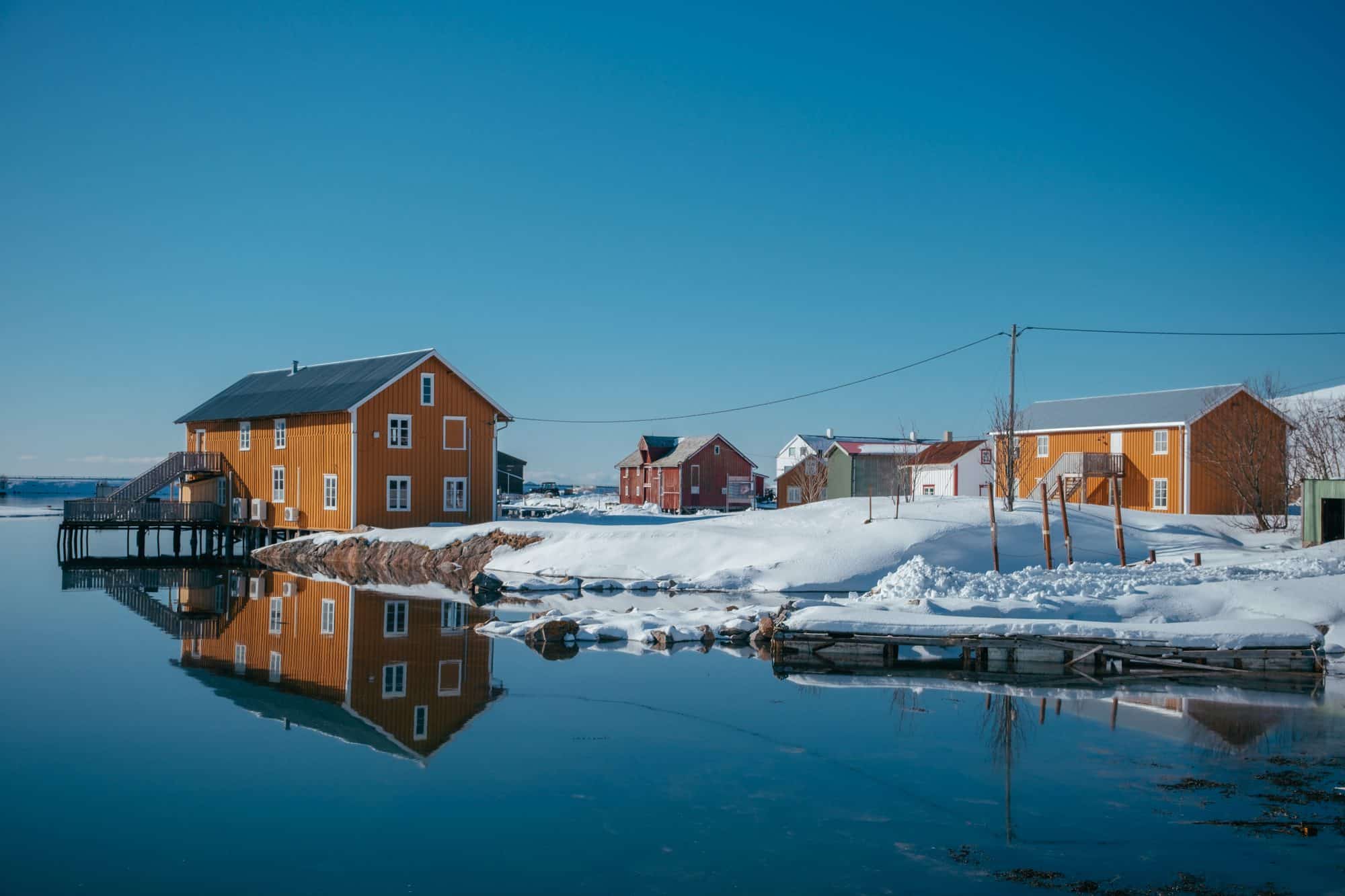
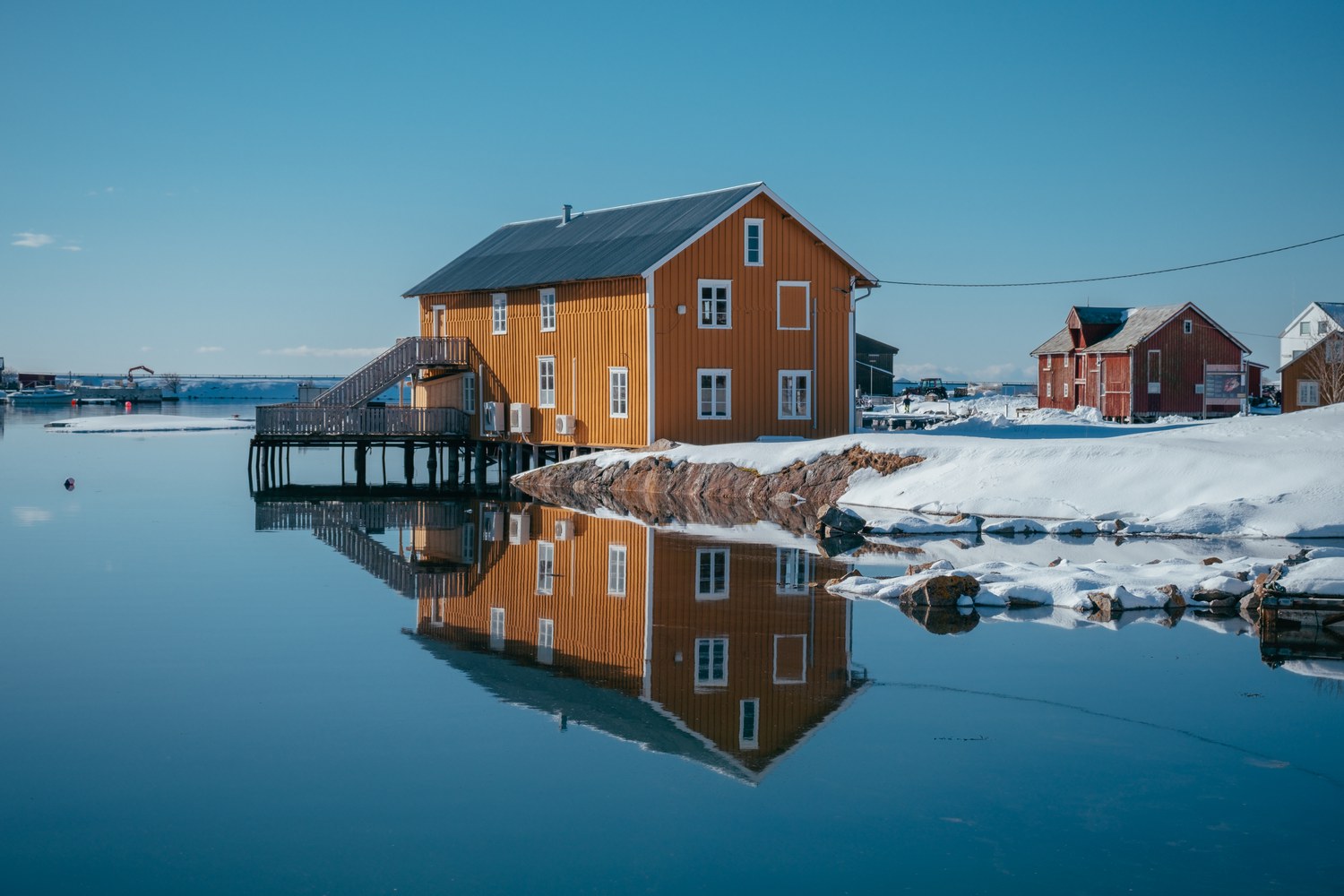
The stilt house, reflected in the still water
The stilt house, reflected in the calm water | © Emilie Solbakken
Behind this door, the island used to bake its bread
Behind this door, the island used to bake its bread | © Henriette Sofia Danielsen
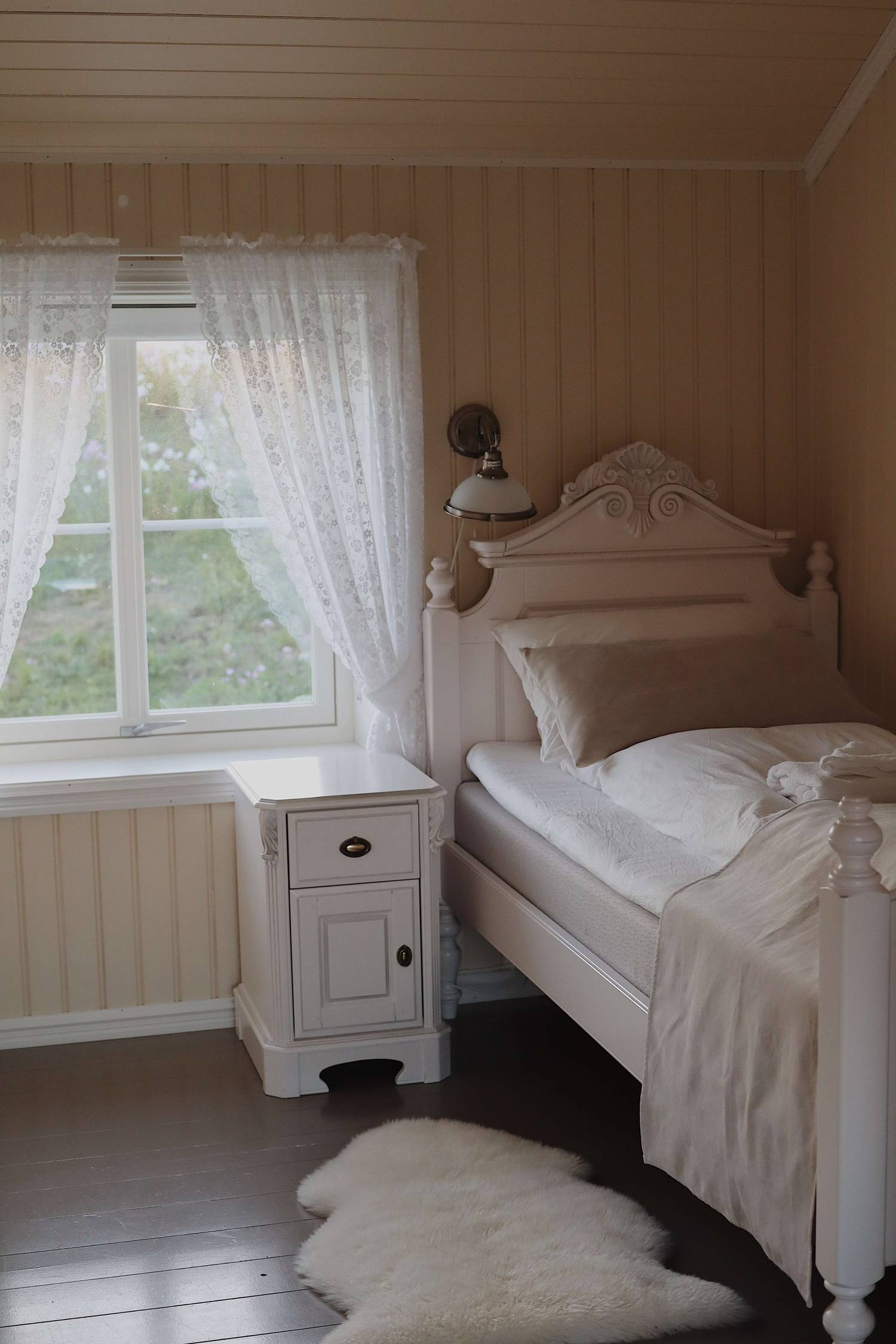
A bed from Grandma's day, freshly made
A bed from Grandma's day, freshly made | © Henriette Sofia Danielsen

An old advertisement on the wall of the toy store
An old advertisement on the wall of the toy store | © Henriette Sofia Danielsen

Stockfish in the Twilight: The Coast's Oldest Craft
Stockfish in the Twilight: The Coast's Oldest Craft | © Emilie Solbakken
A halibut bigger than the person holding it
A halibut bigger than the person holding it | © Benjamin A. Ward
Cod, just a few hours after being caught
Cod, just a few hours after being caught | © Emilie Solbakken
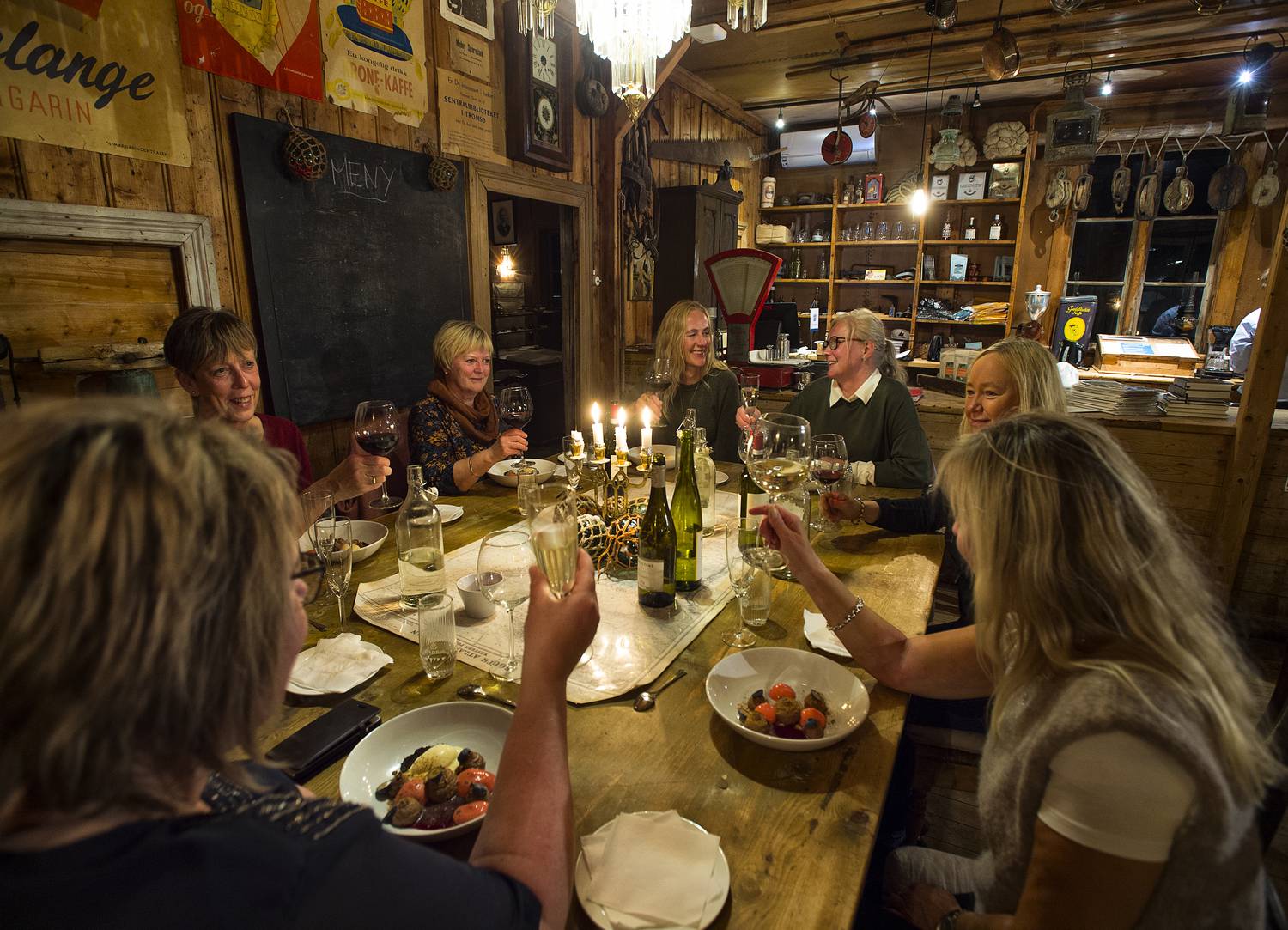
The long table at Gammelbutikken, when the candles are lit
The long table at Gammelbutikken, with the candles lit | © Olav Breen
When the fire gets going, the tent suddenly gets warm
When the fire gets going, the tent suddenly gets warm
Once at the top, with a view of the fjord
At the top, with a view of the fjord | © Eva Ann Andersen
A passage carved into the rock, covered with icicles in winter
A passage carved into the rock, covered with icicles in winter | © Kaisa Hafredal
All set in the RIB before heading out to the archipelago
All set in the RIB before heading out to the archipelago | © Kaisa Hafredal
A white-tailed eagle soars over the coast
A white-tailed eagle soars over the coast | © tourlab
After the sauna at the lighthouse, the path leads into the cold sea
After the sauna at the lighthouse, the path leads into the cold sea | © Kaisa Hafredal

By the fire on the pier, as the lights go out
By the fire on the pier, as the lights go out | © Kaisa Hafredal
An evening sky reflected in the harbor basin
An evening sky reflected in the harbor basin | © Eva Ann Andersen
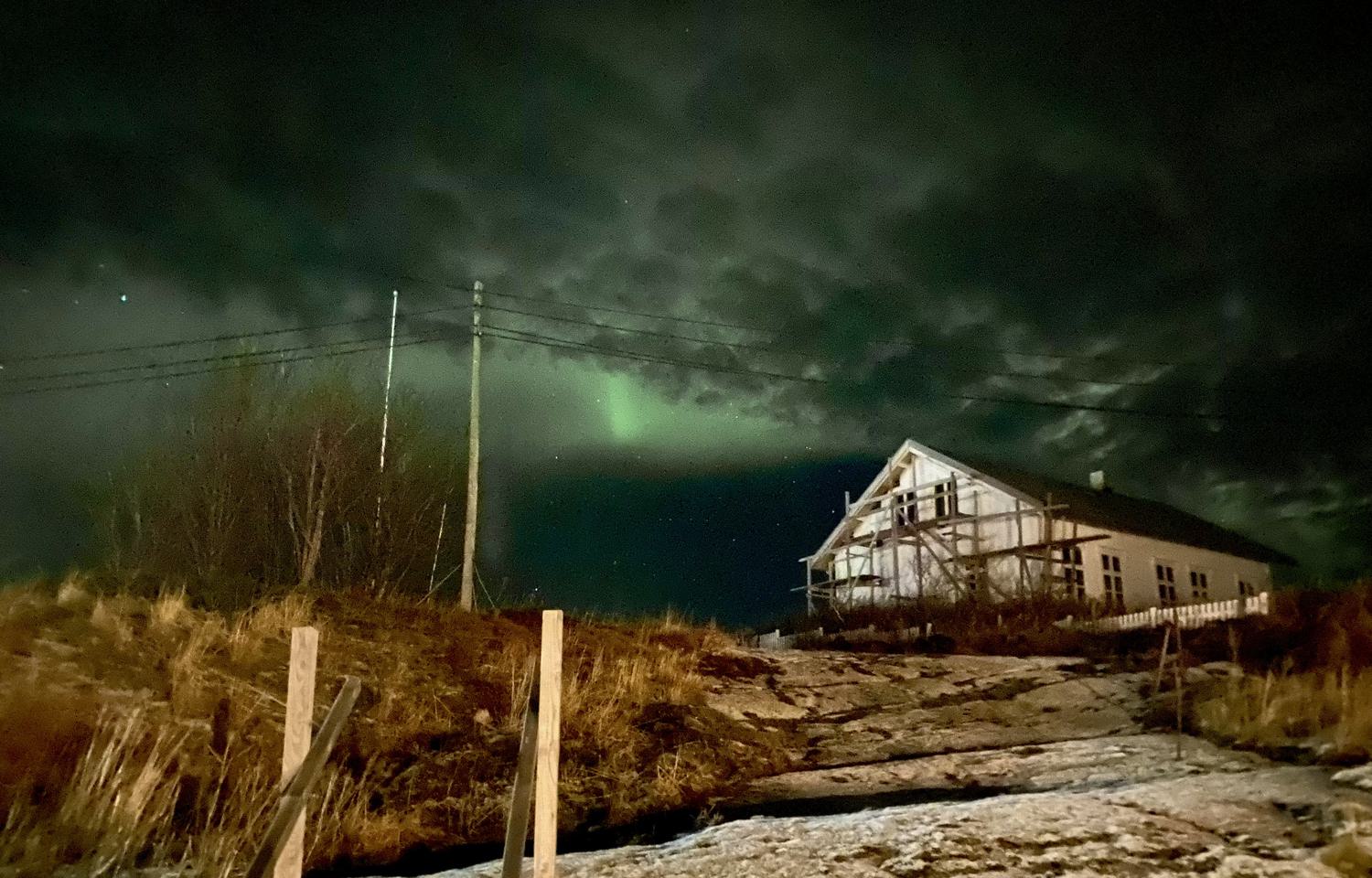
A green light sweeping across the rooftops
A green light sweeping across the rooftops | © Eva Ann Andersen
Northern Lights over the rooftops of the trading post
Northern Lights over the rooftops of the trading post | © Eva Ann Andersen
Further travels in Europe
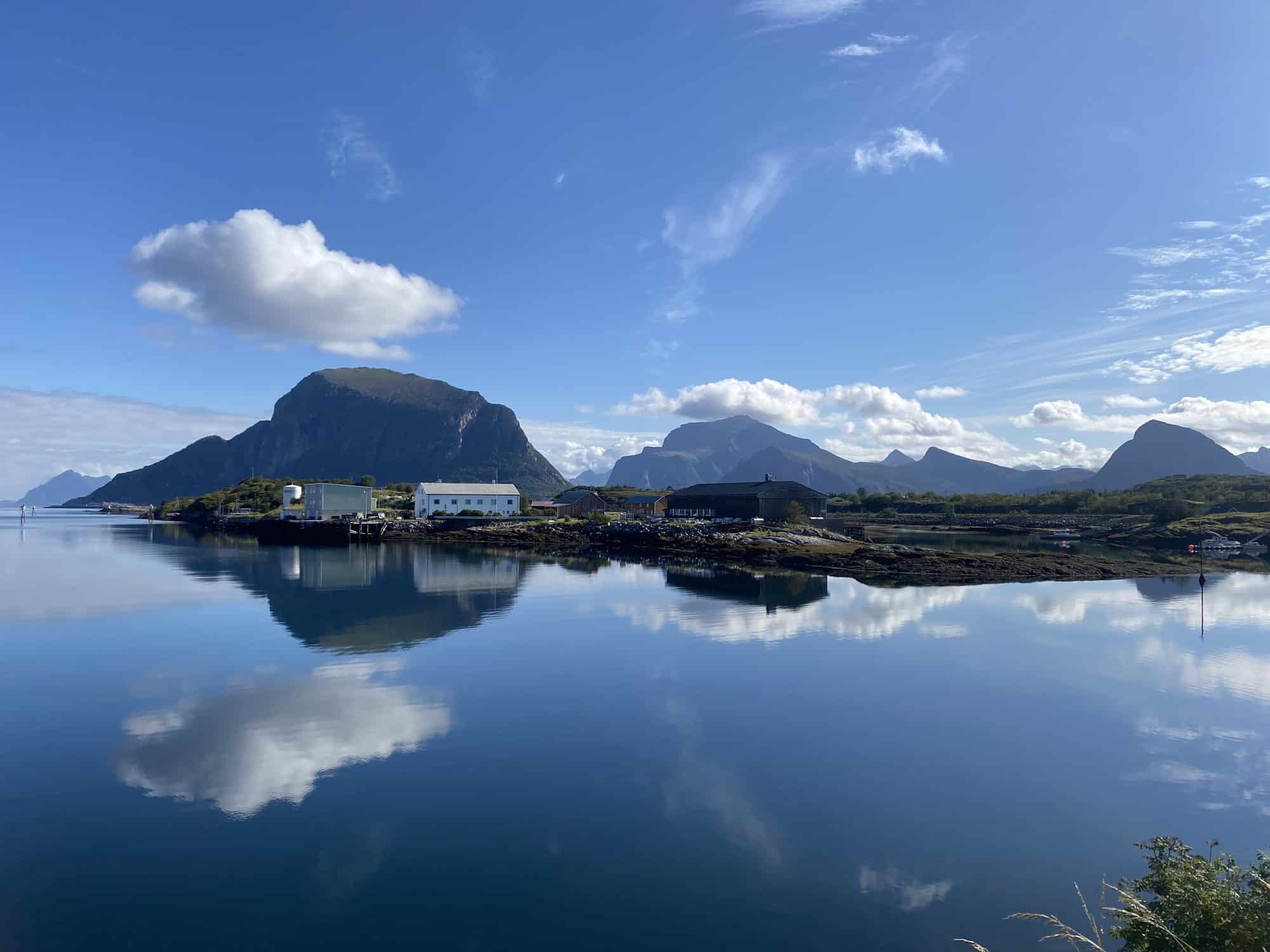
Midnight Sun over the Støtt Archipelago

When the migratory birds return to Støtt

Northern Lights over the old trading post at Støtt
5.450 €

On the most beautiful rail lines and the Hurtigruten route through the Land of the Midnight Sun…
13.171 €

An Old Maritime Route from Scotland to Norway
4.350 €

Active Base Camp in Northern Spitsbergen
4.490 €
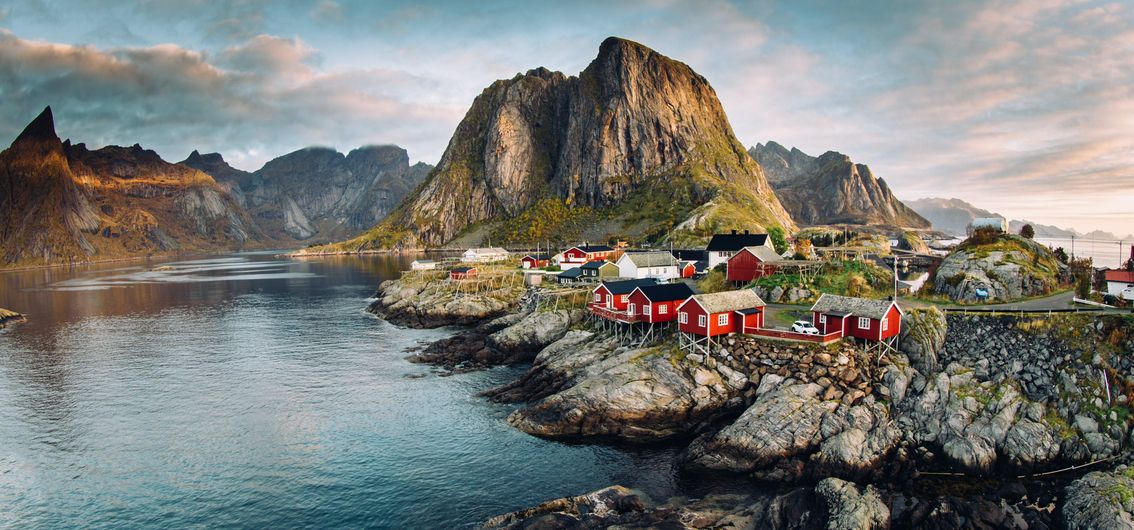
Lapland Express and Erzbahn – By Train to the North Cape (2026/2027)
4.100 €
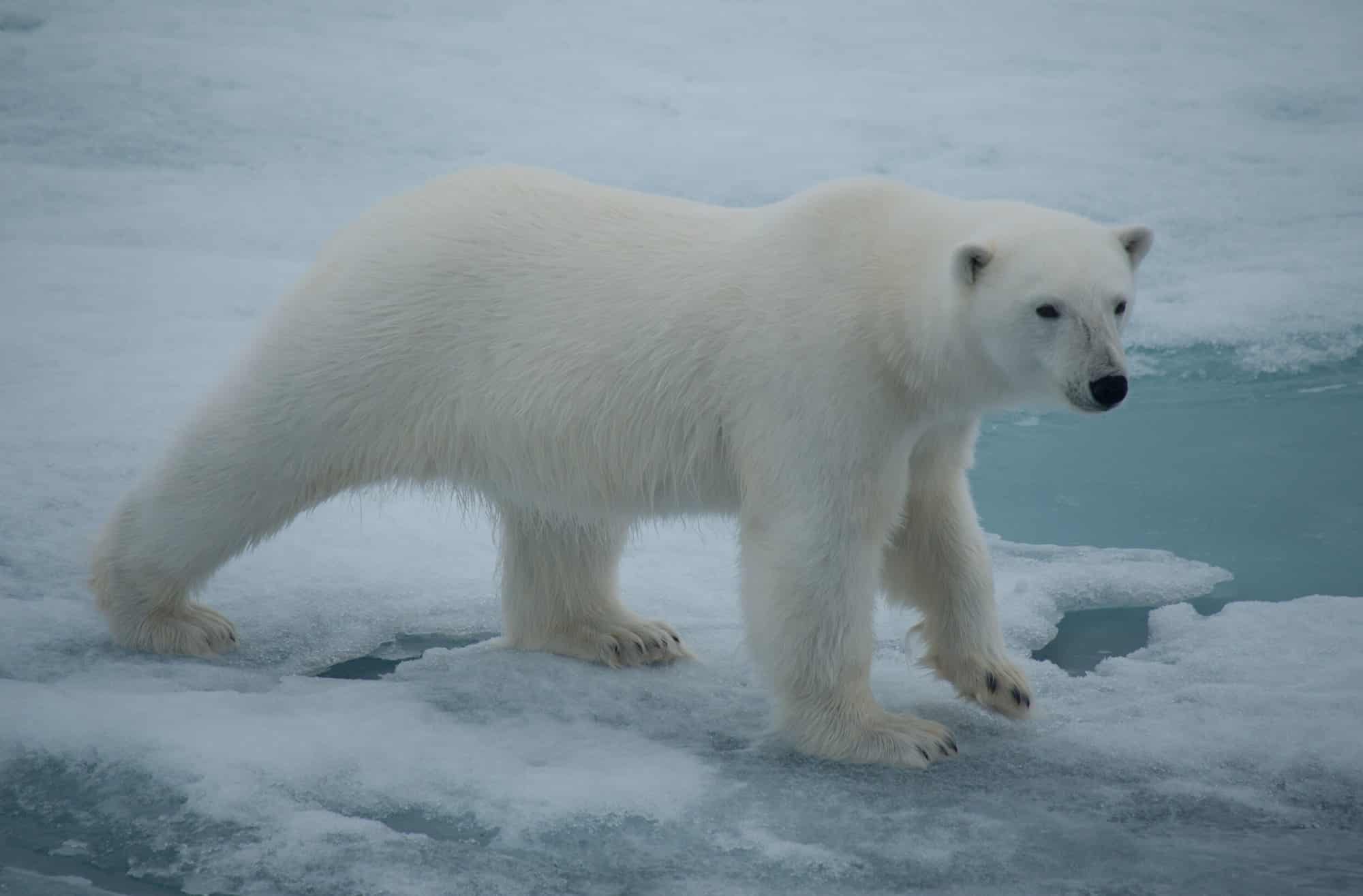
Short Expedition Cruise Through Western Spitsbergen
7.986 €

Western Spitsbergen & the Polar Ice Edge
7.790 €

Svalbard Expedition to the Pack Ice | MS Quest | MS Stockholm |…
10.450 €

Bird islands & glacier ice in the Norwegian Arctic
18.820 €